What November Changes on a First-Time Route
In November, the places on a first-time itinerary do not need to change as much as the way you use them.
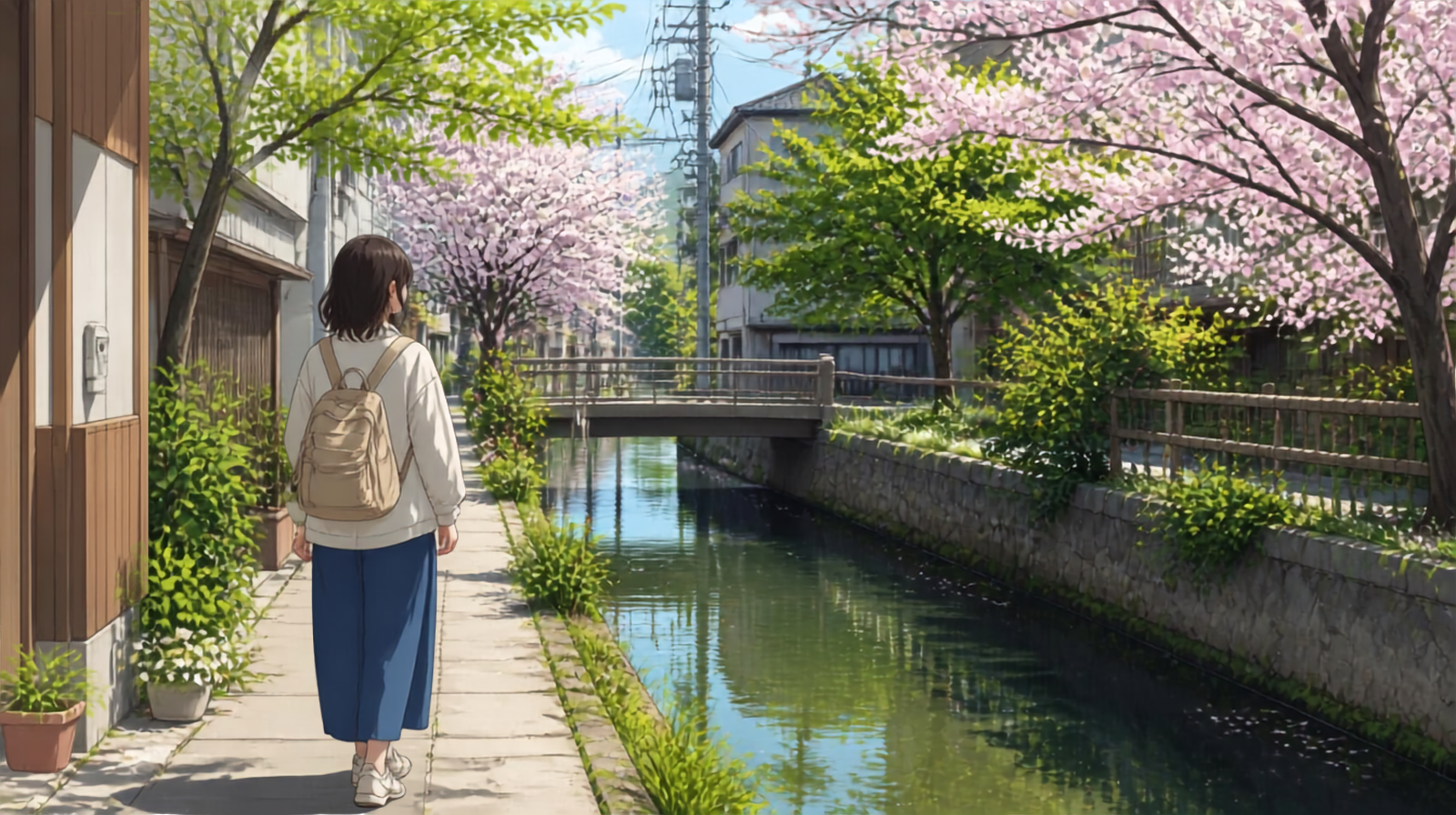
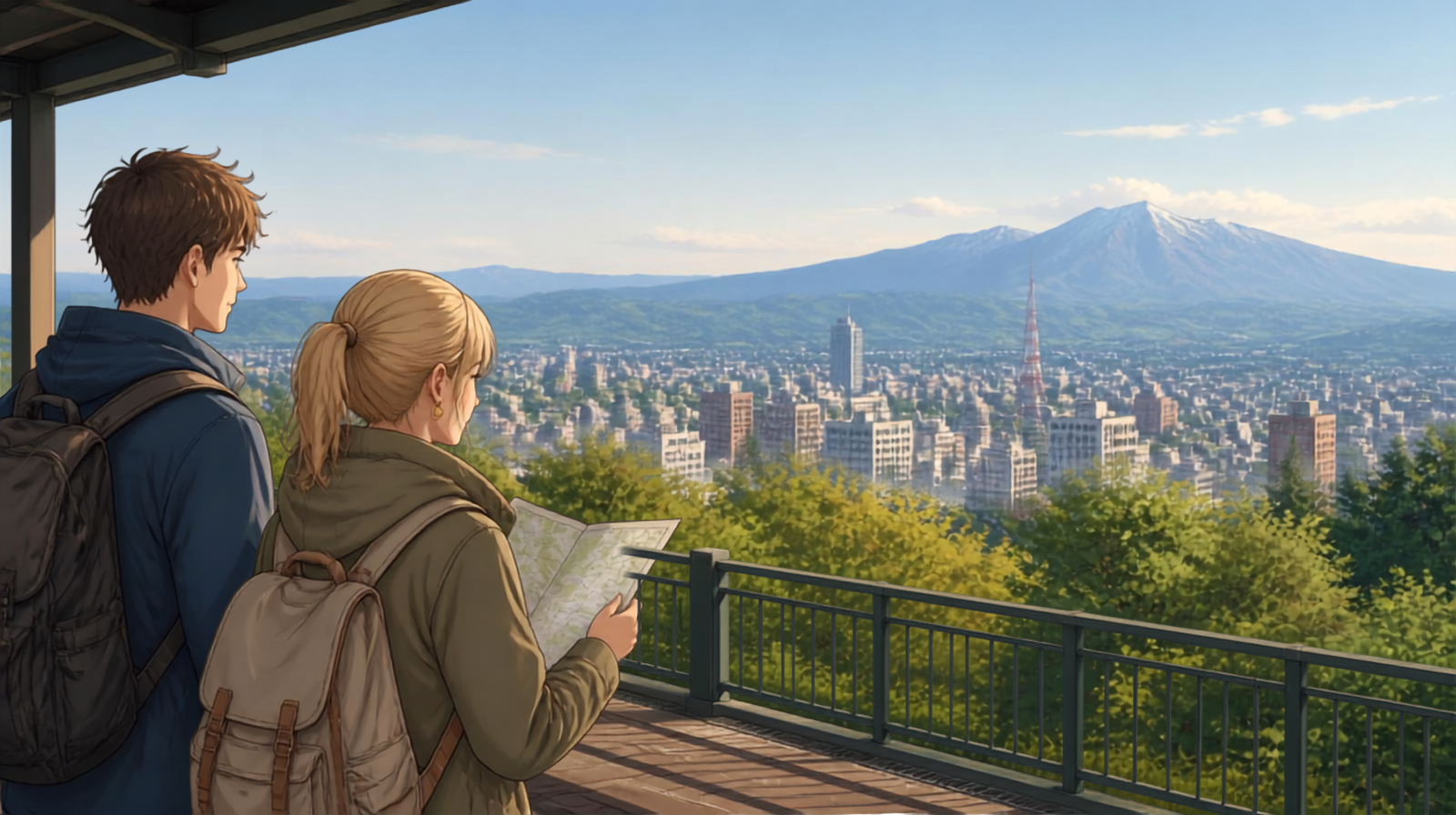
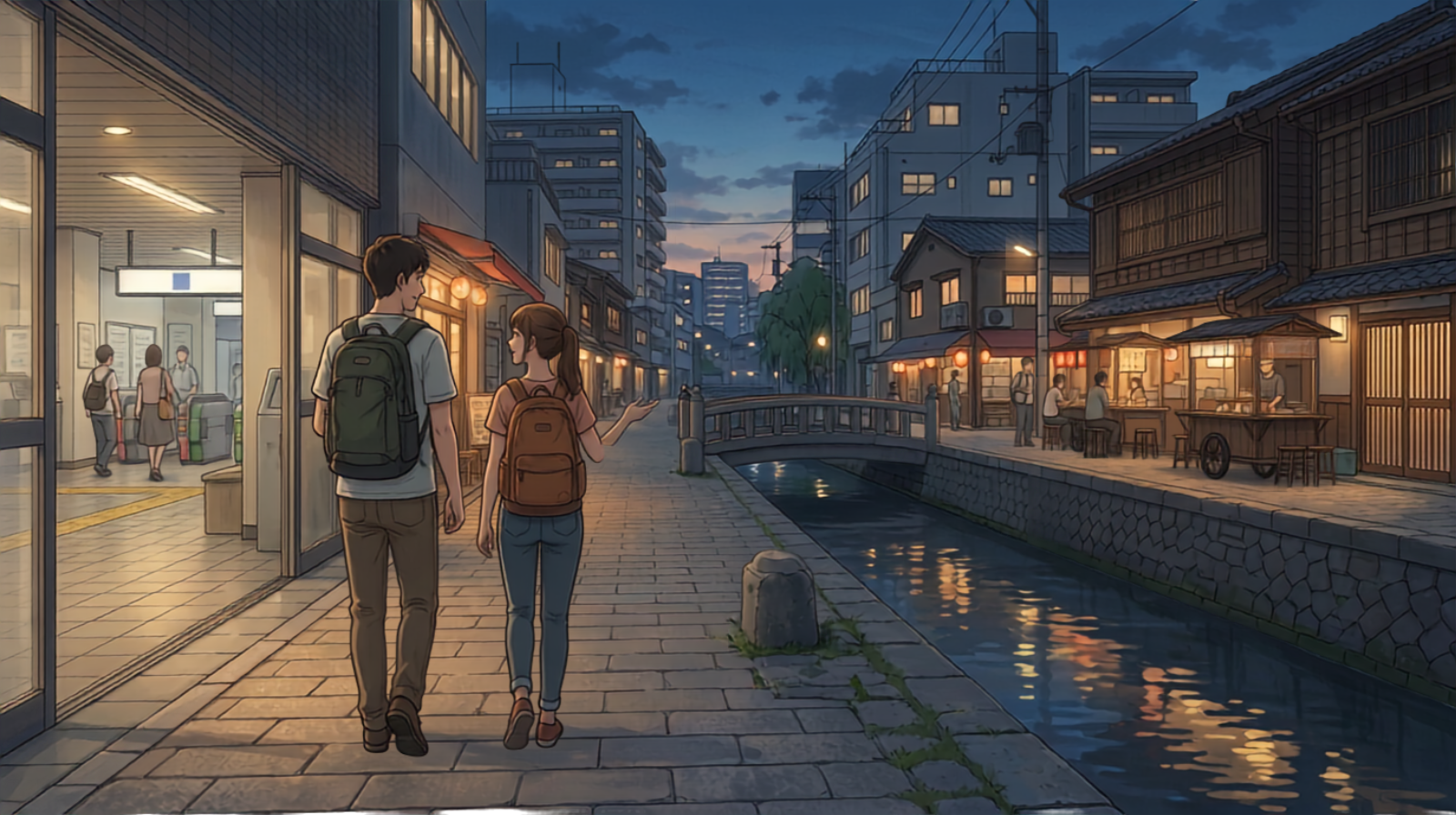
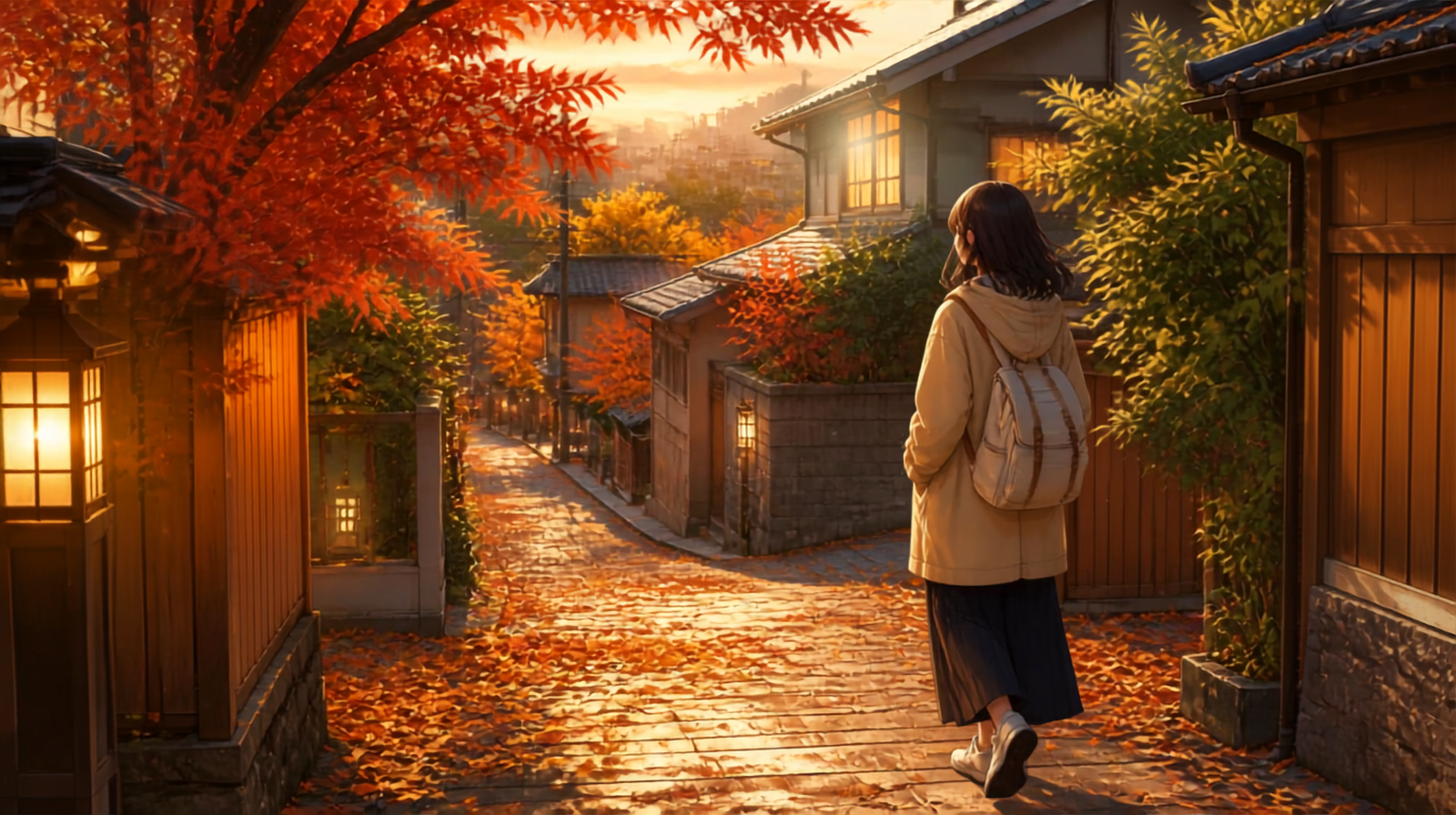
A park near the hotel, a riverside path before dinner, a temple visited for its architecture, or the walk back through a residential street can all become part of the autumn experience. The same itinerary starts to reward slower walking, earlier outdoor sightseeing, and more attention to what is happening between major stops.
The trade-off is demand. As foliage becomes easier to find in places such as Tokyo and Kyoto, popular gardens and temple districts can become much busier, especially on weekends. November therefore rewards good timing and accommodation choices more than constant movement between famous foliage spots.
If your dates are still flexible within the season, our Autumn in Japan guide explains how September, October, and November differ and how the season progresses across the country.
Where Autumn Is in Early, Mid, and Late November
The useful way to think about November is not “early versus late autumn,” but where autumn has reached by the time you travel.
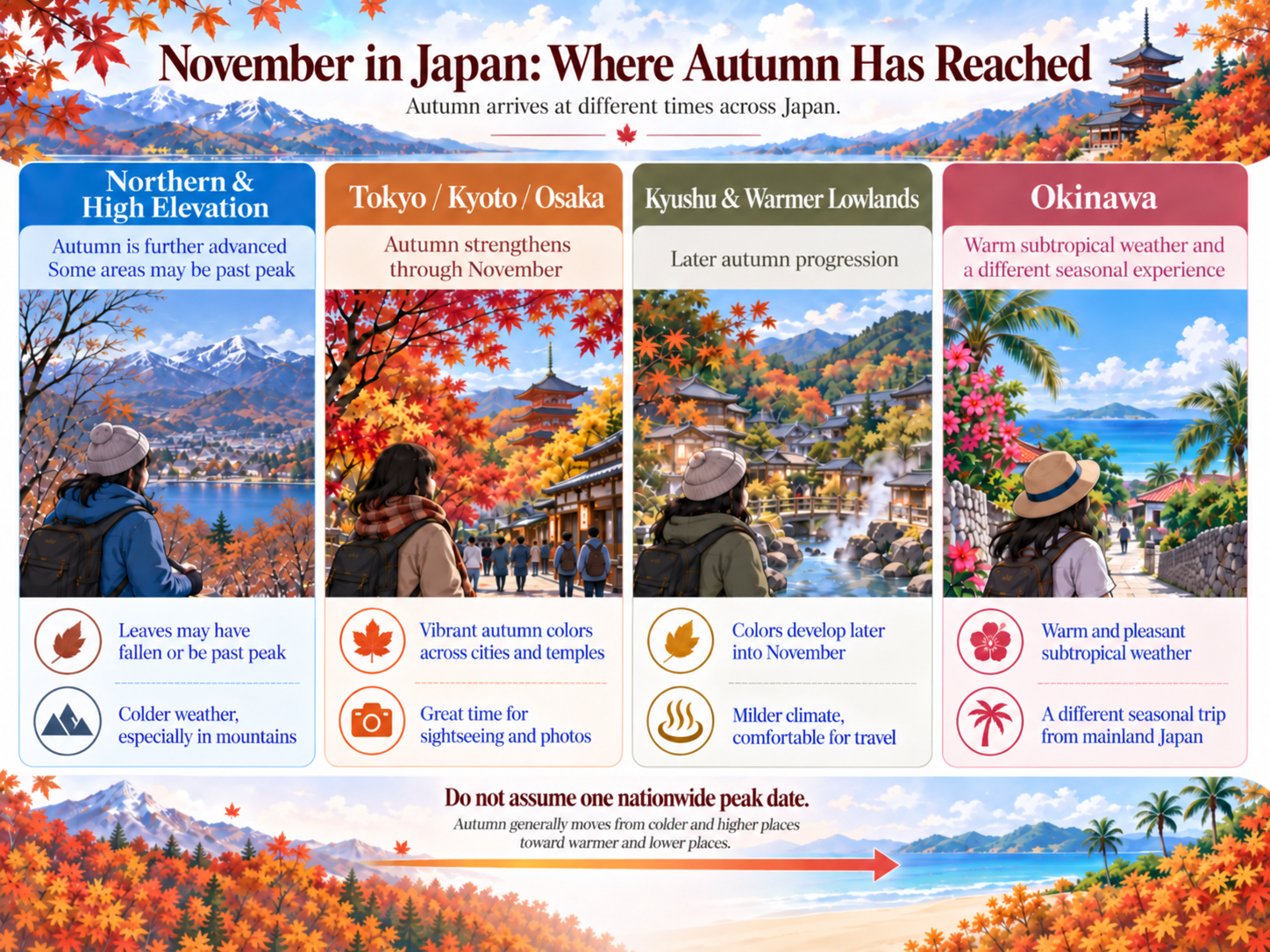
| Part of November | Where Autumn Often Is | Good Fit For | Main Planning Point |
|---|---|---|---|
| Early November | Colder regions and higher elevations may already be late in the season; many major cities are still developing color | City sightseeing, regional trips, mountain or cooler destinations chosen carefully | Do not assume northern or high-elevation foliage is still at peak |
| Mid-November | Autumn becomes easier to find across many classic city destinations in central and western Japan | Tokyo, Kyoto, and Osaka trips, gardens, temples, neighborhood walks | Popular foliage areas can become much busier on weekends |
| Late November | Strong color can reach many lower-elevation city destinations while mornings and evenings become colder | Tokyo, Kyoto, Osaka, autumn illuminations, city + regional trips | Kyoto and other popular foliage destinations may have high accommodation and local transport demand |
Early November: Look Higher or Cooler Only When Foliage Is the Priority
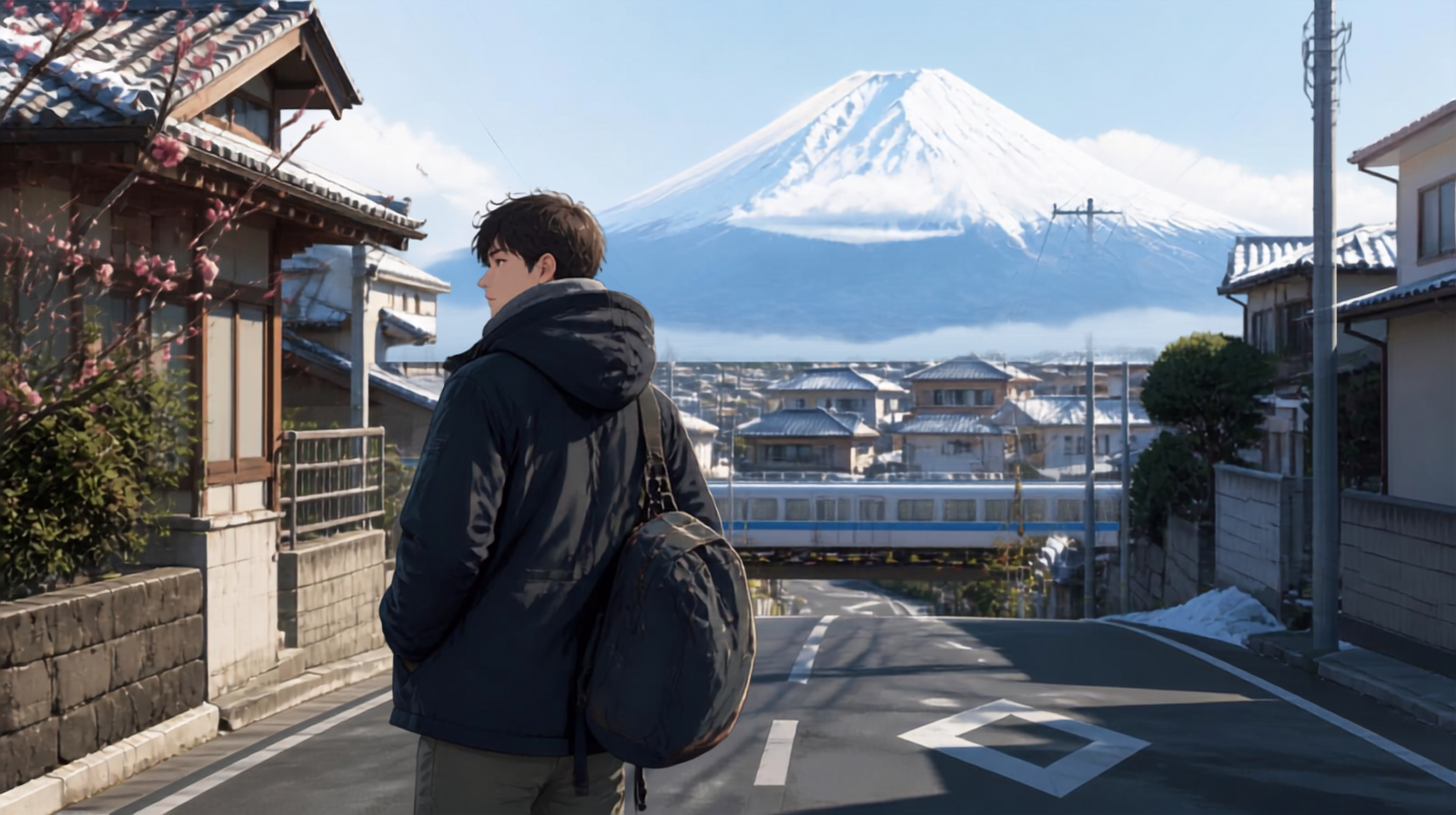
By early November, some mountain and northern destinations are already well advanced into late autumn. That can be useful if foliage is important, but it also means the most famous early-color locations are not automatically the most reliable choice just because the calendar says November.
Tokyo, Kyoto, Osaka, and many lower-elevation destinations may still be moving toward stronger color. For a first trip, that is not a problem. Early November can still be an excellent period for walking and sightseeing even when the city trees have not reached their strongest autumn appearance.
文化の日 / Bunka no Hi / Culture Day is November 3. It is a national holiday, but it should not be treated as a nationwide shutdown. Depending on the calendar, it can contribute to a busier weekend or stronger domestic travel demand.
Mid-November: Autumn Starts to Join the Everyday Route
By mid-November, autumn color often becomes more noticeable in many gardens, temple grounds, parks, and tree-lined streets across central and western Japan.
This is where November becomes especially easy to enjoy without a foliage-heavy itinerary. A morning temple visit, a neighborhood walk after lunch, or a park near your accommodation may already provide enough seasonal atmosphere that you do not need to spend every day chasing a famous viewing spot.
Late November: Let the City Become the Autumn Destination
Late November often works particularly well for travelers focused on Tokyo, Kyoto, Osaka, and other lower-elevation destinations in central and western Japan.
At this point, the question is less about finding “autumn somewhere in Japan” and more about how to use the city well. Popular foliage districts can be crowded, especially on weekends, but quieter streets, smaller gardens, riverside walks, and areas near your accommodation can still carry the season.
勤労感謝の日 / Kinrō Kansha no Hi / Labor Thanksgiving Day is November 23. As with other national holidays, the practical effect depends on the weekday and whether it creates a long weekend.
November Weather: Cool Enough to Change the Day
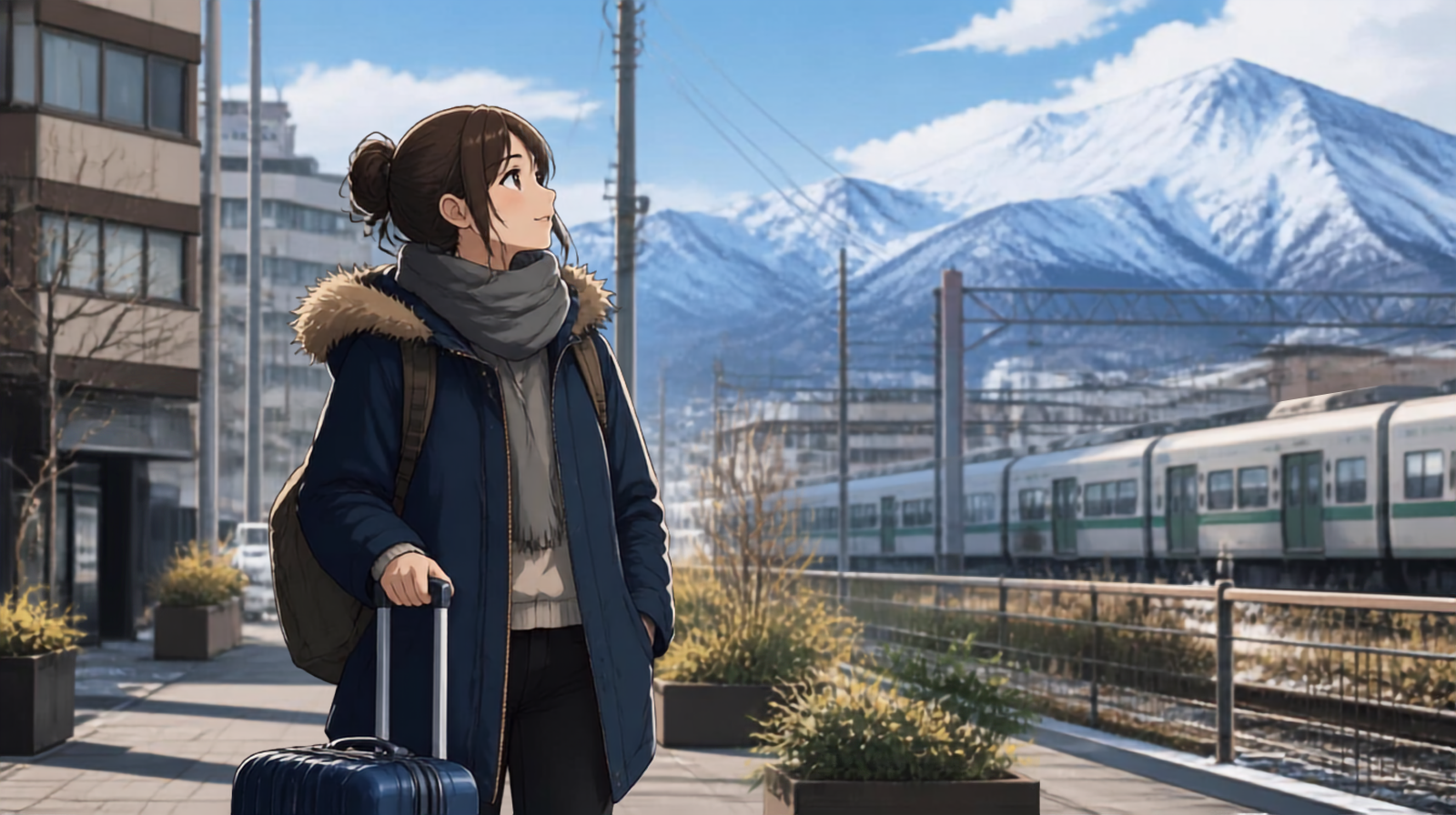
November is noticeably cooler than October across Japan. In the main cities, daytime sightseeing can still be comfortable, but mornings and evenings become cold enough to affect clothing, walking time, and how long you want to stay outdoors after sunset.
The table below uses Japan Meteorological Agency climate normals for 1991–2020. These are long-term averages, not a forecast for a particular trip.
| Destination | Average High | Mean Temperature | Average Low | What It Means for Travelers |
|---|---|---|---|---|
| 札幌 / Sapporo / Sapporo | 8.7°C | 5.2°C | 1.6°C | Late autumn moving toward winter; cold mornings and evenings are normal |
| 東京 / Tōkyō / Tokyo | 16.7°C | 12.5°C | 8.8°C | Comfortable for walking in the day, but noticeably cooler after sunset |
| 京都 / Kyōto / Kyoto | 17.3°C | 12.5°C | 8.4°C | Pleasant daytime sightseeing with colder mornings and evenings |
| 大阪 / Ōsaka / Osaka | 17.8°C | 13.8°C | 10.2°C | Cool autumn weather that still works well for city sightseeing |
| 福岡 / Fukuoka / Fukuoka | 18.2°C | 14.2°C | 10.6°C | Milder than Tokyo or Kyoto but clearly autumn |
| 那覇 / Naha / Naha | 25.0°C | 22.5°C | 20.4°C | Warm compared with mainland Japan and a very different November climate |
Source: Japan Meteorological Agency climate normals (1991–2020). Kyoto values are from the JMA Kyoto observatory normals. Actual conditions vary by year and day.
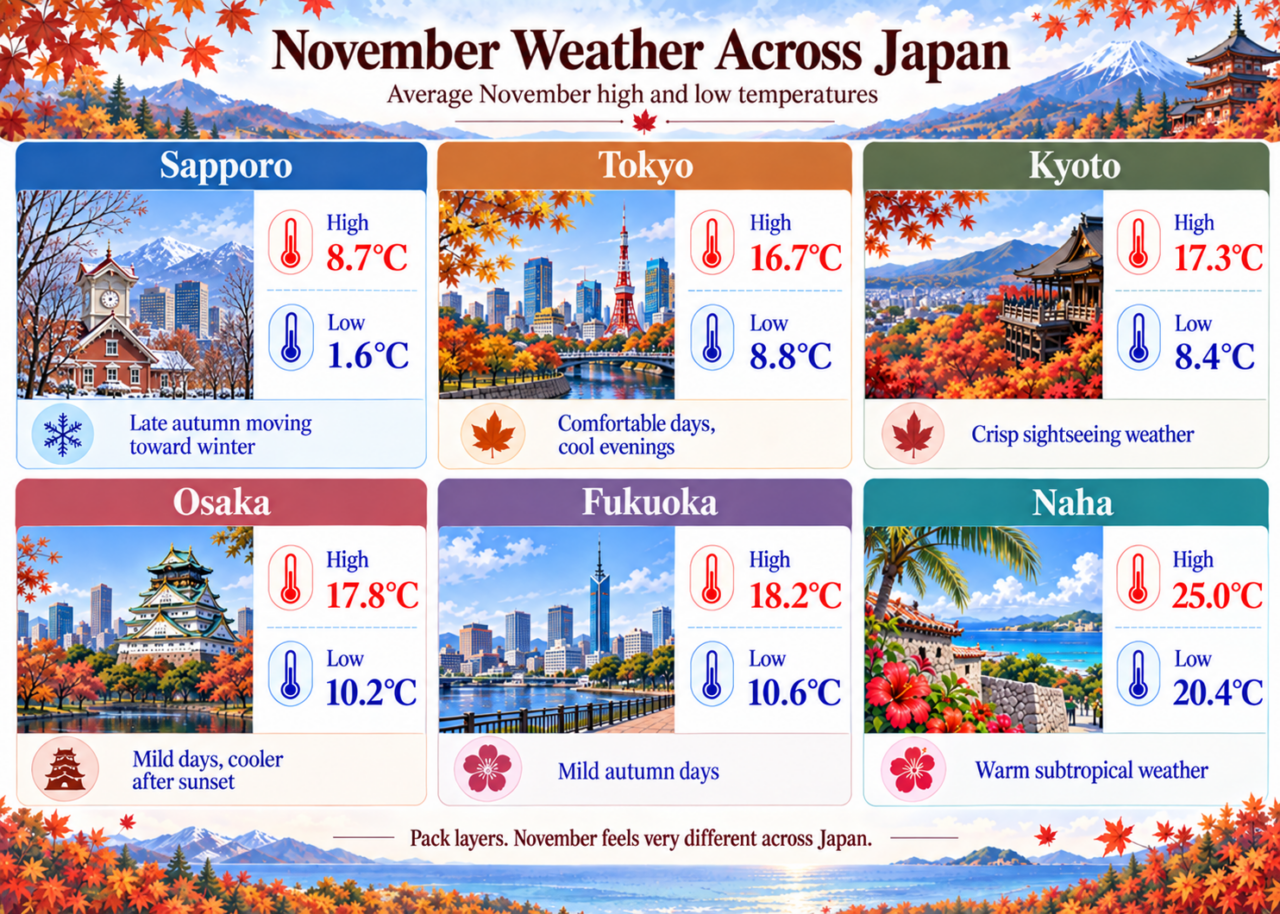
There is no single “November in Japan” outfit. A Tokyo–Kyoto–Osaka trip and a route that includes Hokkaido or a mountain destination can require noticeably different layers.
How to Use Foliage Forecasts Without Chasing Peak Color
Foliage forecasts are most useful for fine-tuning a November trip, not rebuilding the entire itinerary around one predicted peak day.
If autumn leaves are a major priority, use forecasts closer to departure to decide which garden, temple district, day trip, or regional stop deserves more time. If foliage is only one part of the trip, a small timing difference rarely justifies abandoning places you already wanted to experience.
Forecasts can also shift as weather changes. Treat them as a planning aid rather than a guarantee, and keep enough flexibility to move a foliage-focused visit by a day or choose a nearby alternative if conditions are earlier or later than expected.
Build the Route Around the Autumn You Actually Want
November works best when you decide whether foliage is the purpose of the journey or a seasonal layer added to the places you already want to experience.
Let Tokyo, Kyoto, and Osaka Become the Autumn Trip
For most first-time visitors, there is no need to replace the classic route with a list of famous foliage spots.
Parks, temple grounds, gardens, riverbanks, residential streets, and the neighborhood around your accommodation can all add autumn to the journey. This usually produces a more natural trip than crossing the city several times a day simply to collect well-known viewing locations.
Kyoto in November: Stay Closer and Start Earlier
Kyoto needs more deliberate planning than the other two major cities during popular foliage periods.
If a temple district or garden is one of the reasons for visiting, staying in or near the area can be more valuable than choosing accommodation only for access to Kyoto Station. Starting early, returning to the accommodation for a break, and exploring nearby streets later can reduce unnecessary cross-city travel during the busiest part of the day.
Earlier November Color: Choose a Specific Mountain or Cooler Destination
If your trip is in early November and foliage is a priority, cooler or higher destinations may be better candidates for established color than central city areas.
日光 / Nikkō / Nikko, 高野山 / Kōyasan / Mount Koya, mountain towns, and other higher-elevation areas can change earlier than nearby lowland cities. Choose a specific destination and elevation rather than assuming the whole region changes at once.
Hokkaido: Choose It for Hokkaido, Not for Peak November Foliage
北海道 / Hokkaidō / Hokkaido is not the obvious choice if your main goal is classic November foliage in the same way as Tokyo or Kyoto. By this point, many areas are already beyond their main autumn-color period, and colder conditions become more important to the trip.
Hokkaido can still be an excellent November destination, but the reason should be the region itself rather than an assumption that the whole island remains at peak color.
Kyushu and Okinawa: Later Autumn, or a Different Season Entirely
九州 / Kyūshū / Kyushu remains milder than northern Japan, and autumn color can arrive later in many lowland areas. It can suit travelers who want regional cities, hot springs, food, and a gentler transition toward winter.
沖縄 / Okinawa / Okinawa is different. November is warm compared with mainland Japan and should not be chosen as a fall-foliage destination. It is better treated as a separate subtropical trip.
What to Wear in Japan in November
Layers are more useful than one heavy outfit because daytime and evening temperatures can feel very different, especially when you are walking for long periods and then moving into heated trains, restaurants, or shops.
| Route | Clothing Approach | Footwear |
|---|---|---|
| Tokyo / Kyoto / Osaka | Long sleeves, knit or fleece layer, light to medium jacket, and an extra layer for colder evenings | Comfortable walking shoes |
| Hokkaido / mountain areas | Warmer outerwear, stronger layers, and protection for cold mornings or possible early-winter conditions | Closed shoes with useful grip |
| Kyushu city route | Light to medium autumn layers, with extra warmth for mornings, evenings, and inland areas | Comfortable walking shoes |
| Okinawa | Much lighter clothing than mainland Japan, with a light layer for wind or cooler periods | Normal walking shoes |
If the trip includes both Hokkaido and Kyoto, or a mountain stay followed by a warmer city, pack for the coldest destination rather than trying to use one outfit everywhere.
In November, Accommodation Shapes the Hours Outside Sightseeing
Shorter daylight makes the hours before breakfast and after dinner more important. A good base can turn those parts of the day into part of the trip rather than dead time between sightseeing stops.
A stay near a riverside path, local shopping street, small park, café area, or useful station can make it easier to step outside for a quiet morning walk, return before dinner, or spend the evening close to where you are staying. This matters even if the neighborhood is not a famous foliage destination.
During high-demand foliage periods, secure the stay that most affects how you want to use the day, then keep the rest of the route more flexible where possible.
An overnight 温泉 / Onsen / hot-spring stay can also fit naturally into a cooler November route, especially when you want the evening itself to be part of the experience. If shared bathing is unfamiliar, our Onsen & Sento Etiquette in Japan guide explains the basic bathing sequence and facility rules.
Use Daylight for Autumn, Evenings for the Neighborhood
November changes the rhythm of a sightseeing day because daylight fades earlier than it does in early autumn.
Use the brighter hours for gardens, temple districts, parks, scenic walks, and places where color and landscape matter. After sunset, the trip can shift toward dinner, cafés, shopping streets, museums, seasonal illuminations, or simply spending time around the neighborhood where you are staying.
Many winter illumination events begin in November, but exact dates and operating schedules change each year. Treat them as a useful evening option rather than something to assume will be available throughout the month.
A November Plan That Avoids Foliage Chasing
November becomes easier to plan once you decide whether autumn leaves are a priority or a backdrop.
- Start with the places you genuinely want to visit. If Tokyo, Kyoto, and Osaka are already your priorities, do not replace them simply because another region has an earlier foliage peak.
- Match foliage expectations to your dates. Early November, late November, mountain areas, northern Japan, and warmer lowlands can all be at different stages of autumn.
- Choose one stay where location really matters. This is especially useful for late-November Kyoto or another high-demand foliage destination.
- Plan the day around daylight. Put scenery-focused stops earlier, then let dinner, illuminations, indoor stops, or the neighborhood around your accommodation take over after dark.
The best November route is often the one you would have chosen anyway, used differently because autumn has reached it.
Frequently Asked Questions
- Is November a good month to visit Japan?
-
Yes. November combines cooler sightseeing weather with increasingly strong autumn scenery in many classic first-trip destinations. The main planning issue is that foliage timing still varies by region and elevation.
- How cold is Japan in November?
-
Conditions vary greatly by region. Long-term November mean temperatures are about 5.2°C in Sapporo, 12.5°C in Tokyo, 12.5°C in Kyoto, 13.8°C in Osaka, 14.2°C in Fukuoka, and 22.5°C in Naha.
- Is November good for fall foliage in Japan?
-
Yes, but not everywhere at the same time. Northern and high-elevation areas may be past their strongest color by November, while many lower-elevation destinations in central and western Japan become more colorful during the month.
- When is the best time for autumn leaves in Tokyo and Kyoto?
-
Mid- to late November is often an important period for autumn color in Tokyo and Kyoto, but exact timing varies by year, neighborhood, elevation, and tree species. Check current local conditions closer to your trip rather than planning around one guaranteed peak date.
- What should I wear in Japan in November?
-
For Tokyo, Kyoto, and Osaka, bring long sleeves, a knit or fleece layer, and a light to medium jacket. Hokkaido and mountain areas need warmer clothing, while Okinawa remains much warmer than mainland Japan.
- Is Kyoto crowded in November?
-
Kyoto can be very busy during popular foliage periods, especially on weekends and around well-known temples and gardens. Staying closer to the area you want to explore and visiting early can reduce unnecessary cross-city travel.
- Are November 3 and November 23 public holidays in Japan?
-
Yes. November 3 is Culture Day and November 23 is Labor Thanksgiving Day. They are national holidays, but they do not mean the whole country closes. The practical effect depends on the weekday, destination, and whether the date creates a long weekend.