September Is Still Late Summer on a Typical First Trip
If your itinerary is built around Tokyo, Kyoto, Osaka, and nearby destinations, do not pack or plan as though September will automatically feel cool.
Daytime temperatures are still high enough in many cities to affect how long you want to walk, how often you need indoor breaks, and how much energy remains for the evening. Humidity can also make the same temperature feel more tiring than expected.
The route itself can still work well. What changes is how you use the day: plan for heat first, then look for autumn only where geography and elevation make it realistic.
For the wider seasonal picture, our Autumn in Japan guide explains how September, October, and November differ and how autumn moves across the country.
Early, Mid, and Late September: What Actually Changes?
September does cool gradually, but the change is not the same everywhere. The useful question is not whether September is “autumn,” but what kind of September you will experience in the places on your route.
| Part of September | What It Often Feels Like | Good Fit For | Main Planning Point |
|---|---|---|---|
| Early September | Late summer in most major cities; hot days and humid conditions remain common | Tokyo, Kyoto, Osaka, city sightseeing with breaks, warm-weather travel | Plan for heat rather than expecting autumn temperatures |
| Mid-September | Major cities can still feel summery, while high-elevation Hokkaido can already show clear autumn change | Classic city routes, Hokkaido, Daisetsuzan and other cooler areas | Regional differences become more important than the calendar alone |
| Late September | Mornings and evenings may become more comfortable in some areas, but warm days can continue in central and southern Japan | City travel, regional combinations, and places where local autumn conditions have been checked | Do not assume late September means peak autumn in Tokyo, Kyoto, or Osaka |
Early September: Plan for Summer Conditions
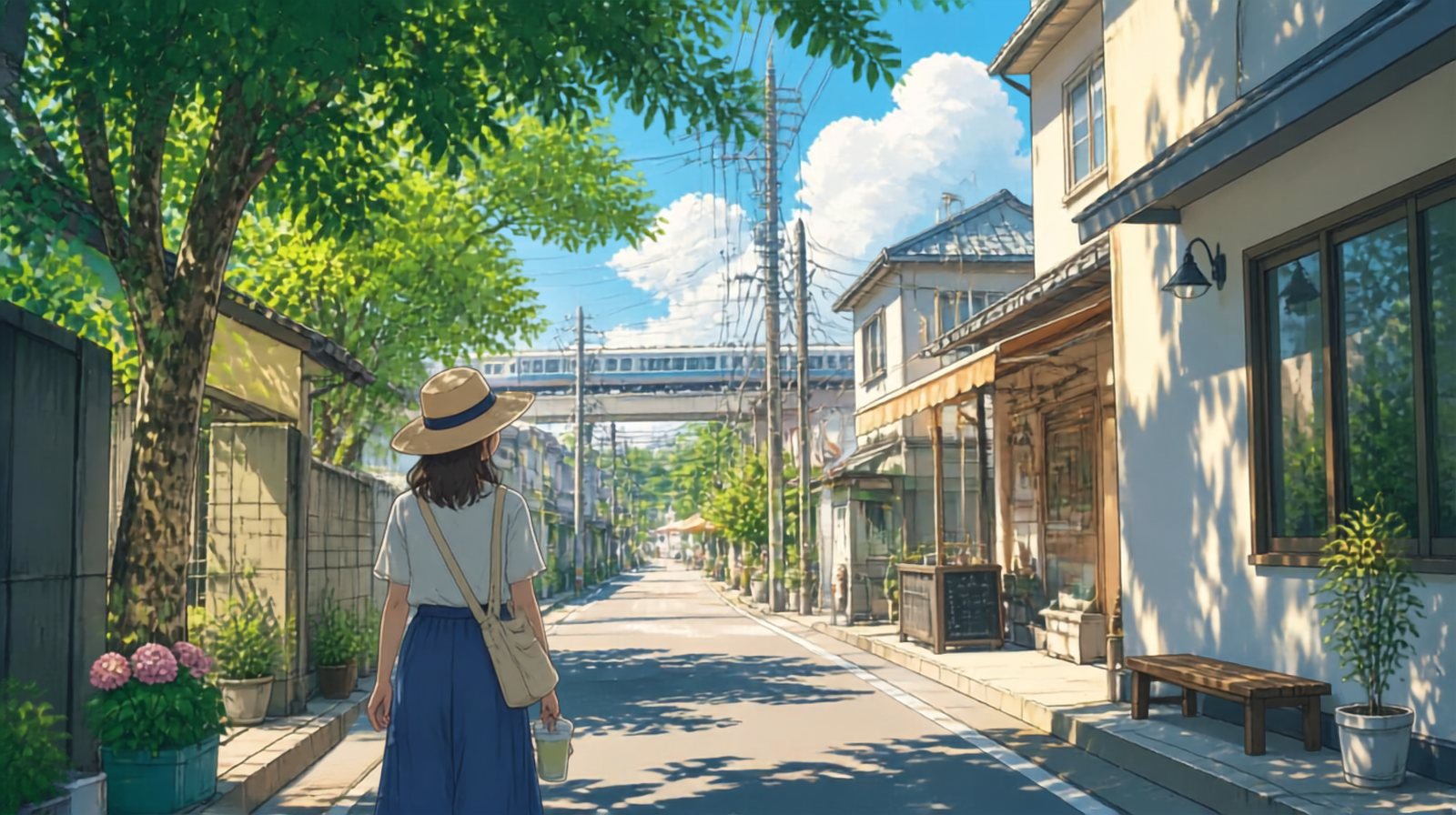
Early September can still feel very close to August in Tokyo, Kyoto, Osaka, Fukuoka, and other central or southern cities.
Start outdoor sightseeing earlier when practical, avoid stacking several long walks into the hottest part of the day, and keep indoor stops such as museums, cafés, shopping areas, or your accommodation available as places to reset.
Mid-September: Japan Starts to Split Into Different Seasons
By mid-September, the contrast between regions becomes especially useful for planning. Tokyo, Kyoto, and Osaka can still have summer-like conditions, while high-elevation parts of Hokkaido can already look and feel distinctly autumnal.
If seeing early autumn is important, this is the point when choosing a specific northern or mountain destination makes more sense than expecting the whole country to change together.
Late September: Cooler Moments, but Not a Guaranteed Autumn City Trip
Late September can bring more comfortable mornings or evenings than the start of the month, but warm daytime conditions can continue in the major cities.
It is better to think of this as a gradual easing of summer rather than a reliable switch to cool autumn weather.
September Weather Across Japan
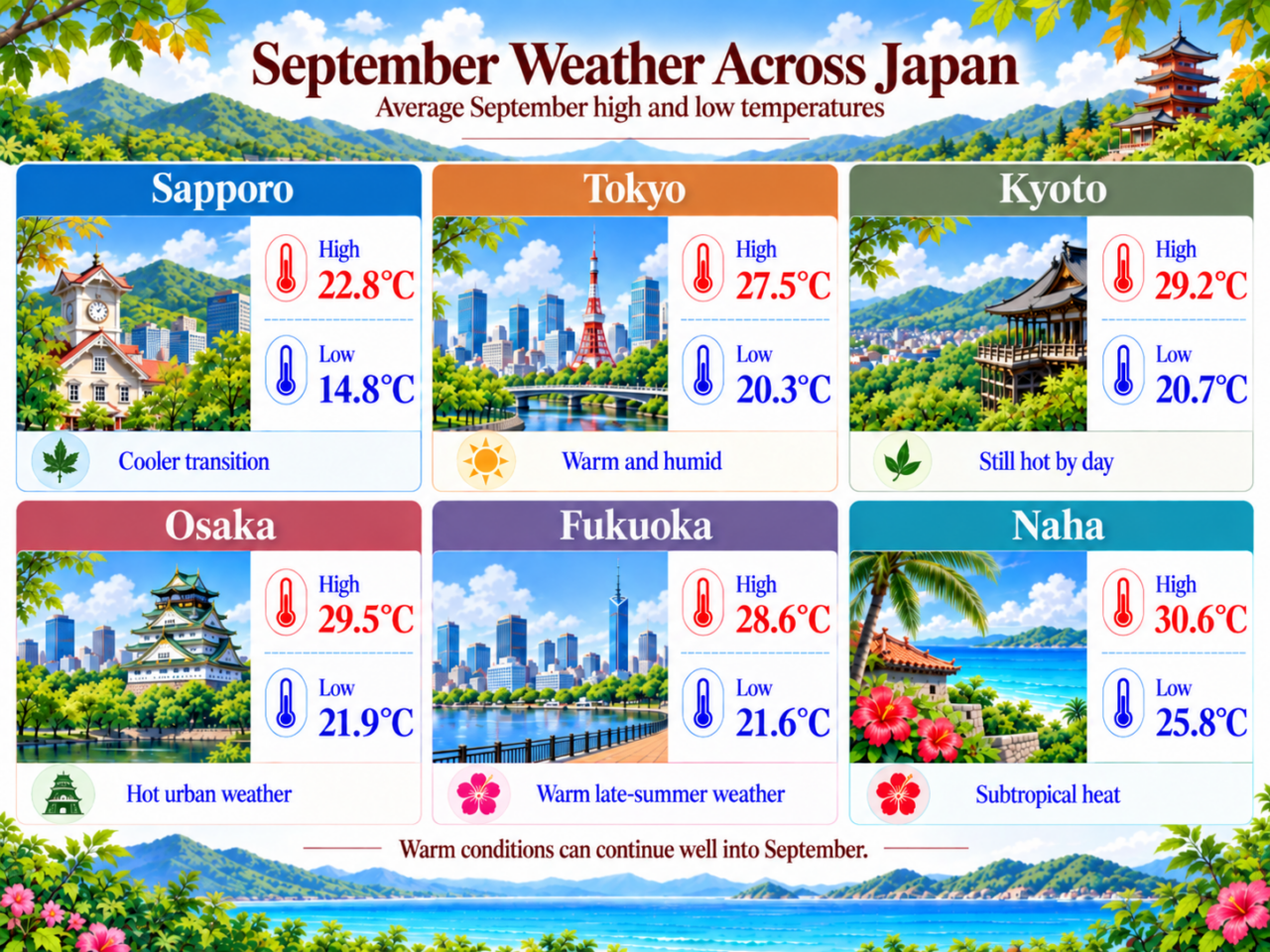
The table below uses Japan Meteorological Agency climate normals for 1991–2020. These are long-term averages, not a forecast for a particular trip, and individual September days can be considerably hotter or cooler.
| Destination | Average High | Mean Temperature | Average Low | What It Means for Travelers |
|---|---|---|---|---|
| 札幌 / Sapporo / Sapporo | 22.8°C | 18.6°C | 14.8°C | Much cooler than Japan’s main central and southern cities; evenings can feel distinctly cooler |
| 東京 / Tōkyō / Tokyo | 27.5°C | 23.3°C | 20.3°C | Warm and often humid; heat can still shape a full sightseeing day |
| 京都 / Kyōto / Kyoto | 29.2°C | 24.4°C | 20.7°C | Still warm, with hot daytime sightseeing possible |
| 大阪 / Ōsaka / Osaka | 29.5°C | 25.2°C | 21.9°C | Late-summer conditions remain important for city walking |
| 福岡 / Fukuoka / Fukuoka | 28.6°C | 24.7°C | 21.6°C | Warm and humid enough that summer-style planning is still useful |
| 那覇 / Naha / Naha | 30.6°C | 27.9°C | 25.8°C | Clearly tropical and still very much a warm-weather trip |
Source: Japan Meteorological Agency climate normals (1991–2020). Kyoto values are from the JMA Kyoto observatory normals. Actual conditions vary by year and day.
For the Classic City Route, Plan for Heat First
The biggest September planning mistake is treating the month as though comfortable autumn walking weather has already arrived everywhere.
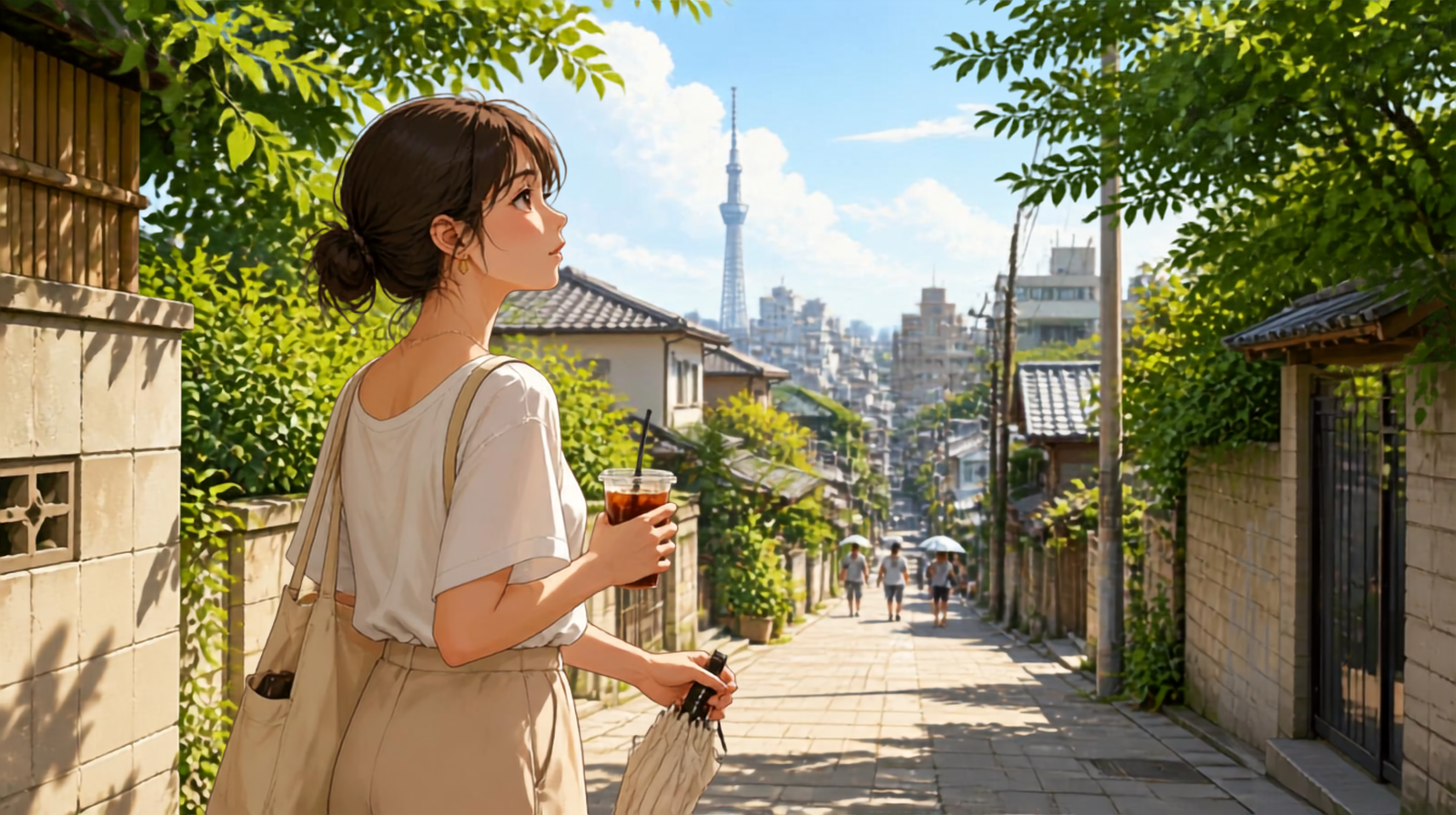
In Tokyo, Kyoto, Osaka, and Fukuoka, a better approach is to plan the day the way you would during the later part of summer: start earlier when possible, use shaded or indoor stops around the hottest part of the day, and leave some energy for the evening.
Carry water, choose breathable clothing, and avoid assuming that a 15- or 20-minute walk between stations will feel effortless in the middle of the day. The distance may look short on a map but feel very different with heat, humidity, luggage, and crowds.
September can still be enjoyable on foot, but the pace matters. A long lunch, a café break, or an hour back at the accommodation can improve the rest of the day more than adding another attraction.
Typhoons and Heavy Rain: Keep the Route Flexible
Typhoons and heavy rain also deserve practical attention in September.
A typhoon does not affect every traveler or every part of Japan. However, when severe weather approaches, flights, Shinkansen services, local trains, buses, ferries, outdoor attractions, and regional roads can be disrupted.
The most useful preparation is flexibility. Avoid building a route where one delayed flight or train automatically causes several non-refundable plans to fail. Keep booking details on your phone, know how to contact your accommodation, and check official transport and weather information when conditions change.
For broader preparation, our Natural Disasters in Japan: What Every Traveler Should Know guide explains typhoons, heavy rain, emergency information, transportation disruption, and what travelers should do if plans are affected.
Where September Actually Starts to Feel Like Autumn
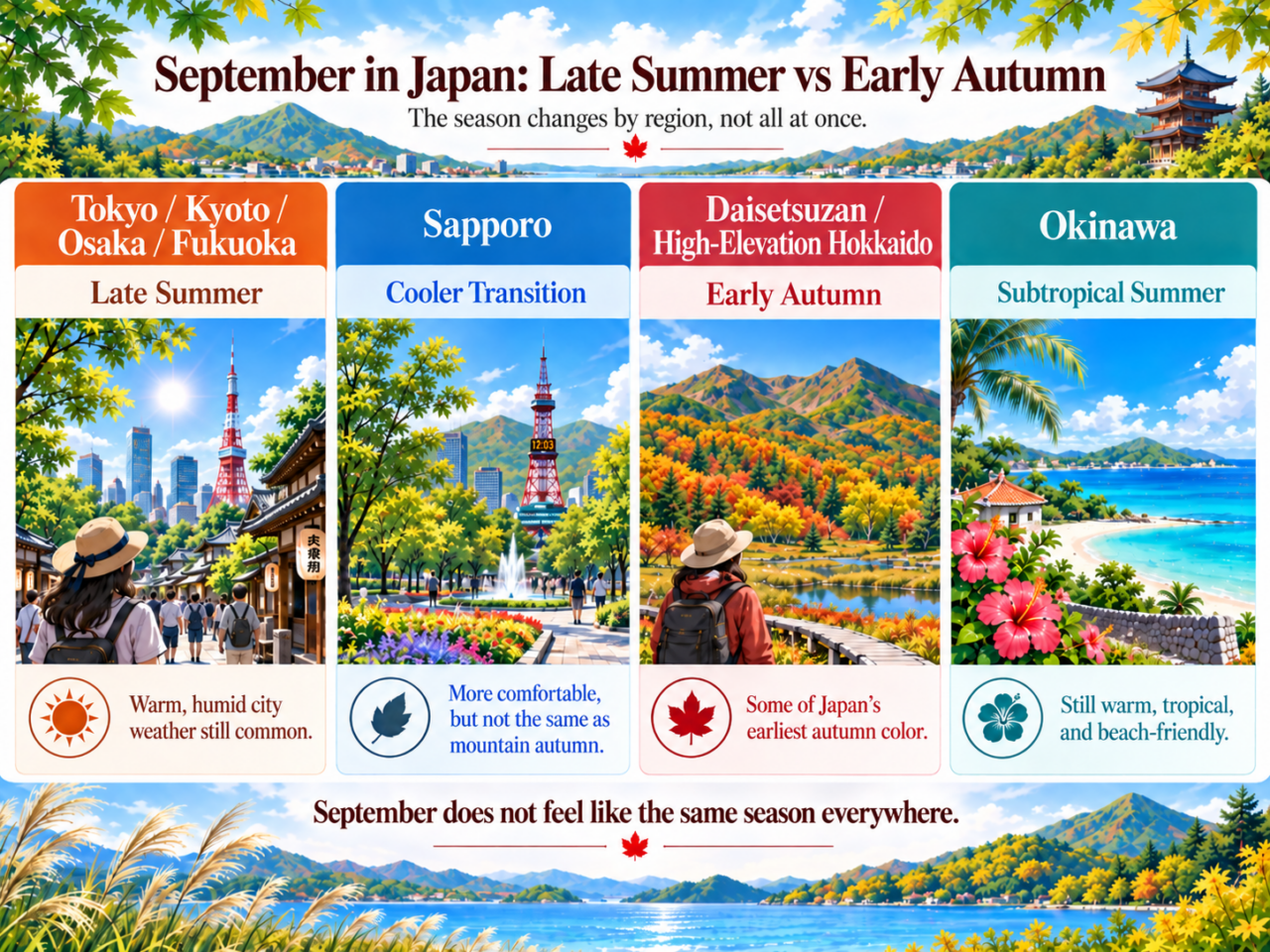
If you want a genuinely autumnal September experience, look first at elevation and latitude rather than the month name.
Daisetsuzan and Hokkaido’s High-Elevation Areas
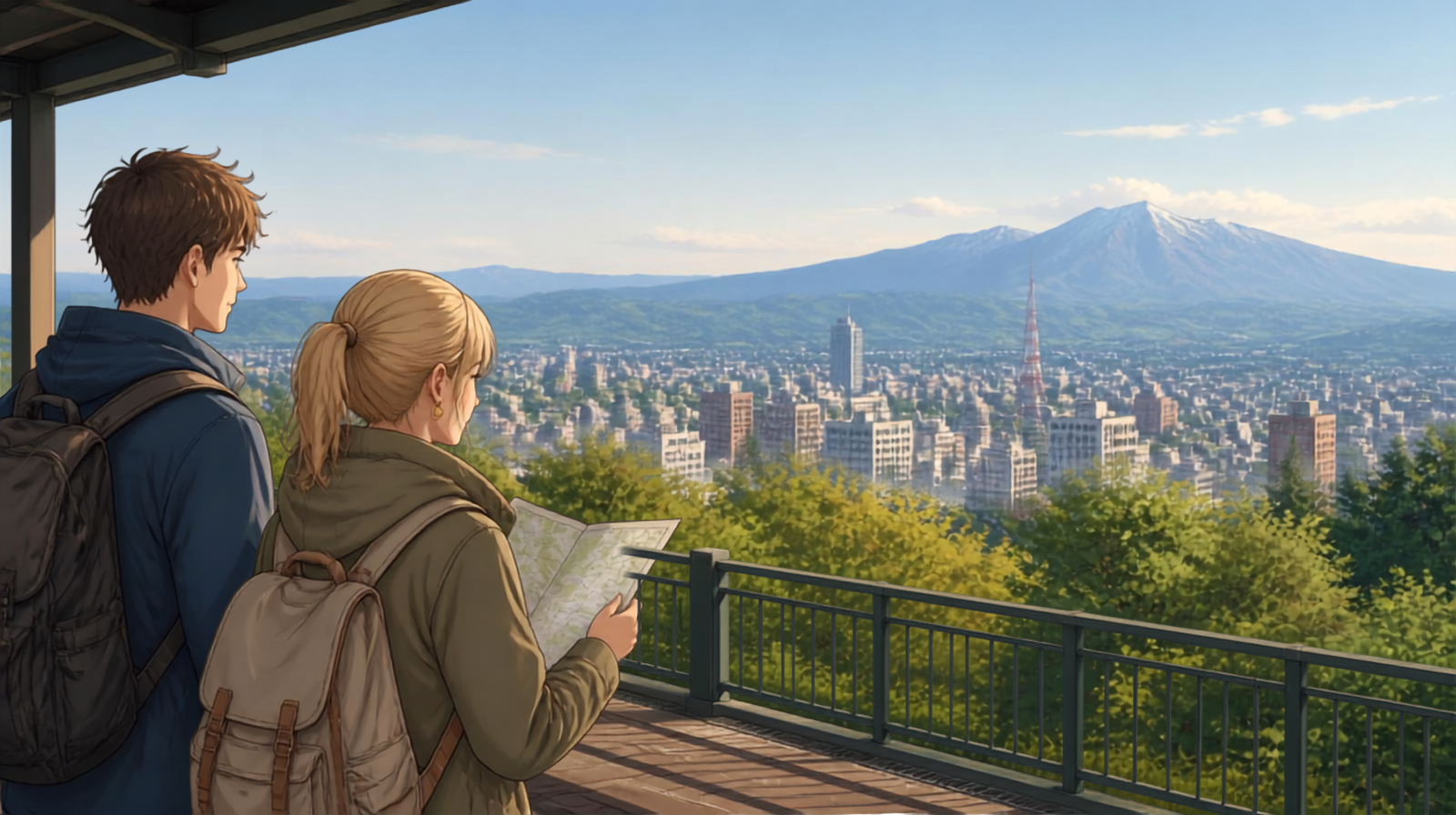
大雪山 / Daisetsuzan / Daisetsuzan in Hokkaido is one of the clearest September exceptions to the late-summer pattern seen farther south.
High areas around 旭岳 / Asahidake / Mt. Asahidake can begin changing color from late August into early September, and some high-elevation locations can already show strong autumn color by mid-September. Timing varies considerably by elevation and year. This is real early autumn, not simply a cooler version of summer.
Do not extend that expectation to the whole island. Hokkaido is large, and lower-elevation cities and coastal areas change later than the mountains.
Sapporo: Cooler, but Not the Same as High-Mountain Autumn
札幌 / Sapporo / Sapporo is much cooler than Tokyo, Kyoto, or Osaka in September, which can make walking and sightseeing more comfortable.
However, visiting Sapporo in September is not the same as visiting Daisetsuzan for early foliage. Choose Sapporo because you want the city and Hokkaido experience, not because you expect peak autumn color across the urban area.
Tokyo, Kyoto, and Osaka: Keep the Classic Route, but Treat It as Late Summer
Tokyo, Kyoto, and Osaka generally remain warm and green through much of September. Keep them if they are already central to your first trip, but do not choose them for autumn foliage—their stronger autumn colors come later.
Kyushu and Okinawa: Mostly Warm-Weather Travel
Most typical city itineraries in 九州 / Kyūshū / Kyushu remain warm in September, while 沖縄 / Okinawa / Okinawa is still firmly a subtropical warm-weather destination.
These regions can still be rewarding in September, but choose them for food, cities, islands, beaches, local culture, or regional travel rather than autumn foliage.
What to Wear in Japan in September
For most first-time city itineraries, pack primarily for warm weather. Add layers only where the route genuinely needs them.
| Route | Clothing Approach | Useful Extras |
|---|---|---|
| Tokyo / Kyoto / Osaka | Breathable tops, light trousers, skirts or shorts depending on preference, and comfortable walking shoes | Compact umbrella, light rain layer, and one light layer for air-conditioned interiors or cooler evenings |
| Sapporo | Light daytime clothing with a jacket, overshirt, or sweater available for cooler mornings and evenings | Closed walking shoes and an extra layer if staying out late |
| Daisetsuzan / high mountain areas | Warmer layers appropriate for mountain conditions rather than city temperatures | Weather protection and suitable footwear for the specific route |
| Kyushu / Okinawa | Summer-weight clothing remains the practical default | Rain protection, sun protection, and breathable footwear |
If the itinerary combines a hot city route with high-elevation Hokkaido, pack for two different climates rather than expecting one September outfit to work everywhere.
Late-September Holidays Can Change Demand
September includes two national holidays that can affect domestic travel demand: 敬老の日 / Keirō no Hi / Respect for the Aged Day, held on the third Monday of September, and 秋分の日 / Shūbun no Hi / Autumnal Equinox Day, whose exact date is set each year.
When the calendar creates a cluster of holidays around these dates, you may see the period called シルバーウィーク / Shirubā Wīku / Silver Week. It is not a fixed long holiday every year, so the practical impact depends on the calendar.
Depending on the calendar, these holidays can create a longer break or a busier travel period. They do not mean Japan shuts down, but popular trains, flights, roads, and accommodation can see stronger demand.
If your dates fall in the second half of September, check that year’s Japanese holiday calendar before assuming transportation and hotels will behave like an ordinary weekday.
Where You Stay Matters When Heat and Rain Linger
When heat and rain linger, accommodation convenience can directly change how tiring the trip feels.
A stay with a short walk from the station, nearby restaurants, a convenience store, or cafés can make it easier to return during the hottest or wettest part of the day. It also reduces the pressure to keep moving simply because you are already far from the place where you are staying.
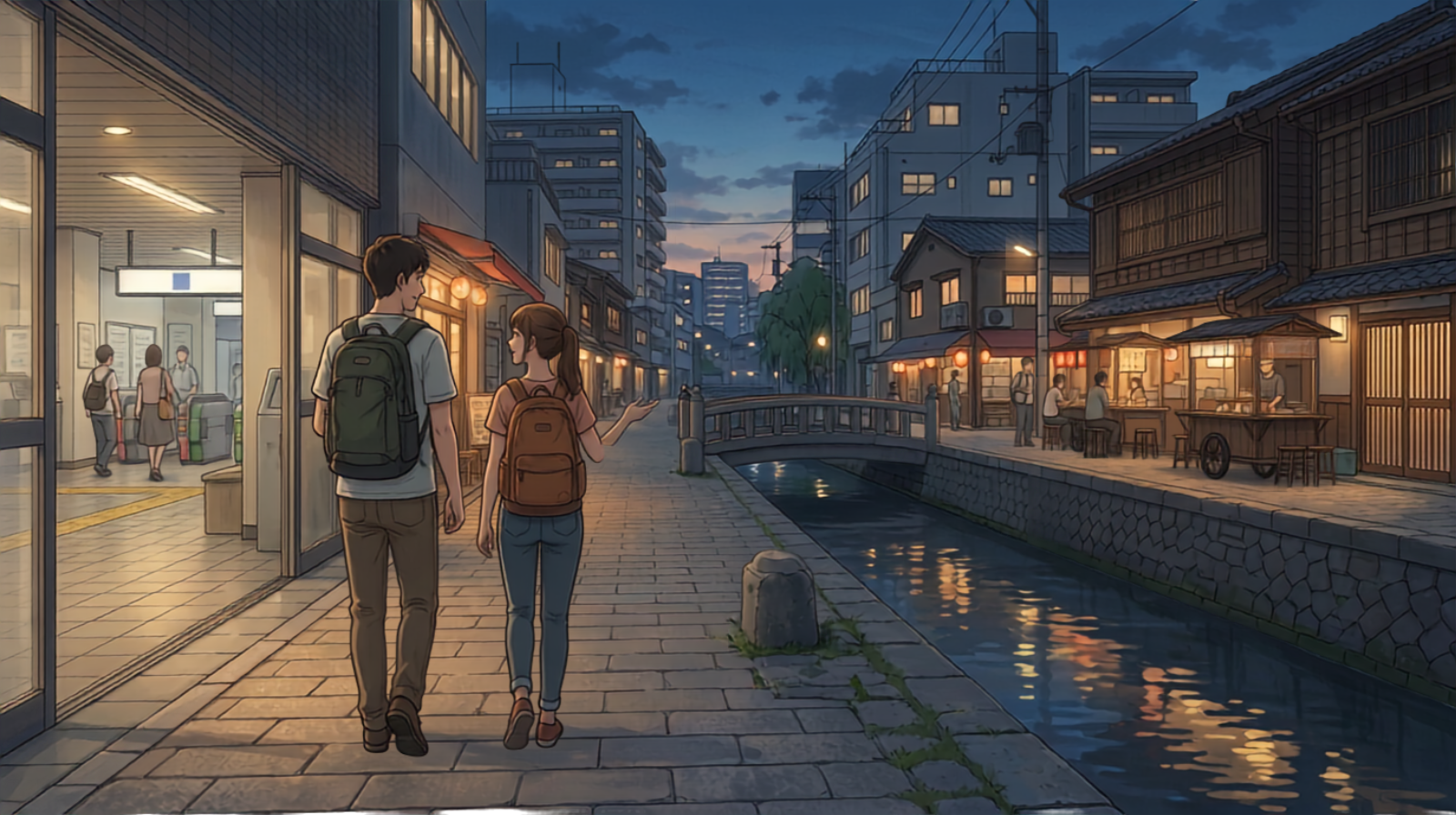
In a walkable neighborhood, the evening can become the most comfortable part of the day. Dinner nearby, a short shopping street, a river, a local park, or simply a quieter walk after the temperature drops can feel more appealing than adding another cross-city journey.
What September Is Good For
September works best when you choose it for what the month actually offers rather than expecting the cooler autumn conditions associated with October or November.
- Classic Tokyo, Kyoto, and Osaka trips with a slower, heat-aware daily pace
- Early-autumn scenery in high-elevation Hokkaido
- Regional travel that combines very different climates in one trip
- Warm-weather travel in Kyushu or Okinawa
- Travelers who are comfortable building some weather flexibility into the itinerary
If cooler city weather is more important than keeping September dates, our Japan in October guide may be a better fit for comparing the next stage of the season.
A Practical September Plan
Planning becomes much easier once you stop treating September as a standard cool-weather autumn trip.
- Assume late-summer conditions for the classic city route. Pack and pace the day for heat first.
- Use geography deliberately if you want autumn. Choose a specific high-elevation or northern destination rather than expecting the whole country to cool at once.
- Leave room for weather changes. Avoid making every transfer and reservation depend on perfect conditions.
- Choose accommodation that makes breaks easy. A useful neighborhood and short station walk can matter more in September than squeezing in one extra attraction.
A good September trip does not need to look like autumn everywhere. It works when the route accepts late summer where it remains and uses northern or higher destinations only when you genuinely want the season to change.
Frequently Asked Questions
- Is September a good month to visit Japan?
-
Yes, if you are comfortable with warm weather and some weather uncertainty. Tokyo, Kyoto, Osaka, and Fukuoka can still feel like late summer, while high-elevation Hokkaido can already offer early-autumn conditions.
- Is Japan still hot in September?
-
Often, yes. Long-term September average highs are 27.5°C in Tokyo, 29.2°C in Kyoto, 29.5°C in Osaka, and 28.6°C in Fukuoka. Individual days can be hotter.
- Can you see autumn leaves in Japan in September?
-
Yes, but mainly in colder and higher areas. Daisetsuzan in Hokkaido is one of the best-known early examples, while Tokyo, Kyoto, and Osaka generally do not offer their main autumn foliage in September.
- What should I wear in Japan in September?
-
For Tokyo, Kyoto, Osaka, and much of Kyushu, pack breathable summer-weight clothing and comfortable walking shoes, plus rain protection and a light layer. Hokkaido and mountain areas may require warmer clothing.
- Are typhoons common in Japan in September?
-
September is one of the months when typhoons can affect Japan. Keep some flexibility in the itinerary and check official weather and transportation information if a storm approaches.
- Does Hokkaido feel like autumn in September?
-
Some parts do, especially high-elevation areas such as Daisetsuzan, where foliage can begin early. Sapporo is cooler than Tokyo or Osaka, but the whole island should not be treated as peak autumn at the same time.
- Is Japan crowded in September?
-
September is not uniformly crowded, but late-month national holidays can increase domestic travel demand depending on the calendar. Check your exact dates if you plan long-distance transport or stays in popular destinations.