Spring in Japan Is More Than Cherry Blossoms
桜 / Sakura / Cherry blossoms are the best-known image of spring in Japan, but they are only one stage of a season that lasts for months.
Before the main cherry-blossom period, 梅 / Ume / Plum blossoms and other early flowers can appear while mornings and evenings are still cold. After the best-known cherry trees have finished, 藤 / Fuji / Wisteria, azaleas, and 新緑 / Shinryoku / Fresh green leaves can continue to change gardens, temple grounds, riversides, parks, and ordinary neighborhoods.
This matters because a spring trip does not become a failure if the cherry blossoms are earlier or later than expected. The season still offers different reasons to spend time outdoors, walk more slowly through a neighborhood, or choose a stay where the surroundings are worth enjoying in the morning and evening.
If your dates are still flexible and you are comparing spring with other seasons, our Best Time to Visit Japan: A Season-by-Season Guide explains the broader trade-offs between spring, summer, autumn, and winter.
When Is Spring in Japan?
For practical travel planning, March, April, and May are the main spring months. They should not be treated as interchangeable.
| Month | How It Often Feels | Seasonal Character | Main Planning Point |
|---|---|---|---|
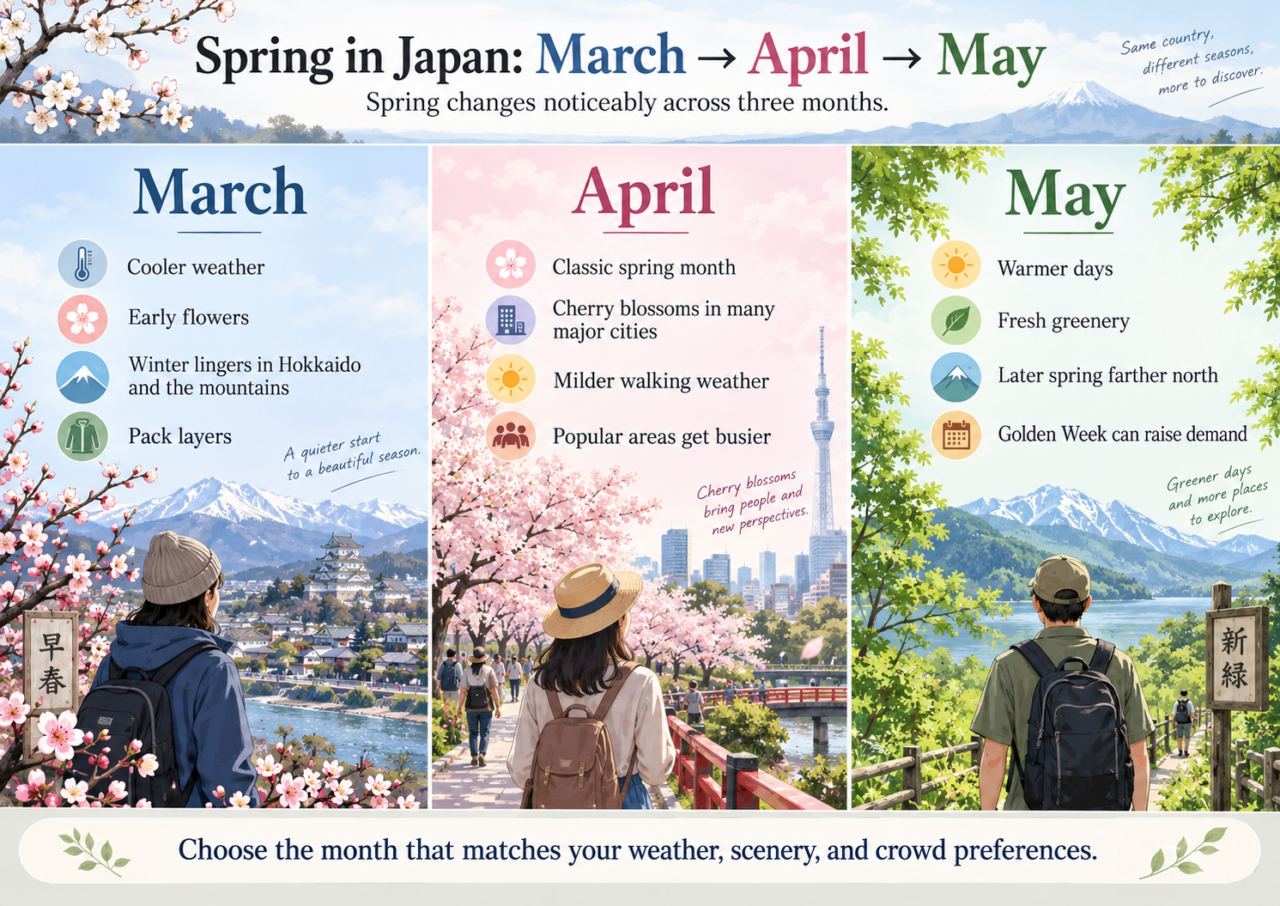
| March | Cool to mild in many cities, colder in northern and mountain regions | Early flowers, late winter in colder areas, spring beginning unevenly | Pack layers and do not assume cherry blossoms will define the whole trip |
| April | Milder in many major first-trip destinations | Cherry blossoms in many regions, spring gardens, comfortable outdoor days | Flower timing and accommodation demand can matter more than the weather itself |
| May | Warmer and increasingly comfortable for long days outside | Fresh greenery, later spring in northern areas, flowers beyond cherry blossoms | Golden Week can sharply change demand, while mid- to late May often feels very different |
March: Spring Begins Unevenly
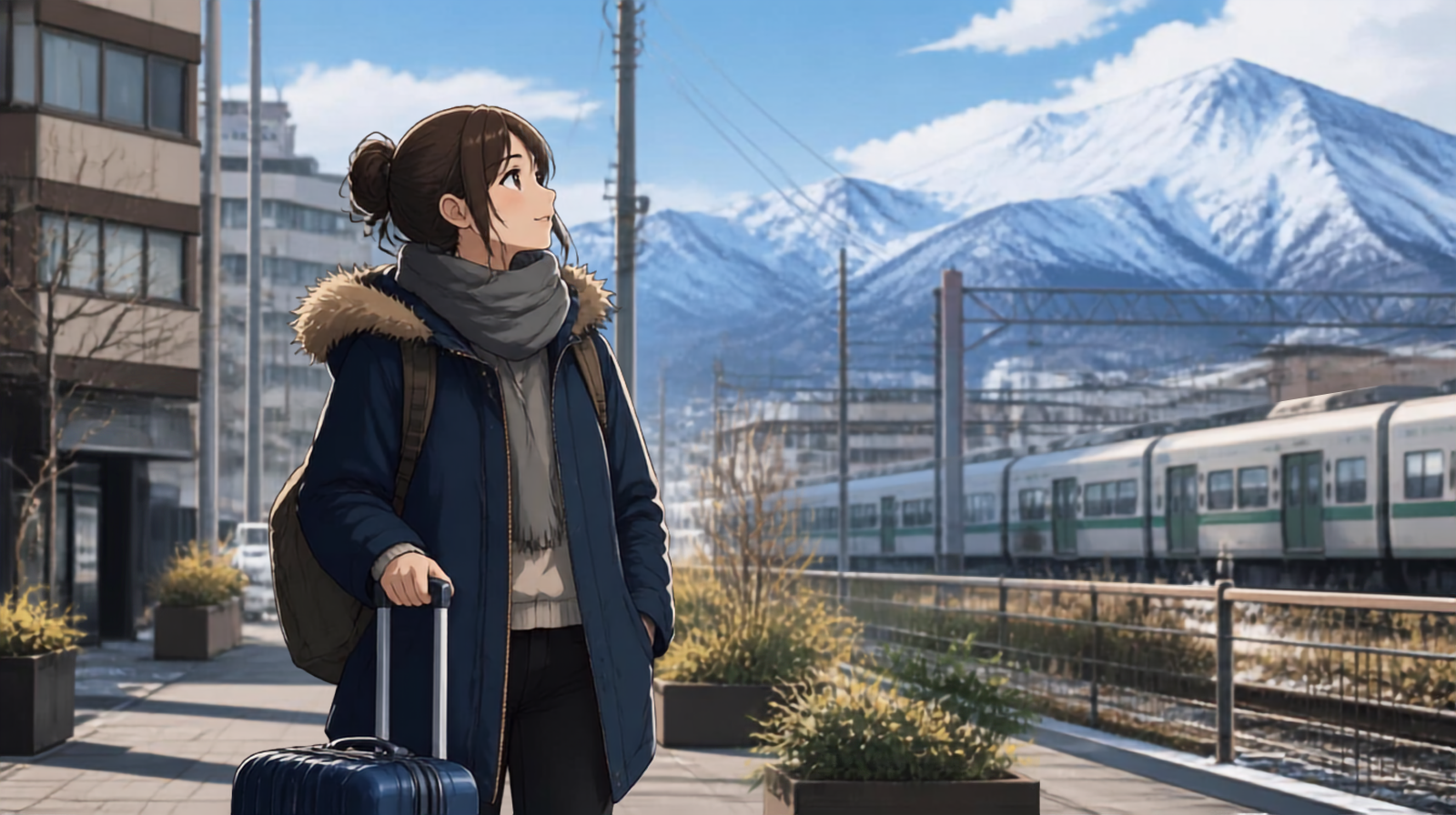
March is a transition month. In 東京 / Tōkyō / Tokyo, 京都 / Kyōto / Kyoto, 大阪 / Ōsaka / Osaka, and 福岡 / Fukuoka / Fukuoka, daytime conditions may become noticeably milder, but cold mornings and evenings are still normal. In northern Japan and mountain areas, winter conditions can remain much more visible.
For travelers, March is less about assuming “spring has arrived” and more about accepting that different parts of Japan are entering the season at different speeds.
April: The Classic Spring Month
April is the month that most closely matches the international image of spring in Japan. Major cities often have milder walking weather, flowers become part of everyday streets and parks, and cherry blossoms may be an important part of the trip depending on the year and region.
It is also one of the periods when popular sightseeing areas can become busy and accommodation demand can rise, so the advantage of April is not that everything is easy. It is that the seasonal atmosphere is unusually visible in places many first-time visitors were already planning to see.
May: Fresh Greenery and Warmer Days
By May, much of central and western Japan has moved beyond the best-known cherry-blossom period. That does not mean spring is over.
Fresh leaves become more prominent, gardens and mountain scenery turn greener, and warmer temperatures can make long outdoor days easier. Northern Japan can still be at a later stage of the season, so May can also work for travelers who want spring scenery without building the entire trip around the main Tokyo or Kyoto blossom period.
How Spring Moves Across Japan
Spring does not arrive nationwide at the same time.
Warmer southern and low-elevation areas generally move into spring earlier, while colder northern regions and high elevations change later. This is true for temperature, vegetation, and many types of seasonal flowers.
Cherry blossoms are the clearest example. For the main spring cherry-blossom season followed by most travelers, flowering generally progresses from warmer parts of Japan toward colder northern regions, which is why one traveler can see petals falling in one city while another part of the country is still waiting for its main bloom.
The same principle is useful even if cherry blossoms are not your main goal. A March trip in Fukuoka can feel very different from a March trip in 北海道 / Hokkaidō / Hokkaido, and a May trip in 札幌 / Sapporo / Sapporo can feel different from May in Osaka or 那覇 / Naha / Naha.
What Is the Weather Like in Spring?
Spring becomes warmer month by month, but regional differences remain large. The table below shows long-term mean temperatures from the Japan Meteorological Agency for March, April, and May.
| Destination | March Mean | April Mean | May Mean |
|---|---|---|---|
| 札幌 / Sapporo / Sapporo | 1.1°C | 7.3°C | 13.0°C |
| 東京 / Tōkyō / Tokyo | 9.4°C | 14.3°C | 18.8°C |
| 京都 / Kyōto / Kyoto | 8.8°C | 14.4°C | 19.5°C |
| 大阪 / Ōsaka / Osaka | 9.9°C | 15.2°C | 20.1°C |
| 福岡 / Fukuoka / Fukuoka | 10.8°C | 15.4°C | 19.9°C |
| 那覇 / Naha / Naha | 19.1°C | 21.5°C | 24.2°C |
Source: Japan Meteorological Agency climate normals (1991–2020). Kyoto values are from the JMA Kyoto observatory normals. These are long-term averages, not a forecast for a particular trip.
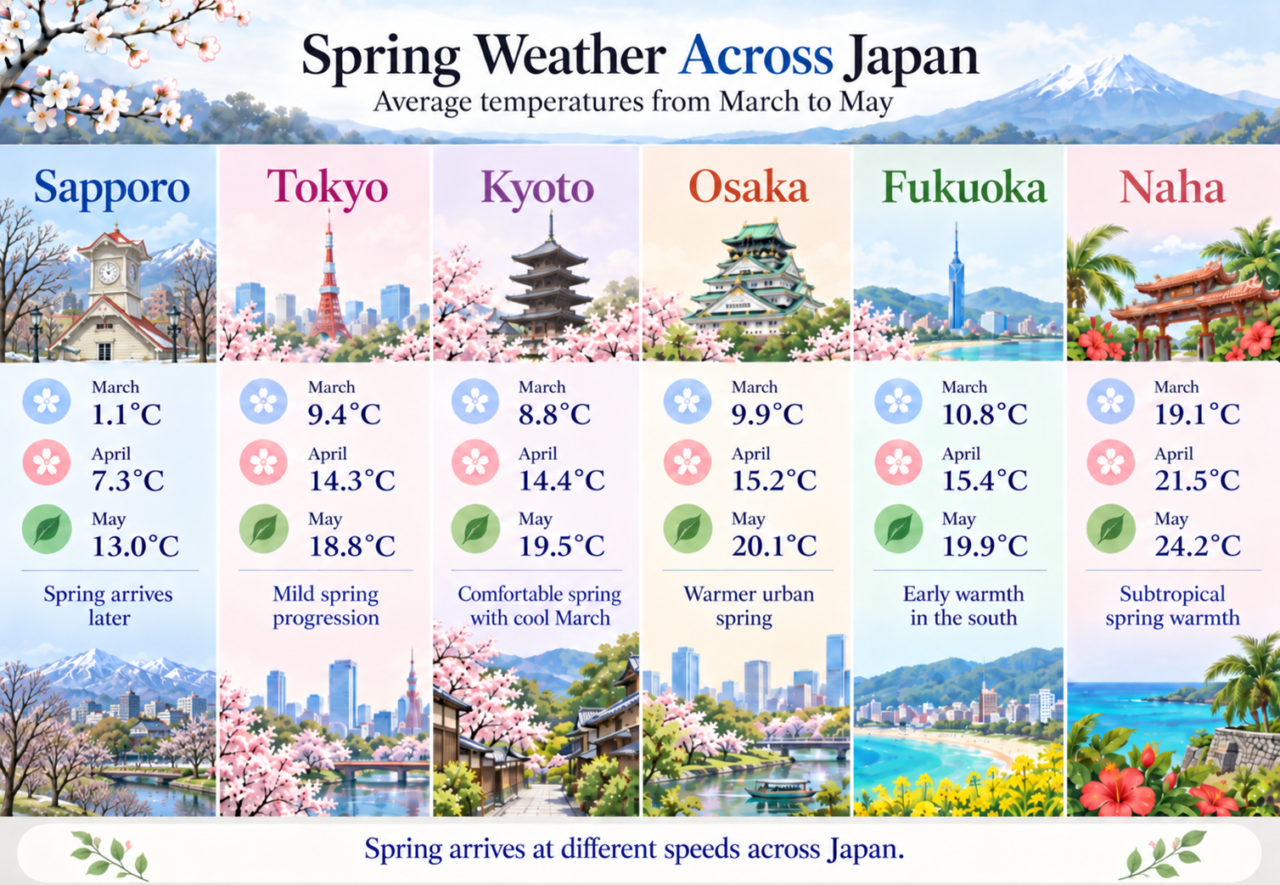
These numbers are useful because they show why “spring weather” is too broad a label. March in Sapporo and May in Osaka are not simply cooler and warmer versions of the same trip—they can require different clothing, walking plans, and expectations.
Cherry Blossoms: Plan for a Window, Not One Perfect Day
花見 / Hanami / Cherry blossom viewing can mean sitting beneath flowering trees, walking along a river, visiting a temple or castle ground, or simply noticing blossoms along a neighborhood street.
The main planning mistake is treating cherry blossoms as though one exact predicted date can guarantee the experience.
Bloom timing changes with the weather and differs by region and elevation. Wind and rain can also shorten the most photogenic period. A forecast is useful for fine-tuning a trip, but it should not force you to rebuild the entire itinerary around one predicted peak day.
If blossoms are a major priority, check an official or widely used seasonal forecast closer to departure. The Japan National Tourism Organization cherry blossom forecast page is one place travelers can check the seasonal progression when forecasts are available.
If blossoms are only one part of the trip, keep the cities and regions you genuinely want to visit and treat the flowers as a seasonal layer rather than the entire purpose of the journey.
Spring After the Cherry Blossoms
Spring does not end when the most famous cherry trees lose their petals.
Later in the season, wisteria, azaleas, fresh leaves, and greener mountain scenery can become more important than blossoms. Gardens and temple grounds often feel different again once the crowds associated with peak cherry-blossom viewing begin to ease.
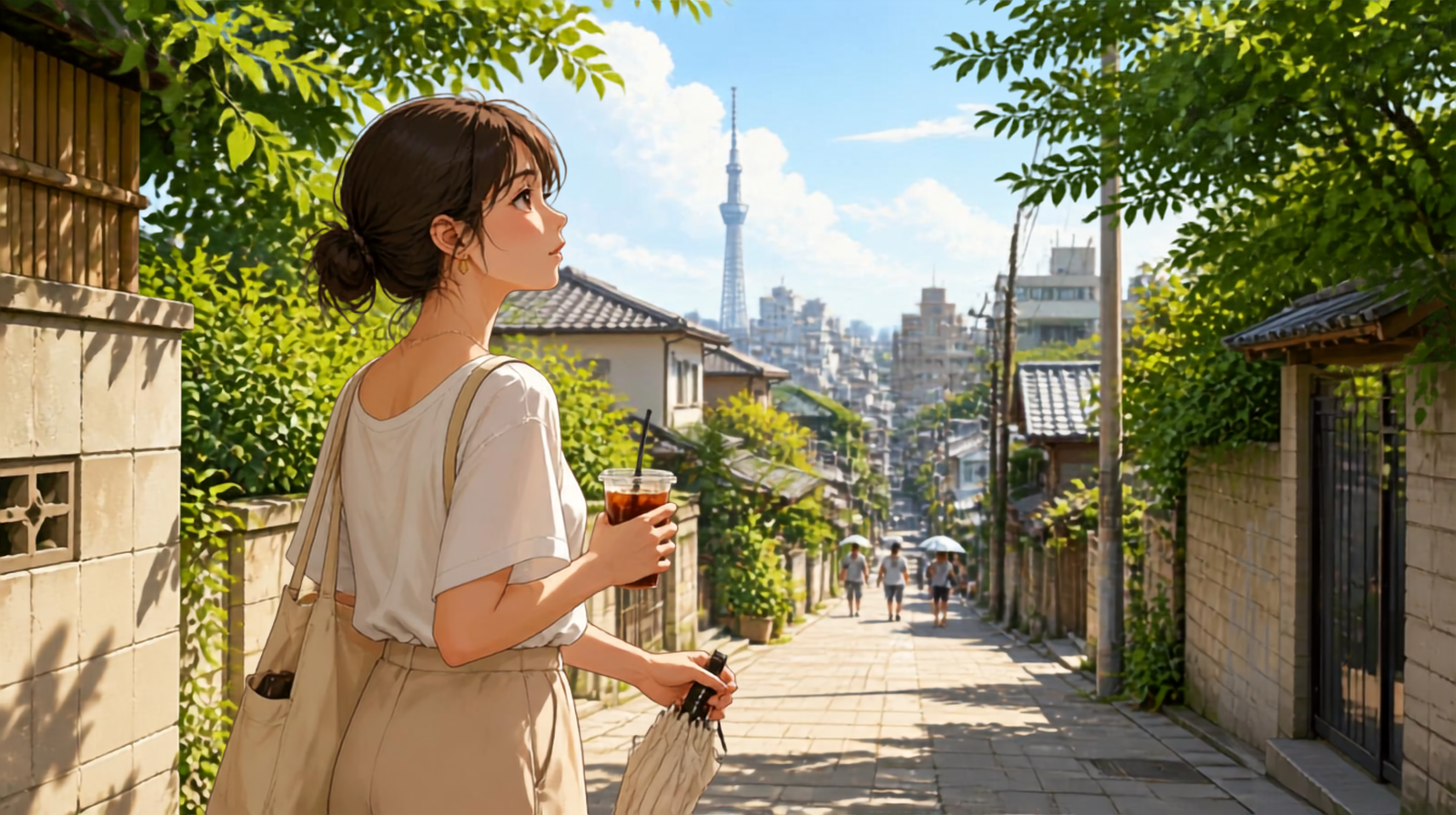
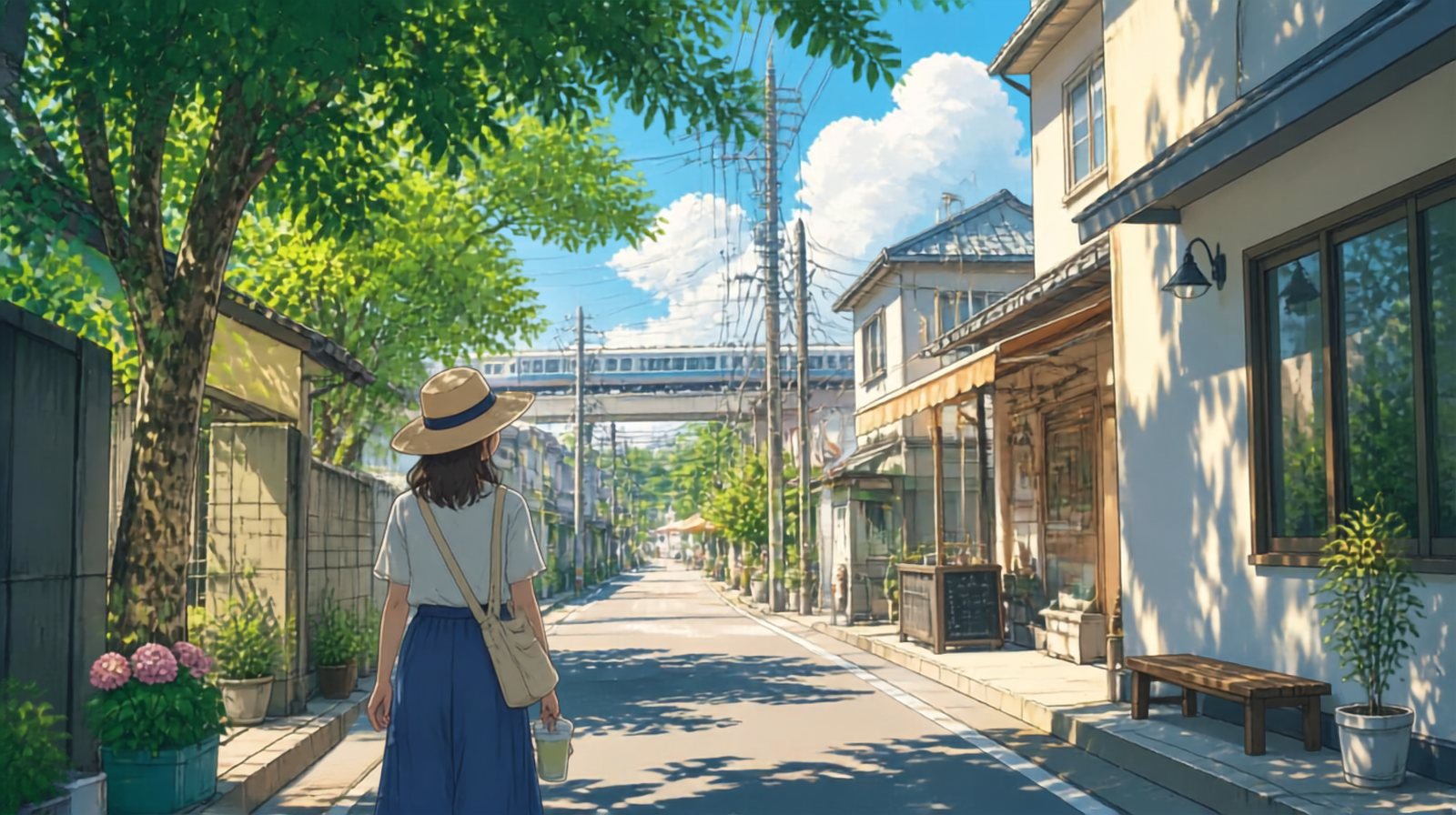
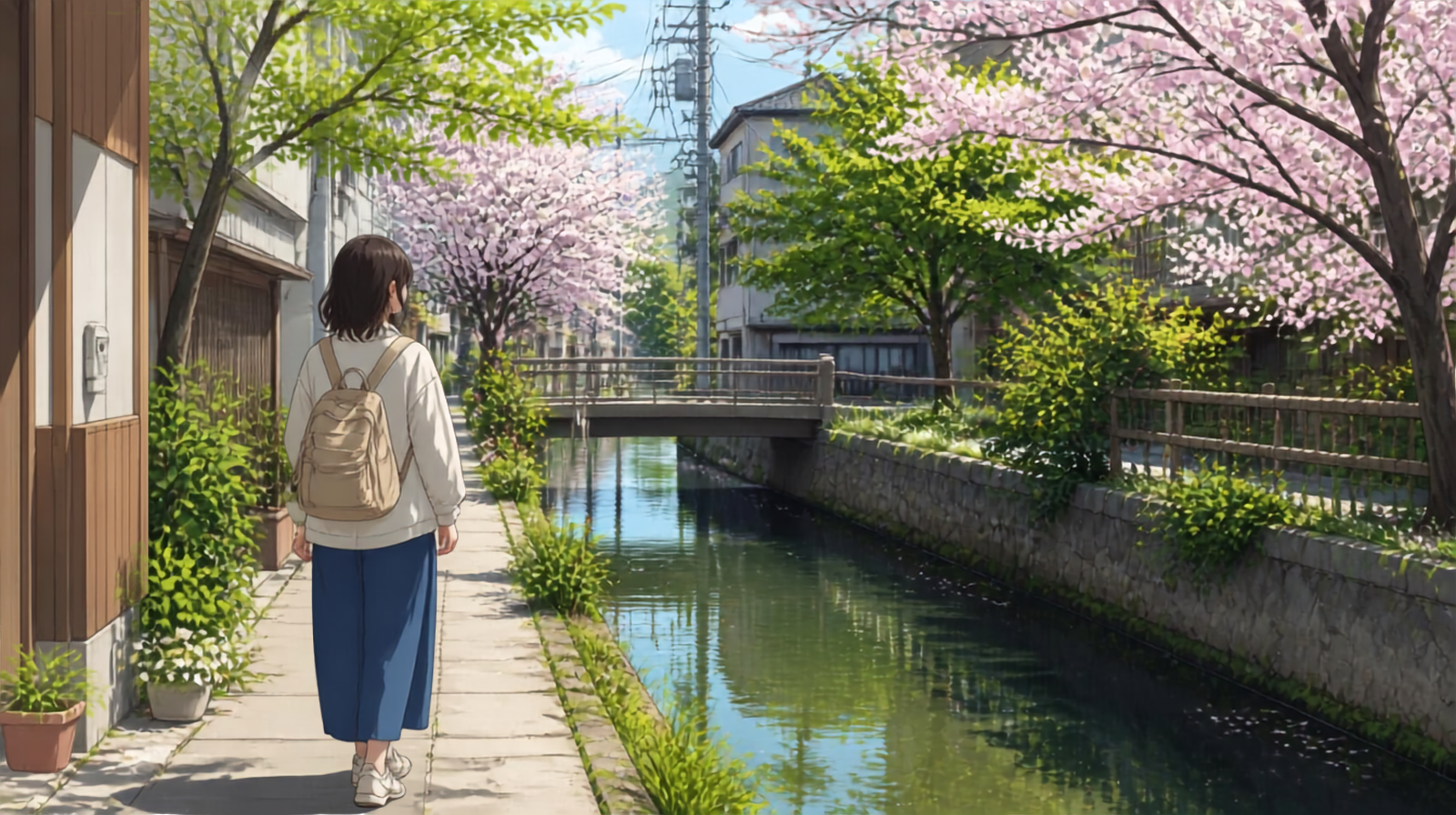
For a first-time visitor, this can be one of the easiest ways to experience Japan beyond sightseeing. A riverside path near your accommodation, a neighborhood park, a café with outdoor seating, or a morning walk through a residential area can become part of the spring experience without adding another famous attraction to the day.
Golden Week Changes the Travel Environment
Late April into early May includes ゴールデンウィーク / Gōruden Wīku / Golden Week, one of the most important domestic travel periods to understand when planning spring.
The holiday cluster includes 昭和の日 / Shōwa no Hi / Showa Day on April 29, followed by 憲法記念日 / Kenpō Kinenbi / Constitution Memorial Day on May 3, みどりの日 / Midori no Hi / Greenery Day on May 4, and こどもの日 / Kodomo no Hi / Children’s Day on May 5. Substitute holidays can extend the break depending on the calendar.
During this period, domestic demand for 新幹線 / Shinkansen / Bullet train seats, flights, highway buses, and popular accommodation can increase sharply, while roads can become more congested. Major sightseeing areas may also feel noticeably busier.
The practical response is not to avoid Japan automatically. If your trip overlaps Golden Week, reserve the parts of the trip that are difficult to replace—especially accommodation and important long-distance transport—earlier than you would for an ordinary spring weekday.
For official holiday dates, see the Cabinet Office national holiday calendar (Japanese).
Where to Go in Spring
The best destination depends less on a universal list of “top spring spots” and more on what stage of spring matches your dates.
For a Classic First Trip: Tokyo, Kyoto, and Osaka
Tokyo, Kyoto, and Osaka remain strong choices throughout spring. You do not need to replace the classic route simply because a different region may have a more advanced or later bloom.
What changes is the seasonal layer around the route: March may still feel cool, April may bring the strongest spring imagery, and May can be greener and warmer.
For Earlier Spring: Kyushu and Warmer Southern Areas
九州 / Kyūshū / Kyushu generally moves into spring earlier than northern Japan. This can make southern regions useful when your dates are in March and you want milder conditions or earlier seasonal change.
Elevation still matters. Mountain destinations can remain cooler than nearby cities, so “southern Japan” should not be treated as one uniform climate.
For Later Spring: Tohoku and Hokkaido
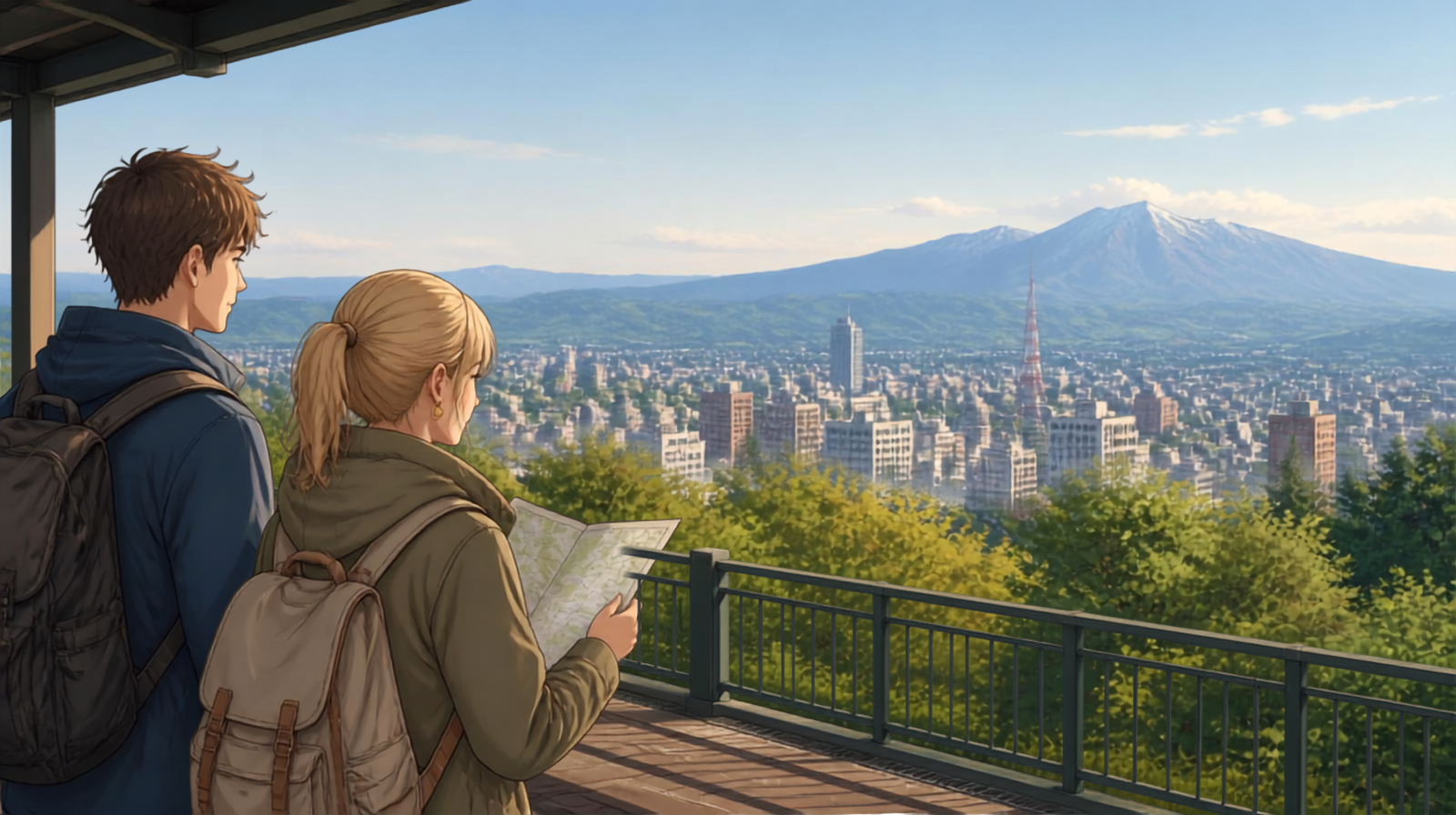
東北 / Tōhoku / Tohoku and 北海道 / Hokkaidō / Hokkaido are useful when you want to experience a later stage of spring.
March can still feel distinctly wintry in colder northern areas, while April and May gradually bring milder weather, blossoms, and fresh greenery later than in Tokyo, Kyoto, Osaka, or Fukuoka.
For Mountain and Rural Trips: Expect a Later Seasonal Clock
Higher elevations often lag behind nearby lowland cities. A mountain or 温泉 / Onsen / Hot spring stay can therefore feel like a different stage of spring from the city you left that morning.
This can be a benefit rather than a complication. Cooler air, later flowers, forest walks, and an evening bath can give the trip a different rhythm from city sightseeing.
Okinawa: A Different Kind of Spring
沖縄 / Okinawa / Okinawa is much warmer than mainland Japan through spring. Choose it for subtropical scenery, islands, beaches, food, and a different regional experience rather than because you expect the same March-to-May progression as Tokyo or Kyoto.
What Should You Wear in Japan in Spring?
Layers are more useful than trying to choose one “spring outfit” for the entire season.
| Travel Period | Practical Clothing Approach |
|---|---|
| March in major cities | Long sleeves, sweater or mid-layer, light-to-medium jacket, comfortable closed shoes |
| April in major cities | Light layers, long sleeves, light jacket for mornings and evenings, comfortable walking shoes |
| May in major cities | Lighter clothing for warmer days, plus one layer for cooler evenings, rain, or air-conditioned interiors |
| Northern or mountain areas | Pack for the coldest destination on your route; some March trips can still require winter-style layers |
| Okinawa | Much lighter clothing is usually practical, with sun and rain protection |
Spring rain is possible in every month, so a compact umbrella or light rain layer is useful. Comfortable shoes matter more than dressing formally because spring often encourages longer walks than expected.
How Accommodation Changes the Spring Experience
Spring is one of the seasons when the area around your accommodation can become part of the trip itself.
A famous cherry-blossom viewpoint may be crowded in the middle of the day, but a smaller riverside path, local park, shrine approach, or residential street near where you stay can be quiet early in the morning or after dinner.
This means location can be valuable for more than transportation. Before booking, ask whether the neighborhood gives you somewhere pleasant to walk, eat, sit outside, or notice seasonal change without making another cross-city trip.
During high-demand blossom periods and Golden Week, it can also be sensible to secure the stay that most affects your trip first, then keep lower-priority day plans more flexible.
Which Spring Month Is Best for Your Trip?
There is no single best spring month because each solves a different travel problem.
- Choose March if you are comfortable with cooler weather and like the idea of seeing Japan at the point where winter begins to loosen its grip.
- Choose April if classic spring scenery and cherry blossoms are a major priority and you are prepared for stronger demand around popular locations.
- Choose May if you prefer warmer weather, fresh greenery, and spring experiences beyond cherry blossoms—but check whether your dates overlap Golden Week.
The best choice is the month whose trade-offs suit your trip, not simply the month with the most famous seasonal image.
Planning a Spring Trip Without Chasing the Season
A strong spring itinerary usually starts with the places you genuinely want to visit, then uses the season to change how you experience them.
- Choose the month first. March, April, and May offer different weather, scenery, and demand patterns.
- Match expectations to the region. Southern and low-elevation areas move into spring earlier; northern and high-elevation areas change later.
- Use blossom forecasts as a planning aid, not a guarantee. Keep enough flexibility to enjoy the trip even if the flowers are earlier or later than expected.
- Protect the parts that are hardest to replace. During cherry-blossom demand and Golden Week, accommodation and important long-distance transport may deserve earlier booking.
- Leave time for ordinary spring. A neighborhood walk, local park, riverside path, café, or quiet morning near your accommodation can be as seasonal as a famous viewing spot.
Spring works best when the season adds depth to the trip rather than becoming a checklist of flowers to chase.
Frequently Asked Questions
- What months are spring in Japan?
-
March, April, and May are the main spring months for travel planning. Conditions vary significantly across the season, with March often still cool, April milder in many major cities, and May warmer and greener.
- What is the best month to visit Japan in spring?
-
It depends on your priorities. March suits travelers comfortable with cooler weather, April is strongly associated with classic cherry-blossom scenery, and May offers warmer weather and fresh greenery. Golden Week can make late April and early May much busier.
- When is cherry blossom season in Japan?
-
Timing varies by region, elevation, weather, and year. Warmer areas generally bloom earlier, while northern and higher areas bloom later. Treat forecasts as a planning aid rather than a guarantee.
- Is March cold in Japan?
-
It can be, especially in the morning and evening and in northern or mountain regions. Major cities such as Tokyo, Kyoto, Osaka, and Fukuoka are generally milder than midwinter but still require layers.
- Is Japan crowded during cherry blossom season?
-
Popular parks, temple districts, riversides, and accommodation areas can become busy when blossoms are at their best. Earlier starts, less famous neighborhood spots, and securing important accommodation in advance can make the trip easier.
- What is Golden Week in Japan?
-
Golden Week is a cluster of national holidays from late April into early May. Domestic travel demand can increase significantly, affecting transport, roads, accommodation, and major sightseeing areas.
- Is May still a good time to visit Japan after cherry blossoms?
-
Yes. Much of central and western Japan becomes warmer and greener, with fresh leaves and other flowers replacing the main cherry-blossom season. Northern Japan may still be at a later stage of spring.