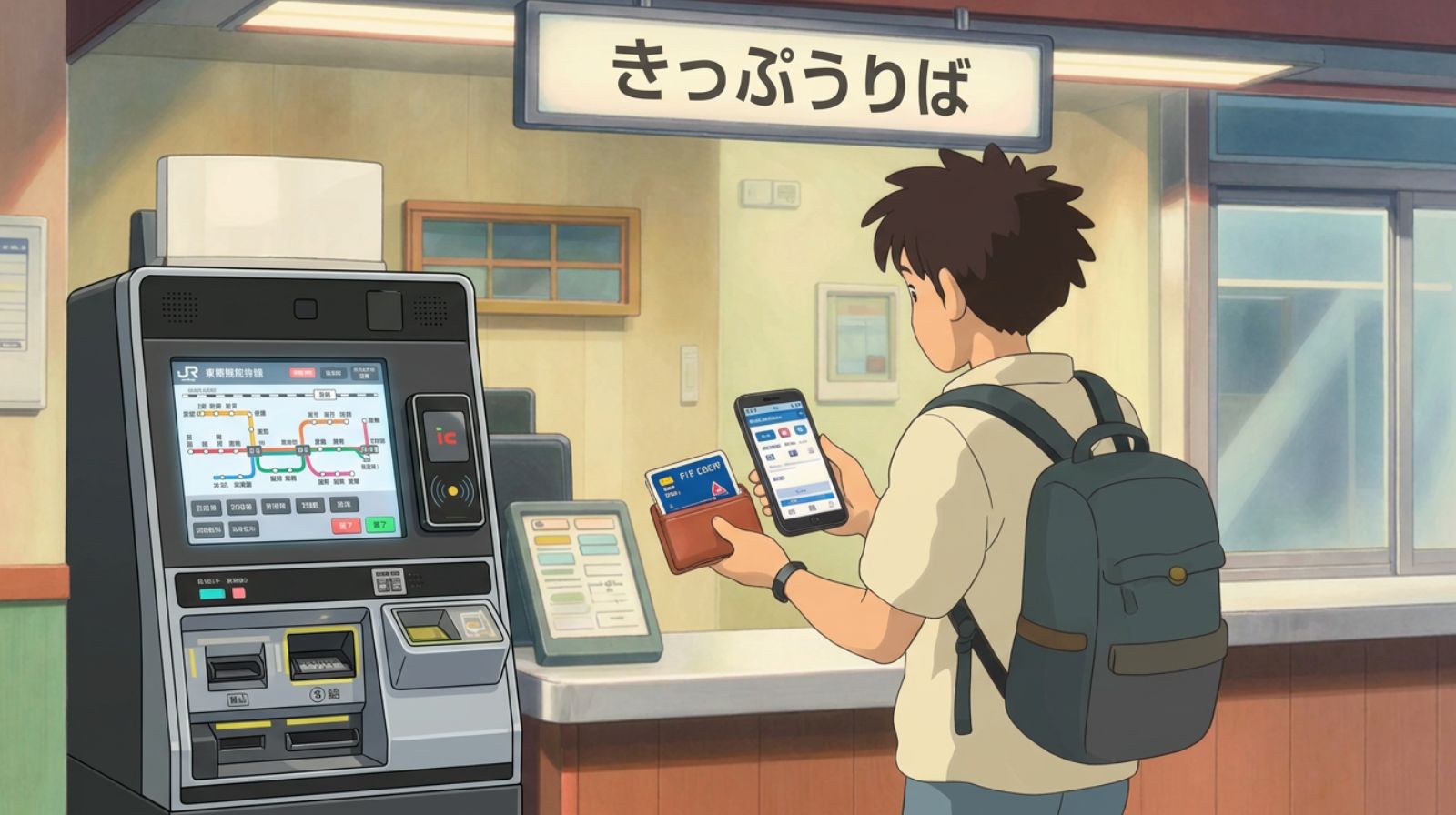
Which Payment Method Should You Use?
For most visitors, the simplest payment method depends on the type of journey rather than on one system that works everywhere.
| Travel Situation | Simplest Payment Method |
|---|---|
| Local trains and subways in major cities | IC card |
| One or two occasional local train journeys | IC card or individual paper ticket |
| Shinkansen travel between major cities | Shinkansen ticket or reservation |
| Limited express train | Basic fare plus the required limited express ticket or reservation |
| Rural railway without IC card support | Paper ticket or cash, depending on the railway |
| Participating contactless railway | Contactless credit or debit card may be available |
A Simple Strategy for First-Time Visitors
- Use an IC card for everyday local trains and subways.
- Arrange the required ticket or reservation for Shinkansen and limited express trains.
- Keep some cash for physical IC card top-ups, rural trains, and ticket machines that may not accept your card.
- Carry a backup payment method in case an overseas-issued credit card is declined.
Some rural and local services use different boarding and payment procedures. When there is no standard ticket gate, follow the signs, onboard instructions, and railway staff guidance for that service.
The rest of this guide explains why these payment methods differ and what to do in less common situations.
Option 1: IC Cards
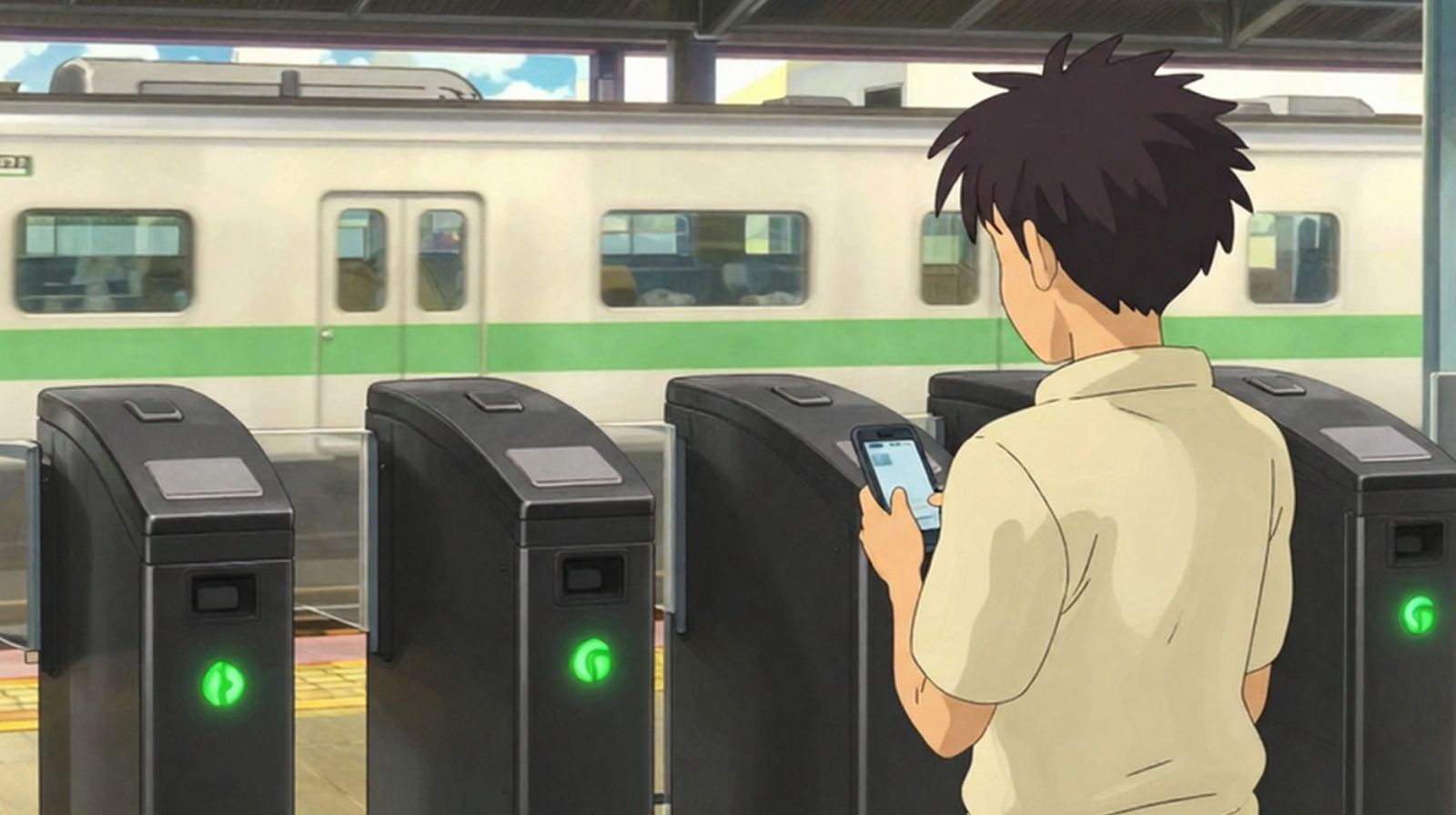
For most first-time visitors, an IC card is the easiest way to pay for local trains, subways, and many buses in Japan.
Common cards include:
- Suica
- PASMO
- ICOCA
Although the names differ by region, the major IC cards can be used interchangeably across many transportation networks in Japan.
How to Use an IC Card
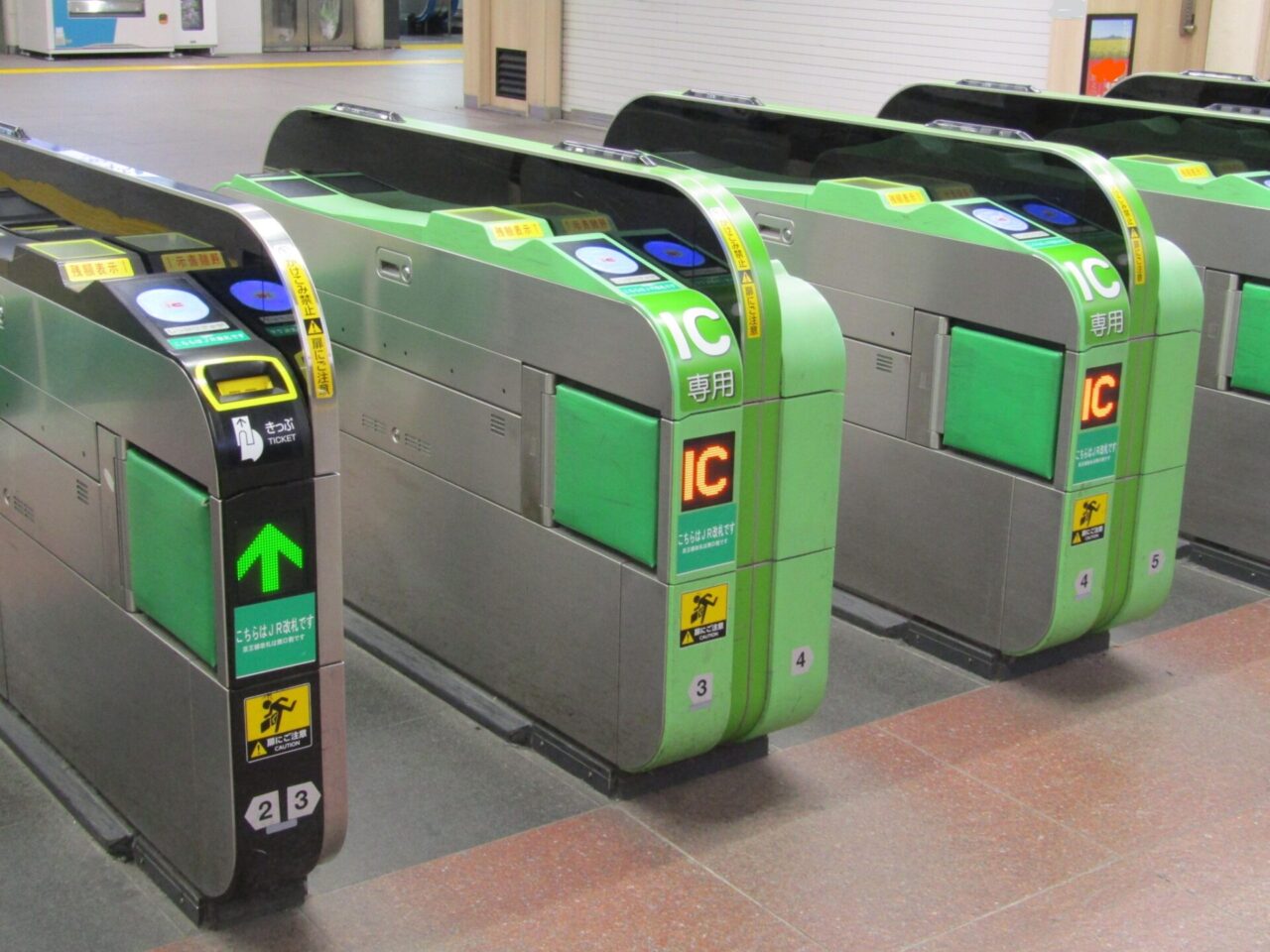
Add money to the card before traveling, then touch it to the IC card reader when entering and leaving the station.
You may see:
改札 / Kaisatsu / Ticket gate
チャージ / Chāji / Top up
The correct fare is normally deducted automatically when you leave the station.
Make sure the card has enough balance before entering or leaving. If the balance is too low, use a fare adjustment or top-up machine near the ticket gates.
When an IC Card Is the Best Choice
An IC card is particularly convenient when:
- Taking several local train or subway journeys
- Traveling within major cities
- Transferring between participating railway and subway operators
- Using buses that accept transportation IC cards
- Buying small items at participating shops and vending machines
You do not need to calculate the fare or purchase a separate paper ticket for each ordinary journey.
When an IC Card Is Not Enough
An IC card does not automatically cover every type of train journey.
You may need a separate ticket or reservation when:
- Riding the Shinkansen
- Using many limited express trains
- Traveling in a Green Car
- Traveling on a railway line that does not accept IC cards
- Crossing between separate IC card service areas
Some online reservation services allow you to link a Shinkansen or limited express reservation to a registered IC card. In this case, the card acts as the key for passing through the gate, but the journey must still be reserved and paid for through the relevant service.
Physical or Mobile IC Card?
Physical and mobile IC cards can both be used for everyday transportation where supported. The best option depends mainly on your phone, where your trip begins, and how you prefer to add money.
For detailed guidance on choosing, buying, setting up, and topping up Suica, PASMO, ICOCA, and mobile IC cards, read our guide to IC cards in Japan.
Option 2: Individual Paper Tickets
A paper ticket can be a practical choice when you are taking only a few train journeys, do not have an IC card, or are traveling on a railway line that does not accept transportation IC cards.
For an ordinary local or rapid train journey, the ticket covers the basic fare between your departure station and destination.
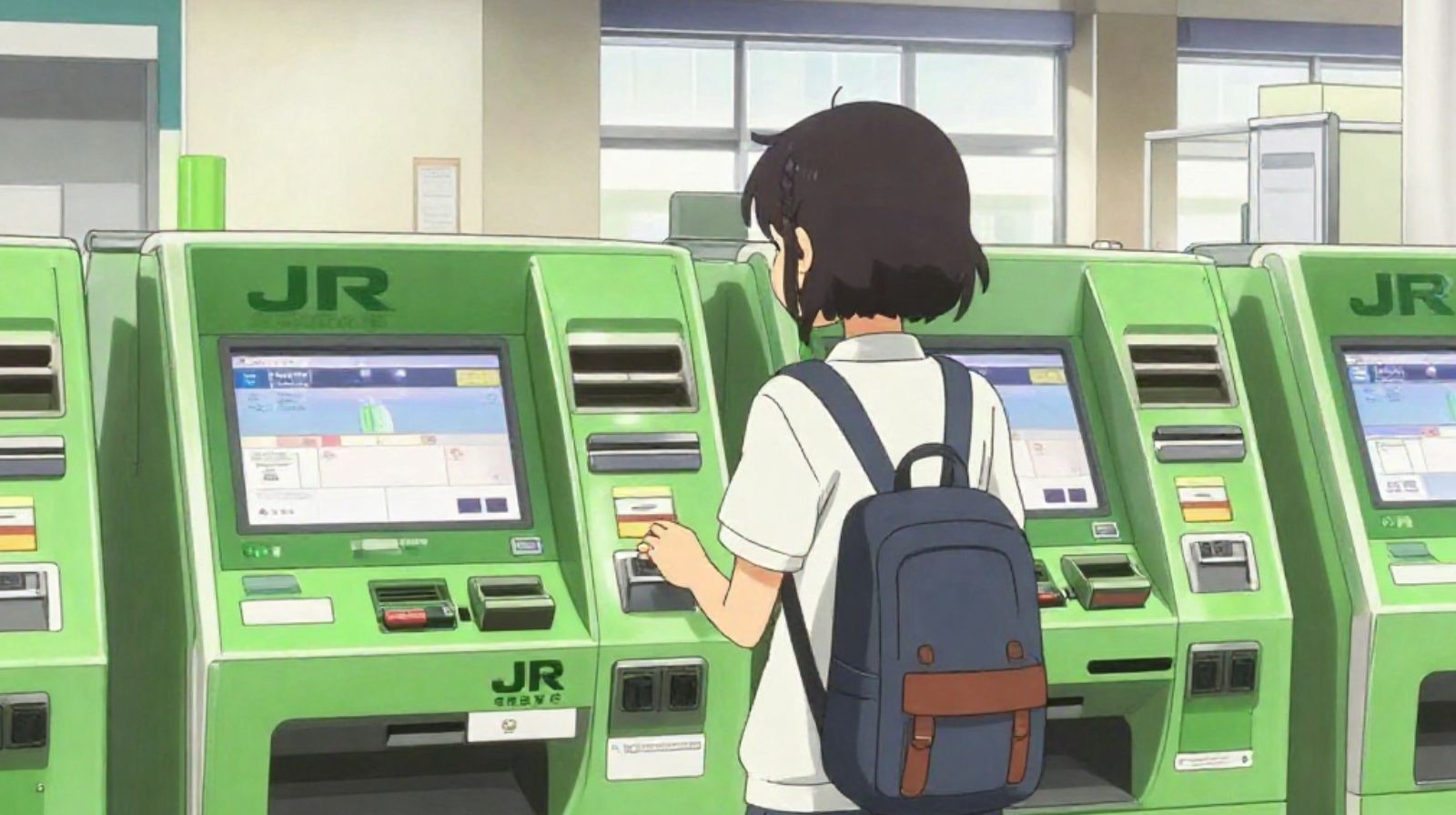
How to Buy a Paper Ticket
Paper tickets are usually sold from:
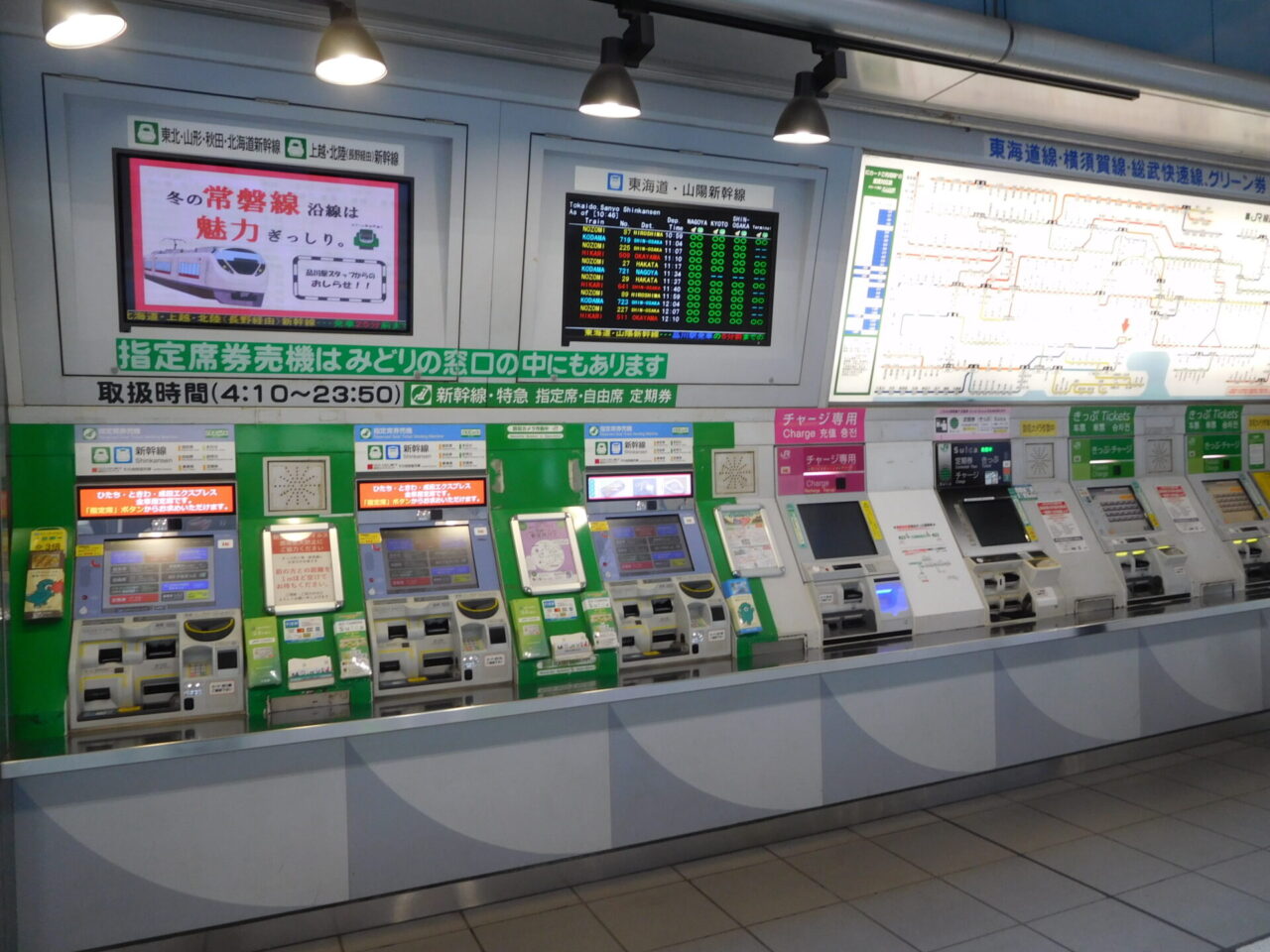
券売機 / Kenbaiki / Ticket vending machine
Machine layouts vary between railway companies, but many stations provide an English-language option.
The basic process is usually:
- Select English on the screen.
- Choose the option to purchase a regular ticket.
- Search for your destination or select the correct fare.
- Select the number of adults and children.
- Pay using one of the methods accepted by the machine.
- Collect the ticket and any change.
Some machines allow you to search for your destination by station name. At other stations, you may need to check the fare map above or near the machines and select the corresponding amount.
Payment options vary by railway company and machine. Do not assume that every machine accepts an overseas credit card, and keep some cash or another payment method available.
How to Use a Paper Ticket
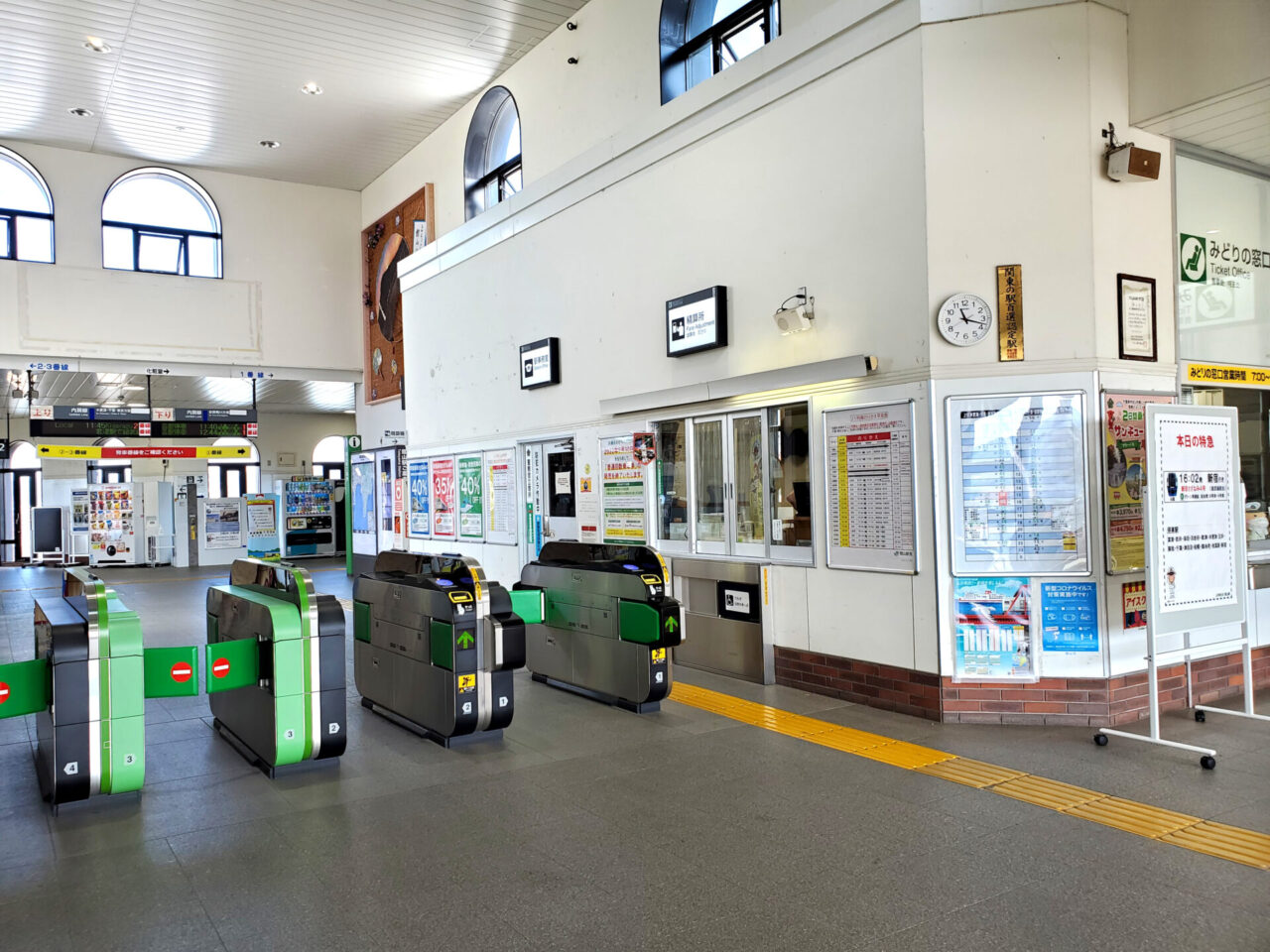
At the entrance gate, insert the ticket into the ticket slot and collect it as you pass through.
Keep the ticket throughout your journey. At your destination, insert it into the exit gate. A regular single-journey ticket is normally retained by the gate when your journey is complete.
You may see:
きっぷ / Kippu / Ticket
改札 / Kaisatsu / Ticket gate
If there is no automatic gate, show or hand your ticket to a station employee.
What If You Bought the Wrong Fare?
If you travel farther than the fare covered by your ticket, you normally pay the difference before leaving the station.
Look for:
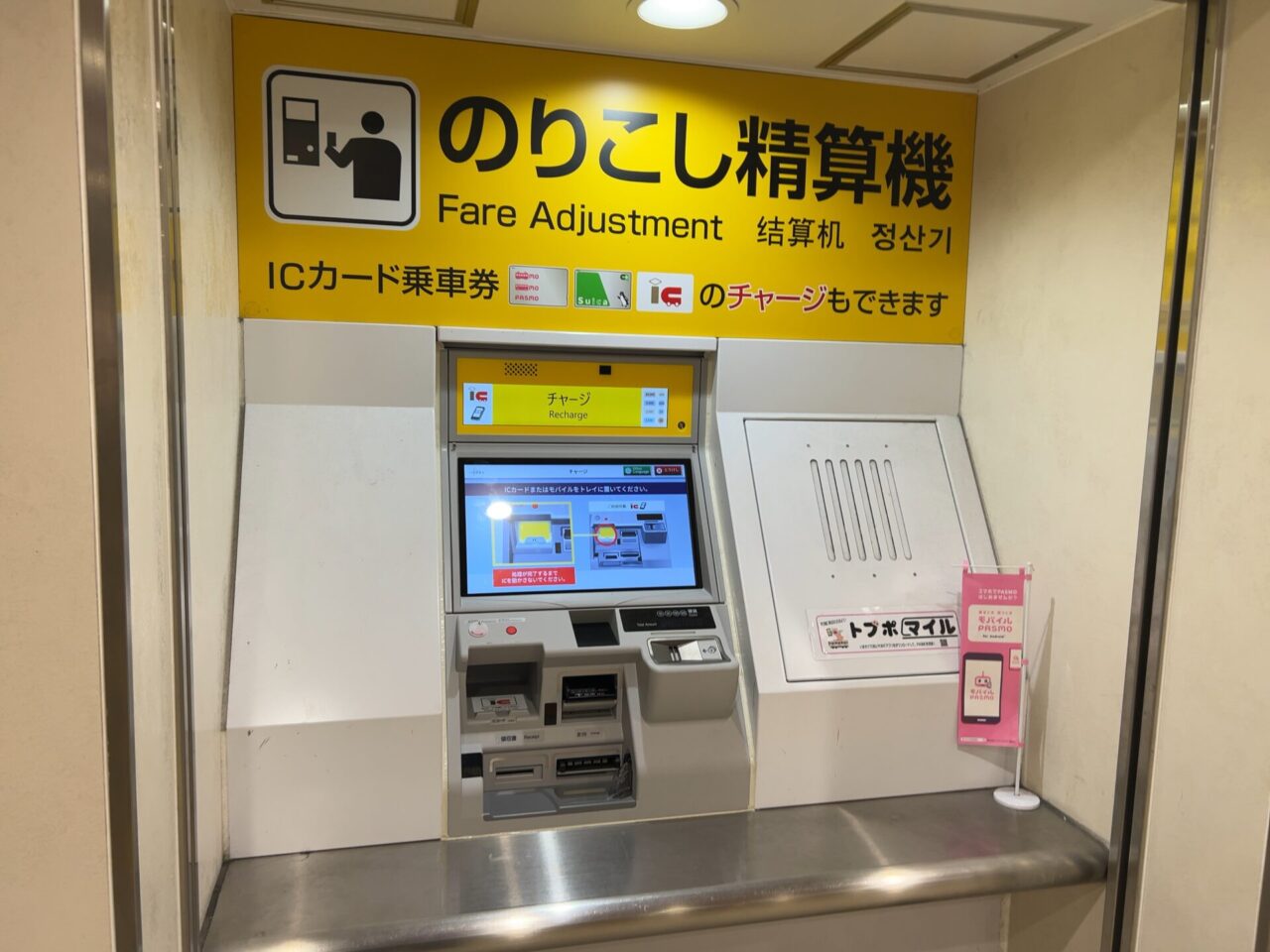
精算機 / Seisanki / Fare adjustment machine
Insert your ticket into the machine, pay the displayed difference, collect the adjusted ticket, and use it at the exit gate.
You can also ask station staff for help.
精算をお願いします。
Seisan o onegaishimasu.
I would like to adjust the fare, please.
If you think you purchased the wrong fare, ask station staff rather than assuming that any difference will be refunded automatically.
When a Paper Ticket Is Useful
A paper ticket may be the simplest choice when:
- You are making only one or two train journeys
- You do not want to purchase an IC card
- The railway line does not accept your IC card
- You need a ticket for a specific route or transfer
- Your IC card cannot be used across the full journey
For frequent urban travel, an IC card is usually more convenient because you do not need to buy a new ticket for every journey.
If you’re unfamiliar with Japan’s railway system, it’s helpful to understand how trains, subways, and ticket gates work before buying individual tickets.
→ How to Use Trains and Subways in Japan
Option 3: Shinkansen and Limited Express Tickets
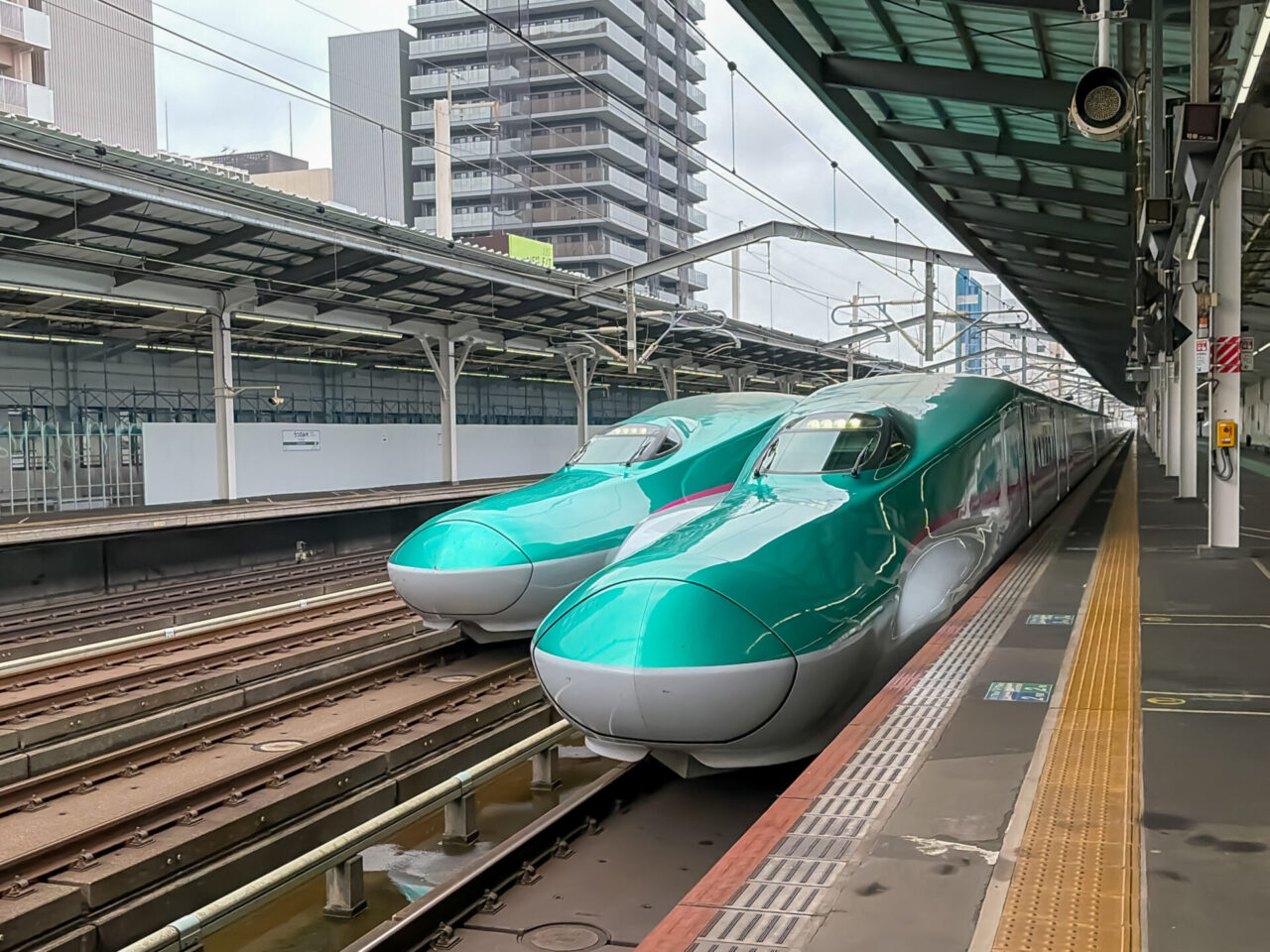
Shinkansen and limited express trains use an additional fare or ticket structure beyond the basic fare used for ordinary local and rapid trains.
For a Shinkansen journey, you normally need both:
- 乗車券 / Jōshaken / Basic fare ticket
- 新幹線特急券 / Shinkansen tokkyūken / Shinkansen limited express ticket
The basic fare covers the distance traveled. The Shinkansen limited express ticket covers the faster train service and, when applicable, your seat reservation.
These may be issued as one combined ticket or as multiple paper tickets. Keep everything issued by the ticket machine or counter until you have completed your journey.
When You Need a Shinkansen Ticket
A separate Shinkansen ticket or reservation is generally needed for journeys such as:
- Tokyo Station to Kyoto Station
- Tokyo Station to Shin-Osaka Station
- Shin-Osaka Station to Hiroshima Station
- Tokyo Station to Sendai Station
- Hakata Station to Kumamoto Station
An ordinary local train ticket or a standard IC card balance does not automatically include the Shinkansen fare.
How to Buy Shinkansen Tickets
You can purchase Shinkansen tickets:
- From a compatible ticket machine at a JR station
- At a staffed JR ticket counter
- Through an official online reservation service
The correct online service depends on the route and the JR company operating the train.
When purchasing, you may need to choose:
- Travel date and departure time
- Train service
- Reserved or non-reserved seating
- Ordinary Car or Green Car
- Number of adults and children
- Preferred seat
- Oversized luggage space, when required
What About Limited Express Trains?
Many limited express trains also require an additional ticket or reservation beyond the basic fare.
You may see:
特急券 / Tokkyūken / Limited express ticket
Depending on the railway and train, you may pay the basic fare with an IC card or ordinary ticket and purchase the limited express portion separately. Reserved-seat services may include the seat reservation in the additional ticket.
The exact ticketing method varies by operator and service, so check the train details before boarding rather than assuming that an IC card alone covers the journey.
Can You Use an IC Card for the Shinkansen?
A regular IC card does not work as a universal Shinkansen ticket. Depending on the line and service, you may need a separate Shinkansen ticket, a reservation linked to your IC card, or an eligible IC-based service.
When a reservation is linked to an IC card, the card may be used to pass through the gate, but the required Shinkansen journey still needs to be arranged through the relevant ticketing or reservation service.
For most first-time visitors, buying or reserving the Shinkansen journey through an official ticket machine, counter, or online service is the simplest approach.
For detailed guidance on ticket machines, online booking, seat choices, luggage rules, and advance reservations, read our Shinkansen ticket guide.
Can You Pay for Train Travel With a Credit Card?
Yes, but credit card acceptance depends on the railway company, ticket type, and payment method.
You may be able to use a credit card to:
- Buy Shinkansen and limited express tickets
- Make reservations through an official online service
- Purchase certain railway passes
- Pay directly at contactless-enabled ticket gates on participating railway lines
However, you should not assume that every local ticket machine, railway line, or IC card top-up machine accepts an overseas-issued credit card.
Buying Train Tickets With a Credit Card
Many major JR stations have compatible ticket machines or staffed counters that accept credit cards for Shinkansen, limited express, and reserved-seat tickets.
Online reservation services also accept credit cards, although supported card brands, authentication procedures, and overseas-issued card acceptance vary by service.
If a card payment is declined, try another card or purchase the ticket at the station using an accepted payment method.
Using a Contactless Credit or Debit Card at the Gate
Some railway companies allow passengers to enter and exit by tapping a contactless credit, debit, or prepaid card at a compatible ticket gate.
For example, Tokyo Metro’s Tap to Ride Service is available across its network and supports transfers with participating railway operators in the Kanto region, subject to station and route conditions.
Look for a contactless payment reader and the supported card brand logos at the gate. Use the same physical card or smartphone when entering and leaving.
Contactless bank card travel is not available on every railway line. Transfer coverage, supported stations, and fare rules can differ by operator, so do not assume that the same card-tap journey will work throughout Japan.
Can You Top Up an IC Card With a Credit Card?
Physical IC cards often need to be topped up with cash at station machines.
For example, JR East states that physical Suica cards cannot be topped up with a credit card at its ticket and fare adjustment machines.
Mobile IC cards may support credit card or mobile wallet top-ups, but availability depends on your device, card issuer, and account settings.
Should You Rely Only on a Credit Card?
No. Carry at least one backup payment method.
A practical combination is:
- An IC card for local trains and subways
- A credit card for Shinkansen tickets and online reservations
- Some cash for ticket machines, IC card top-ups, and smaller or rural transport services
For a broader explanation of when to use cash, credit cards, and IC cards during your trip, read our guide to paying in Japan.
Paying for Trains Outside Major Cities
Payment is usually straightforward in Tokyo, Osaka, Kyoto, and other major cities. However, smaller regional railways and rural train lines may use different systems.
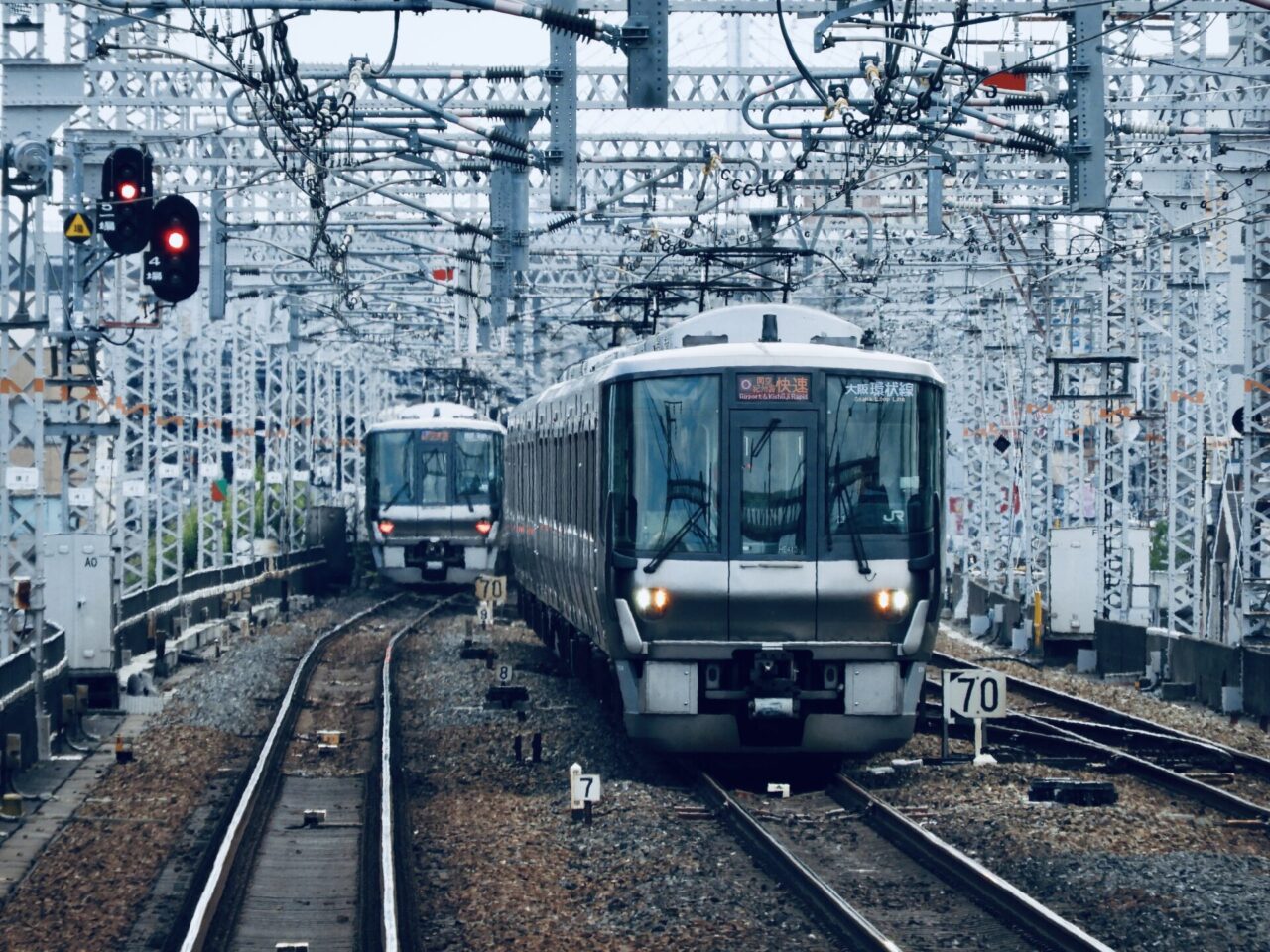
You may encounter:
- Stations without automatic ticket gates
- Unstaffed stations
- Railway lines that do not accept IC cards
- Ticket machines that accept cash only
- One-man-operated trains without a conductor
- Fares paid when leaving the train
Do not assume that the payment method used in a major city will work on every rural railway line.
One-Man-Operated Trains
Some local trains are operated only by the driver and do not have a conductor.
You may see:
ワンマン / Wanman / One-man operation
The boarding and payment process varies by railway company and train. Follow the signs, onboard announcements, and instructions displayed near the doors.
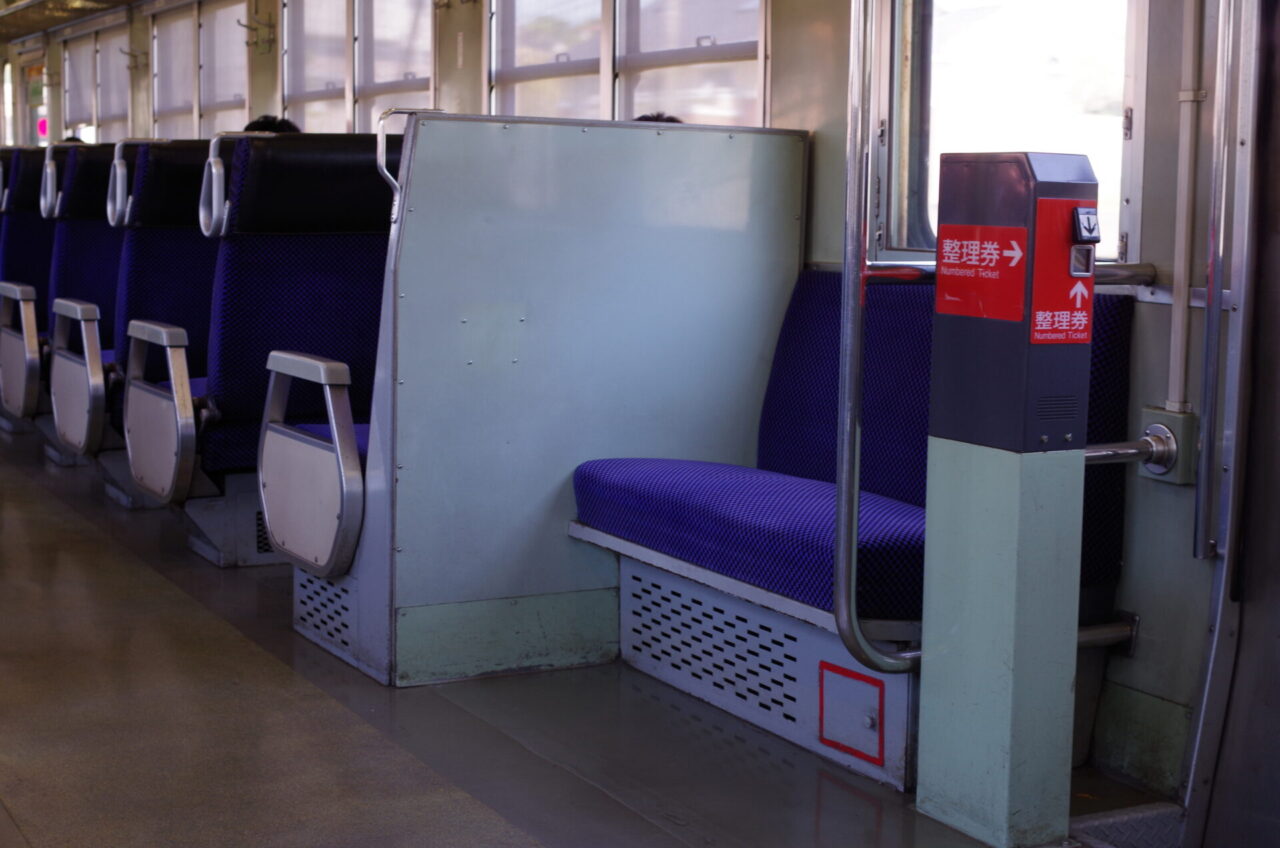
On some services, passengers without a ticket must take:
整理券 / Seiriken / Numbered ticket
The numbered ticket records where you boarded.
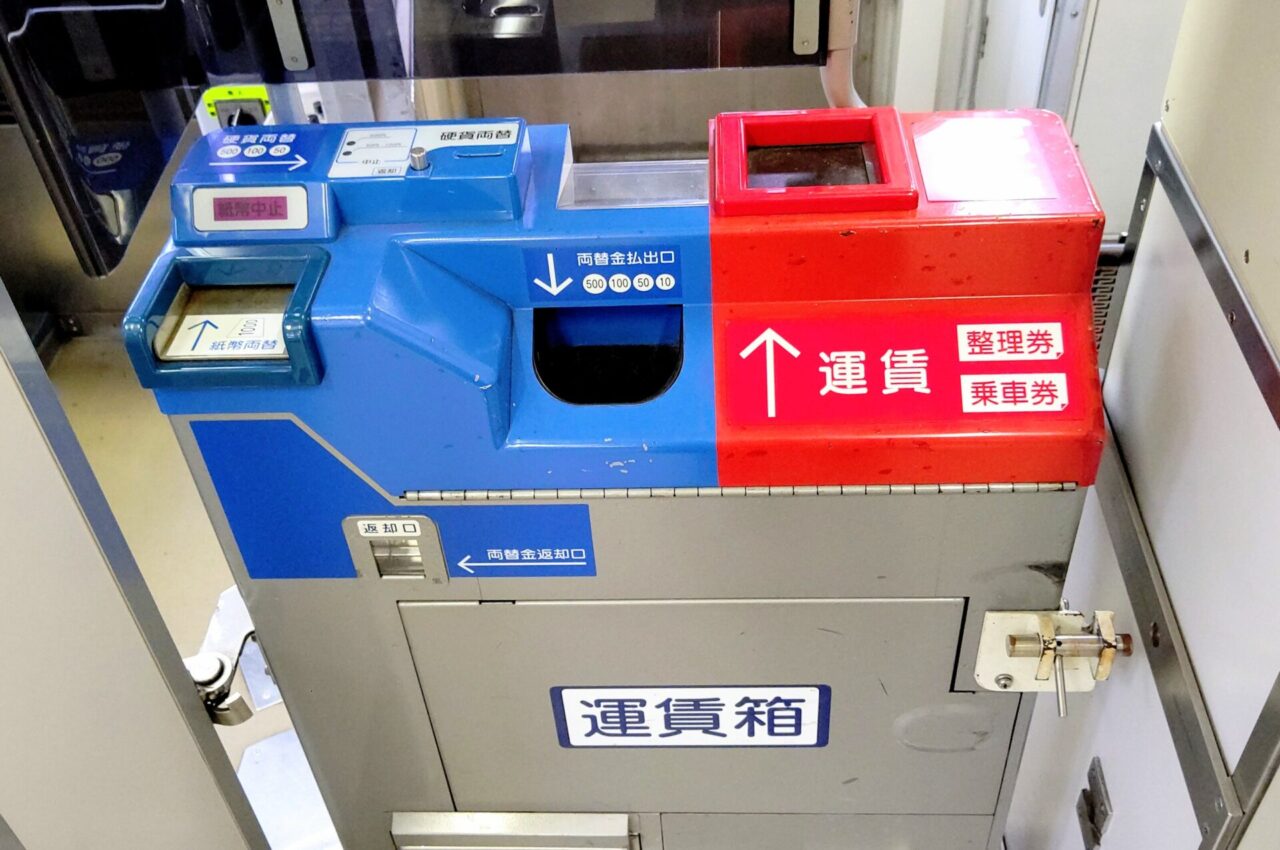
When leaving the train, check the fare display near the front of the carriage. Match the number on your ticket with the fare shown, then place the numbered ticket and the correct cash fare into the fare box near the driver.
You may see:
運賃箱 / Unchin-bako / Fare box
Bring Small Amounts of Cash
Some rural trains and buses do not accept IC cards or credit cards.
Onboard change machines may accept only certain coins and ¥1,000 notes. They may not accept ¥5,000 or ¥10,000 notes, and they normally provide change rather than automatically deducting the fare.
Before traveling in a rural area, carry:
- ¥1,000 notes
- ¥100 coins
- Smaller coins when possible
- A backup payment method
Do not wait until you are leaving the train to prepare your fare.
Getting On and Off at an Unstaffed Station
At an unstaffed station, there may be no automatic gate or station employee.
Depending on the service, you may need to:
- Board through a designated door.
- Take a numbered ticket if you do not already have a ticket.
- Check the fare display before getting off.
- Pay the fare at the front of the train.
- Exit through the door near the driver.
Some train doors do not open automatically. Press the door button when it is illuminated and safe to do so.
Other services may require you to buy a ticket before boarding or hand your ticket to station staff at your destination. Always follow the instructions for the specific railway line.
Check the Route Before Traveling
Before taking a regional or rural train, check:
- Whether your IC card is accepted
- Whether the station is staffed
- Whether tickets can be purchased before boarding
- Whether the train uses one-man operation
- Whether cash is required
- The time of the final return train
Services may be infrequent outside major cities, so payment is not the only point to confirm. Knowing how to board, where to pay, and when the next train departs can make regional travel much easier.
Pay for Train Travel With Confidence
For most trips, the basic pattern is simple: use an IC card for everyday local transportation, arrange the required ticket or reservation for Shinkansen and limited express trains, and keep some cash for rural services and physical IC card top-ups.
You do not need to learn every railway fare rule before arriving. Check the details when a journey involves a long-distance train, special service, or rural railway, and ask station staff when the payment method is unclear.
Frequently Asked Questions
- What is the easiest way to pay for trains in Japan?
-
For most first-time visitors, an IC card is the easiest way to pay for local trains and subways. Arrange Shinkansen and limited express tickets separately when required, and keep some cash available for rural transport and machines that may not accept your card.
- Can I pay after getting on the train?
-
Usually, you should prepare an IC card or ticket before entering the station. However, some rural and one-man-operated trains collect the fare when you leave, so follow the signs and onboard instructions for that service.
- Can I use Suica or PASMO for the Shinkansen?
-
Sometimes. A regular IC card does not work as a universal Shinkansen ticket. Depending on the line and service, you may need a separate Shinkansen ticket, a reservation linked to your IC card, or an eligible IC-based service.
For ticket machines, online reservations, seat choices, and luggage rules, read our Shinkansen ticket guide.
- Can I pay directly at a train gate with a credit or debit card?
-
Only on participating railway lines with compatible contactless gates. This option is not available throughout Japan, so look for the contactless reader and supported card logos before relying on it.
- Is cash still needed for train travel in Japan?
-
Yes, carrying some cash is recommended. You may need it to top up a physical IC card, use a cash-only ticket machine, or pay for transportation in a rural area.
- What happens if my IC card balance or paper ticket fare is too low?
-
Use a top-up or fare adjustment machine near the exit gates, or ask station staff for help. With a paper ticket, you normally pay the difference before leaving the station.
- Which IC card should I buy?
-
Suica, PASMO, and ICOCA can be used interchangeably across many major transport networks, so the easiest choice is usually the card available where you begin your trip or a compatible mobile option you can set up before traveling.
For details about physical cards, mobile cards, top-ups, and supported areas, read our guide to IC cards in Japan.
Related Guides
Explore practical guides to help you plan your trip and travel around Japan with confidence.
Planning Your Trip to Japan
- A Complete Guide for First-Time Visitors to Japan: Stay, Travel, and Experience Local Life
- How to Prepare for a Trip to Japan: What to Plan Before You Go
Transportation
- How to Use Trains and Subways in Japan
- How to Use IC Cards in Japan: Suica, PASMO, ICOCA & Mobile IC Cards
- How to Pay for Train Travel in Japan
- How to Use Local Buses in Japan: A First-Time Visitor Guide
- How to Use Taxis in Japan
- Kansai Airport to Osaka: Best Routes for 8 Areas
- Kansai Airport to Umeda: A Practical Route Example Using Train, Bus & Taxi
- How to Buy Shinkansen Tickets in Japan
- Japan Rail Pass: Is It Worth It? A Complete Guide
Money
- Cash or Credit Cards in Japan? A Complete Guide for First-Time Visitors
- Can I Use Credit Cards Everywhere in Japan? Where Cards Work—and Where You’ll Still Need Cash
- How to Exchange Money in Japan: The Best Ways to Get Japanese Yen
- Tax-Free Shopping in Japan: Rules, Purchases & Refunds
Cities & Destinations
- Osaka vs Kyoto: Which City Is Right for You?
- Where to Stay in Osaka: Best Areas for First-Time Visitors
- Are Osaka Hotels Expensive in 2026? What to Expect and When to Book
- Where to Stay in Yodoyabashi, Higobashi & Edobori: Central Osaka Area Guide
Culture & Etiquette
- Japanese Etiquette Every Visitor Should Know
- Onsen & Sento Etiquette in Japan: A First-Time Visitor Guide