- For many travelers: an overseas-enabled debit card at an international ATM is the first option to check after reviewing the card’s fees.
- If you already carry foreign banknotes: compare the final yen amount offered by a reputable airport or city exchange counter.
- If your card does not work: use a backup card or exchange supported foreign cash at a counter.
- Before departure: a small amount of yen is optional but can help after a late arrival or before a direct trip to a remote destination.
- When comparing costs: consider the final amount rather than looking only at an ATM fee or a “no commission” sign.
What Is the Best Way to Get Japanese Yen?
The best method depends on the cards and banknotes you carry, the fees charged by your provider, when you need cash, and where you are traveling in Japan.
For many independent travelers, an overseas-issued debit card offers a practical balance of convenience and flexibility. It is not automatically the cheapest option for every cardholder. A currency exchange counter may be the better choice when you already have supported foreign banknotes or when your card’s withdrawal terms are unfavorable.
| Method | Best For | Main Costs or Limits | Typical Role |
|---|---|---|---|
| Overseas-issued debit card at an ATM | Travelers whose cards allow international withdrawals on reasonable terms | ATM fee, issuer withdrawal fee, foreign transaction fee, and exchange-rate markup may apply | Usually the first option to check |
| Credit card cash advance | Travelers with favorable cash-advance terms or no better backup | Cash-advance fee, ATM fee, interest, and currency-conversion charges may apply | Use only after checking the card’s terms |
| Airport or city exchange counter | Travelers carrying supported foreign banknotes or unable to use an ATM | The exchange rate may include a margin even when no separate commission is shown | Compare the final yen amount |
| Small exchange before departure | Travelers who want cash immediately after arrival | Rates and fees depend on the provider in the departure country | Optional for convenience and backup |
| Hotel exchange service | Travelers who prioritize convenience or need an alternative | Currencies, hours, amounts, and rates may be limited | A backup rather than the main plan |
This article focuses on how to obtain yen. For the wider question of how much cash to keep and how to combine cash, cards, and an IC card, read Cash or Credit Cards in Japan? How to Pay During Your Trip.
Should You Exchange Money Before Traveling to Japan?
You usually do not need to exchange a large part of your travel budget before departure. International ATMs and currency exchange services are available at major airports and in many cities across Japan.
However, bringing a small amount of Japanese yen can make arrival easier when:
- Your flight arrives late and you are unsure which services will be open
- You need cash for a local bus, small ticket machine, or another first-day expense
- You prefer not to find an ATM or exchange counter immediately after a long flight
- Your itinerary continues directly to a rural, island, or mountain destination
- You want a backup in case your card is blocked, declined, or incompatible
Do not treat ¥5,000 or ¥10,000 as a universal requirement. The right starting amount depends on your airport transfer, accommodation payment arrangements, group size, and access to more yen after arrival.
ATM Withdrawals: A Practical Starting Point
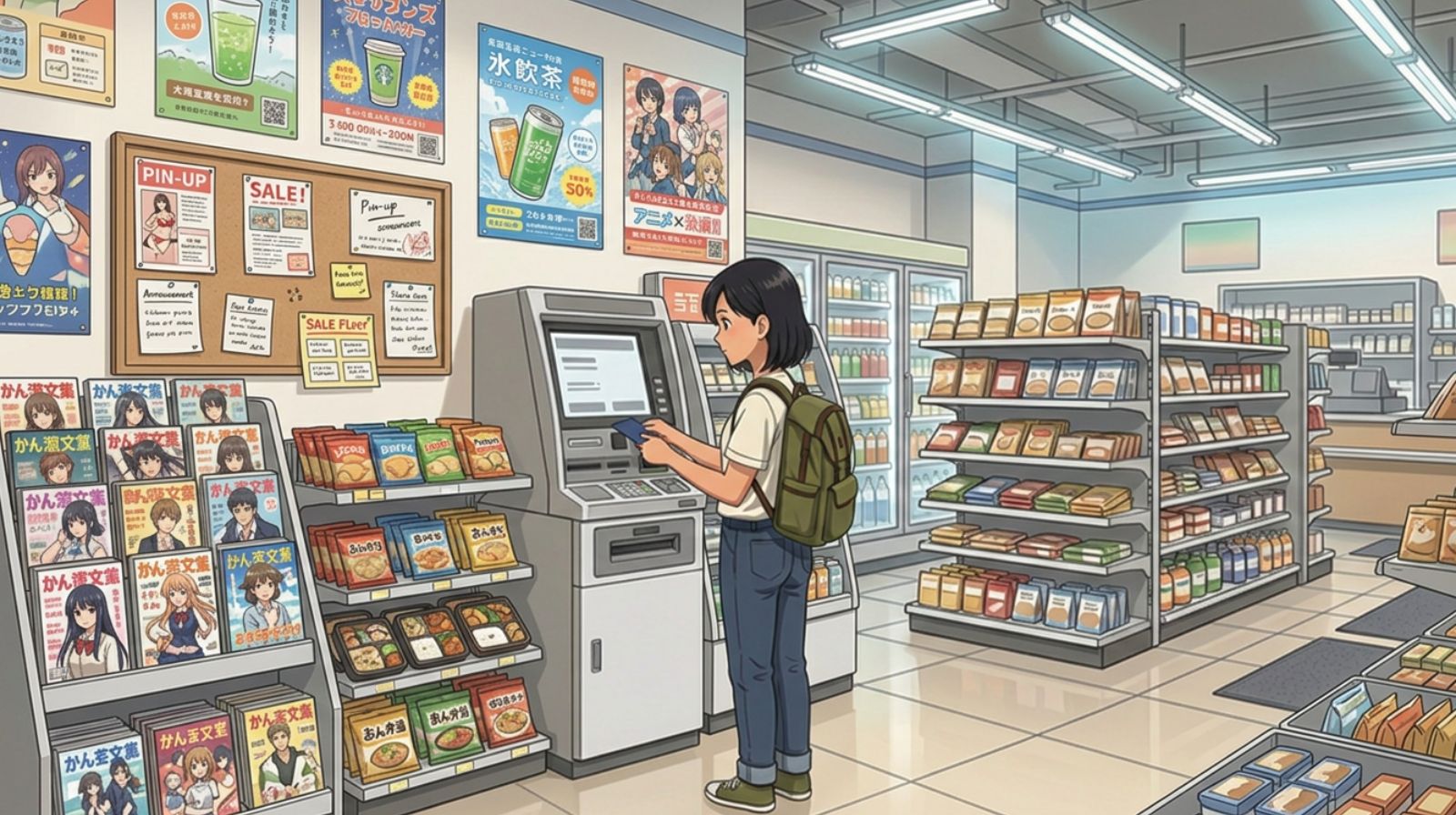
If your debit card supports overseas cash withdrawals and its fees are reasonable, using an international ATM after arrival is often the most flexible option. You can withdraw yen when needed instead of carrying a large amount from the beginning of the trip.
Before traveling, confirm your overseas ATM setting, PIN, issuer fees, and daily limit. A credit card withdrawal is generally treated as a cash advance. If an ATM offers conversion into your home currency, choosing Japanese yen is usually the clearer default unless you have compared both options.
For compatible ATM networks, operator limits, step-by-step instructions, fees, Dynamic Currency Conversion, and failed-withdrawal troubleshooting, read ATMs in Japan: How to Withdraw Cash With a Foreign Card.
Exchanging Cash at Airports and Currency Counters
Currency exchange counters are useful when you already carry supported foreign banknotes, prefer not to use a bank card, or need another option after an unsuccessful ATM withdrawal.
Airport Exchange Counters
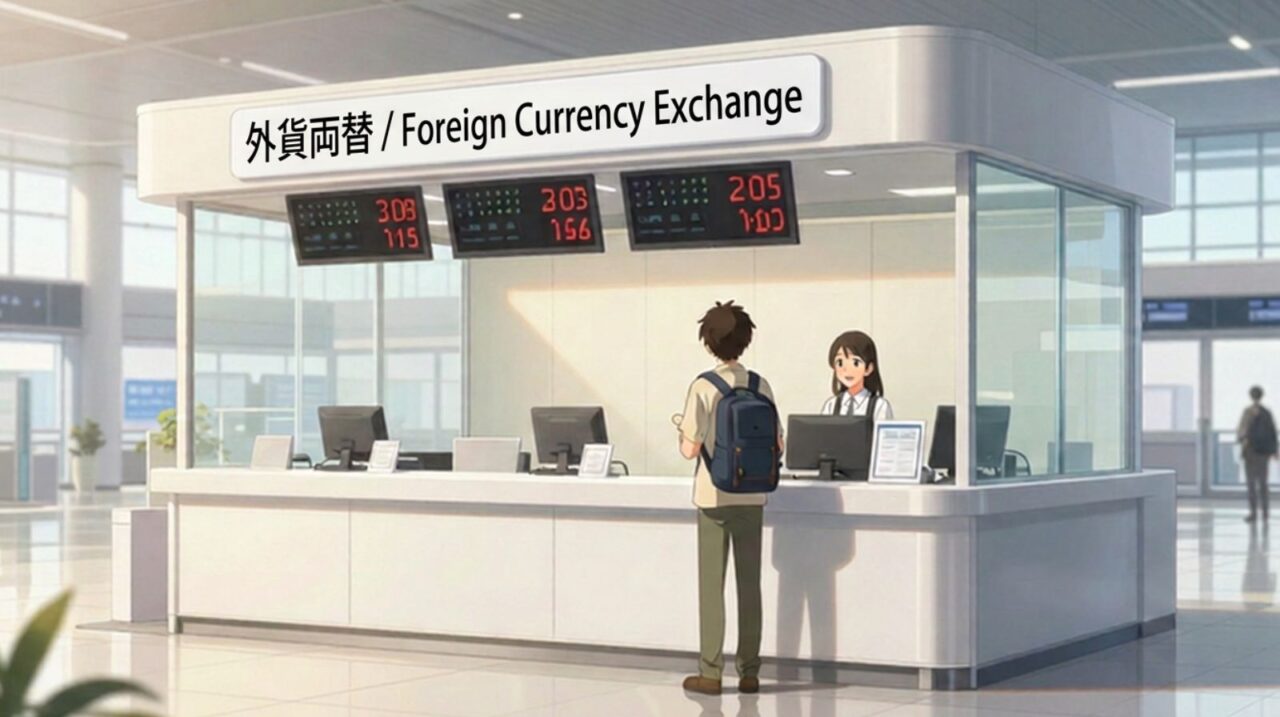
Major international airports in Japan generally have currency exchange counters as well as ATMs. Their main advantage is convenience: you can obtain yen before leaving the airport.
Do not assume that an airport counter is always more expensive or that an airport ATM is always cheaper. Compare the displayed cash exchange rate with the total fees applied to your card. Opening hours and supported currencies also vary by counter.
Currency Exchange Offices in Cities
Currency exchange businesses can be found around major stations, shopping areas, and visitor districts. They may be practical when you:
- Already carry a supported foreign currency
- Want to know the exact amount of yen before completing the exchange
- Cannot use your card at an ATM
- Prefer not to make an overseas card withdrawal
Compare the final amount of yen rather than focusing only on a “no commission” sign. The provider’s margin may already be included in the exchange rate.
Hotel Exchange Services
Some hotels exchange a limited range of currencies or direct guests to a nearby service. This can help when convenience matters more than comparing every rate.
Availability depends on the property, and smaller accommodation facilities may not offer currency exchange. Ask before arrival if you expect to rely on this option.
How to Compare the Final Cost
Do not compare an ATM’s displayed fee with an exchange counter’s commission label as if they were the complete prices. Each method can include costs in a different place.
| What to Compare | ATM Withdrawal | Cash Exchange |
|---|---|---|
| Starting amount | The amount of Japanese yen you request | The foreign banknotes you exchange |
| Visible cost | ATM fee and any currency-conversion offer shown on screen | Displayed exchange rate and any stated commission |
| Possible additional cost | Issuer withdrawal fee, foreign transaction fee, exchange markup, or cash-advance cost | A margin already built into the exchange rate |
| Useful comparison | The estimated total charged to your account for the yen received | The final yen amount offered for the same amount of foreign currency |
Your issuer’s final converted amount may not appear until the transaction is processed, so an exact comparison is not always possible at the machine. Before departure, review your card’s fee schedule and exchange-rate terms. At a counter, ask how much yen you will receive before handing over the banknotes.
Which Option Fits Your Situation?
| Your Situation | Practical Starting Point | Why |
|---|---|---|
| You have an overseas-enabled debit card with reasonable fees | International ATM | Flexible access to yen without carrying the full budget in cash |
| You already carry supported foreign banknotes | Airport or city exchange counter | You can compare and confirm the final yen amount before exchanging |
| Your card is blocked, declined, or incompatible | Backup card or currency exchange counter | Provides another way to obtain yen without repeating the same failed transaction |
| You arrive late or travel directly to a remote destination | Small pre-departure exchange or an airport service | Reduces the risk of arriving without usable cash |
| You expect to need additional yen during a longer trip | International ATM | Lets you replenish cash instead of exchanging the full travel budget at once |
Get Yen Before Rural or Remote Travel
Access to international ATMs and currency exchange services is generally easier around airports, cities, major stations, and busy visitor areas. It can become less predictable in rural towns, on small islands, in mountain areas, and around remote hot spring destinations.
Before leaving a larger town or transport hub:
- Check how your accommodation, meals, local transport, and other expected costs must be paid
- Locate a compatible ATM or exchange service and check when it is available
- Obtain enough yen for the next stage of the itinerary without carrying more than you are comfortable managing
- Keep a backup card separately from your main wallet
The goal is not to carry the entire trip budget. It is to avoid arriving somewhere with limited services and no practical way to pay for the next part of the journey.
Common Money Exchange Mistakes
Assuming One Method Is Always Cheapest
The lowest-cost option depends on the ATM operator, card issuer, exchange provider, transaction amount, and the rates and fees that apply to you. Treat an ATM as a practical first option, not a universal price guarantee.
Looking Only for “No Commission”
A counter can advertise no separate commission while including its margin in the exchange rate. Compare the final yen amount instead of relying on one fee label.
Exchanging the Entire Travel Budget at Once
Obtaining every yen before or immediately after arrival can leave you carrying more cash than necessary. Prepare enough for the next stage and keep another way to access money.
Waiting Until You Reach a Remote Destination
Do not depend on finding a compatible ATM or exchange counter after reaching a small island, mountain town, or remote accommodation. Obtain the cash you expect to need before leaving a larger transport hub.
Useful Japanese for Currency Exchange
| Japanese | Romaji | English |
|---|---|---|
| 日本円 | Nihon-en | Japanese yen |
| 外貨両替 | Gaika ryōgae | Currency exchange |
| 為替レート | Kawase rēto | Exchange rate |
| 手数料 | Tesūryō | Fee or commission |
| この外貨を日本円に両替できますか? | Kono gaika o Nihon-en ni ryōgae dekimasu ka? | Can I exchange this foreign currency for Japanese yen? |
| いくらになりますか? | Ikura ni narimasu ka? | How much will I receive? |
| 外貨両替所はどこですか? | Gaika ryōgaejo wa doko desu ka? | Where is the currency exchange counter? |
Get Yen Without Carrying Your Entire Budget
Obtaining Japanese yen does not require exchanging your full travel budget before departure.
For many visitors, an overseas-issued debit card and an international ATM provide the most flexible starting point. Cash exchange remains useful when you already carry foreign banknotes, want cash ready on arrival, or need an alternative after a card problem.
Choose the method that fits the money and payment options you already have, obtain enough yen for the next part of the trip, and keep a backup for situations in which the first option does not work.
Official Information
Exchange locations, supported currencies, rates, fees, and operating hours can change. For a general official overview, see Japan National Tourism Organization: Currency and Currency Exchange.
Last verified: September 3, 2026 (JST)
Frequently Asked Questions
- What is the best way to get Japanese yen?
-
For many travelers, an overseas-issued debit card at an international ATM is the most practical starting point. It is not automatically the cheapest method, so review the ATM fee, issuer charges, exchange terms, and withdrawal limits that apply to your card.
- Should I exchange money before arriving in Japan?
-
You usually do not need to exchange a large amount before departure. A small amount can be useful if you arrive late, want cash immediately, or travel directly to an area with limited ATM and exchange access.
- Is an ATM or a currency exchange counter better?
-
An ATM is often more flexible when you have an overseas-enabled debit card with reasonable fees. A currency exchange counter may be better when you already carry supported foreign banknotes, cannot use your card, or want to confirm the final yen amount before exchanging.
- Can I exchange US dollars, euros, or other foreign cash in Japan?
-
Major airports and currency exchange offices handle selected foreign banknotes, but supported currencies, rates, limits, identification requirements, and business hours vary. Check the counter’s terms and the final amount of yen before exchanging.
- What should I do if my card does not work at an ATM?
-
Try a backup card or use a currency exchange counter if you carry supported foreign banknotes. For network checks, smaller withdrawal attempts, issuer settings, and other troubleshooting steps, see ATMs in Japan: How to Withdraw Cash With a Foreign Card.