
What Is the Japan Rail Pass?
The Japan Rail Pass is a nationwide rail pass primarily intended for eligible international visitors traveling in Japan. Qualifying Japanese nationals living abroad may also be eligible under separate conditions.
It provides unlimited travel during a fixed validity period on most JR Group trains, including many Shinkansen, limited express, rapid, and local services. Some JR buses, the Tokyo Monorail, and the JR West Miyajima Ferry are also covered, subject to the pass conditions.
The pass became substantially more expensive in October 2023. Since then, the practical question is not whether a visitor “should” buy one, but whether the JR journeys in a specific itinerary cost enough to justify the pass.


Is the Japan Rail Pass Worth It? The Short Answer
For many first-time itineraries, individual tickets are cheaper.
If you are staying mainly in Tokyo and nearby destinations, or using Osaka as a base for Kyoto and Nara, a nationwide Japan Rail Pass is unlikely to pay for itself. An IC card plus individual long-distance tickets is usually more practical.
The pass becomes more relevant when several expensive JR journeys are concentrated within the same 7-, 14-, or 21-day period—especially when the itinerary includes long-distance travel in more than one direction.
| Your Itinerary | What to Consider |
|---|---|
| One city or one region | Individual tickets and an IC card are usually better |
| Tokyo and Kyoto/Osaka with limited long-distance travel | Individual tickets are often cheaper |
| Several long-distance JR journeys within a short period | Compare the total fares with the pass price |
| Multi-region itinerary with long-distance return or side trips | The pass may become worthwhile |
The nationwide pass is best treated as an itinerary-specific option, not a standard purchase for every visitor.
Why the Japan Rail Pass Is No Longer Always Worth It
Before the October 2023 price increase, the nationwide pass was much easier to justify for travelers moving between several major cities. Current prices require a closer comparison.
A Tokyo–Kyoto or Tokyo–Osaka trip by itself does not come close to the cost of a 7-day nationwide pass. Even when you add local JR journeys, the pass may still cost more than buying tickets separately.
Older articles and videos may therefore overstate the savings. Use current fares and the current pass price when planning your own itinerary.
When the Japan Rail Pass Is Worth Buying
The pass is most likely to make sense when your itinerary includes several high-cost JR journeys that fit inside the pass validity period.
It is worth comparing carefully if you:
- Will take several long-distance Shinkansen or limited express journeys.
- Are traveling across multiple regions within 7, 14, or 21 consecutive days.
- Have a route that includes substantial return travel or long-distance side trips.
- Expect to use enough eligible JR services for the total individual fares to approach or exceed the pass price.
Do not assume that visiting several cities automatically makes the pass worthwhile. A mostly one-way route can still cost less with individual tickets.
Compare Before You Buy
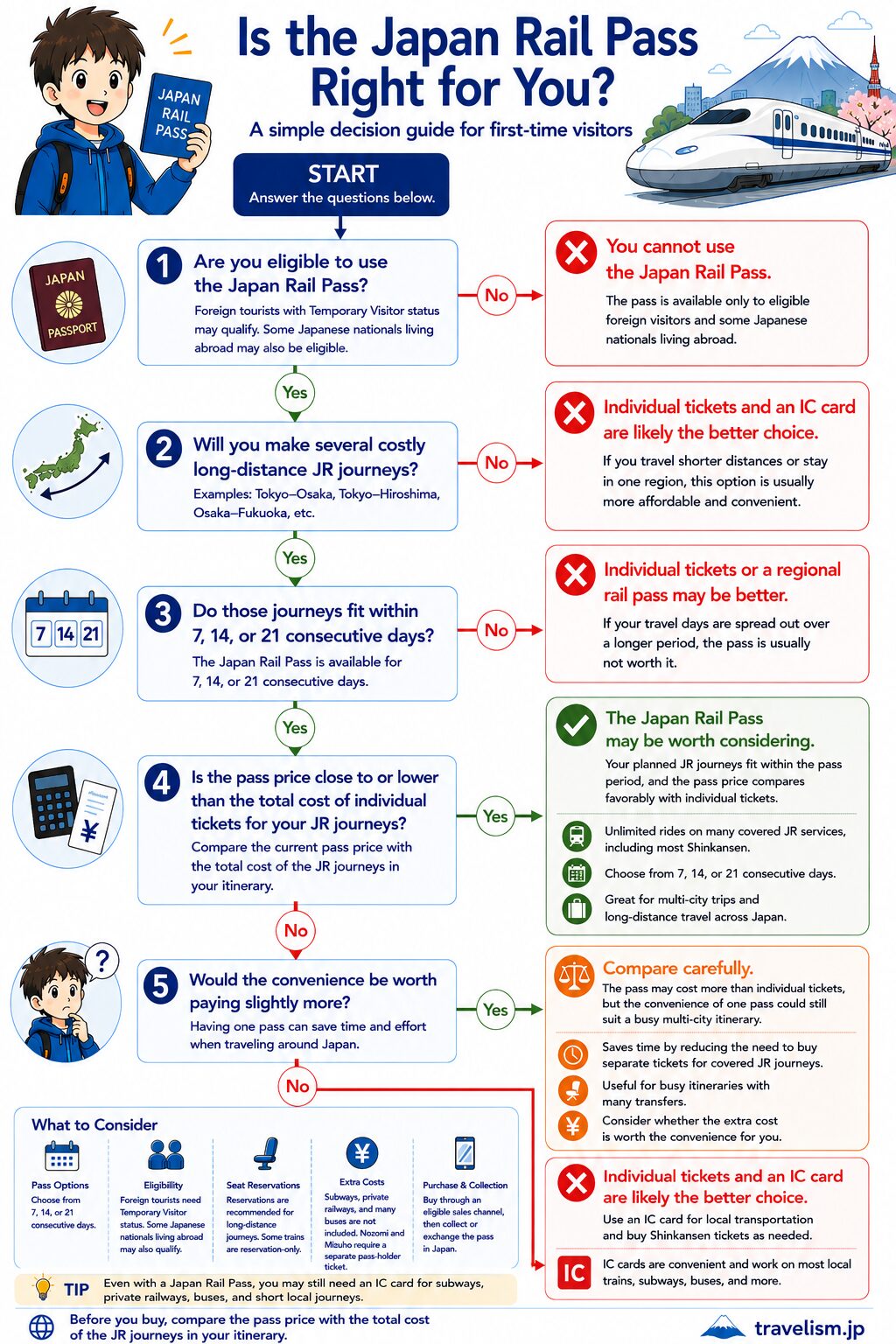
Start with the long-distance JR journeys you actually plan to take. Add their individual fares, then compare that total with the pass price for the same travel period.
Include the details that can change the comparison:
- How many long-distance JR journeys you will take
- Whether those journeys fit within 7, 14, or 21 consecutive days
- Whether part of the itinerary uses subways or private railways that are not covered
- Whether you plan to use Nozomi or Mizuho and would buy the additional pass-holder ticket
- Whether a regional JR pass would fit the route better than the nationwide pass
A pass that is only slightly cheaper can still be attractive for convenience, but the comparison should begin with the actual fares rather than the number of cities on your itinerary.
Current Japan Rail Pass Prices
As of August 16, 2026, the price depends on the purchase channel and, for overseas agency purchases, the purchase date.
The adult Ordinary Car prices through the official online reservation website are:
| Validity Period | Official Online Purchase |
|---|---|
| 7 consecutive days | ¥50,000 |
| 14 consecutive days | ¥80,000 |
| 21 consecutive days | ¥100,000 |
The same prices apply to Exchange Orders purchased through overseas JR-designated agencies until September 30, 2026.
For Exchange Orders purchased through overseas agencies on or after October 1, 2026, the adult Ordinary Car prices will increase to:
| Validity Period | Overseas Agency from October 1, 2026 |
|---|---|
| 7 consecutive days | ¥53,000 |
| 14 consecutive days | ¥84,000 |
| 21 consecutive days | ¥105,000 |
JR has announced that prices through the official online purchasing service will remain unchanged for a limited period. As of August 16, 2026, the end date of that price-freeze period has not been announced.
Green Car and child prices also vary by validity period and purchase channel. Check the official Japan Rail Pass price page, especially if your purchase date is close to October 1, 2026.
Compare the current pass price with the individual fares for your own itinerary. Recheck the official price page whenever a scheduled price change could affect your purchase.
The pass is most likely to save money when several costly long-distance JR journeys fit within the same validity period.
What Does the Japan Rail Pass Cover?
The Japan Rail Pass covers most transportation operated by the JR (Japan Railways) Group.
This includes many of Japan’s most popular train services.
You can use the pass on:
- JR local trains
- JR rapid trains
- JR limited express trains
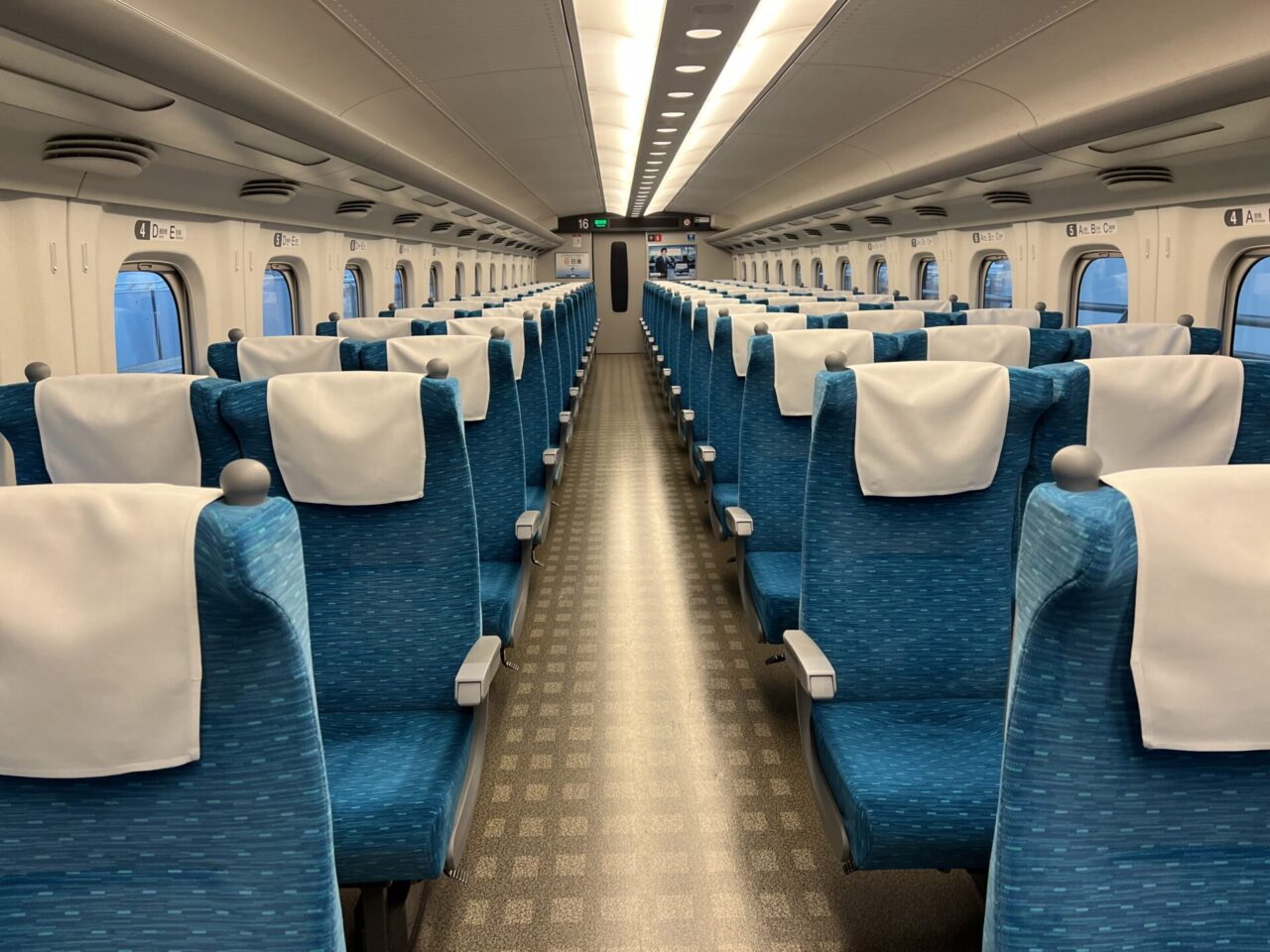
- Most Shinkansen (bullet trains)
- Eligible local JR bus services
- The JR West Miyajima Ferry between Miyajimaguchi and Miyajima
The Tokyo Monorail is also covered. When using the JR West Miyajima Ferry to visit Miyajima, the separate ¥100 Miyajima Visitor Tax is not included in the pass.
However, there are also services that are not included.
For example, the Japan Rail Pass does not cover:
- Tokyo Metro
- Osaka Metro
- Most private railway companies
- Many local buses
- JR Bus express and highway bus routes
- Nozomi and Mizuho services unless you also purchase the required Japan Rail Pass holder ticket
Because of this, even travelers using a Japan Rail Pass often need an IC card for local transportation within cities.
If you’re unfamiliar with Japan’s train system, it’s also helpful to understand how local trains, rapid trains, and subways work before deciding whether a rail pass fits your itinerary.
→ How to Use Trains and Subways in Japan
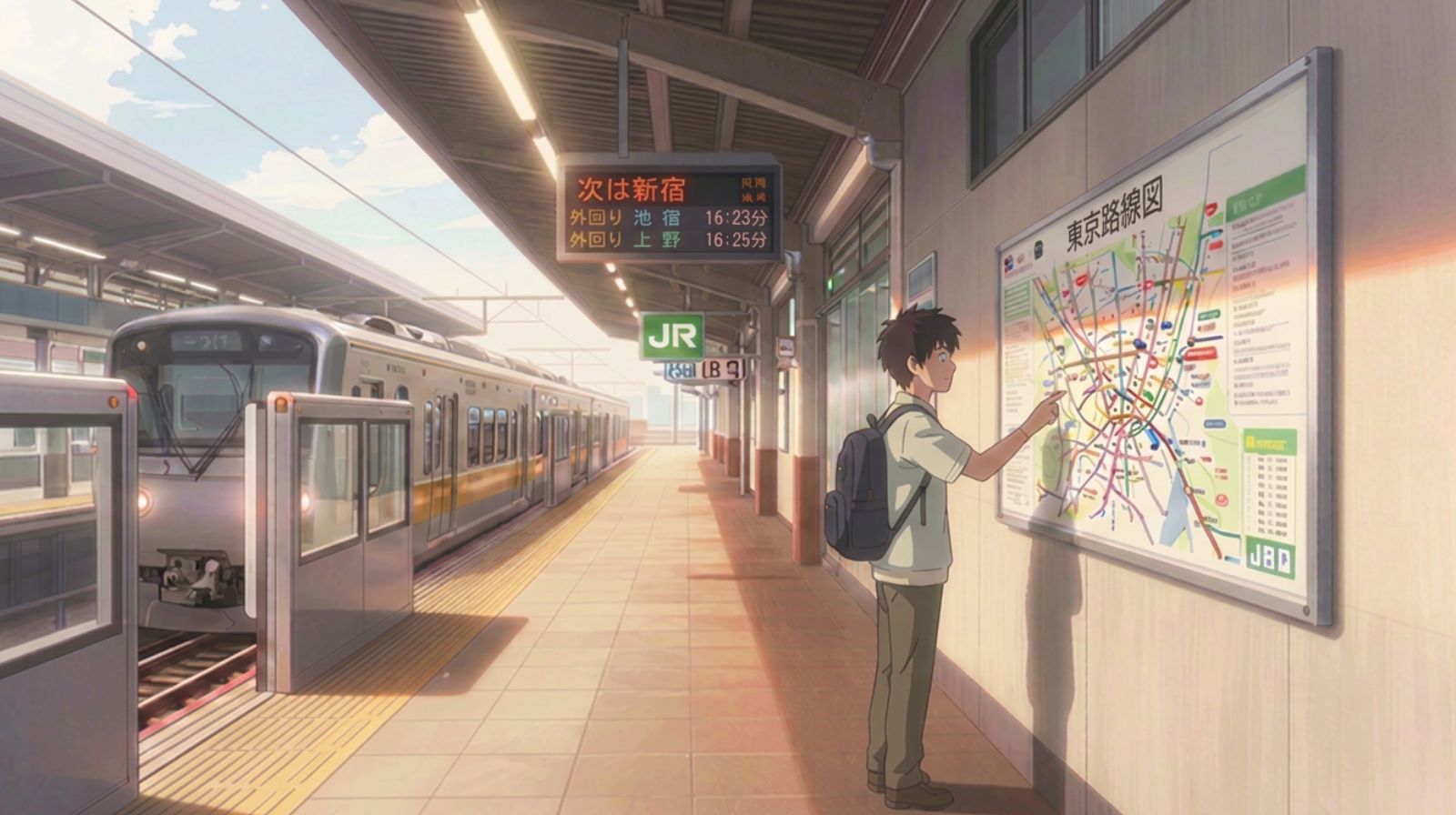
Can You Use the Japan Rail Pass on Nozomi and Mizuho Trains?
Nozomi operates on the Tokaido and Sanyo Shinkansen, while Mizuho operates on the Sanyo and Kyushu Shinkansen.
They are not included in the standard Japan Rail Pass price. However, a valid Japan Rail Pass holder can use these trains by purchasing a separate ticket called the [ONLY WITH JAPAN RAIL PASS] NOZOMI MIZUHO Ticket before boarding.
The additional ticket is required for each Nozomi or Mizuho journey and is valid only for the route, direction, date, train, and seat conditions shown on the ticket.
Travelers who do not want to pay the supplement can use other Shinkansen services covered by the pass, including:
- Hikari
- Sakura
- Kodama
- Tsubame
Which covered alternative is available depends on the route. These trains may make more stops or take longer, but they do not require the additional Nozomi or Mizuho pass-holder ticket.
Before deciding which train to use, compare the departure times, total journey time, transfer requirements, and the price of the supplement. The fastest service is not always necessary for a comfortable itinerary.
For current routes, prices, purchase locations, and conditions, check the official Nozomi and Mizuho special ticket information.
If you’re planning to travel by Shinkansen, it’s also helpful to understand how reservations, seat types, and ticket purchasing work.
→ How to Buy Shinkansen Tickets in Japan
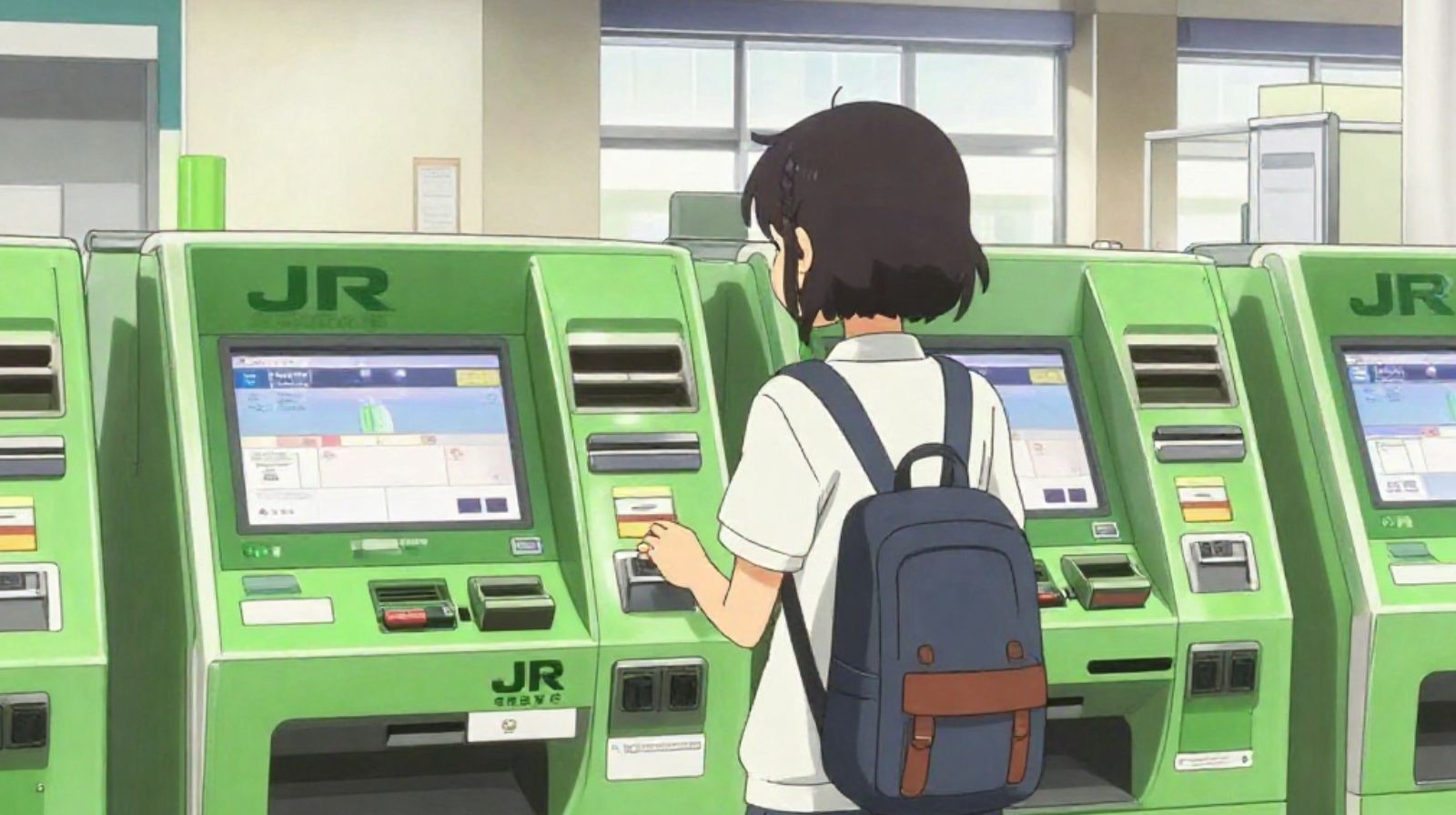
Do You Still Need an IC Card?
Usually, yes. A Japan Rail Pass covers eligible JR services, but it does not replace local payment methods across every city.
Subways and private railways such as Tokyo Metro, Osaka Metro, Hankyu, Keihan, Kintetsu, and Nankai are not covered by the nationwide pass. An IC card is useful for these networks where accepted and for many short local journeys.
IC cards can also be used at many convenience stores, vending machines, coin lockers, restaurants, and some taxis.
Think of the two products as serving different purposes: the rail pass covers eligible JR travel, while an IC card handles much of the everyday transportation outside the pass.
→ How to Use IC Cards in Japan
Buying the Japan Rail Pass
If you’ve decided that the Japan Rail Pass is the right choice for your trip, here are a few important things to know before purchasing.
How to Buy and Collect the Japan Rail Pass
There are two main purchase routes for eligible travelers, but they are not available to exactly the same groups.
Purchase Online Through the Official Website
Eligible foreign visitors can purchase the pass through the official Japan Rail Pass reservation website using passport information and a credit card in the purchaser’s name.
After arriving in Japan, collect the pass at a designated JR ticket office or, at certain stations, a reserved seat ticket machine equipped with a passport reader.
Purchasing through the official website also allows you to reserve eligible Shinkansen and limited express seats online before collecting the pass.
The official online purchasing service is not available to Japanese nationals living abroad, even when they meet the separate eligibility requirements for the pass.
Purchase Through a JR-Designated Overseas Agency
You can also purchase an Exchange Order from a JR-designated travel agency outside Japan before your trip. This is also the purchase route used by eligible Japanese nationals living abroad.
After arriving in Japan, take the Exchange Order and your original passport to a designated exchange office. The Exchange Order itself cannot be used to board a train and must be exchanged for the actual Japan Rail Pass.
Do not assume that you can simply walk into an ordinary JR ticket counter after arriving and purchase the pass directly. Purchase, collection, and exchange procedures may change, so check the official Japan Rail Pass website before your trip.
Who Is Eligible?
For most international visitors, the Japan Rail Pass is available to foreign tourists entering Japan with Temporary Visitor status for sightseeing.
Qualifying Japanese nationals who have lived outside Japan for at least 10 consecutive years may also be eligible under separate conditions. Check the official eligibility requirements before purchasing.
If you enter Japan under another immigration status—such as work, study, training, or re-entry status—you cannot pick up or exchange the pass as a foreign tourist.
If you use an automated immigration gate, your passport is not automatically stamped. Before leaving the immigration area, ask an immigration officer to add the Temporary Visitor stamp or sticker required for Japan Rail Pass pickup or exchange. Trusted Traveler Program users follow a separate confirmation procedure.
Important:
Your original passport is required when exchanging or collecting the Japan Rail Pass. Photocopies, screenshots, or digital images are not sufficient.
Validity Options
The nationwide Japan Rail Pass is available in three durations:
- 7 consecutive days
- 14 consecutive days
- 21 consecutive days
Your pass becomes valid from the activation date you choose, not the purchase date.
Choose the duration based on the dates of your expensive JR journeys, not simply the total length of your stay. A two-week trip, for example, may still only justify a 7-day pass if most long-distance travel is concentrated within one week.
Before You Buy
Before purchasing, make sure that:
- Your itinerary includes enough long-distance train travel.
- You meet the eligibility requirements for Temporary Visitor status or the applicable overseas-resident Japanese eligibility rules.
- You’ve selected the pass duration that best matches your itinerary.
- You know where you’ll exchange or collect your pass after arriving in Japan.
Complete the fare comparison before purchase, then confirm the eligibility and collection requirements for your purchase method.
For the latest prices, eligibility requirements, exchange locations, and purchasing options, please visit the official Japan Rail Pass website.
JAPAN RAIL PASS
How to Use the Japan Rail Pass
Unlike IC cards such as Suica or ICOCA, the Japan Rail Pass is issued as a paper pass.
After you have collected or exchanged the pass, you can use it at eligible JR services during the validity period.
At many JR stations, simply insert the paper pass into the automatic ticket gate. The gate will return your pass after you pass through, so don’t forget to collect it.
At some smaller stations or on certain routes, you may need to show your pass to station staff instead of using an automatic gate.
For eligible Shinkansen and limited express services, reserved seats can be booked without an additional seat-reservation charge. Depending on how you purchased the pass, reservations may be made through the official online service, at a reserved-seat ticket machine, or at an eligible JR ticket office.
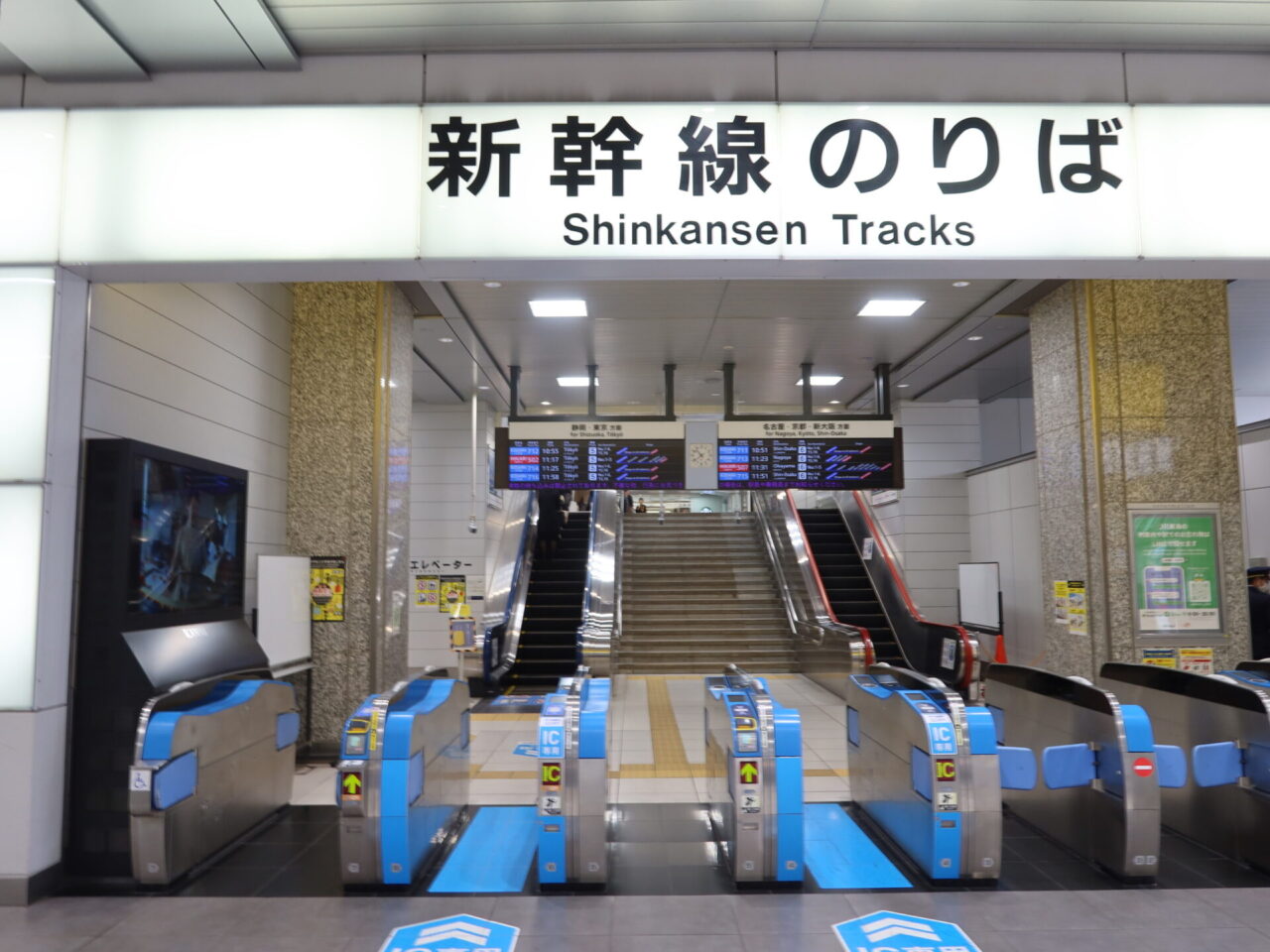
Decide Based on Your Own Itinerary
Write down the major JR journeys you actually plan to take and compare their fares with the current pass price. Then check whether those journeys fit inside the same validity period and whether local transportation outside the JR network will require separate payment.
Convenience can matter, but it should not force the itinerary. If the pass only becomes worthwhile by adding unnecessary train journeys, individual tickets are probably the better fit. Choose the option that leaves enough time to experience each destination rather than trying to maximize the number of rides.
Last verified: August 16, 2026 (JST)
Japan Rail Pass prices, purchase channels, eligibility requirements, and ticketing conditions may change. Check the official Japan Rail Pass website before purchasing.
Frequently Asked Questions
- Is the Japan Rail Pass worth it for first-time visitors?
-
It depends on the itinerary. A nationwide pass is usually poor value for a trip focused on one city or region, but it may make sense when several expensive long-distance JR journeys fit within the same 7-, 14-, or 21-day validity period.
- How much does the Japan Rail Pass cost?
-
As of August 16, 2026, the official online adult Ordinary Car prices are ¥50,000 for 7 days, ¥80,000 for 14 days, and ¥100,000 for 21 days. Overseas agency prices increase on October 1, 2026, while the official online prices remain unchanged for a limited period whose end date has not yet been announced.
- Does the Japan Rail Pass cover all Shinkansen trains?
-
No. Most Shinkansen services are covered, but Nozomi and Mizuho are not included in the standard pass alone. You can use them only when you also purchase the required [ONLY WITH JAPAN RAIL PASS] NOZOMI MIZUHO Ticket before boarding.
- Does the Japan Rail Pass cover subways and private railways?
-
No. Tokyo Metro, Osaka Metro, and most private railway companies are not covered. An IC card is usually the easiest way to pay for these services where accepted.
- Can I use the Japan Rail Pass and an IC card together?
-
Yes. The pass can cover eligible JR journeys while an IC card handles many subways, private railways, buses, and short local journeys outside the pass.
- Where should I buy the Japan Rail Pass?
-
Eligible foreign visitors can buy through the official Japan Rail Pass reservation website or purchase an Exchange Order from a JR-designated overseas agency. Eligible Japanese nationals living abroad cannot use the official online purchasing service and must follow the overseas Exchange Order procedure.
- Should I reserve seats when using the Japan Rail Pass?
-
Reserve when you want a specific seat, are traveling in a group, or are using a train with reserved seating only. Eligible reserved seats can be booked without an additional seat-reservation charge, subject to the pass conditions and availability.
- How long is the Japan Rail Pass valid?
-
The nationwide pass is available for 7, 14, or 21 consecutive days. The period begins on the starting date selected for the pass.
- Is the Japan Rail Pass valid on airport trains?
-
Many JR-operated airport services are covered, including the Narita Express and Haruka. The Tokyo Monorail is also covered. Private airport railways such as the Keisei Skyliner are not covered.
- Can I get a refund for the Japan Rail Pass?
-
Refunds are generally available only before the pass starting date and are subject to the rules of the purchase method. For an uncollected pass bought through the official online service, a refund can be requested online until 11:30 p.m. Japan time on the day before the starting date; a handling fee applies. Different fees and procedures apply to Exchange Orders and passes that have already been collected or exchanged.
Related Guides
Explore practical guides to help you plan your trip and travel around Japan with confidence.
Planning Your Trip to Japan
- A Complete Guide for First-Time Visitors to Japan: Stay, Travel, and Experience Local Life
- How to Prepare for a Trip to Japan: What to Plan Before You Go
Transportation
- How to Use Trains and Subways in Japan
- How to Use IC Cards in Japan: Suica, PASMO, ICOCA & Mobile IC Cards
- How to Pay for Train Travel in Japan
- How to Use Local Buses in Japan: A First-Time Visitor Guide
- How to Use Taxis in Japan
- Kansai Airport to Osaka: Best Routes for 8 Areas
- Kansai Airport to Umeda: A Practical Route Example Using Train, Bus & Taxi
- How to Buy Shinkansen Tickets in Japan
- Japan Rail Pass: Is It Worth It? A Complete Guide
Money
- Cash or Credit Cards in Japan? A Complete Guide for First-Time Visitors
- Can I Use Credit Cards Everywhere in Japan? Where Cards Work—and Where You’ll Still Need Cash
- How to Exchange Money in Japan: The Best Ways to Get Japanese Yen
- Tax-Free Shopping in Japan: Rules, Purchases & Refunds
Cities & Destinations
- Osaka vs Kyoto: Which City Is Right for You?
- Where to Stay in Osaka: Best Areas for First-Time Visitors
- Are Osaka Hotels Expensive in 2026? What to Expect and When to Book
- Where to Stay in Yodoyabashi, Higobashi & Edobori: Central Osaka Area Guide
Culture & Etiquette
- Japanese Etiquette Every Visitor Should Know
- Onsen & Sento Etiquette in Japan: A First-Time Visitor Guide