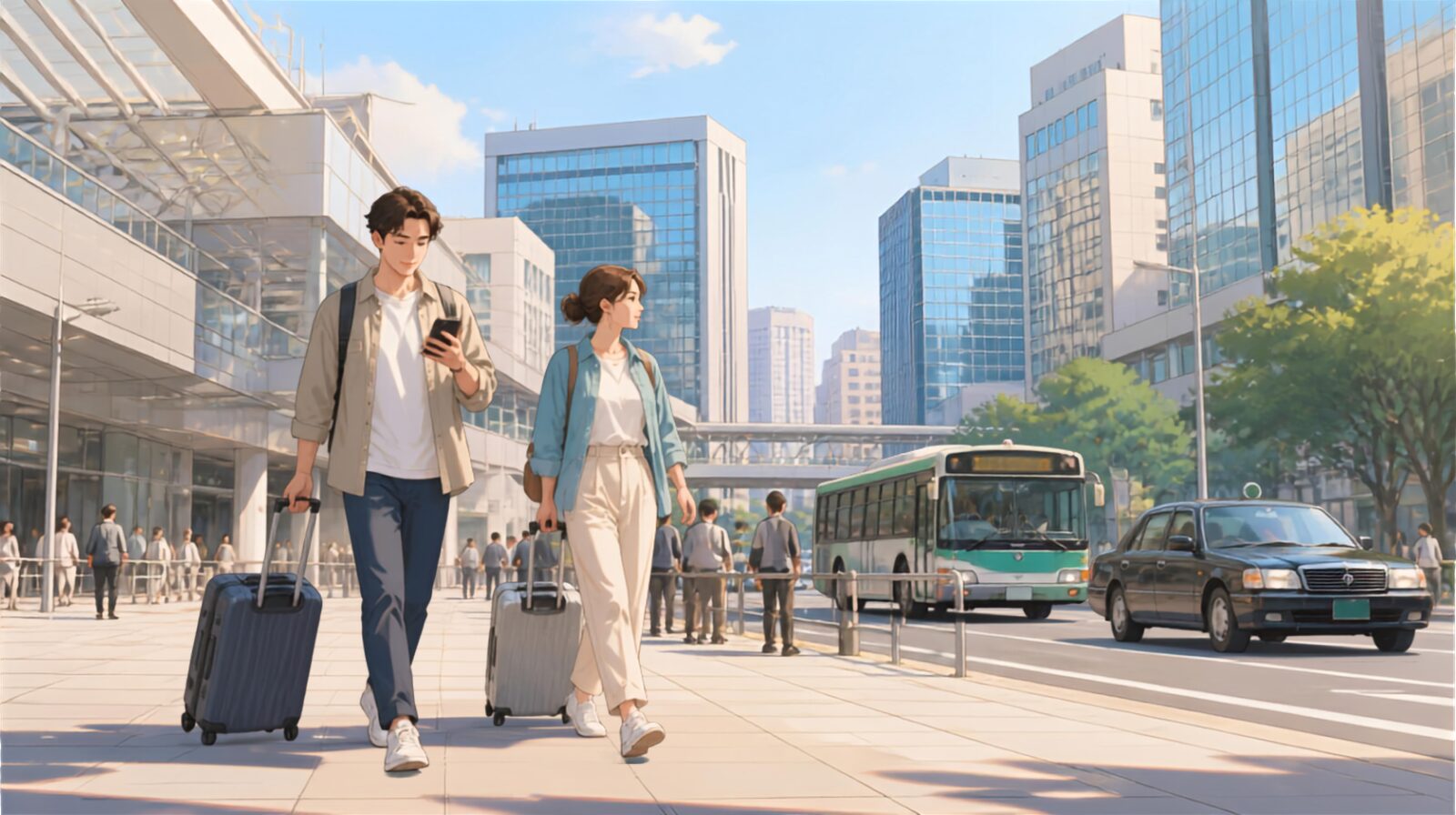
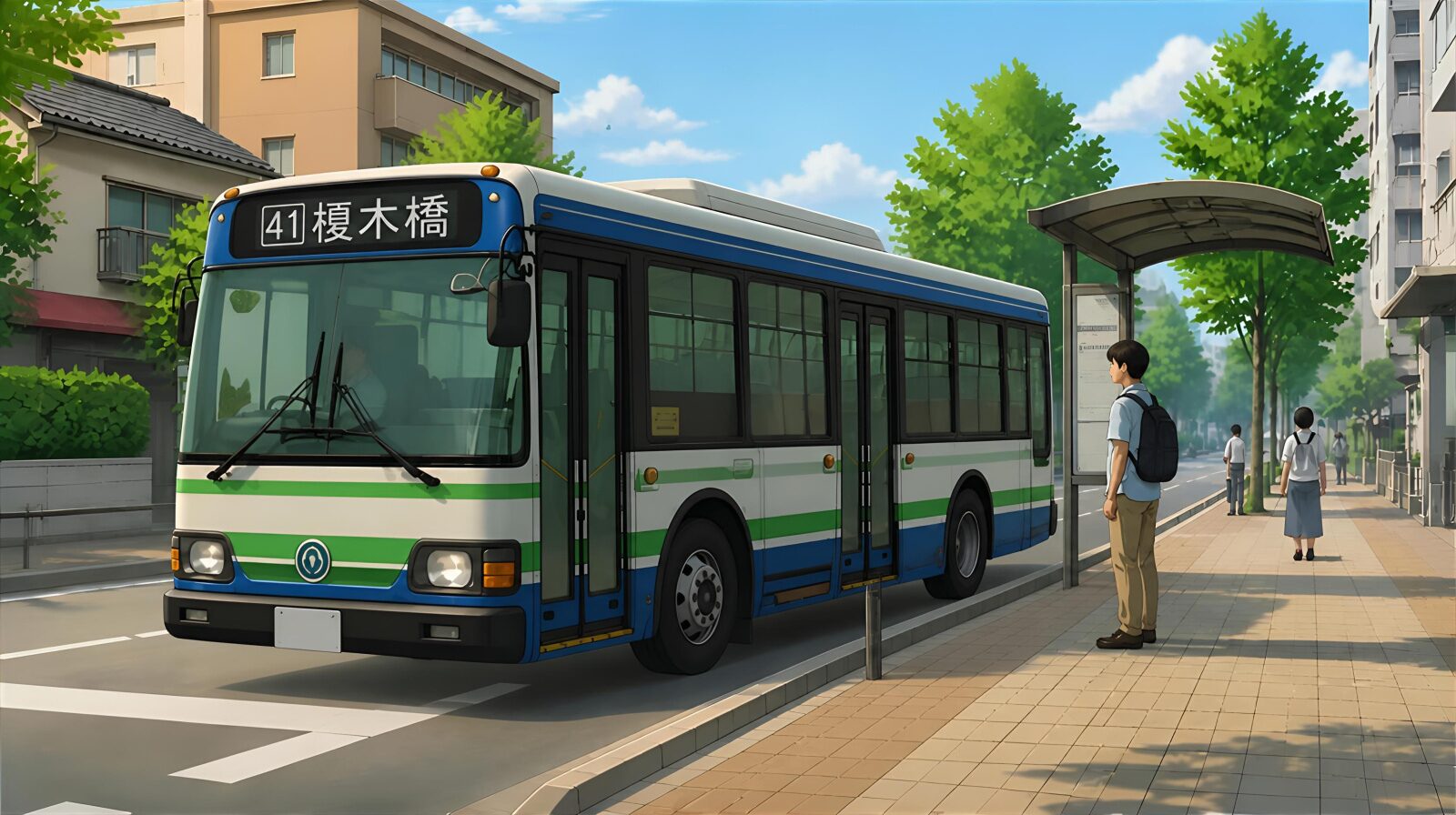
Using local buses in Japan can feel less straightforward than taking a train. The reason is simple: there is no single boarding and payment system used by every bus operator in the country.
On one bus, you may enter at the front and pay immediately. On another, you may enter through the rear door and pay when you get off. In regional areas, you may need to take a numbered ticket so the driver knows where you boarded.
Once you know what to look for, however, local buses are not difficult to use. They can also take you beyond the railway network—to residential neighborhoods, temples, trailheads, hot-spring areas, and smaller towns that are harder to reach by train.
What Do We Mean by a Local Bus?
This guide focuses on regular local route buses used for short and medium-distance journeys.
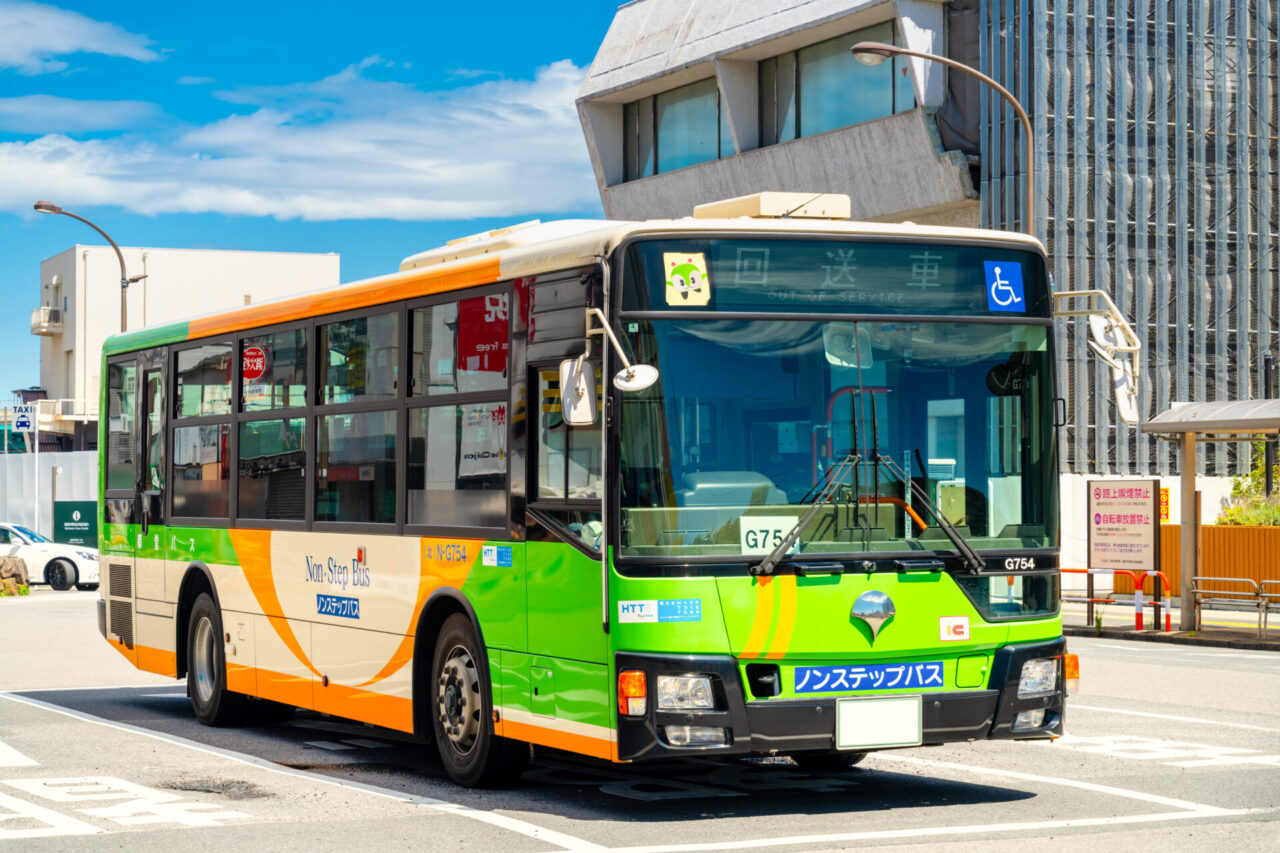
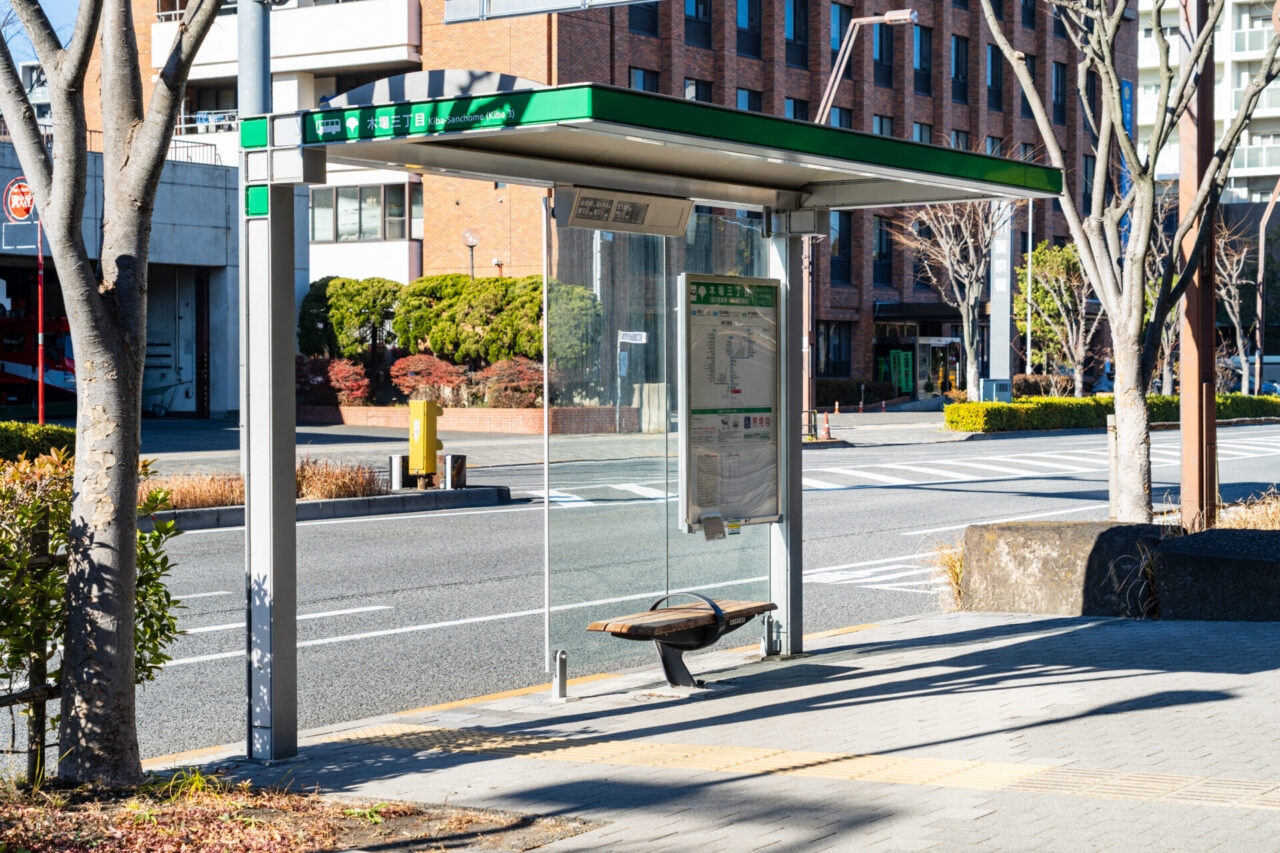
路線バス / Rosen basu / Local route bus
For travelers, buses in Japan can be broadly grouped into four common types:
| Japanese | Romaji | English | Main use |
|---|---|---|---|
| 路線バス | Rosen basu | Local route bus | Travel within cities, towns, and local areas |
| 高速バス | Kōsoku basu | Highway bus | Longer-distance travel between cities and regions |
| 空港リムジンバス | Kūkō rimujin basu | Airport limousine bus | Travel between airports and major stations, hotels, or city areas |
| 観光バス | Kankō basu | Sightseeing bus | Sightseeing routes and organized tours |
Most overnight intercity buses fall under the highway-bus category rather than forming a separate category.
Local route buses include services that:
- travel through city neighborhoods
- connect railway stations with residential areas
- serve local attractions
- link stations with suburban or rural communities
- provide the final part of a journey where no convenient train connection exists
This guide focuses on local route buses. Highway buses, airport limousine buses, and sightseeing buses use different ticketing, boarding, reservation, and luggage systems, so this guide does not cover them in detail.
There Is No Single Way to Ride a Bus in Japan
The main thing to remember is that the system can vary by operator and route. The door you use, when you pay, and whether you need to tap an IC card once or twice can all differ.
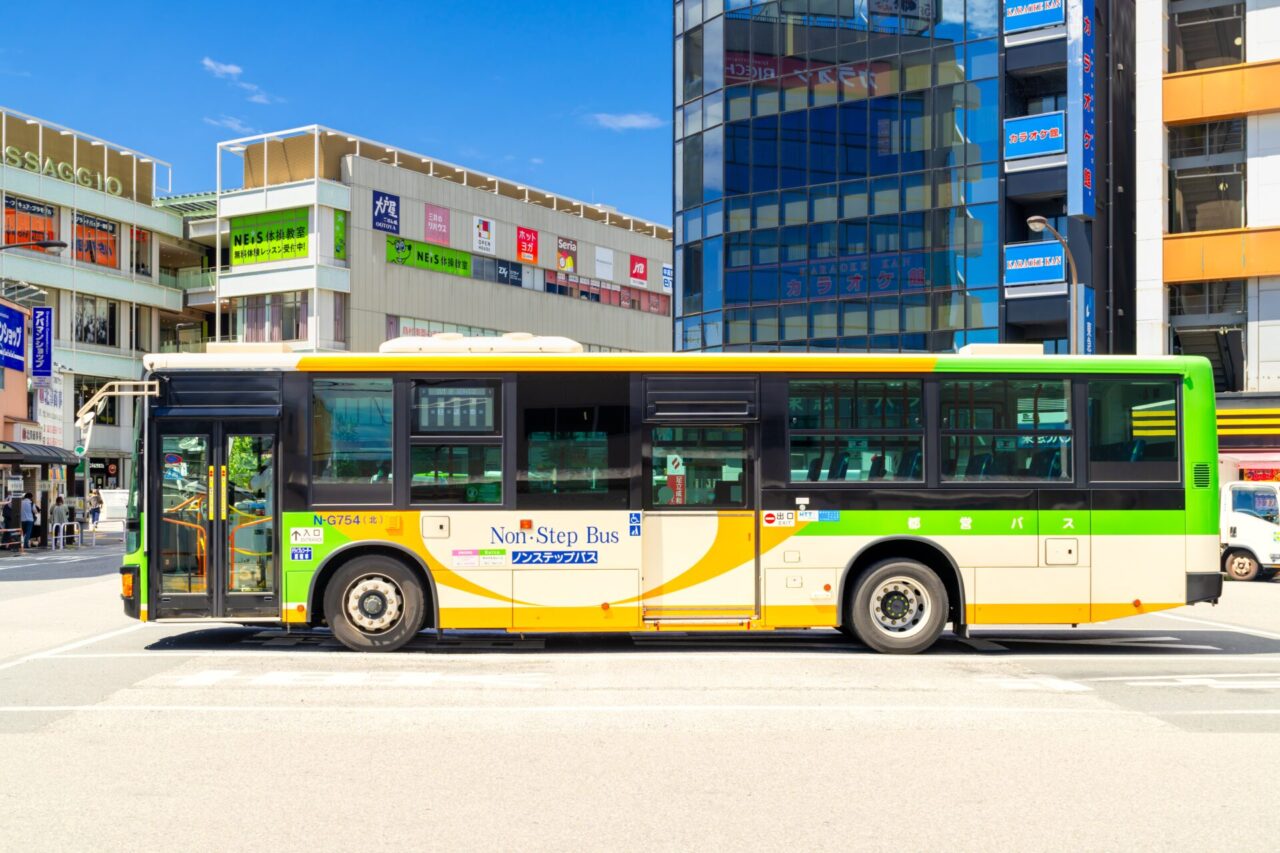
Here are three common patterns:
| Example system | Where you board | When you pay | Typical fare system |
|---|---|---|---|
| Front boarding | Front door | When boarding | Flat fare |
| Rear or center boarding | Rear or center door | When getting off | Flat fare |
| Rear or center boarding | Rear or center door | When getting off | Fare based on distance |
Tokyo, Osaka, and Kyoto alone show why it is better not to memorize one nationwide rule.
Some buses in central Tokyo use front-door boarding and payment when you get on. Osaka City Bus uses rear-door boarding and payment when you get off, even though the fare is flat. Most Kyoto City Bus routes use rear-door boarding and front-door exit, although some services use a different system.
Regional buses may use a distance-based fare system, where your boarding point needs to be recorded.
Before boarding, check how that particular bus works rather than relying on one nationwide rule.
Before You Board: Check the Bus Stop Carefully
Finding the correct bus stop can sometimes be more difficult than riding the bus itself.
A large railway station may have several bus stops with similar names, divided among different streets, platforms, or operators.
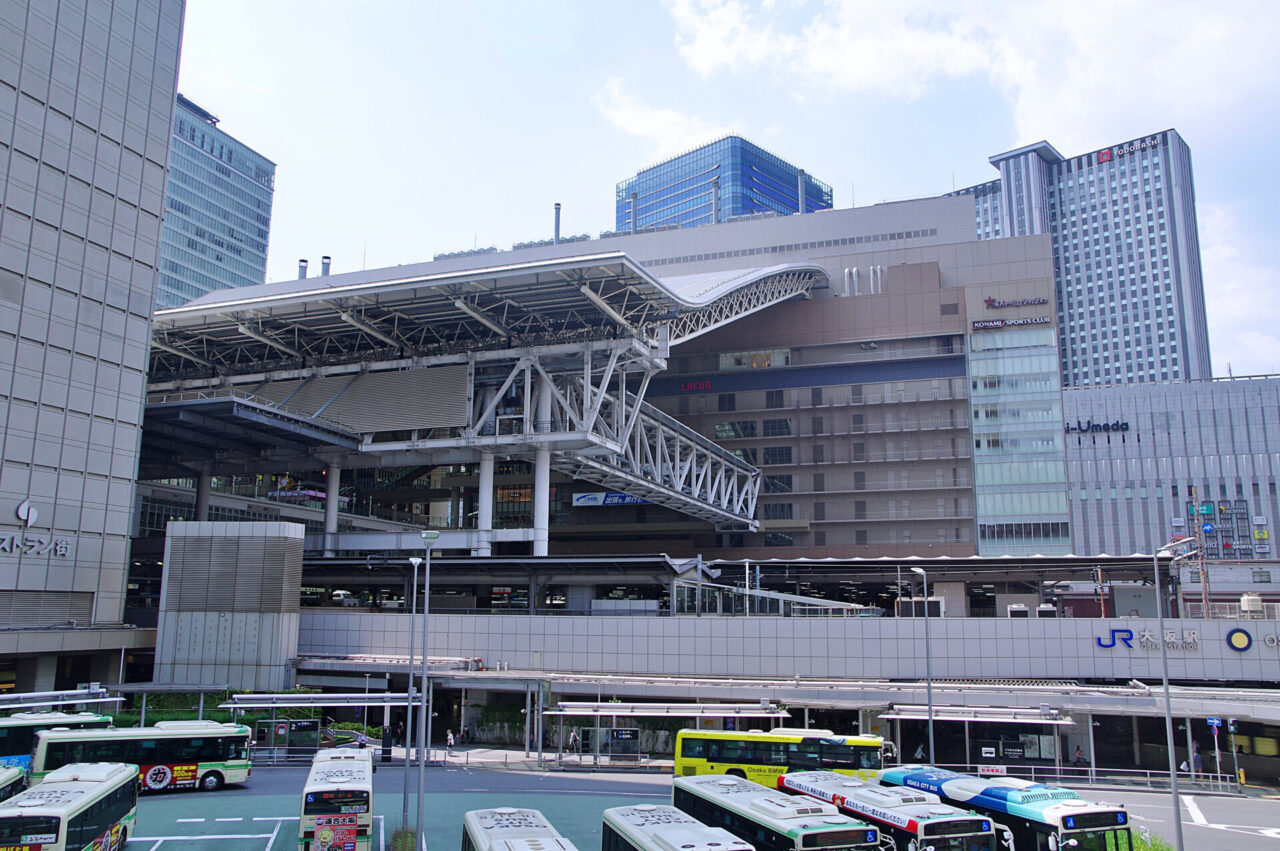
Before the bus arrives, confirm:
- the bus route or route number
- the destination shown on the bus
- the direction of travel
- the boarding position
- your destination stop
路線 / Rosen / Route
行先 / Ikisaki / Destination
バス停 / Basutei / Bus stop
Do not rely only on the bus stop name. At a large station, the same general stop name may cover several separate boarding positions.
Navigation apps can be very useful for finding routes and departure times, but it is still worth checking the route number and destination displayed on the actual bus before you board.
How to Ride a Local Bus in Japan
The exact payment system varies, but the basic journey follows the same sequence.
Step 1: Wait at the Correct Bus Stop
Stand near the designated boarding position without blocking the sidewalk or road.
If several buses use the same stop, check the route number and destination as each bus approaches.
Do not assume that every bus stopping there follows the same route.
Step 2: Check Which Door Opens
Watch the bus as it arrives.
Depending on the route, passengers may board from:
- the front door
- the rear door
- a center door
If you are unsure, the easiest approach is simply to see which door opens for boarding and follow the passengers ahead of you.
Step 3: Record Where You Board If Required
This is important on distance-based buses.
If you are paying with cash on a distance-based route, you may need to take a 整理券 / Seiriken / Numbered ticket when you board. Keep it until you get off—you will use its number to determine your fare.
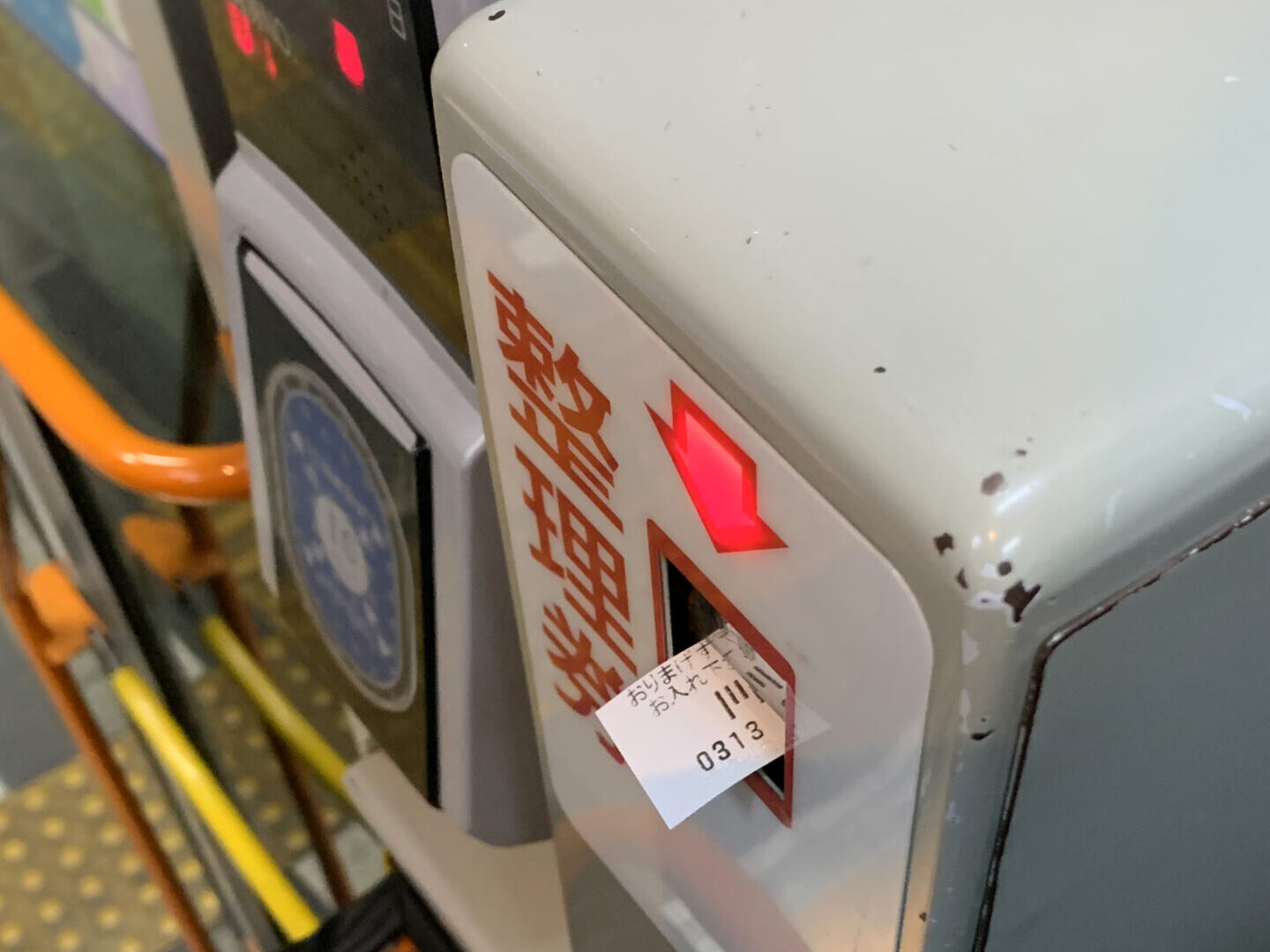
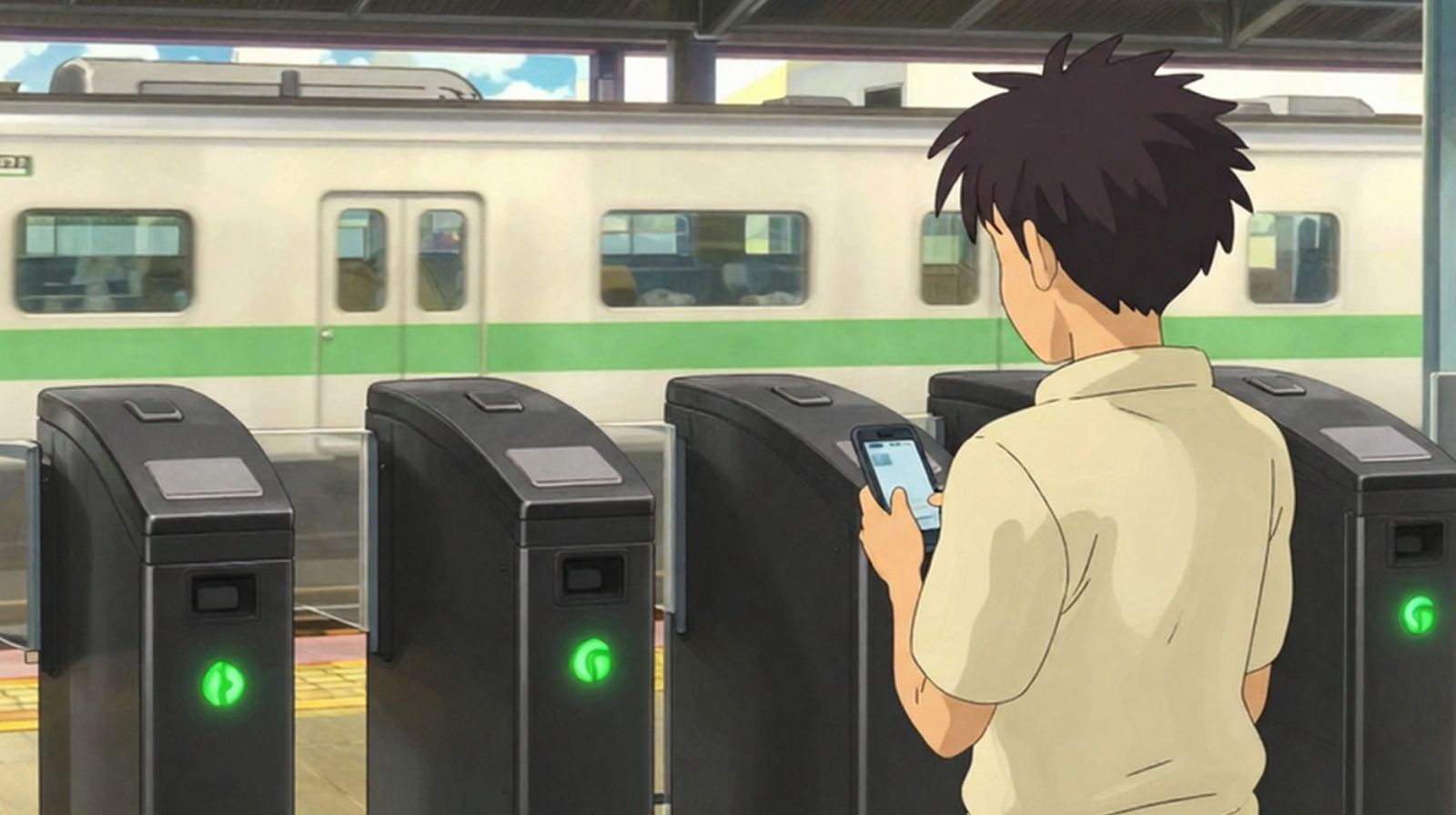
If the bus accepts an IC card, there may instead be a card reader near the entrance. On a distance-based route, tapping when you board records your starting point.
On some flat-fare routes, there is nothing to do when boarding because payment happens later.
Do not automatically take a numbered ticket or tap a reader unless the system calls for it.
How to Pay for a Local Bus
There are several possible payment methods.
Using an IC Card
Transportation IC cards are accepted on many local buses.
Common cards include:
Suica
PASMO
ICOCA
For most first-time visitors, an IC card is the easiest payment method when the bus accepts one.
However, the tapping procedure varies.
On some routes, you tap when boarding and again when getting off.
On others, you tap only once because the fare is fixed.
Look for the IC card reader and follow the instructions on the bus rather than assuming the procedure is identical everywhere.
Some smaller or regional bus routes may not accept nationwide IC cards at all.
For a complete explanation of Suica, PASMO, ICOCA, and mobile cards, see our How to Use IC Cards in Japan guide.
Paying With Cash
Cash remains useful on local buses, especially when traveling outside major urban areas.
On a distance-based bus, the usual process is:
- Take a numbered ticket when boarding.
- Keep the ticket during the journey.
- Check the fare display near the front of the bus.
- Find the fare corresponding to your ticket number.
- Put the ticket and fare into the fare box when you get off.
運賃 / Unchin / Fare
運賃箱 / Unchinbako / Fare box
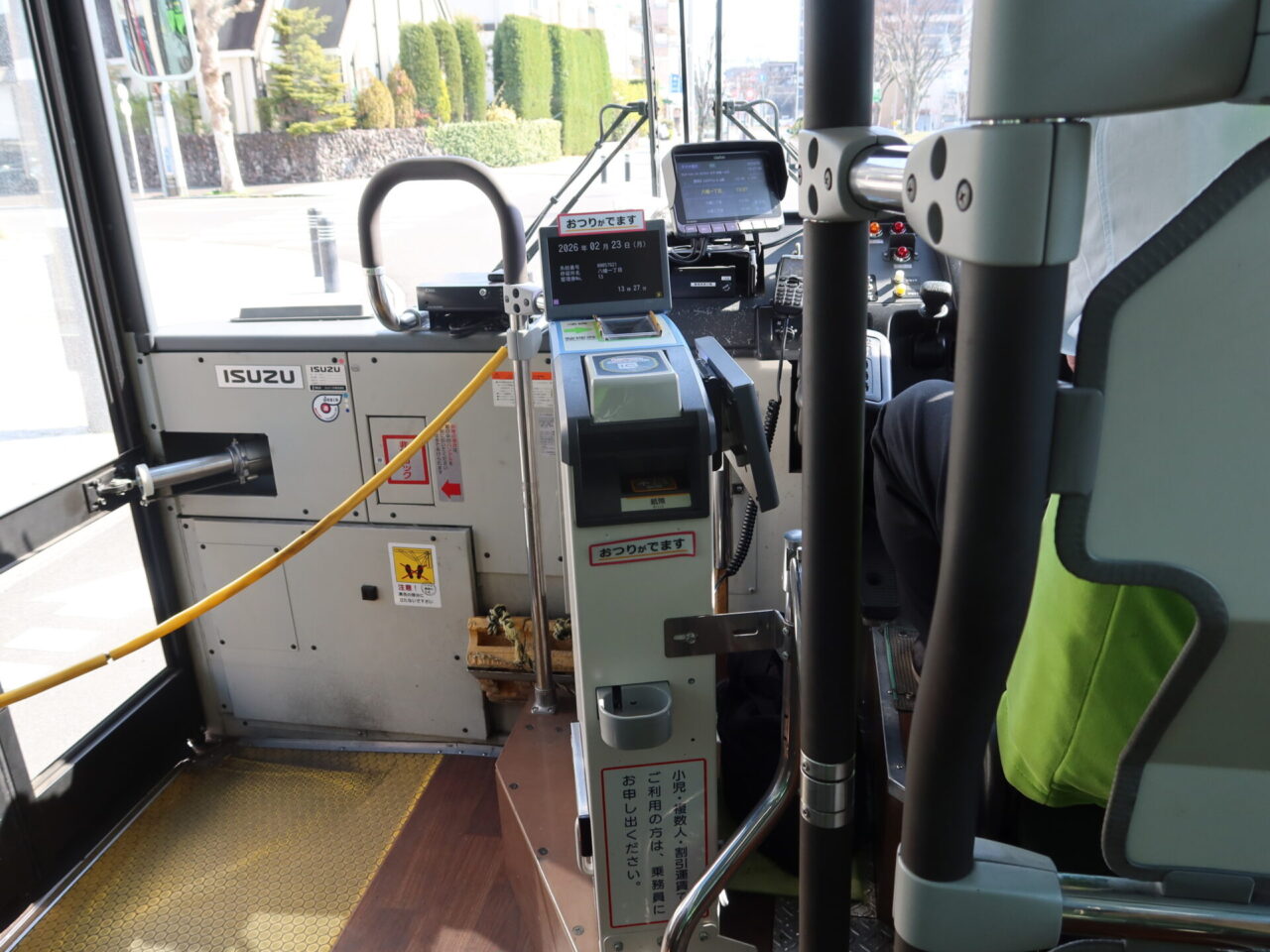
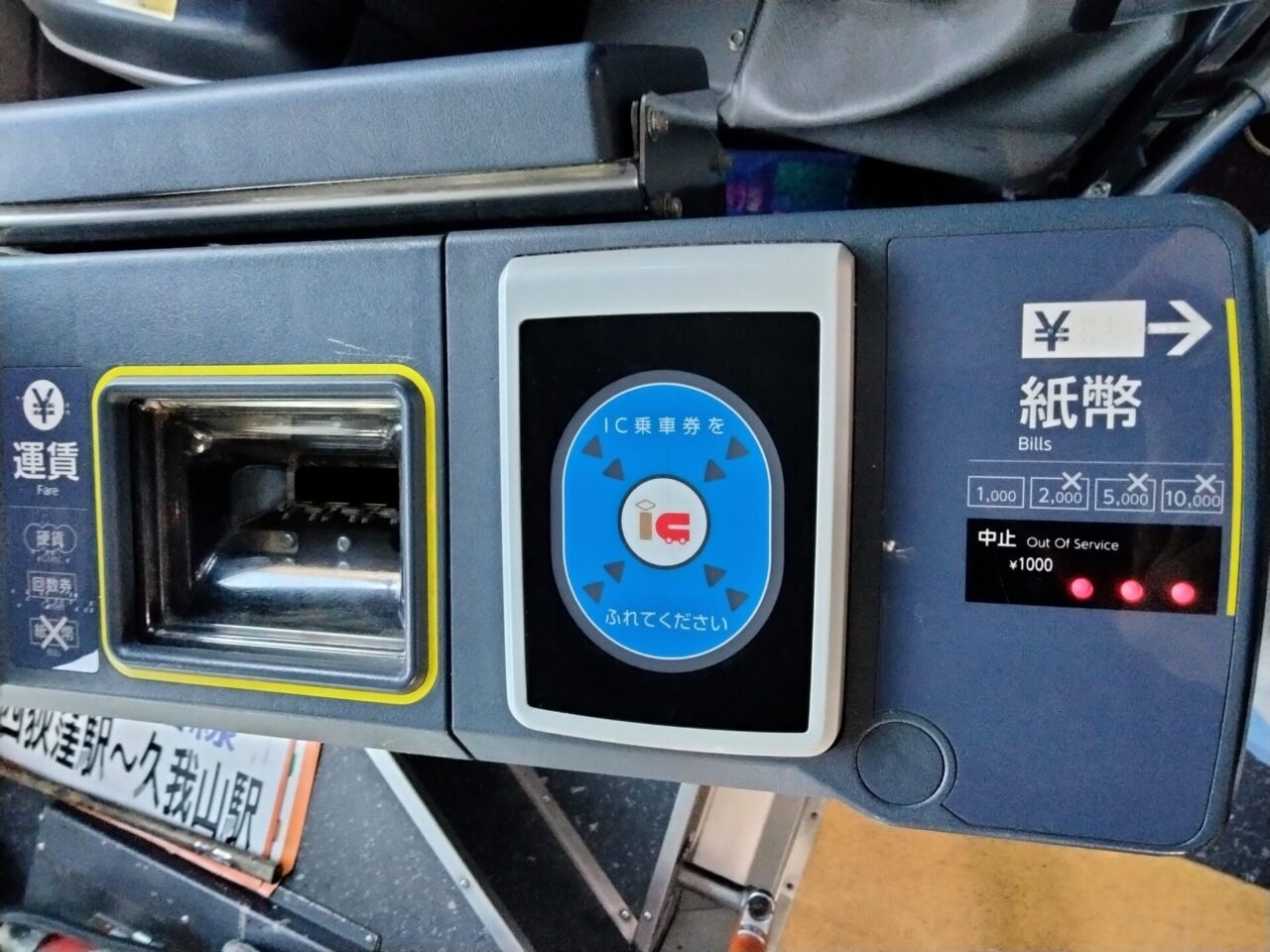
Fare boxes handle change differently. Some have a money-changing function, while some operators return change automatically. Check the instructions before inserting money, and do not rely on large-denomination notes.
Do not assume that large notes or international credit cards will work.
Some modern bus operators have introduced contactless credit-card payments, but this is not yet a universal system across Japan.
For that reason, carrying an IC card plus some Japanese yen remains a useful combination. Our Cash or Credit Cards in Japan? guide explains how cash, cards, and IC cards work together during a trip.
What Is a Numbered Ticket?
The numbered ticket system often causes confusion for first-time visitors because there is no equivalent on many urban transit systems overseas.
整理券 / Seiriken / Numbered ticket
A seiriken does not show the fare.
Instead, the number tells the bus where you started your journey.
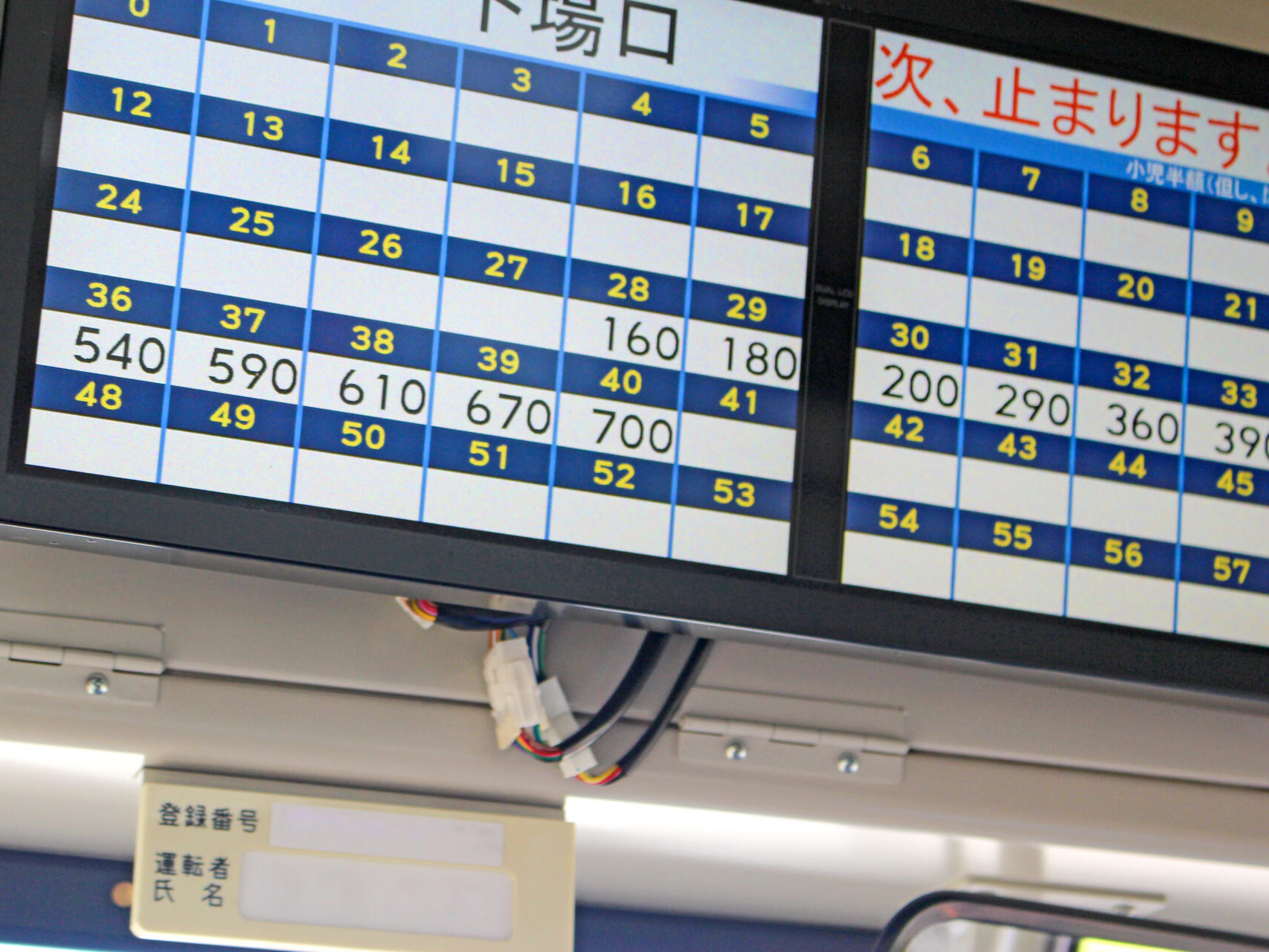
Near the front of the bus, a screen shows several numbers with fares beneath or beside them.
For example, if your ticket says 38, look for number 38 on the fare display as you approach your stop. The amount displayed is the fare you need to pay.
As the bus travels farther, the amount may increase.
If you use an accepted IC card instead, the card reader usually records your boarding point electronically, so you do not need a paper numbered ticket.
How Do You Know When to Get Off?
The next stop is usually announced inside the bus and displayed on a screen near the front.
次は / Tsugi wa / Next stop
In major cities and tourist areas, English announcements or displays are common. They may be less consistent on smaller regional routes.
If you are worried about missing your stop, keep your navigation app open and follow your position during the journey.
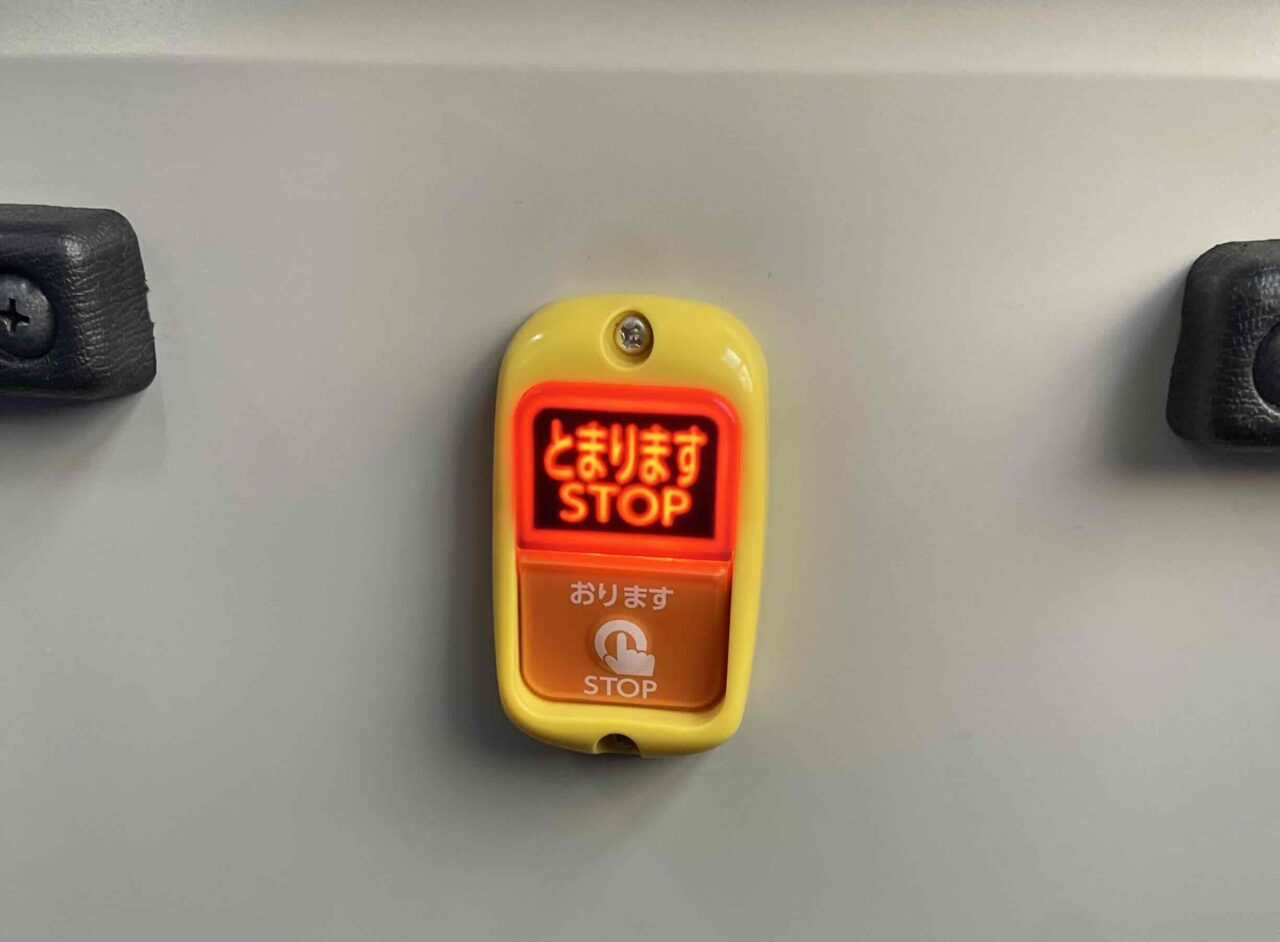
When your stop is approaching, press one of the buttons inside the bus.
降車ボタン / Kōsha botan / Stop request button
You may also see words such as:
とまります / Tomarimasu / Stopping
おります / Orimasu / Getting off
You do not need to tell the driver verbally in most cases.
Once someone has pressed the button, it normally lights up and the driver knows that a passenger wants to get off at the next stop.
If nobody requests the stop and nobody is waiting to board, a local bus may continue without stopping.
Wait Until the Bus Comes to a Complete Stop Before Moving
Local buses can brake suddenly because they operate in normal road traffic.
Press the stop button when your stop is announced, but remain seated or hold a handrail while the bus is moving. Whenever possible, wait until the bus has come to a complete stop before moving toward the exit.
What If You Are Not Sure How to Pay?
If the payment system is not obvious, look at what passengers ahead of you are doing.
The most useful clues are:
- Which door did you board through?
- Was there an IC reader near the entrance?
- Was there a numbered-ticket machine?
- Is the fare box next to the driver?
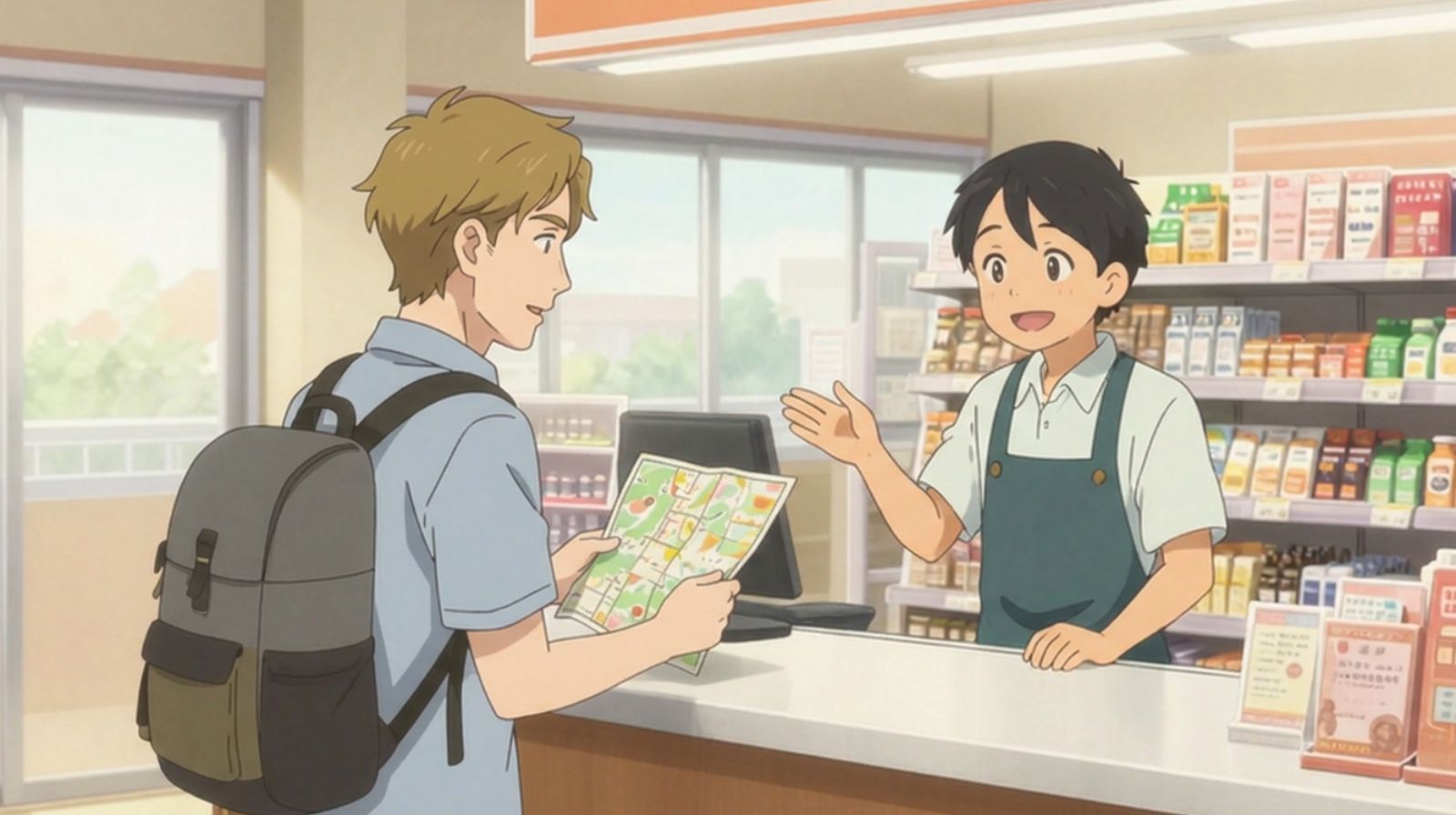
If you still are not sure, show your IC card, ticket, or cash to the driver before paying.
A useful phrase is:
すみません / Sumimasen / Excuse me
You can also show the name of your destination on your phone.
For smaller towns and local services where English support may be limited, our How Much English Is Spoken in Japan? guide explains how to manage everyday travel without speaking much Japanese.
Can You Use Local Buses With Large Luggage?
You usually can bring ordinary luggage onto a local bus, but space may be limited.
This matters especially when:
- the bus is crowded
- you are carrying a large suitcase
- the route is used heavily by commuters
- the bus serves a popular tourist area
- there is little space around the doors or aisle
Keep your luggage close to you and do not block the aisle, doors, or other passengers.
For a short journey from a railway station to your accommodation, a local bus can be a useful alternative to walking with luggage.
But it is not always the best choice.
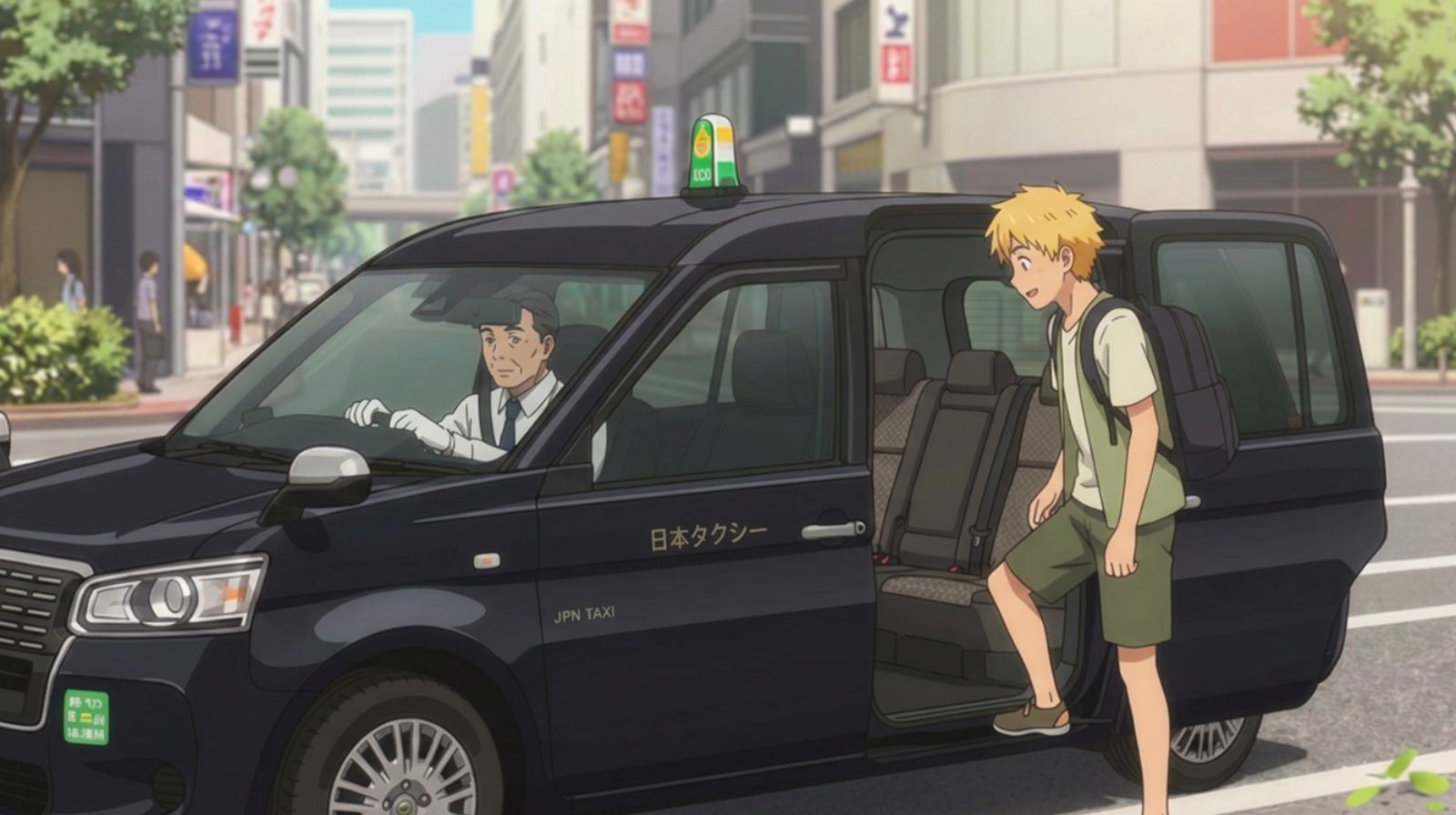
After a long flight, in heavy rain, with young children, or with several large suitcases, a taxi may be easier for the final part of the journey.
Our How to Use Taxis in Japan guide explains how taxi stands, apps, fares, doors, and payment work.
Local Bus or Train: Which Should You Use?
You do not need to choose one for your entire trip. Trains and buses often work best together.
| Situation | Often the easier choice |
|---|---|
| Moving quickly between major stations | Train or subway |
| Reaching a neighborhood away from a station | Local bus |
| Visiting a destination with no nearby railway | Local bus |
| Traveling through heavy city traffic | Train or subway |
| Covering the final part from a station to your destination | Local bus or taxi |
| Traveling with several large suitcases | Train with suitable access or taxi |
In cities with extensive rail networks, the train may cover most of your journey and a local bus only the final section.
In smaller cities and regional areas, the bus may be the main public transport option.
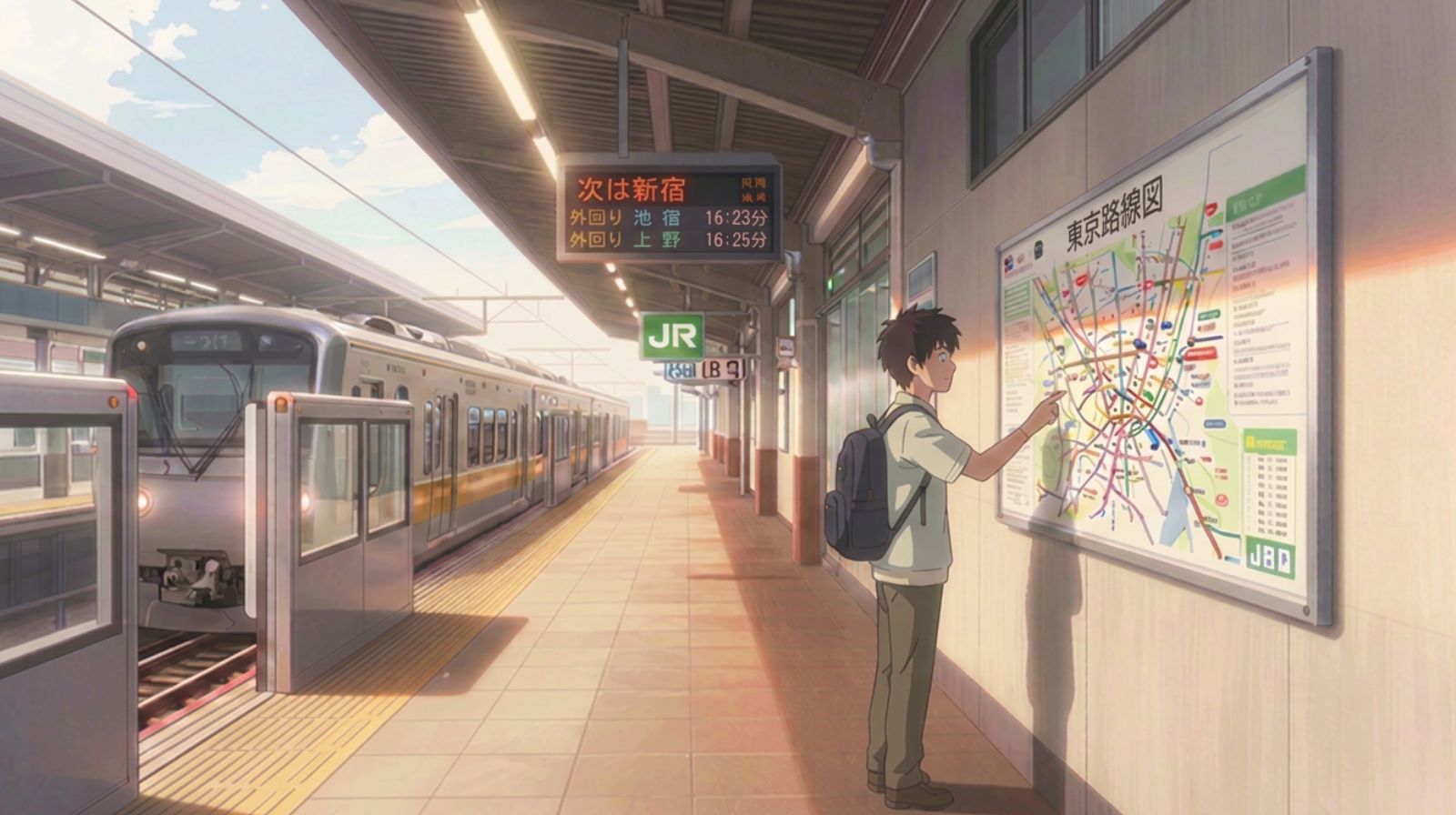
If you are still getting familiar with Japan’s railway system, our How to Use Trains and Subways in Japan guide covers ticket gates, platforms, transfers, train types, and station navigation.
Local Buses Can Take You Beyond the Railway Network
It is easy to build a first Japan itinerary entirely around railway stations.
That works well in Tokyo, Osaka, and many other major destinations. But some places begin to feel much more accessible once you are comfortable using a local bus.
A bus might take you:
- from a station into a residential neighborhood
- from a regional station to a hot-spring area
- to a temple or cultural site away from the railway
- into a smaller town
- to the start of a walking route or hiking area
- closer to your accommodation when it is not directly beside a station
Once local buses feel manageable, you are no longer limited to places within walking distance of a railway station. That can make it easier to stay in a residential neighborhood, reach a hot-spring area, or spend time in a smaller town.
Useful Japanese Words for Local Buses
| Japanese | Romaji | English |
|---|---|---|
| 路線バス | Rosen basu | Local route bus |
| バス停 | Basutei | Bus stop |
| 路線 | Rosen | Route |
| 行先 | Ikisaki | Destination |
| 整理券 | Seiriken | Numbered ticket |
| 運賃 | Unchin | Fare |
| 運賃箱 | Unchinbako | Fare box |
| 降車ボタン | Kōsha botan | Stop request button |
| 次は | Tsugi wa | Next stop |
| とまります | Tomarimasu | Stopping |
| おります | Orimasu | Getting off |
| 入口 | Iriguchi | Entrance |
| 出口 | Deguchi | Exit |
You do not need to memorize all of these. 整理券 / Seiriken / Numbered ticket is particularly useful to recognize if you plan to use regional buses.
The Simplest Way to Approach Your First Local Bus
Do not try to learn the bus system for all of Japan before your trip.
Instead, check four things when the bus arrives:
- Which door opens?
- Do passengers pay now or later?
- Is there an IC card reader or numbered-ticket machine?
- Which stop do you need?
Once you can answer those four questions, most local bus journeys become straightforward.
Frequently Asked Questions
- Can I use Suica, PASMO, or ICOCA on local buses in Japan?
-
Often, but not always. Major cities and many regional operators accept nationwide transportation IC cards, but some local routes use a different system or still require cash. Look for the IC card logo or check the bus operator before traveling.
- Do I pay when I get on or when I get off a bus in Japan?
-
It depends on the bus. Some routes require payment when boarding, while others collect the fare when you get off. Do not assume that one method applies throughout Japan.
- What is a seiriken on a Japanese bus?
-
整理券 / Seiriken / Numbered ticket is a small ticket that records where you boarded a distance-based bus. When getting off, match its number with the fare shown on the display near the front of the bus.
- Can I pay for a local bus with a credit card?
-
Sometimes, but you should not rely on it. Contactless credit-card payment is available on some bus services, while others accept only transportation IC cards and cash.
- What happens if I forget to press the stop button?
-
If nobody requests the stop and nobody is waiting there, the bus may continue past it. Press the stop request button after your destination is announced as the next stop.
- Are local buses a good option with large suitcases?
-
They can be useful for short journeys, but crowded local buses have limited luggage space. If you have several large bags, are traveling with children, or are tired after a long journey, a taxi may be more comfortable.
Related Guides
Explore practical guides to help you plan your trip and travel around Japan with confidence.
Planning Your Trip to Japan
- A Complete Guide for First-Time Visitors to Japan: Stay, Travel, and Experience Local Life
- How to Prepare for a Trip to Japan: What to Plan Before You Go
Transportation
- How to Use Trains and Subways in Japan
- How to Use IC Cards in Japan: Suica, PASMO, ICOCA & Mobile IC Cards
- How to Pay for Train Travel in Japan
- How to Use Local Buses in Japan: A First-Time Visitor Guide
- How to Use Taxis in Japan
- Kansai Airport to Osaka: Best Routes for 8 Areas
- Kansai Airport to Umeda: A Practical Route Example Using Train, Bus & Taxi
- How to Buy Shinkansen Tickets in Japan
- Japan Rail Pass: Is It Worth It? A Complete Guide
Money
- Cash or Credit Cards in Japan? A Complete Guide for First-Time Visitors
- Can I Use Credit Cards Everywhere in Japan? Where Cards Work—and Where You’ll Still Need Cash
- How to Exchange Money in Japan: The Best Ways to Get Japanese Yen
- Tax-Free Shopping in Japan: Rules, Purchases & Refunds
Cities & Destinations
- Osaka vs Kyoto: Which City Is Right for You?
- Where to Stay in Osaka: Best Areas for First-Time Visitors
- Are Osaka Hotels Expensive in 2026? What to Expect and When to Book
- Where to Stay in Yodoyabashi, Higobashi & Edobori: Central Osaka Area Guide
Culture & Etiquette
- Japanese Etiquette Every Visitor Should Know
- Onsen & Sento Etiquette in Japan: A First-Time Visitor Guide