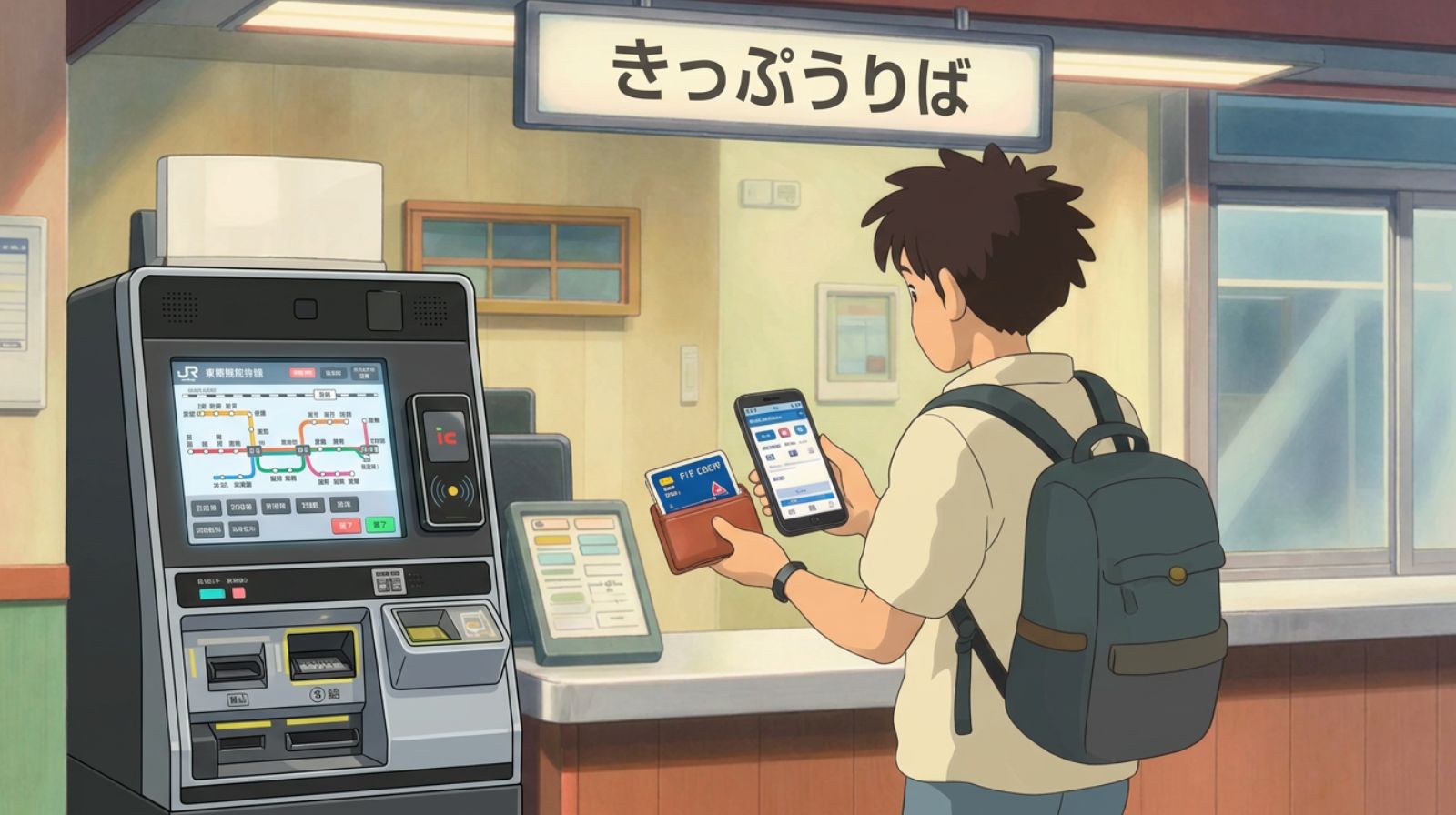
Most Visitors Only Need to Understand Three Options
Japan’s transportation system may look complicated at first, but paying for train travel is actually quite simple.
For most travelers, there are only three options to understand:
- IC Cards (Suica, PASMO, ICOCA)
- Individual train tickets
- Shinkansen tickets and reservations
The best choice depends on where you plan to travel and how often you expect to use public transportation.
Fortunately, most visitors can travel comfortably throughout Japan using just one or two of these options.
Option 1: IC Cards
For most travelers, an IC card is the easiest and most convenient way to pay for transportation.
An IC card is a rechargeable card that can be used on trains, subways, and many buses throughout Japan.
Instead of purchasing a ticket for each journey, you simply tap your card when entering and leaving the station.
Popular IC cards include:
- Suica
- PASMO
- ICOCA
Although the names differ by region, they work almost identically for visitors.
For most travelers, the choice of card is far less important than simply having one.
Physical Cards vs Mobile IC Cards
Today, visitors can choose between:
- A physical plastic card
- A mobile IC card stored on a smartphone
Both work in the same way at ticket gates.
Many travelers now prefer mobile IC cards because they eliminate the need to carry an additional card.
However, the best option depends on your device and personal preference.
Mobile IC Cards Are Often the Most Convenient Option
For iPhone users, adding a Suica card to Apple Wallet is usually the easiest solution.
Once configured, your phone can be used exactly like a physical IC card.
Many travelers choose to set up Mobile Suica before arriving in Japan so they can begin using trains immediately after landing.
No ticket machines.
No lines.
No confusion.
Simply tap and travel.
Because setup requirements vary by device and country, we recommend reviewing our dedicated guide before departure.
Related Guide: How to Use IC Cards in Japan
Android Users Should Check Compatibility
While many iPhones support Mobile Suica worldwide, Android compatibility varies significantly.
Some Android devices purchased outside Japan may not support Mobile Suica or other Japanese transit systems.
Travelers using Android devices should confirm compatibility before relying on a mobile IC card.
If mobile support is unavailable, a physical IC card remains an excellent option.
Option 2: Individual Train Tickets
Individual tickets are available at stations throughout Japan.
They are useful when:
- You rarely use trains
- You do not have an IC card
- You are visiting areas with limited IC card support
Ticket machines typically offer English-language menus and are relatively easy to use.
However, frequent travelers usually find IC cards much more convenient.
Option 3: Shinkansen Tickets
The Shinkansen, often called the bullet train, operates differently from local trains and subways.
In most cases, a separate ticket or reservation is required.
For example:
- Tokyo to Kyoto
- Tokyo to Osaka
- Osaka to Hiroshima
These journeys typically require a dedicated Shinkansen ticket.
Many first-time visitors are surprised to learn that local transportation and Shinkansen travel are handled separately.
Understanding this distinction before your trip can prevent confusion later.
Reserved and Non-Reserved Seats
Depending on the route, Shinkansen passengers may choose between:
- Reserved seats
- Non-reserved seats
- Green Car (first-class style seating)
The best choice depends on your schedule, budget, and travel season.
During busy travel periods, reservations are often recommended.
Can You Use a Credit Card?
Japan has become increasingly friendly to international payment methods.
Credit cards are commonly accepted for:
- Mobile IC card recharges
- Shinkansen reservations
- Ticket purchases at many stations
However, acceptance varies by service and card issuer.
Some travelers occasionally experience issues when using overseas-issued cards for mobile IC card payments.
Because policies change over time, it is wise to carry at least one backup payment method.
Traveling Outside Major Cities
Most visitors spend time in destinations such as:
- Tokyo
- Osaka
- Kyoto
- Yokohama
- Nagoya
In these areas, transportation payments are usually straightforward.
However, travelers visiting rural destinations should be aware that some local transportation systems operate differently.
You may occasionally encounter:
- Train lines without IC card support
- Local buses with different payment methods
- Cash-only transportation services
These situations are becoming less common, but they still exist in some regions.
Checking transportation information before visiting remote destinations is always a good idea.
Which Option Is Best for Most Travelers?
For most first-time visitors, the simplest approach is:
- Use an IC card for daily transportation.
- Purchase Shinkansen tickets separately when traveling between major cities.
- Keep a backup payment method available.
This combination works well for the majority of trips throughout Japan.
Once you understand these basics, navigating Japan’s transportation system becomes much easier.
Transportation Should Feel Easy, Not Stressful
Many first-time visitors worry about transportation before arriving.
Fortunately, Japan’s payment systems are designed to be practical and reliable.
After a few train journeys, most travelers quickly become comfortable using stations, IC cards, and ticket machines.
What initially feels complicated often becomes second nature.
The goal is not to master every transportation rule.
It is to travel confidently and spend more time enjoying Japan.
Related Guides
- How to Use Trains and Subways in Japan
- How to Use IC Cards in Japan
- How to Buy Shinkansen Tickets in Japan
- Can You Travel Japan Without Speaking Japanese?
- How Much English Is Spoken in Japan?
- Is Japan Safe for Foreign Travelers?
- A Complete Guide for First-Time Visitors to Japan
- What to Expect on Your First Trip to Japan
- Japanese Etiquette Every Visitor Should Know