The Quick Answer: Where Should You Stay in Osaka?
For most first-time visitors:
- Choose Umeda for transportation, shopping, and day trips to Kyoto or Kobe.
- Choose Namba for food, nightlife, and famous central Osaka sights.
- Choose Yodoyabashi, Higobashi, or Edobori for a quieter stay in central Osaka.
- Choose Tennoji for a practical southern base with shopping and sightseeing nearby.
- Choose Morinomiya or Midoribashi for Osaka Castle, parks, and a more residential atmosphere.
- Choose Tengachaya for direct Kansai Airport access and a local neighborhood stay.
- Choose Shin-Osaka when frequent Shinkansen travel is your main priority.
- Choose the Osaka Bay area when Universal Studios Japan is the main purpose of your trip.
| Area | Best for | Atmosphere | Main consideration |
|---|---|---|---|
| Osaka Station and Umeda | Transportation and day trips | Busy, modern, convenient | The large station area can feel complicated |
| Yodoyabashi, Higobashi, and Edobori | A quiet central stay | Calm, refined, local | Fewer late-night attractions |
| Namba and Shinsaibashi | Food and nightlife | Lively, crowded, energetic | Noise and tourist crowds |
| Tennoji and Abeno | A balanced southern base | Convenient and varied | Less practical for northern Osaka |
| Osaka Castle, Morinomiya, and Midoribashi | Parks and local neighborhoods | Residential and relaxed | Some journeys require transfers |
| Tengachaya and South Osaka | Airport access and local life | Traditional and residential | More residential, less tourist-focused |
| Shin-Osaka and nearby districts | Shinkansen travel | Practical and business-oriented | Limited sightseeing atmosphere |
| Universal Studios Japan and Osaka Bay | USJ and family attractions | Leisure-focused | Less convenient for exploring the whole city |
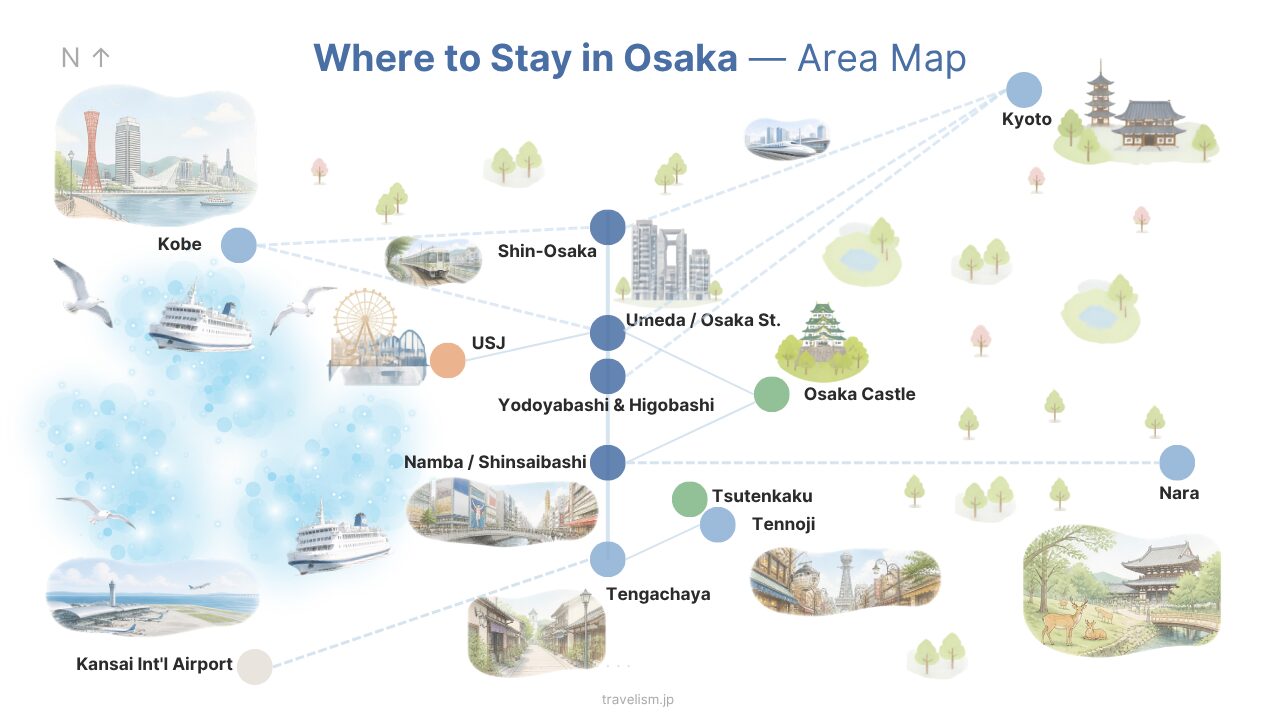
The best area is not necessarily the one closest to the greatest number of attractions. It is the area that makes your particular trip easier and more enjoyable.
Think in Travel Zones, Not Just Station Names
Osaka is easier to understand if you think in travel zones rather than individual stations.
A property described as being in the “Umeda area” may not be directly beside Osaka Station. A stay described as “Yodoyabashi” may actually be closer to Higobashi or Edobori. Accommodation near Osaka Castle may be around Morinomiya or Midoribashi rather than beside the castle tower.
That is not necessarily a disadvantage. Moving slightly away from a major station can mean quieter streets, local restaurants, supermarkets, parks, and more spacious accommodation.
Before booking, check:
- The nearest station, not only the area name
- The actual walking route from the station
- Which railway or subway line serves the station
- Whether the route includes stairs, pedestrian bridges, or large intersections
- Which parts of Osaka you will visit most often
- Whether you expect to return late at night
- How much luggage you will carry
For a first-time visitor, knowing the nearest station and railway line is usually more useful than relying on a broad neighborhood name.
For a step-by-step introduction to local rail travel, see How to Use Trains and Subways in Japan.
Osaka Station, Umeda, Nakatsu, and Fukushima — Best for Transport and Day Trips
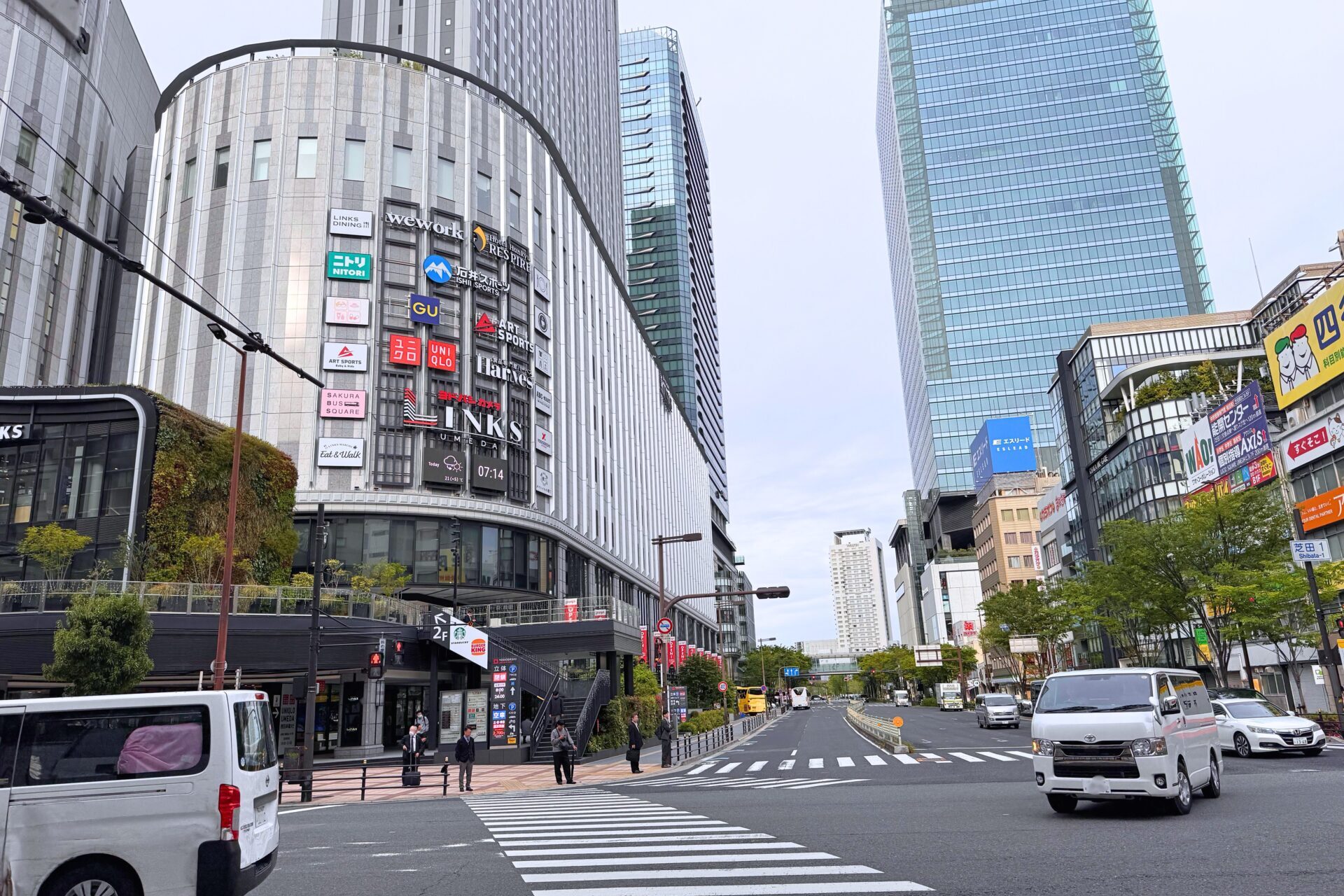
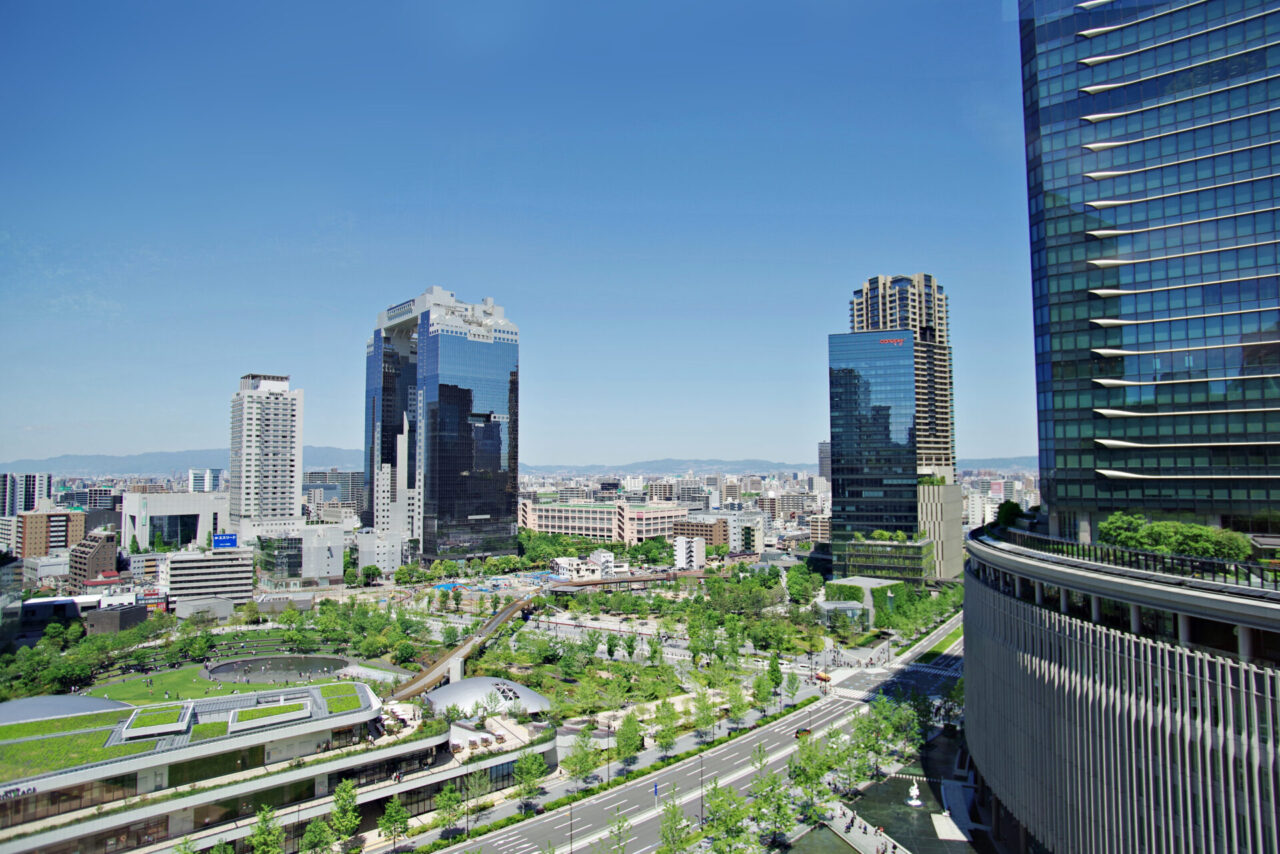
大阪駅 / Ōsaka-eki / Osaka Station and 梅田 / Umeda / Umeda form the main transportation and commercial center of northern Osaka.
JR, Osaka Metro, Hankyu, and Hanshin services all meet in the wider area, surrounded by department stores, restaurants, offices, shopping centers, and large hotels.
Why Umeda works for a first trip
Umeda is one of the easiest bases for visitors who plan to move around Kansai.
It works particularly well if you want to:
- Take day trips to Kyoto or Kobe
- Travel through Shin-Osaka
- Shop in large department stores and commercial complexes
- Have plenty of restaurants nearby
- Stay close to one of Osaka’s main transport hubs
If your itinerary includes several journeys north or east of Osaka, Umeda will often be more practical than Namba.
What staying around Osaka Station feels like
Immediately around Osaka Station, the city feels large, modern, and busy. There are multiple station buildings, underground passages, shopping centers, and exits, and you can spend most of a day in the area without needing to go far.
Walk away from the station toward 中津 / Nakatsu / Nakatsu, 大淀 / Ōyodo / Oyodo, or 福島 / Fukushima / Fukushima, and the atmosphere begins to change. The streets become quieter, with neighborhood supermarkets, smaller restaurants, apartment buildings, and local cafés.
You are still close to Umeda, but the experience feels less like staying inside a transport hub.
One thing to know before booking
Osaka Station is very large. Even when a hotel looks close on a map, reaching the correct entrance or railway line can take longer than expected.
Staying directly beside the station may also mean higher prices or smaller rooms. A property a little farther away can offer a calmer environment or more space, but check the walking route carefully if you are traveling with heavy luggage.
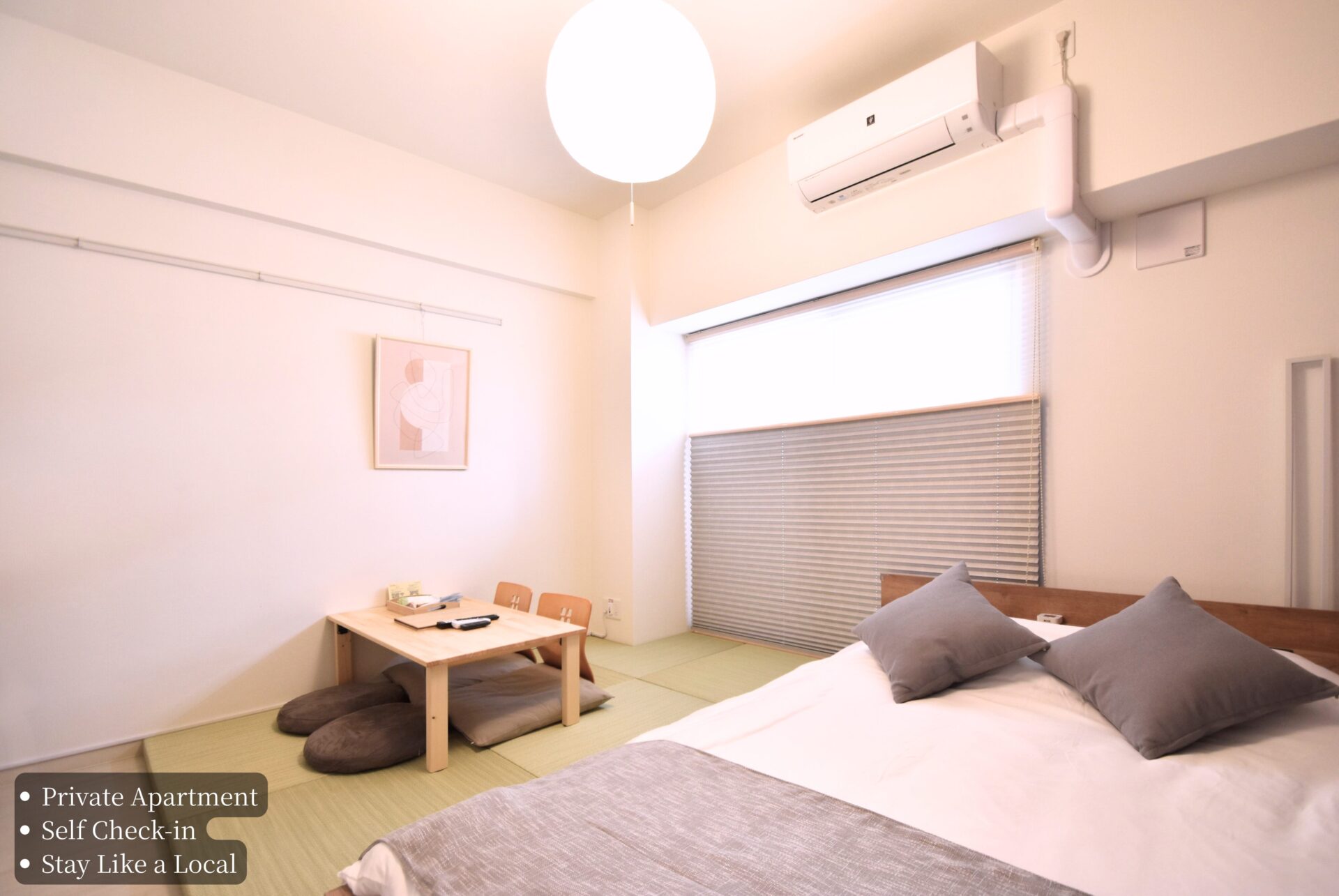
One accommodation we operate in the wider Umeda area is Takumi Stay Umeda Osaka in Oyodonaka, approximately a 12-minute walk from Hankyu Nakatsu Station and an 18-minute walk from Osaka Station.
Yodoyabashi, Higobashi, and Edobori — Best for a Quiet Central Stay
淀屋橋 / Yodoyabashi / Yodoyabashi and 肥後橋 / Higobashi / Higobashi sit between Umeda and the southern districts of central Osaka.
The wider area includes 中之島 / Nakanoshima / Nakanoshima, 本町 / Hommachi / Hommachi, 江戸堀 / Edobori / Edobori, and 靱公園 / Utsubo Kōen / Utsubo Park.
For travelers who want to stay in central Osaka without having nightlife and crowds outside the door, this area is easy to overlook—and worth considering.
For a closer look at transport, breakfast, parks, supermarkets, and what it is like to stay here for several days or longer, see our guide to staying in Yodoyabashi, Higobashi & Edobori.
Why this central location works
Yodoyabashi is served by the Osaka Metro Midosuji Line and the Keihan Line. Higobashi is on the Yotsubashi Line, while Hommachi connects the Midosuji, Yotsubashi, and Chuo lines.
Depending on where you stay, you may have two or more stations within walking distance. That flexibility makes it relatively easy to reach Umeda, Shinsaibashi, Namba, Osaka Castle, and other parts of the city without basing yourself in one of Osaka’s busiest districts.
Around Utsubo Park and Edobori
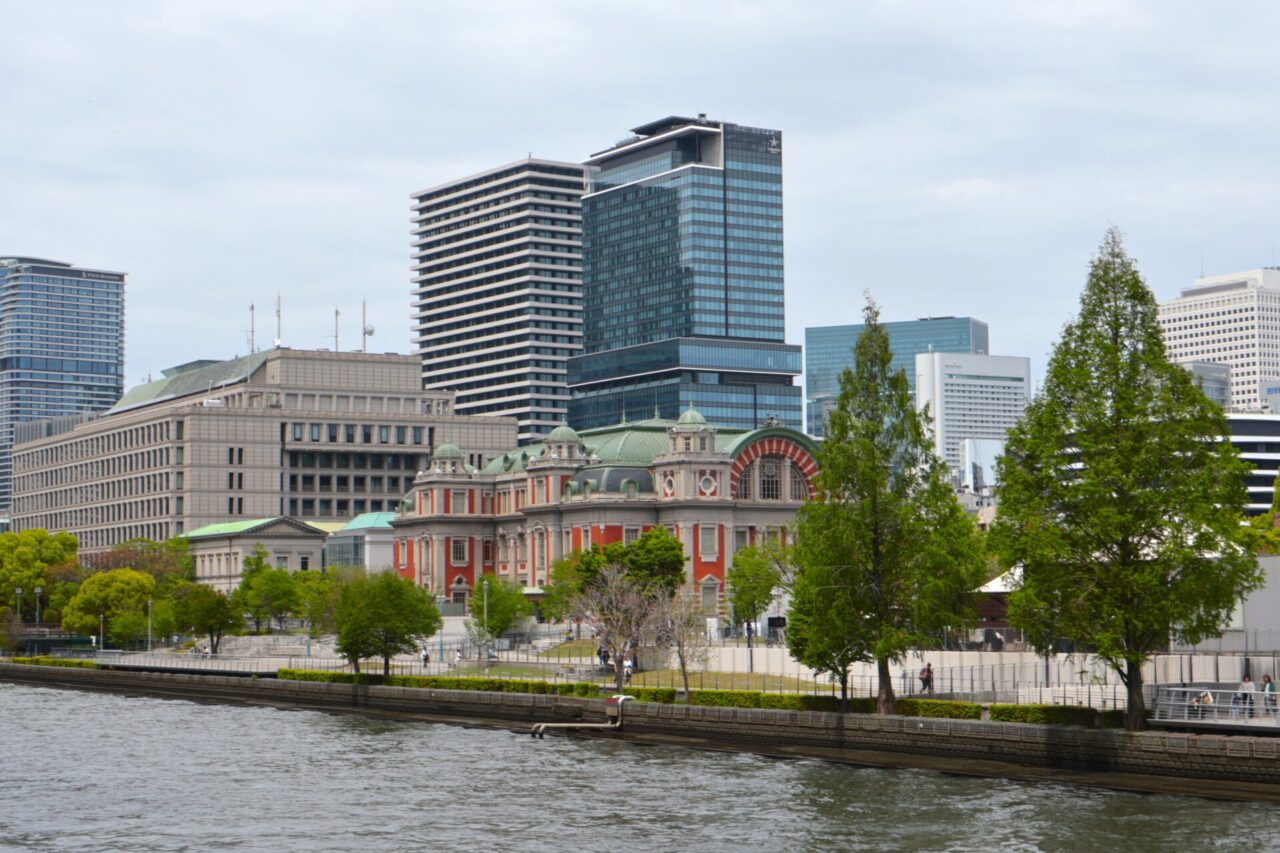
Yodoyabashi is known for office buildings, historic architecture, river views, and convenient transport. Walk toward Higobashi and Edobori, however, and the atmosphere becomes noticeably more relaxed.
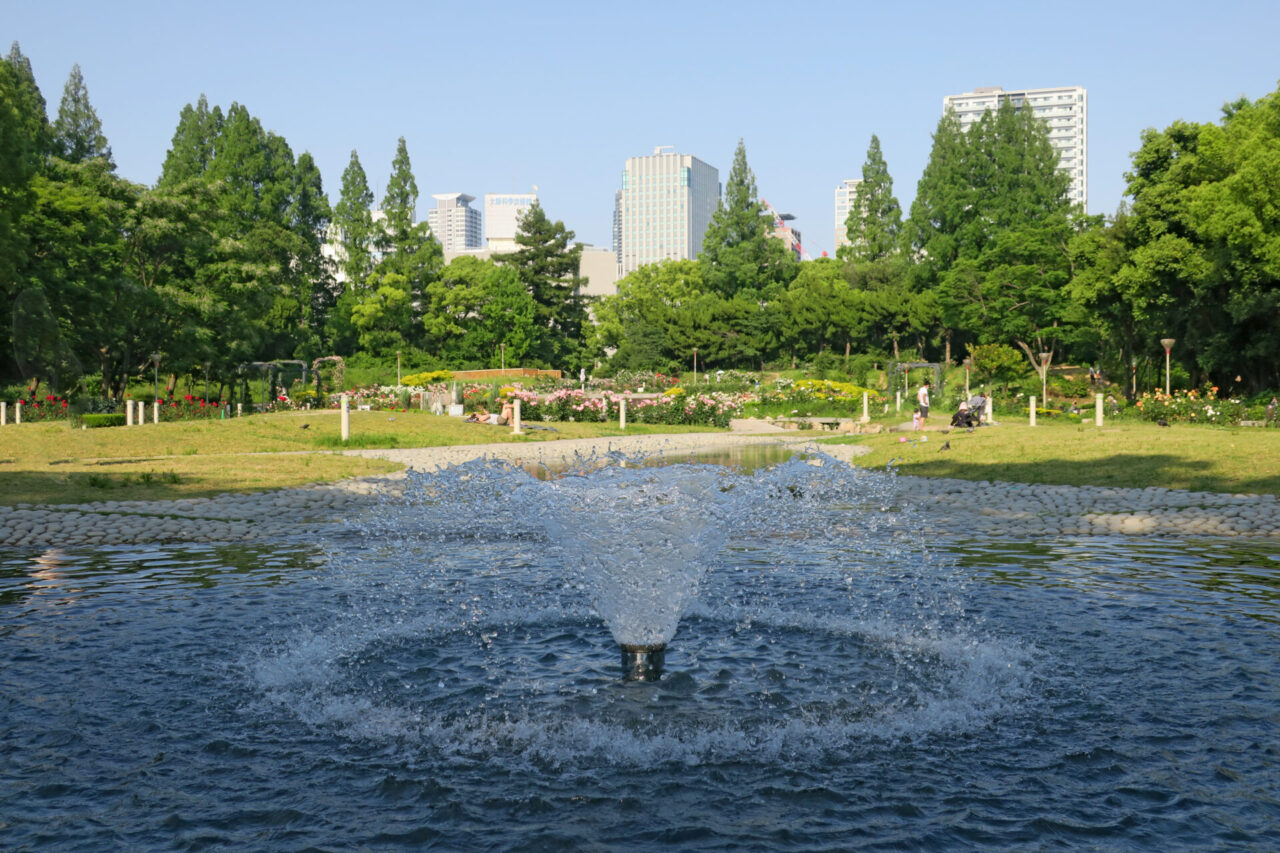
Around Utsubo Park, you will find cafés, bakeries, restaurants, supermarkets, apartment buildings, and smaller local businesses. A morning here can start with a walk through the park, breakfast from a neighborhood bakery, or coffee before heading out for sightseeing.
Weekdays reflect the rhythm of the nearby business districts. On weekends, some streets become surprisingly quiet.
For a two- or three-night stay, that may simply mean having a calmer place to return to. Stay longer, and the neighborhood begins to matter more. You may find a bakery you return to each morning, a café near Utsubo Park, or a supermarket you stop at on the way back to your accommodation.
Who will enjoy staying here most?
Yodoyabashi, Higobashi, and Edobori work especially well for:
- Couples
- Visitors staying several nights
- Travelers who prefer quiet evenings
- People who enjoy cafés, parks, and neighborhood restaurants
- Visitors who want convenient access to both Umeda and Namba
- Travelers working remotely during part of their stay
If you want bars and nightlife immediately outside your accommodation, Namba will probably suit you better. If you prefer exploring busy parts of the city during the day and returning somewhere calmer at night, this area can be a very good fit.
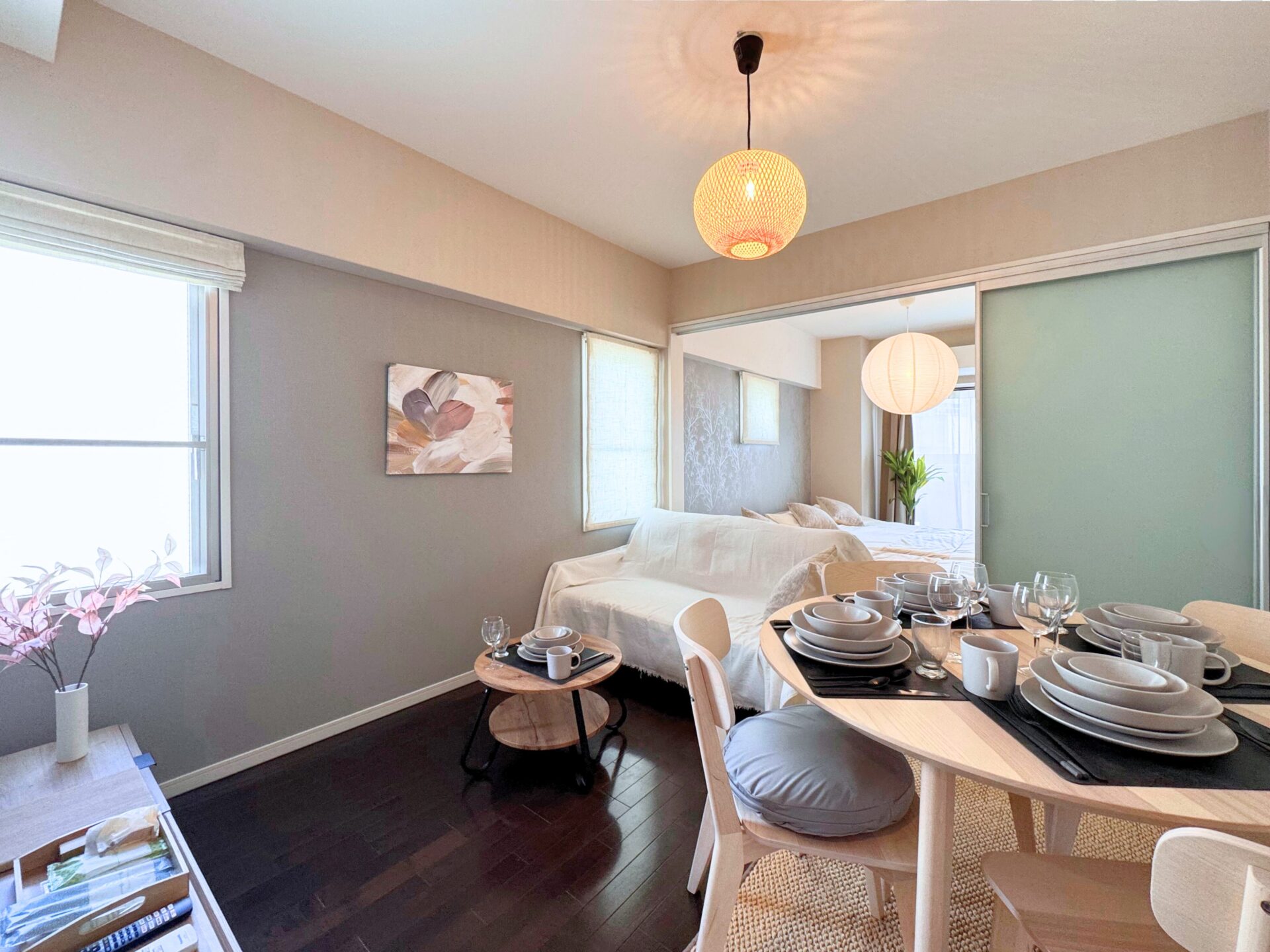
One accommodation we operate in this area is Takumi Stay Yodoyabashi Osaka in Edobori. Higobashi is the nearest station, with Hommachi and Yodoyabashi also within walking distance, and Utsubo Park nearby.
Shinsaibashi, Namba, Dotonbori, and Nipponbashi — Best for Food and Nightlife
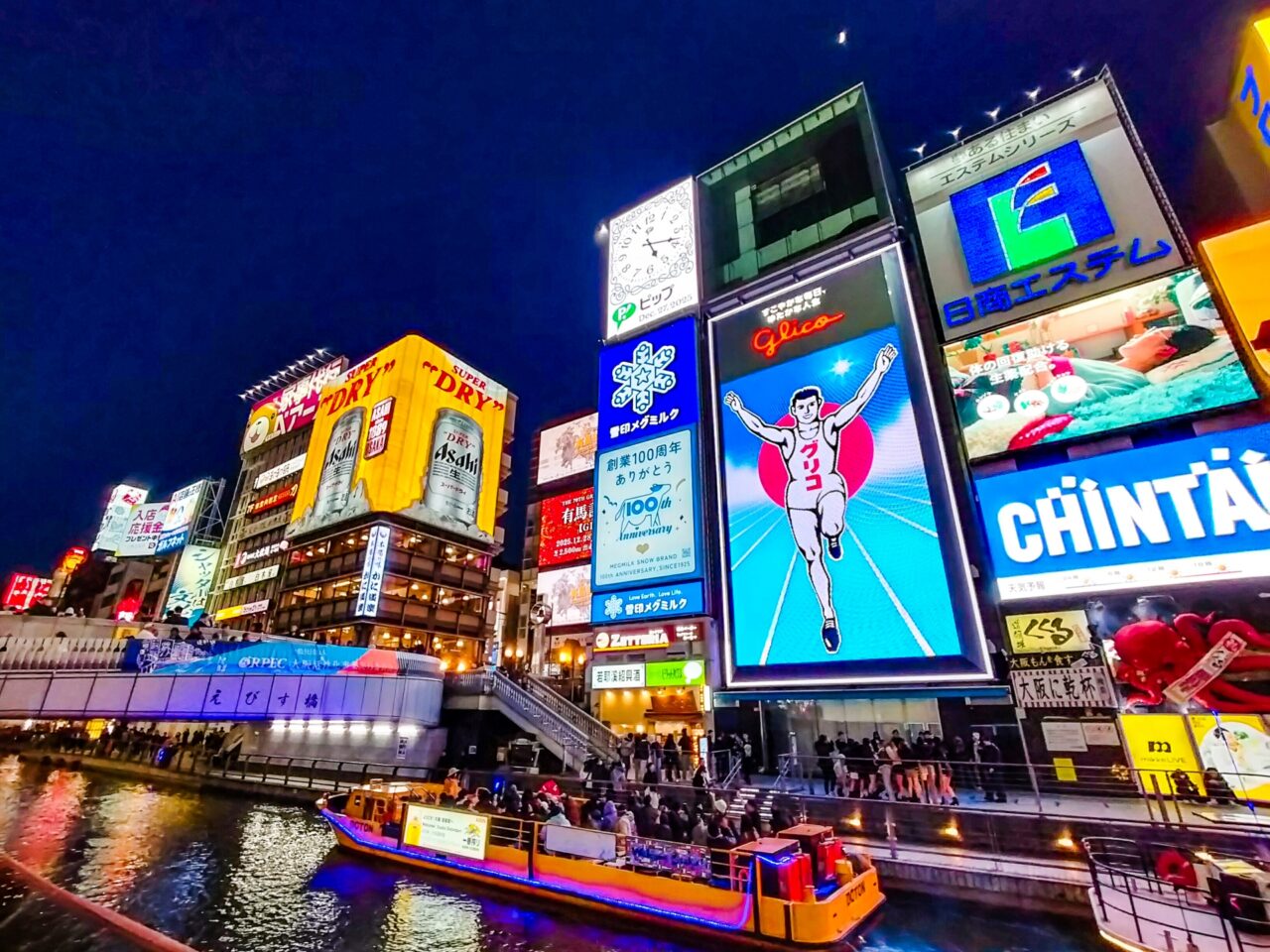
心斎橋 / Shinsaibashi / Shinsaibashi and 難波 / Namba / Namba form the heart of Osaka’s Minami district.
This is the Osaka many first-time visitors picture before arriving: neon signs, busy restaurants, shopping streets, entertainment, and food late into the night.
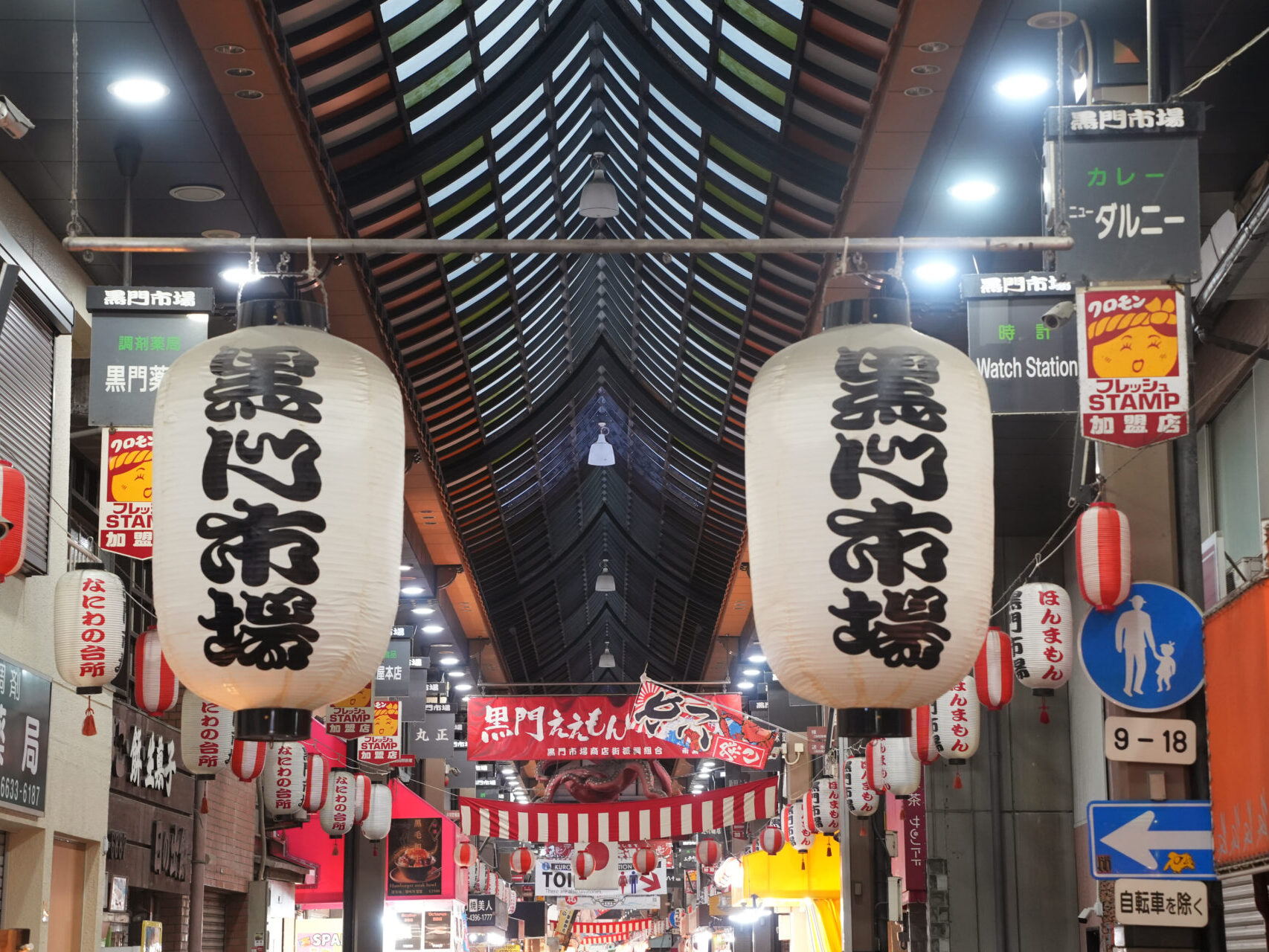
The wider area includes 道頓堀 / Dōtonbori / Dotonbori, 黒門市場 / Kuromon Ichiba / Kuromon Market, and 日本橋 / Nipponbashi / Nipponbashi.
Stay here if you want Osaka outside your door
Namba makes sense when food, shopping, and nightlife are a major part of your trip.
It is especially convenient if you:
- Want to walk to Dotonbori
- Plan to spend time shopping in Shinsaibashi
- Enjoy busy streets and late-night dining
- Want convenient Nankai access from Kansai Airport
- Prefer famous sights within walking distance
For a short first visit focused mainly on central Osaka, it is difficult to beat the convenience. Step outside in the evening and there is usually somewhere to eat, shop, or explore.
The trade-off: crowds and noise
The energy that makes Namba exciting can also become tiring. Dotonbori and the surrounding streets are among the busiest parts of Osaka, particularly in the evening and during weekends or holiday periods.
Some accommodation may also be affected by nightlife noise. Families, light sleepers, or travelers spending a week in Osaka may prefer staying several streets away from the busiest areas—or choosing a quieter central district such as Higobashi or Yodoyabashi.
Namba is also less practical than Umeda if you plan to make frequent day trips toward Kyoto or Kobe. For visitors spending most of their time in Osaka, however, that difference may not matter.
Tennoji, Abeno, and Shinsekai — Best for a Balanced Southern Base
天王寺 / Tennōji / Tennoji and 阿倍野 / Abeno / Abeno form one of southern Osaka’s main transport and commercial centers.
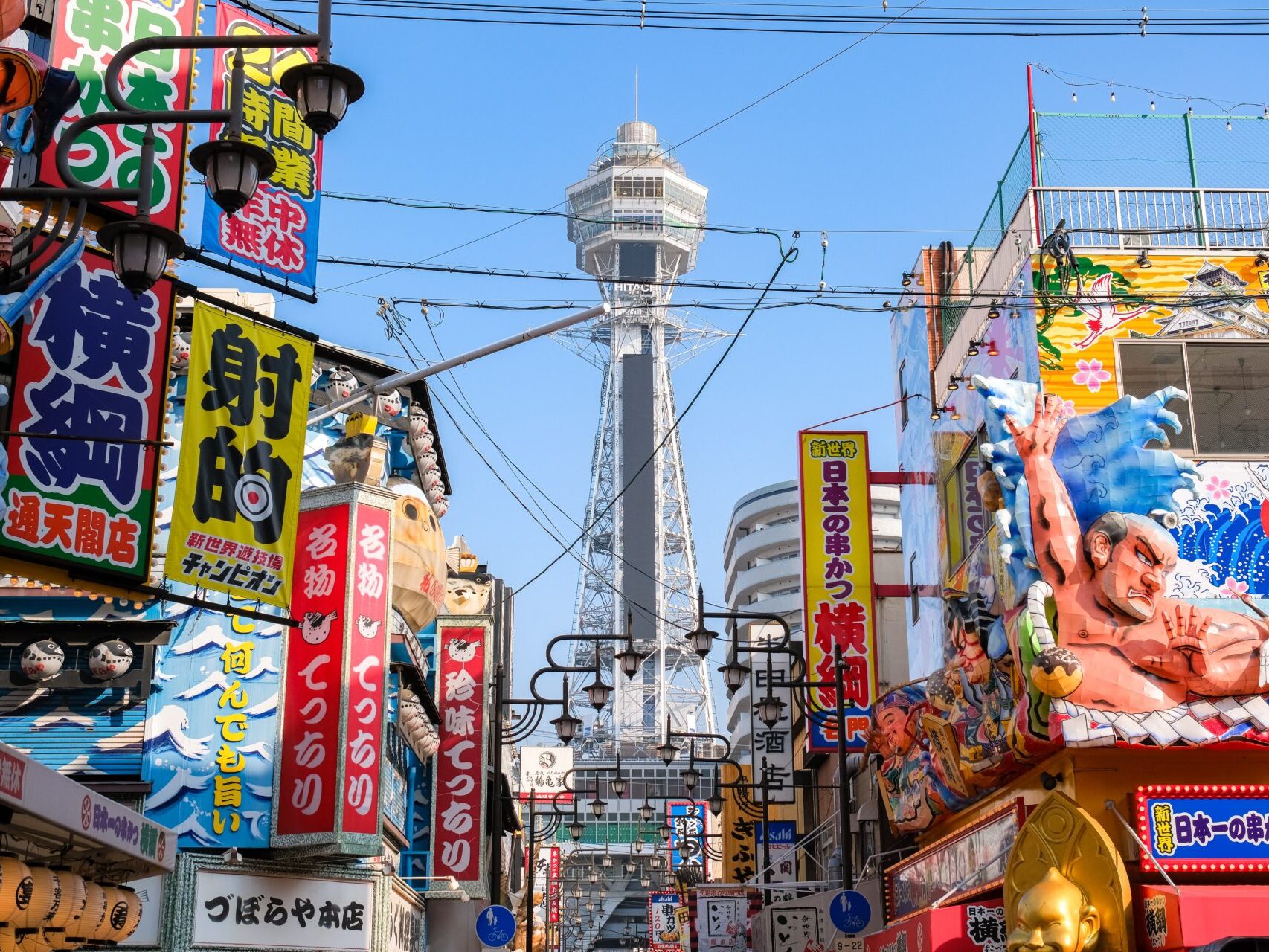
Nearby 新世界 / Shinsekai / Shinsekai adds a very different atmosphere around Tsutenkaku, with older restaurants, casual entertainment, and a more traditional image of Osaka.
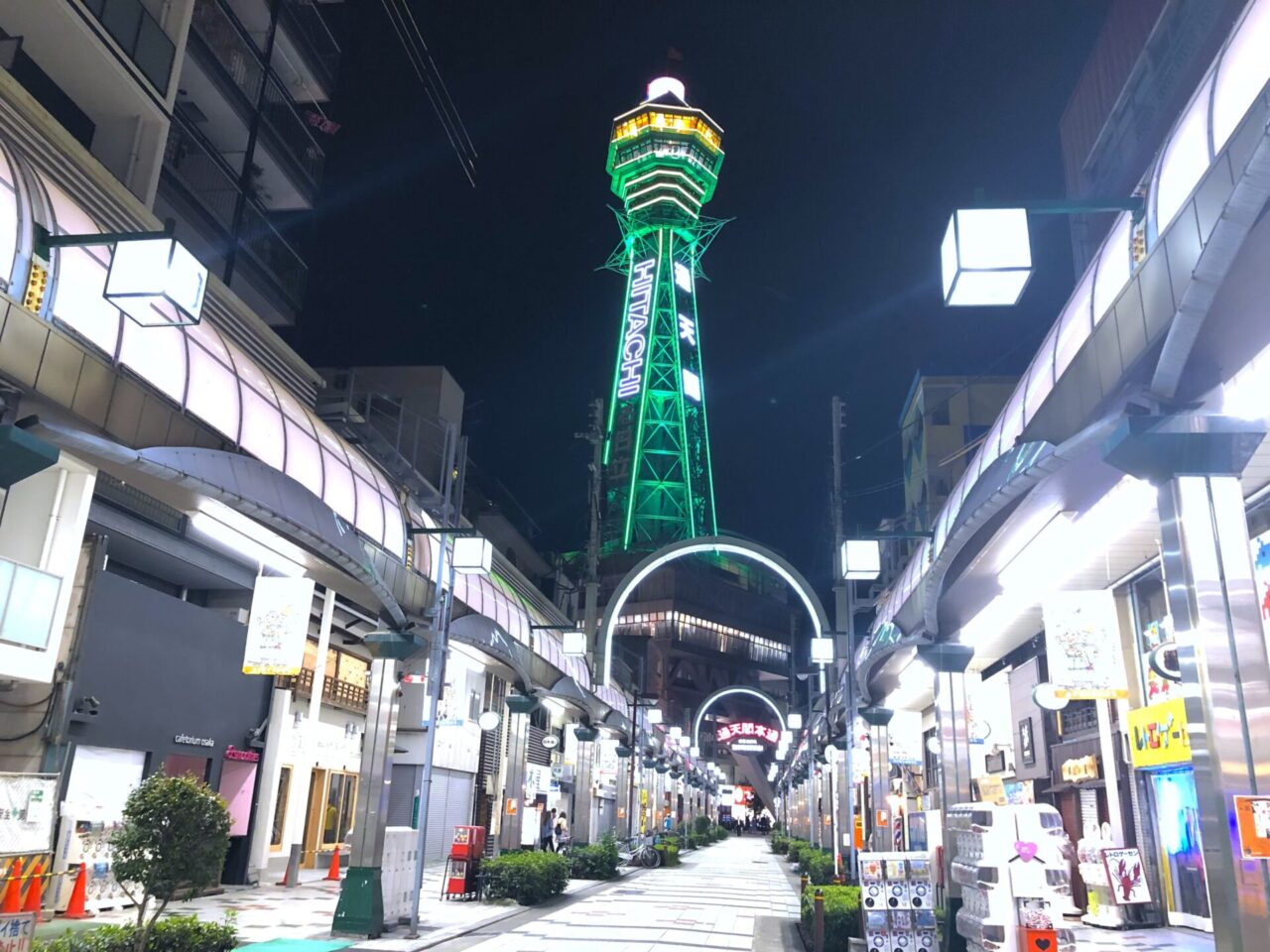
Why Tennoji works as a southern base
Tennoji is useful for travelers who want good transport without staying in Umeda or Namba.
It is a practical choice if you:
- Are traveling between Osaka and Kansai Airport
- Plan a day trip to Nara
- Want shopping and dining close to your accommodation
- Are visiting Tennoji Zoo
- Want to explore both modern and older parts of Osaka
Tennoji Station is surrounded by large shopping centers, restaurants, hotels, and Abeno Harukas. From there, walk toward Shinsekai and the city changes quickly.
The streets become more colorful and informal. Walk in another direction and you may find temples, parks, residential areas, and neighborhood shopping streets. That variety is part of the appeal.
What to keep in mind
Tennoji works well for southern Osaka and Nara, but it is less practical than Umeda when most of your plans involve Kyoto, Kobe, or northern Osaka.
The atmosphere also changes considerably between neighborhoods, so check the exact location of the property rather than assuming every accommodation around Tennoji offers the same experience.
Osaka Castle, Morinomiya, and Midoribashi — Best for Parks and Local Neighborhoods
大阪城 / Ōsakajō / Osaka Castle is one of Osaka’s best-known landmarks, but staying in the wider castle area does not necessarily mean sleeping beside the castle itself.
森ノ宮 / Morinomiya / Morinomiya and 緑橋 / Midoribashi / Midoribashi are useful bases on the eastern side of central Osaka.
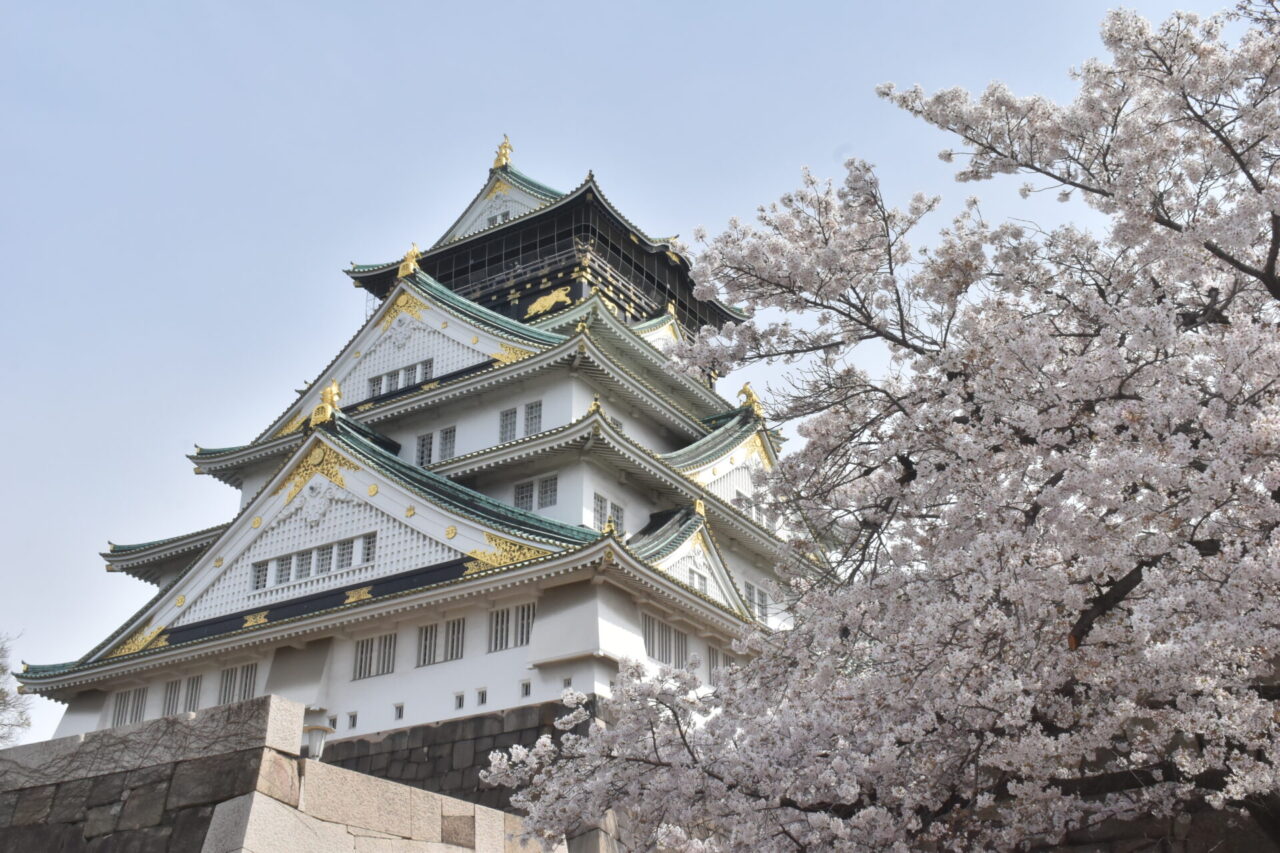
A quieter side of Osaka
Morinomiya keeps you close to Osaka Castle Park and major transport connections. Continue toward Midoribashi and the surroundings become increasingly residential.
You may pass local supermarkets, small restaurants, cafés, schools, and people going about their normal routines before taking the subway toward central Osaka. That creates a very different start to the day from staying in Namba.
Osaka Castle is nearby, but the neighborhood itself still feels like somewhere people live rather than a district built around visitors.
This area can work particularly well for travelers who:
- Enjoy parks and morning walks
- Want convenient access to Osaka Castle
- Prefer residential streets to nightlife districts
- Are traveling as a couple or family
- Want to see a more everyday side of eastern Osaka
How close is “near Osaka Castle”?
Osaka Castle Park is large. A property advertised as being “near Osaka Castle” may still be some distance from the main tower or from the park entrance you intend to use.
Check:
- The nearest station
- Which side of the park you will approach from
- The route to the castle tower
- Your return journey at the end of the day
If your trip includes frequent late nights in Namba, a more southern base may be easier. If you value quieter surroundings and do not mind using the subway, Morinomiya and Midoribashi offer a very different balance.
We also operate Takumi Residence Osaka Castle in the wider Midoribashi and Morinomiya area. It is in a residential neighborhood rather than directly beside the castle tower.
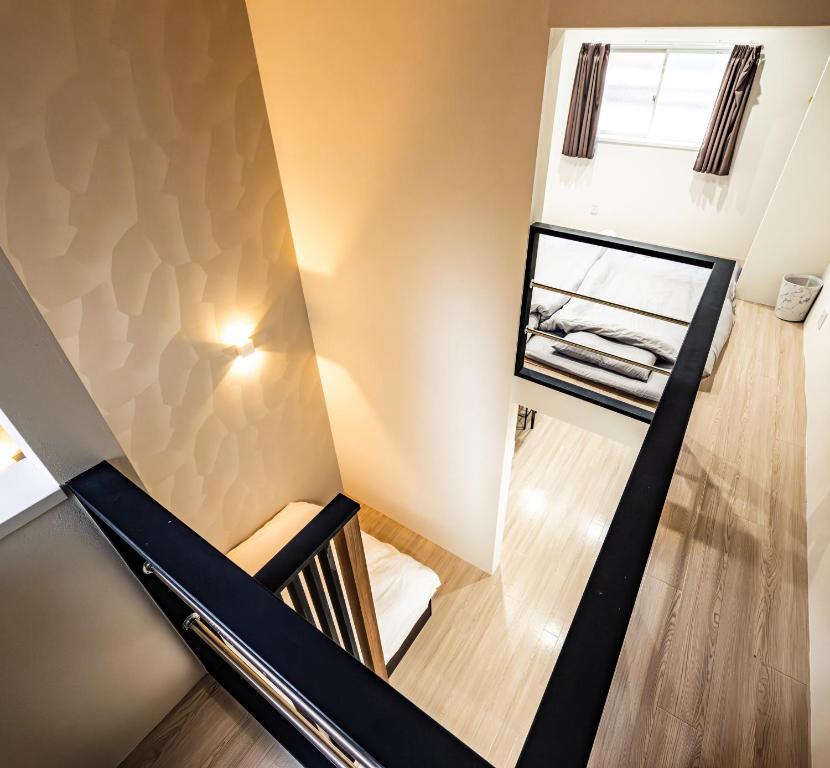
Tengachaya and South Osaka — Best for Airport Access and Local Life
天下茶屋 / Tengachaya / Tengachaya is a residential district in southern Osaka with useful transport connections and a noticeably more local atmosphere than Umeda or Namba.
It is not usually the first name visitors encounter when looking for accommodation in Osaka. For the right traveler, that is part of the appeal.
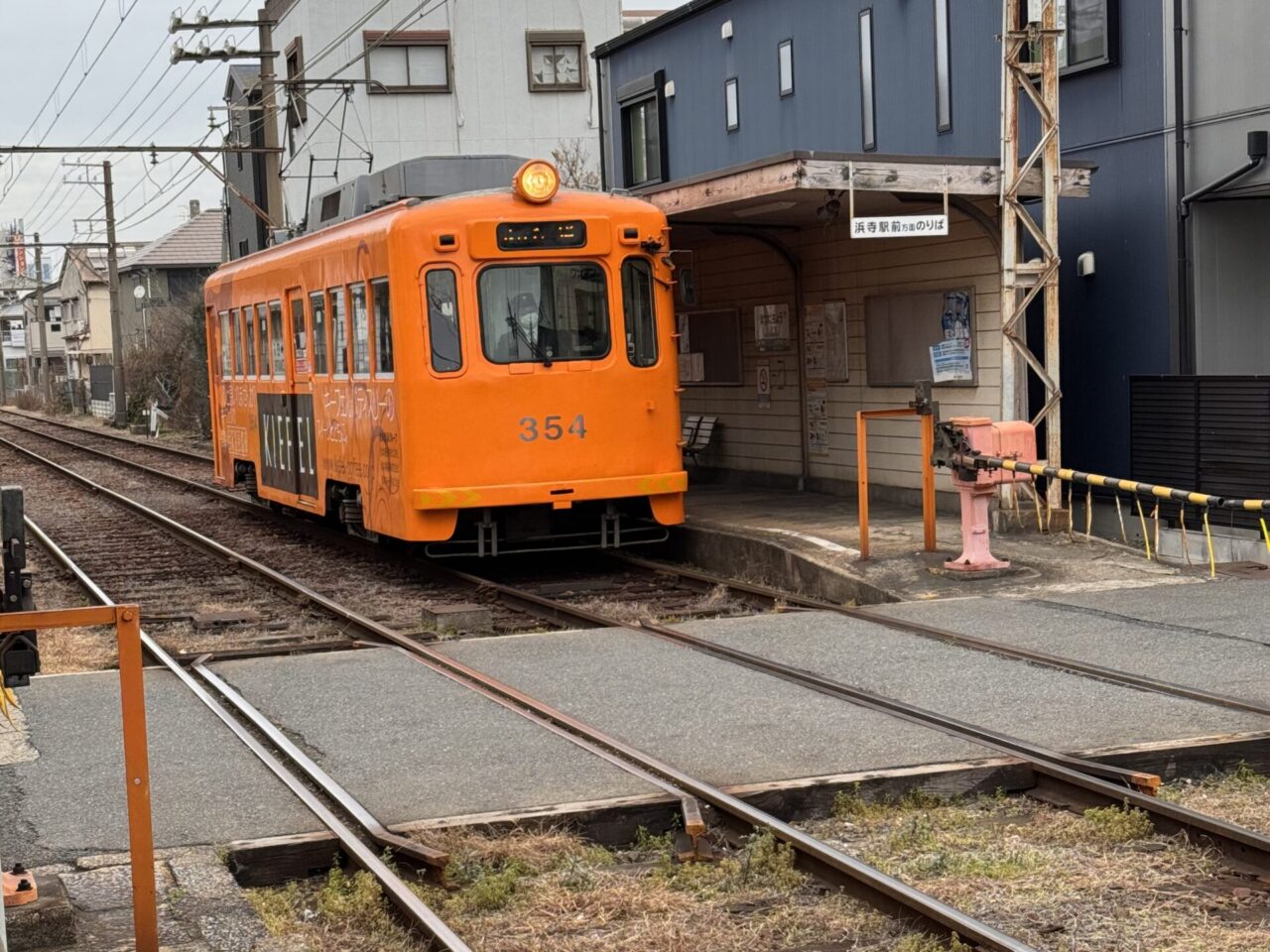
Why Tengachaya works for Kansai Airport
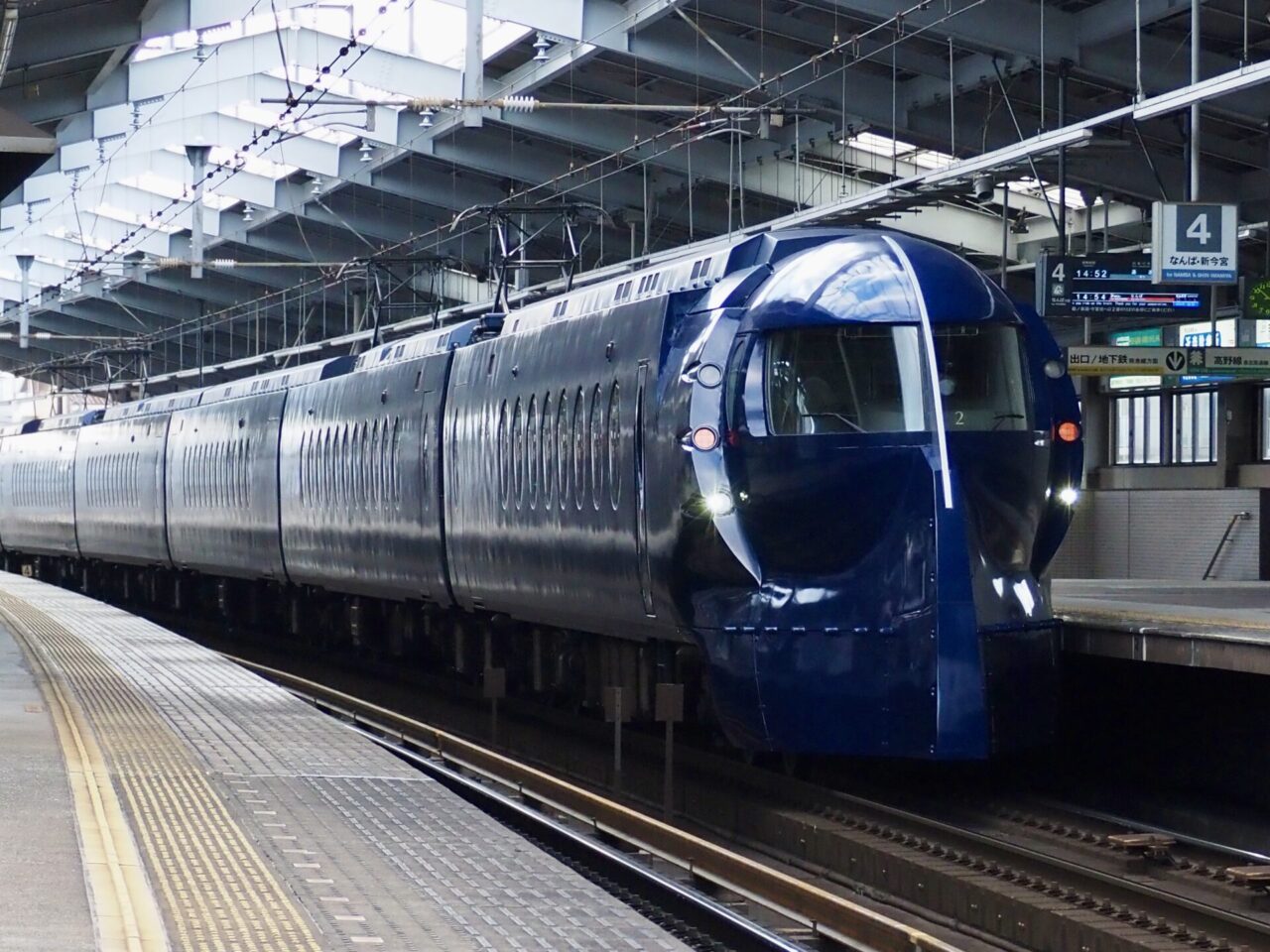
Nankai services connect Kansai Airport, Tengachaya, and Namba. The Osaka Metro Sakaisuji Line also provides access toward central Osaka.
That combination makes Tengachaya worth considering if you are arriving through Kansai International Airport but do not necessarily want to stay in central Namba. It can also work well for travelers looking for an entire house or a more residential style of accommodation.
What a local stay here actually feels like
Tengachaya is not built around international tourism. You may see residents shopping for groceries, eating at neighborhood restaurants, using the historic Hankai Tramway, or visiting a 銭湯 / sentō / public bath.
There are local shopping streets and residential lanes that many visitors to Osaka would never see if they stayed entirely around Umeda or Dotonbori.
You can spend the day sightseeing in central Osaka and return in the evening to somewhere that feels less like a tourist district.
What to know before booking
Tengachaya is more residential than Umeda or central Namba, so English-language tourist information is less prominent in the neighborhood.
Before arrival, make sure you understand:
- The walking route from the station
- The property address
- The check-in procedure
- How to contact the accommodation if necessary
This is particularly important for self-check-in properties. And because Tengachaya is a residential neighborhood, keeping noise low at night is especially important.
For a more detailed look at transport, daily life, long-stay practicality, and the trade-offs of using the neighborhood as a base, see Where to Stay in Tengachaya, Osaka: Airport Access & a Residential Base.
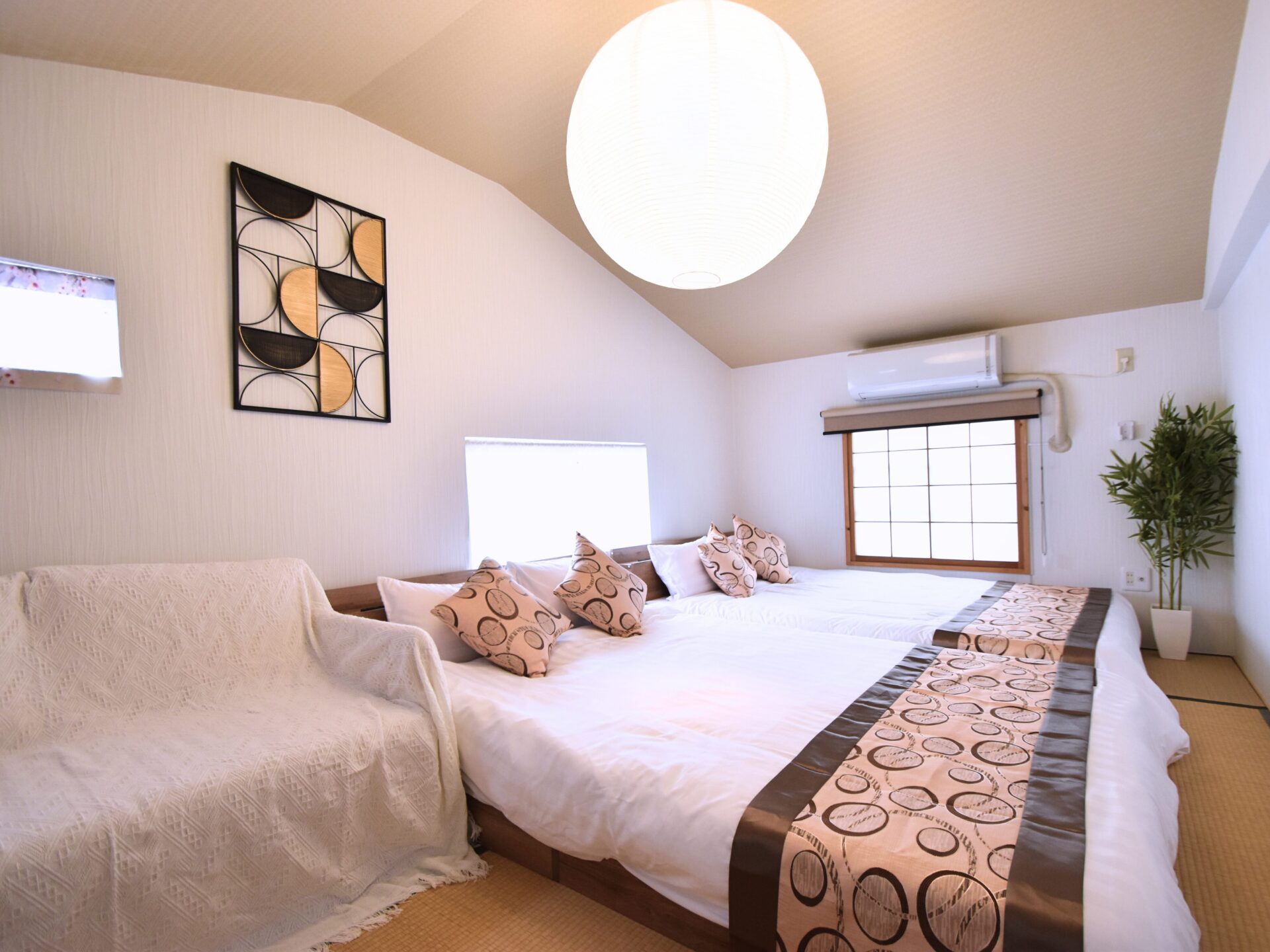
We also operate Takumi Residence Tengachaya Tennoji Osaka, an entire private house approximately six minutes on foot from Tengachaya Station, close to the Hankai Tramway, a supermarket, and a local public bath.
Shin-Osaka, Nishinakajima, and Juso — Best for Shinkansen Travel
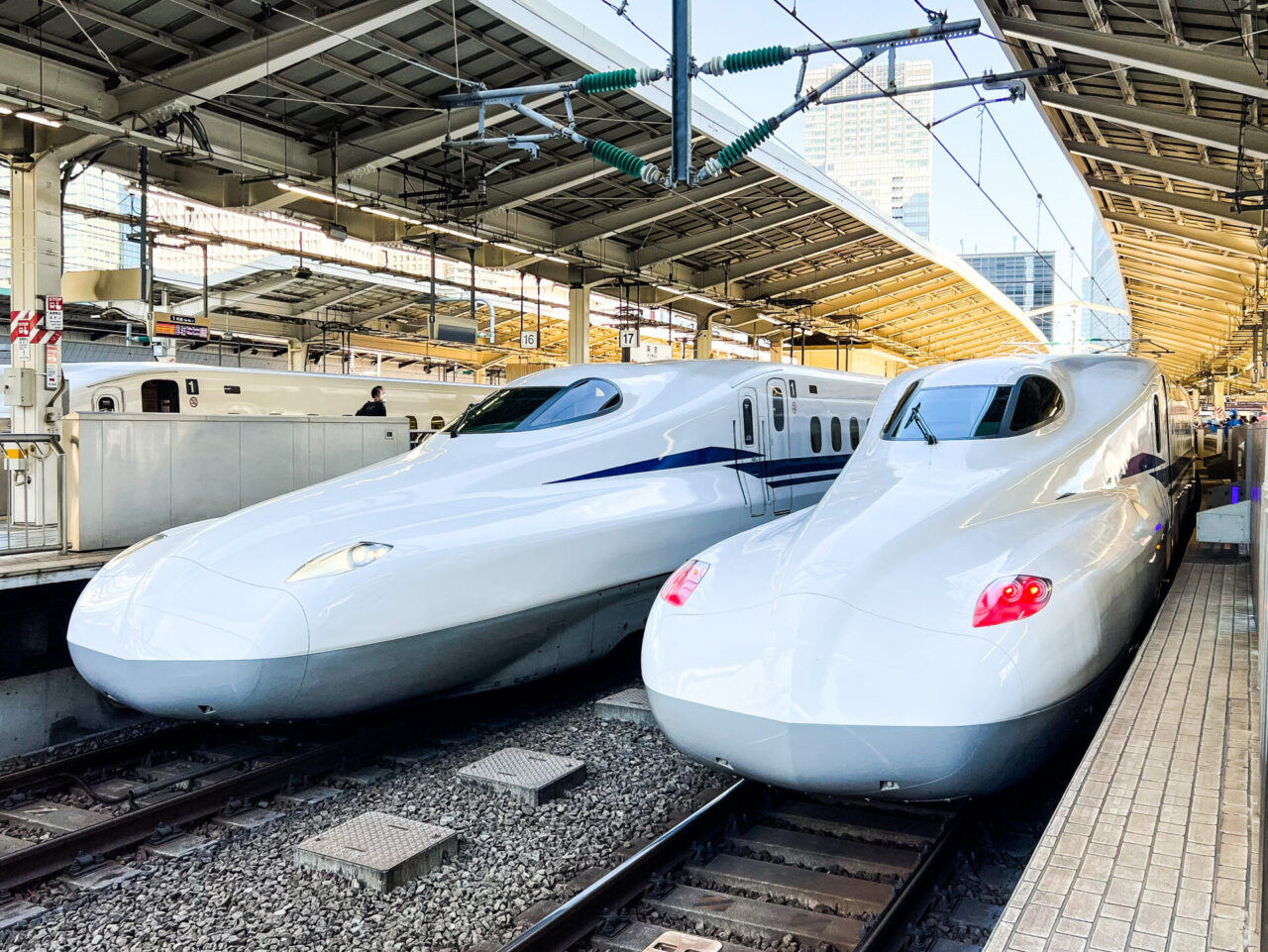
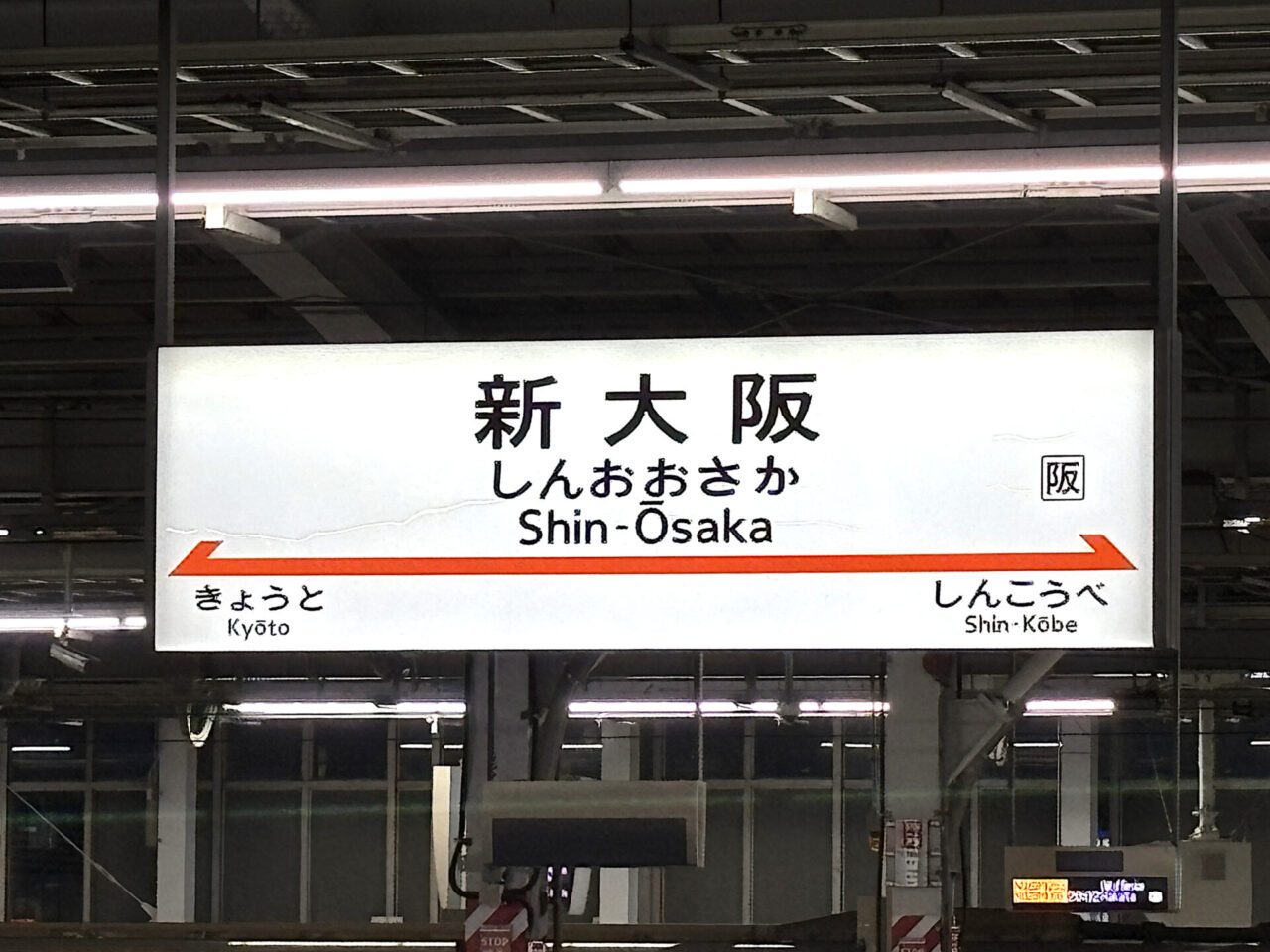
新大阪駅 / Shin-Osaka-eki / Shin-Osaka Station is Osaka’s main Shinkansen station.
The wider accommodation zone also includes parts of Nishinakajima and Juso, although the neighborhoods differ in both railway access and atmosphere.
Choose Shin-Osaka for convenience, not atmosphere
If you expect to board the Shinkansen several times during your stay, sleeping near Shin-Osaka can save time.
It is particularly practical when:
- You have several long-distance rail journeys
- You are arriving late
- You have an early departure
- Osaka is your base for exploring western Japan
- Your trip is mainly for business
The station itself has plenty of restaurants, shops, hotels, and transport services. What it does not have is the same sense of place you will find in Namba, Umeda, or one of Osaka’s residential neighborhoods.
You will probably take a train or subway whenever you want to explore the city. For a trip focused mainly on sightseeing within Osaka, Umeda or another central district will usually feel more enjoyable. For a trip built around frequent Shinkansen travel, Shin-Osaka may be exactly what you need.
If you plan to use the Shinkansen during your trip, see How to Buy Shinkansen Tickets in Japan.
Universal Studios Japan and Osaka Bay — Best for USJ and Family Attractions
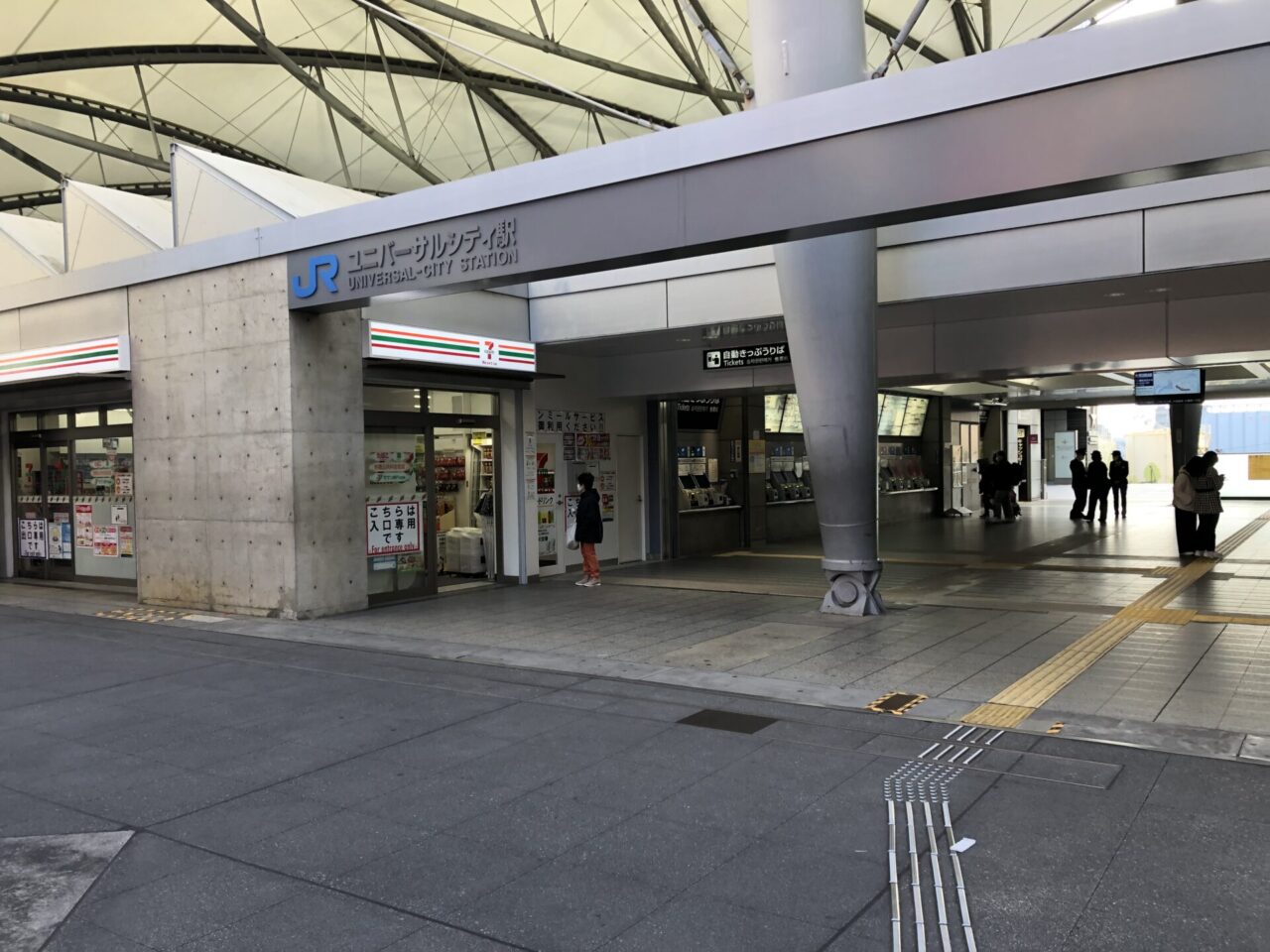
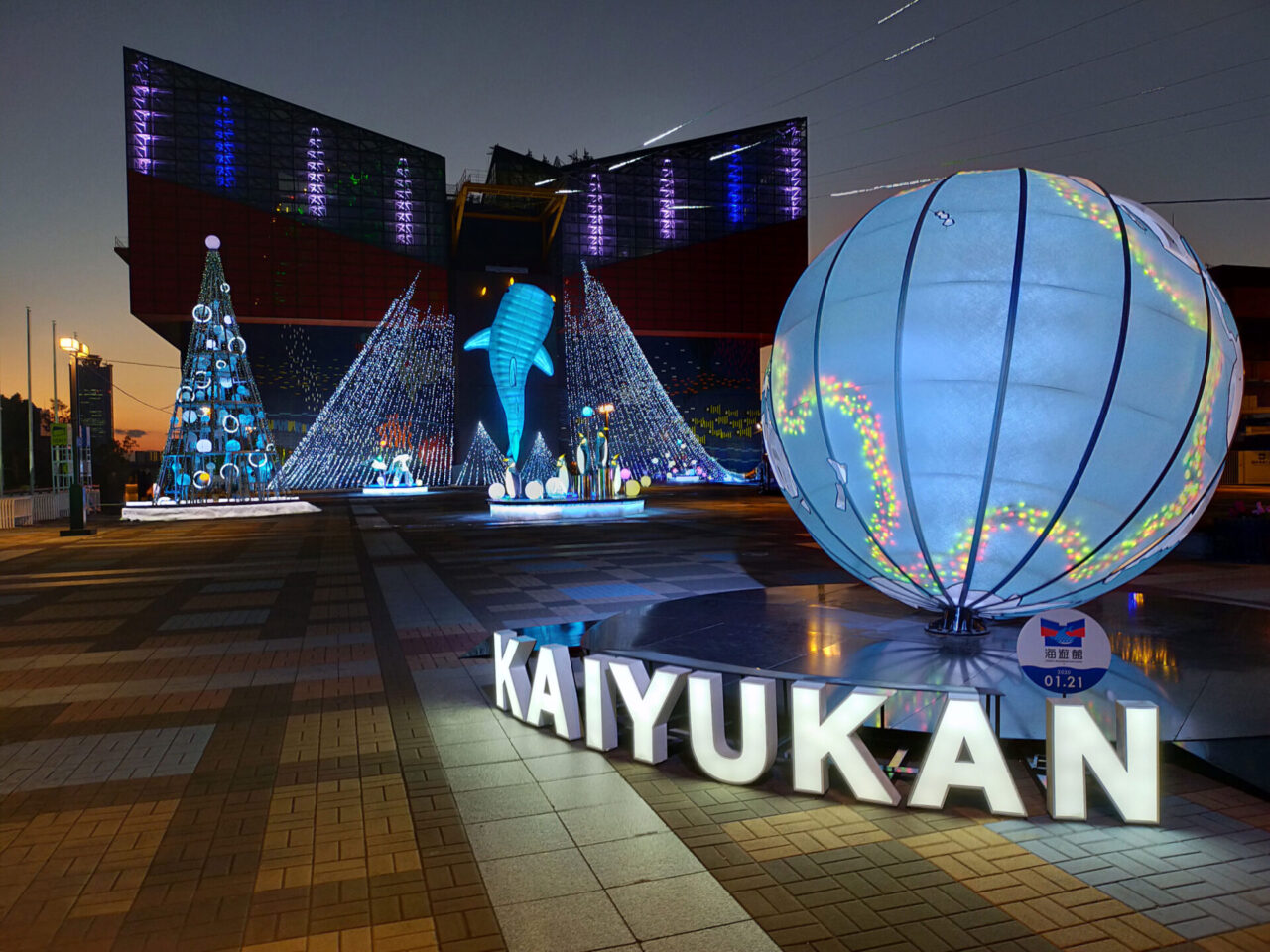
大阪ベイエリア / Ōsaka Bei Eria / Osaka Bay Area includes Universal Studios Japan, Osaka Aquarium Kaiyukan, Tempozan, and other waterfront attractions.
When staying in the Bay Area makes sense
If Universal Studios Japan is the main reason for your trip, staying nearby can make the day much easier.
This is especially useful for:
- Families with young children
- Travelers spending two or more days at Universal Studios Japan
- Visitors planning to arrive at the park early
- People visiting Kaiyukan and Tempozan
- Travelers who prefer a leisure-focused hotel environment
Around Universal City, hotels, restaurants, shops, and entertainment are designed around theme-park visitors. Around Osaka Port, the atmosphere is more open and waterfront-focused.
When another area may be better
The Bay Area is not the most convenient base for exploring the whole of Osaka. Trips to Umeda, Namba, eastern Osaka, and destinations outside the city take more time than from a central location.
If Universal Studios Japan is only one day of a longer Osaka trip, you may prefer to stay centrally and travel to the park. For families spending several days there, a split stay can also work: one or two nights near Universal Studios Japan, followed by a stay elsewhere in Osaka.
Umeda or Namba: Which Is Better?
This is one of the most common questions for first-time visitors.
Choose Umeda when:
- You plan day trips to Kyoto or Kobe
- You will travel through Shin-Osaka frequently
- You enjoy modern shopping districts
- You prefer a major northern transport hub
- You want easy access to Osaka Station
Choose Namba when:
- Food and nightlife are central to your trip
- You want to walk to Dotonbori
- You are arriving by Nankai train from Kansai Airport
- You prefer a lively atmosphere
- Most of your sightseeing is in southern central Osaka
Neither area is objectively better.
For a three-night trip focused on food and central Osaka, Namba may feel easier. For a longer Kansai trip with day trips to Kyoto and Kobe, Umeda may be more practical.
And if neither sounds quite right, do not assume you have to choose between the two. Yodoyabashi, Higobashi, and Edobori offer a useful middle ground: central enough for sightseeing, but noticeably calmer in the evening.
Is It Better to Stay Near a Station?
For most first-time visitors, staying within a reasonable walk of a useful station is helpful.
But “near a station” does not have to mean “within three minutes.”
A property 10 to 15 minutes away may offer:
- A quieter street
- More space
- A kitchen or washing machine
- Better value
- Local supermarkets and restaurants
- A more residential atmosphere
Staying very close to a station becomes more important when:
- You have young children
- You have mobility concerns
- You will carry large luggage
- You expect frequent rain or extreme heat
- You will return late every night
- You are staying only one or two nights
A longer walk may be a reasonable trade-off when:
- You are staying several nights
- You prefer a quieter neighborhood
- You travel with light luggage
- A bus or second station is available
- The accommodation offers more space or useful facilities
Always check the actual route on a map. Ten minutes along a flat neighborhood street can feel very different from ten minutes involving underground passages, stairs, or large intersections.
What to Check Before Booking Accommodation in Osaka
Choosing the right neighborhood is important, but the exact property matters just as much.
Check the nearest station and railway line
Two stations that look close on a map may serve completely different routes. Look at the places in your itinerary and see how many transfers you will need on a normal day.
A slightly farther station on a more useful line can sometimes be the better choice.
Look at the actual walking route
Do not rely only on the stated walking time.
Check for:
- Large intersections
- Pedestrian bridges
- Railway crossings
- Underground passages
- Stairs
- Elevators
- Covered walkways
A short route on a map can feel considerably longer when you are carrying luggage.
Confirm the room size and bed arrangement
Accommodation in Japan can be smaller than visitors expect. Check whether the maximum occupancy will actually be comfortable once beds and luggage are taken into account.
A room that works well for two people may feel very different with four suitcases and four guests.
Understand the check-in method
Large hotels usually have a front desk. Smaller accommodations may use:
- Self check-in
- Smart locks
- Online guest registration
- Passport submission before arrival
- PIN codes
- QR codes
Complete any required procedures before traveling to the property.
Check luggage storage
Do not assume every accommodation can store luggage before check-in or after check-out. This is especially important for apartments, private houses, and unmanned accommodations.
Think about the neighborhood after dark
A nightlife district and a residential street can feel completely different at 10 PM. Neither is necessarily better. The question is which one matches the way you want to spend your evenings.
For longer stays, look beyond the bed
If you are spending several nights in Osaka, practical facilities can start to matter more than being a few minutes closer to a famous attraction.
Useful features include:
- Washing machine
- Kitchen or kitchenette
- Refrigerator
- Supermarket nearby
- Dining table or workspace
- Separate bathroom and toilet
- Drying space
- Reliable Wi-Fi
These details can make a noticeable difference on a four-, five-, or seven-night stay.
Which Osaka Area Is Best for Your Travel Style?
Best for first-time visitors
Umeda or Namba
Choose Umeda for transportation and day trips. Choose Namba if food, nightlife, and central Osaka are the focus of your trip.
Best for couples
Yodoyabashi, Higobashi, Edobori, or Nakanoshima
These neighborhoods combine central access with calmer evenings, parks, river walks, cafés, and restaurants.
Best for families
Umeda, Tennoji, or the Universal Studios Japan area
The best choice depends on whether your family prioritizes city travel, general sightseeing, or the theme park.
Best for experiencing local neighborhoods
Tengachaya, Midoribashi, Edobori, or the quieter neighborhoods around Umeda
Here, supermarkets, local restaurants, parks, public baths, and residential streets become part of the trip rather than something you only pass on the way to a sightseeing spot.
Best for day trips
Umeda or Shin-Osaka
Umeda is usually the more enjoyable place to stay if you also want to experience Osaka. Shin-Osaka is hard to beat when frequent Shinkansen travel is the main priority.
Best for Kansai Airport access
Namba, Tengachaya, or Tennoji
The best choice depends on the railway service you plan to use and where you want to spend the rest of your time in Osaka. Before choosing an area mainly for airport convenience, compare the complete journey to your accommodation in Kansai Airport to Osaka: Best Routes for 8 Areas.
Choose the Area That Fits the Way You Want to Experience Osaka
There is no single best place to stay in Osaka.
Umeda gives you excellent transport and modern city convenience. Namba puts food, nightlife, and famous sights outside your door. Yodoyabashi, Higobashi, and Edobori offer a quieter way to stay in central Osaka. Morinomiya and Midoribashi combine access to Osaka Castle with residential neighborhoods. Tengachaya gives you useful airport connections and a more local side of southern Osaka.
So rather than asking only, “Which area is closest to the attractions?”, think about the parts of the day that do not appear on your itinerary.
Where will you go for breakfast? What will the walk back to your accommodation feel like at night? Will you pass a local supermarket, a park, or a neighborhood restaurant along the way?
A major station can make every journey easier. A quieter neighborhood can introduce you to a side of Osaka you did not plan to see. Both can lead to a great trip.
Where you stay simply determines which version of Osaka becomes part of your everyday experience.
Frequently Asked Questions
- What is the best area to stay in Osaka for a first-time visitor?
-
Umeda and Namba are the easiest choices for most first-time visitors. Choose Umeda for transportation and day trips. Choose Namba for food, nightlife, and famous central Osaka sights.
If you want somewhere quieter while remaining in central Osaka, Yodoyabashi, Higobashi, or Edobori are also worth considering.
- Is Umeda or Namba better for families?
-
Umeda is often easier for families planning day trips or using major rail connections. Namba can be a better choice when the family wants to stay close to Dotonbori and southern central Osaka.
Families who are sensitive to crowds or nighttime noise should check the exact property location before booking.
- Is Yodoyabashi a good place for tourists?
-
Yes. Yodoyabashi and nearby Higobashi provide central access without the constant crowds of Namba.
The area works especially well for couples, longer stays, and travelers who enjoy parks, cafés, river walks, and quieter evenings. Visitors who want extensive nightlife immediately outside their accommodation may prefer Namba.
- Is it convenient to stay near Osaka Castle?
-
Yes, particularly around Morinomiya and Midoribashi. You can reach Osaka Castle while staying in quieter residential neighborhoods.
However, Osaka Castle Park is large, so check the nearest station and which park entrance is most convenient from your accommodation.
- Is Tengachaya convenient for international visitors?
-
Tengachaya can be convenient for Kansai Airport and Namba because of its Nankai connections. It also offers a more residential and traditional atmosphere than Osaka’s major commercial districts.
Before arrival, check your walking route and check-in procedure carefully, particularly if you are staying in a self-check-in property.
- Should I stay near Shin-Osaka Station?
-
Stay near Shin-Osaka if frequent Shinkansen travel, a late arrival, or an early departure is one of your main priorities.
For a sightseeing-focused Osaka trip, Umeda, Namba, Yodoyabashi, or another central neighborhood will usually provide a more interesting base.
- Is Osaka easy to explore from one accommodation?
-
Yes. Most visitors can explore Osaka comfortably from one well-connected base.
A split stay is usually unnecessary unless you plan to spend several days near Universal Studios Japan or have two very different travel priorities.
- How many nights should I stay in Osaka?
-
Many first-time visitors find that a three- or four-night stay gives them enough time to explore central Osaka, enjoy the local food scene, and visit at least one neighborhood beyond the busiest tourist areas.
Stay longer and you can slow the pace, take day trips, and experience more of everyday Osaka.
Related Guides
- Where to Stay in Yodoyabashi, Higobashi & Edobori, Osaka
- Are Osaka Hotels Expensive in 2026? What to Expect and When to Book
- Osaka Travel Guide: How to Plan Your First Visit
- Kansai Airport to Osaka: Best Routes for 8 Areas