Start With the Osaka You Want to Experience
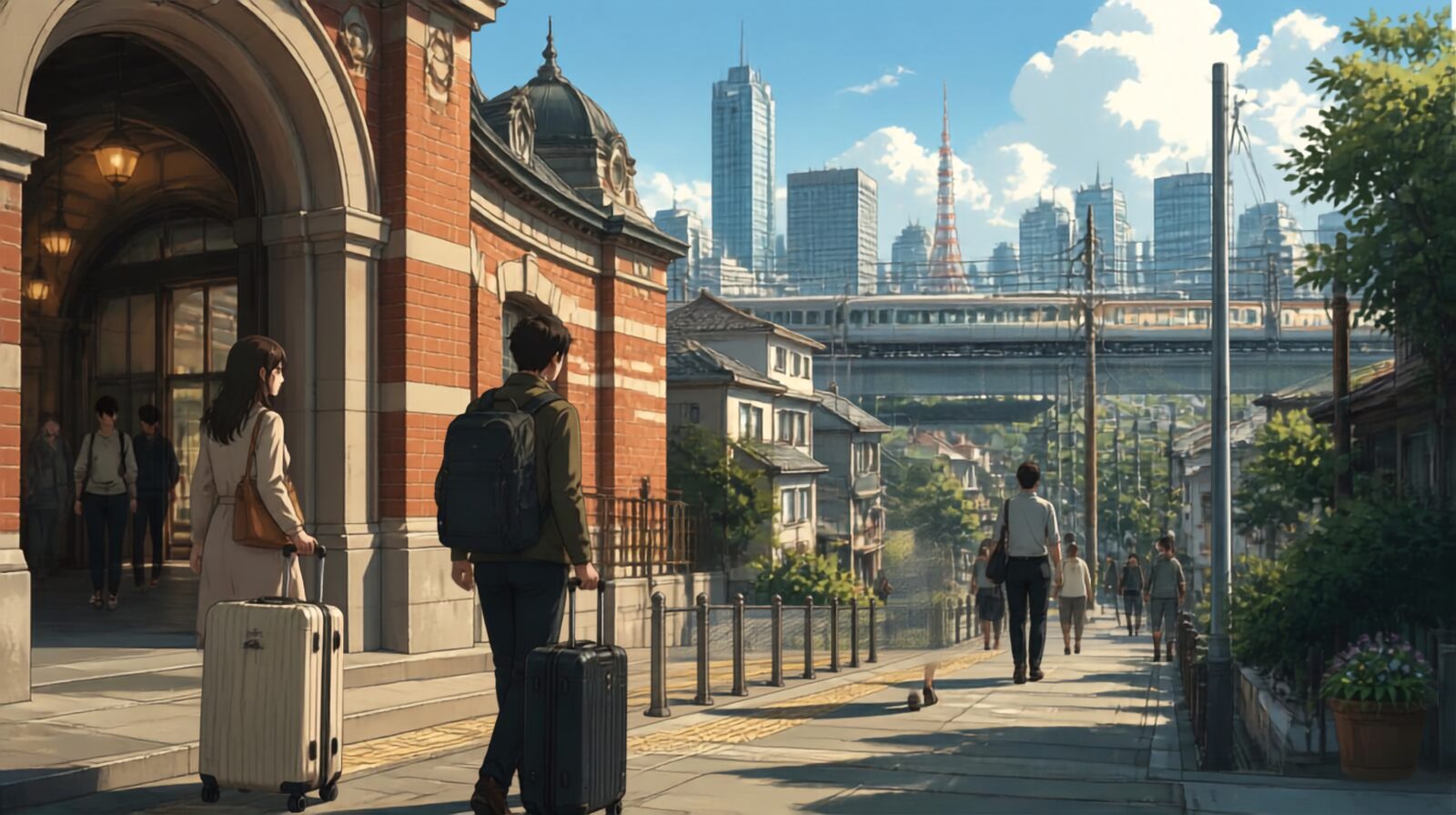
Osaka can play several different roles in a first Japan trip.
- It can be a lively city stay built around food, shopping, nightlife, and famous central districts.
- It can be a practical Kansai base for day trips to Kyoto, Kobe, or Nara.
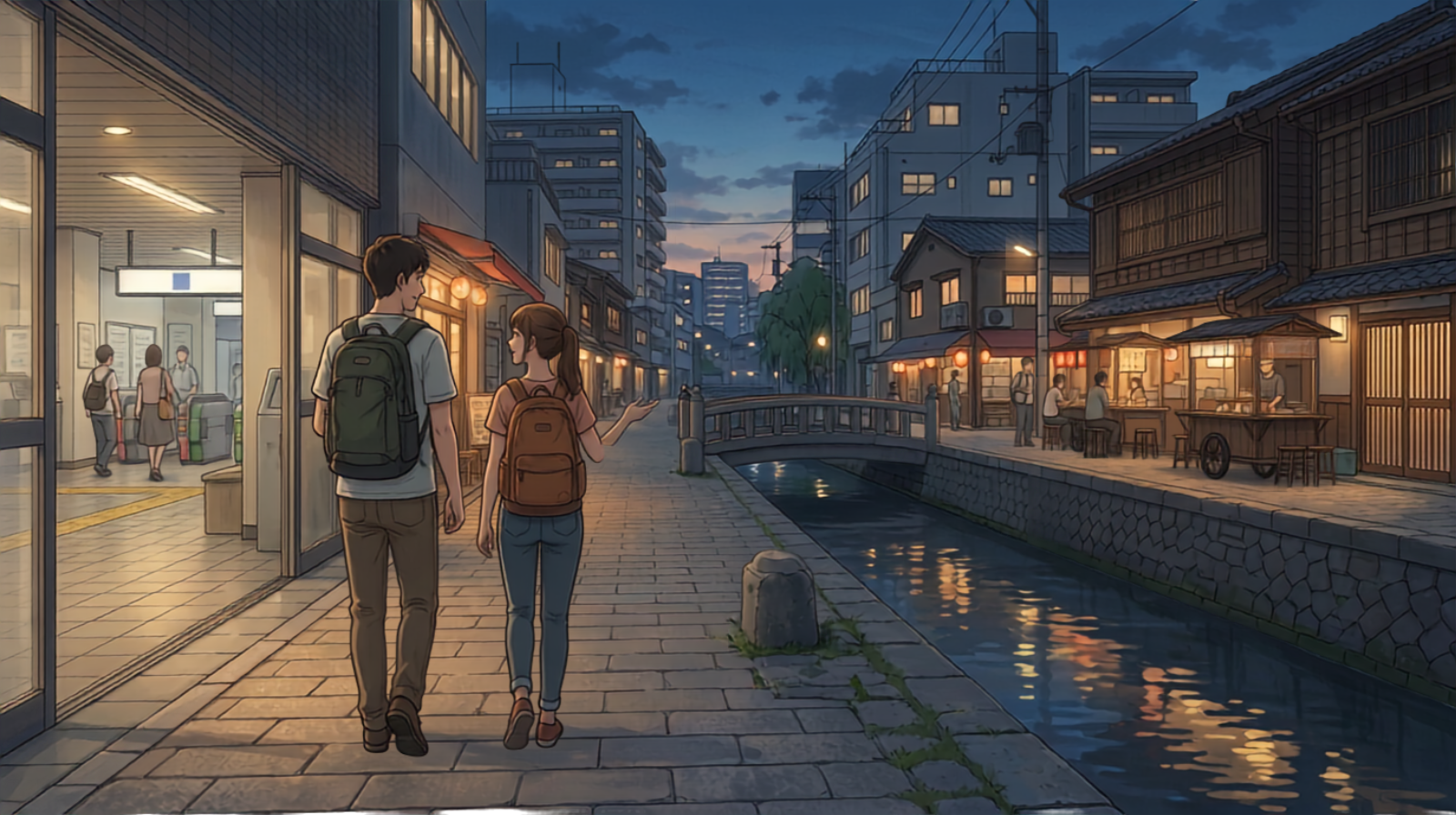
- It can be a slower neighborhood stay where parks, cafés, supermarkets, public baths, and ordinary residential streets become part of the trip.
- It can be a family stop built partly around Universal Studios Japan and the Osaka Bay area.
You do not need to choose only one of these. The important point is to know which one matters most, because that decision affects where you stay and how you use your time.
If Osaka is one stop in a longer Japan itinerary, think about what you want the city to add that Tokyo, Kyoto, or another destination does not. Osaka works particularly well when you want a large, easy-to-navigate city with strong transport connections but also want room for food, neighborhoods, evenings out, and day trips.
How Many Days Should You Spend in Osaka?
For many first-time visitors who want to experience Osaka itself without making Universal Studios Japan or multiple day trips the main focus, three full days is a practical starting point. Two full days can work for a focused visit, while four days or longer gives you room for a slower pace, USJ, or a day trip without compressing the city into a checklist.
| Time in Osaka | What it allows | Main consideration |
|---|---|---|
| 2 full days | A focused first look at central Osaka and one or two major areas | Keep the geographic plan simple |
| 3 full days | A balanced first stay with time for major districts plus a slower area or evening | A good starting point for many first trips |
| 4+ full days | More neighborhood time, USJ, a day trip, or a slower pace | Where you stay becomes more important |
Think in full usable days rather than hotel nights alone. An evening arrival and an early departure may add two hotel nights without giving you two sightseeing days.
Use the number of things you genuinely want to do to decide how many full days you need. Three days is a useful default, not a rule: shorten the stay when Osaka is only one focused stop, and extend it when USJ, day trips, or slower neighborhood time are important parts of the trip.
Understand Osaka by Area, Not Just Attractions
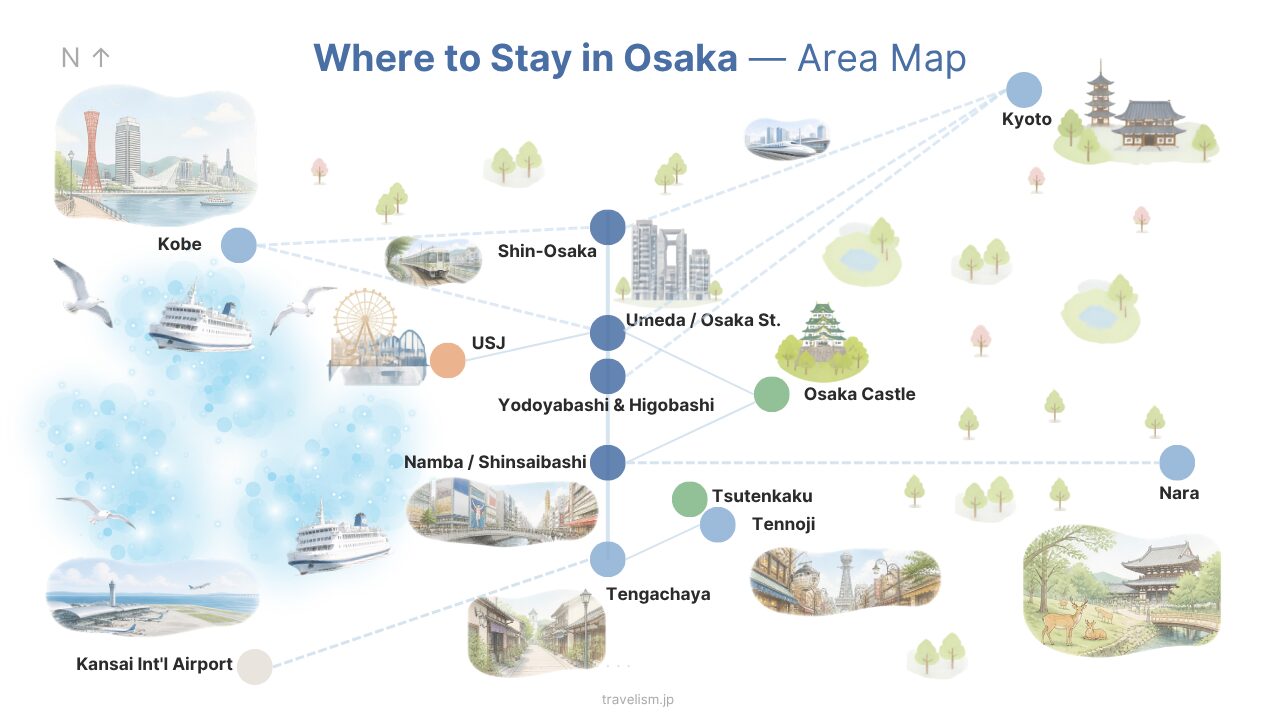
Osaka does not have one compact historic center or one downtown district that works equally well for every trip. It is easier to understand the city as several travel zones connected by rail and subway.
| Travel zone | Think of it first for |
|---|---|
| 大阪駅・梅田 / Ōsaka-eki・Umeda / Osaka Station & Umeda | Transportation, shopping, and Kansai day trips |
| 淀屋橋・肥後橋・江戸堀 / Yodoyabashi・Higobashi・Edobori / Yodoyabashi, Higobashi & Edobori | A quieter central stay, parks, cafés, and everyday routines |
| 難波・心斎橋 / Namba・Shinsaibashi / Namba & Shinsaibashi | Food, nightlife, shopping, and famous central Osaka streets |
| 天王寺・阿倍野 / Tennōji・Abeno / Tennoji & Abeno | A practical southern base with strong transport |
| 大阪城・森ノ宮・緑橋 / Ōsakajō・Morinomiya・Midoribashi / Osaka Castle, Morinomiya & Midoribashi | Parks, residential neighborhoods, and eastern Osaka |
| 天下茶屋・大阪南部 / Tengachaya・Ōsaka Nanbu / Tengachaya & South Osaka | Kansai Airport access and a more local South Osaka stay |
| 新大阪と周辺エリア / Shin-Ōsaka to Shūhen Eria / Shin-Osaka & nearby districts | Frequent Shinkansen travel |
| 大阪ベイエリア / Ōsaka Bei Eria / Osaka Bay Area | Universal Studios Japan and family-focused stays |
This does not mean you should spend one day in every zone. The table is a way to understand how the city fits together before you choose where to spend your limited time.
A day around Namba and Dotonbori feels very different from a morning around Utsubo Park, a visit to Osaka Castle followed by residential Midoribashi, or an evening around Umeda. That contrast is part of the value of staying in Osaka rather than treating the city as a single sightseeing district.
Where Should You Stay in Osaka?
For many first-time visitors, Umeda and Namba are the easiest places to start comparing. Umeda is strong for transportation and day trips, while Namba is stronger when food, nightlife, and southern central Osaka are the focus.
They are not the only sensible choices. Yodoyabashi, Higobashi, and Edobori can give you a quieter central stay. Tennoji works well as a balanced southern base. Morinomiya and Midoribashi suit travelers who value parks and residential surroundings. Tengachaya can be especially practical for Kansai Airport, while Shin-Osaka is useful when Shinkansen travel dominates the itinerary.
The key question is not only “Which area is closest to the attractions?” It is also “What will the rest of the day feel like when I leave the station, look for breakfast, return after dinner, or carry luggage back to my accommodation?”
The detailed area guide below compares all eight travel zones in more detail, including atmosphere, transport, practical trade-offs, and the type of traveler each area suits.
Before You Arrive: Mobile Data and Travel Insurance
Two general Japan preparations become especially useful as soon as you begin traveling independently around Osaka: having mobile data and knowing what travel-insurance coverage you have.
Arrange mobile data before you need it
Mobile data is useful immediately after landing. You may need it to check the next train, compare an airport-bus route, find the correct station exit, walk to your accommodation, translate a sign, or receive a reservation or check-in message.
For most travelers, it is easier to decide how you will connect before leaving home rather than solving the problem after arrival. How to Stay Connected in Japan: eSIM, SIM Card, Roaming or Pocket Wi-Fi compares the main options and helps you choose the simplest setup for your phone and trip.
Check your travel-insurance coverage before departure
You may already have overseas medical or trip coverage through a credit card, annual policy, employer plan, or another existing policy. The useful step is to find out what you actually have before you leave and keep the assistance details somewhere you can reach easily.
Do You Need Travel Insurance for Japan? What to Check Before You Go explains what to review before deciding whether you need additional coverage.
How to Get to Osaka
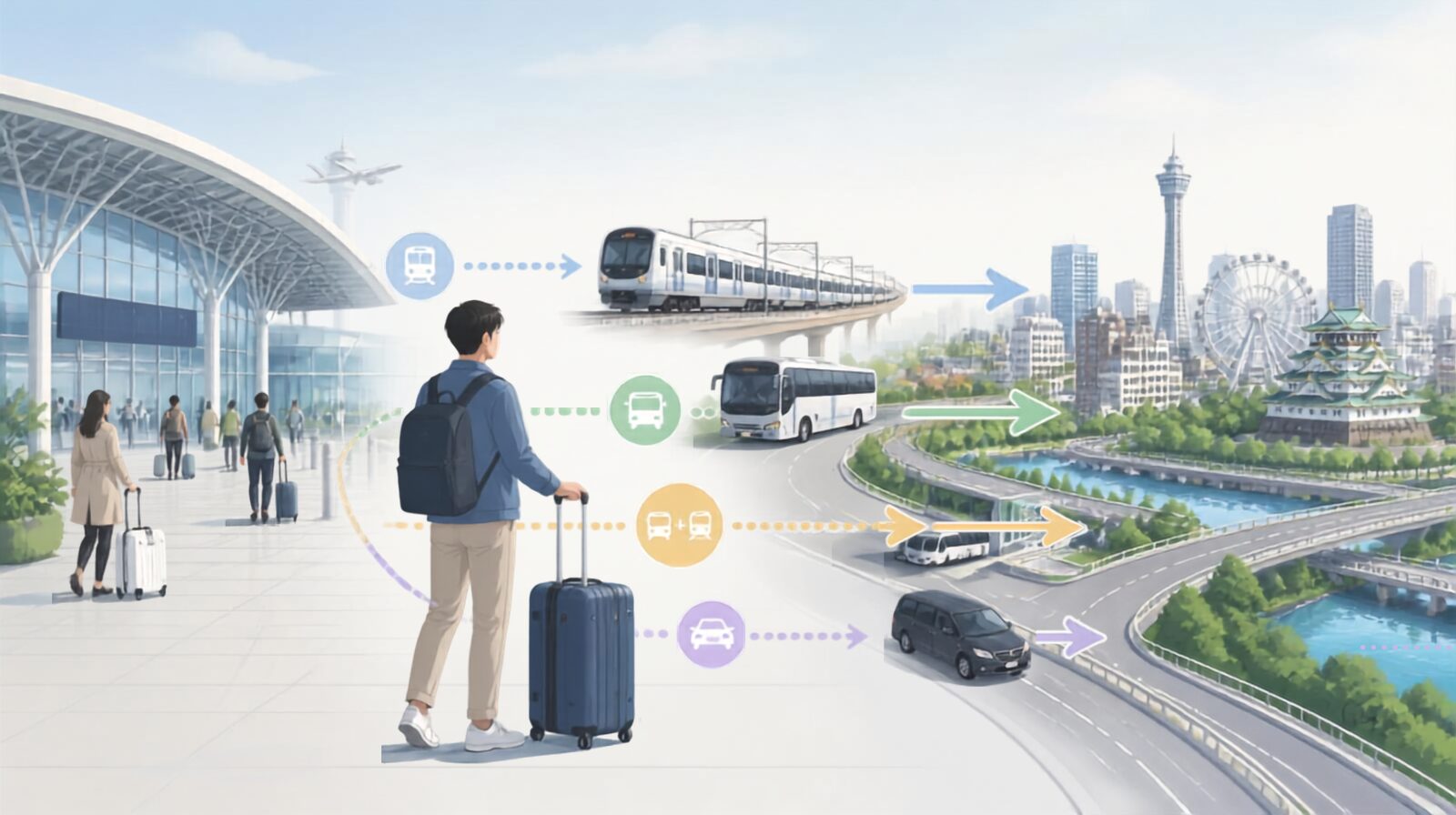
How you enter Osaka depends on where you are coming from. First-time visitors commonly arrive through Kansai International Airport, Osaka Itami Airport, Shin-Osaka by Shinkansen, or another Kansai city such as Kyoto.
From Kansai International Airport (KIX)
関西国際空港 / Kansai Kokusai Kūkō / Kansai International Airport (KIX) handles both international and domestic flights and has several useful rail and airport-bus connections into Osaka.
There is no single KIX route that is best for every traveler. Namba, Umeda, Tennoji, Shin-Osaka, Yodoyabashi, and Osaka Bay are all in Osaka, but the easiest airport route can be different for each one.
With luggage, the most practical route is often the one that minimizes awkward transfers and the final walk rather than the one with the shortest scheduled travel time. A direct train or airport bus can be ideal when it goes close to your accommodation. In other cases, public transport to a major hub followed by a short taxi can be easier than adding another local transfer.
Compare the complete journey to your actual accommodation in the detailed eight-area airport guide below.
From Osaka Itami Airport (ITM)
大阪国際空港 / Ōsaka Kokusai Kūkō / Osaka Itami Airport (ITM) is a major domestic airport serving Osaka. If you are flying to Osaka from another part of Japan, do not assume that KIX will be your arrival airport.
Airport limousine buses connect Itami directly with several useful Osaka hubs, including Osaka Station and Umeda, Shin-Osaka, Namba, and Tennoji. For many travelers with luggage, checking the direct airport bus to the part of Osaka where you are staying is the simplest starting point.
As with KIX, plan the whole trip to the accommodation rather than stopping the comparison at the first major station. Check the current Osaka Itami Airport bus routes before travel because destinations and timetables can change.
From Tokyo and Eastern Japan
If you are arriving from Tokyo or another city on the Tokaido Shinkansen, 新大阪駅 / Shin-Ōsaka-eki / Shin-Osaka Station is the main long-distance rail gateway to Osaka.
Do not choose accommodation near Shin-Osaka automatically just because your Shinkansen arrives there. If you are staying elsewhere in Osaka, treat Shin-Osaka as the long-distance arrival point and then compare the final local journey to Umeda, Namba, Yodoyabashi, Tennoji, or your actual neighborhood.
If you need help buying long-distance rail tickets, see How to Buy Shinkansen Tickets in Japan.
From Kyoto, Kobe, Nara, and Elsewhere in Kansai
Osaka is connected with the rest of Kansai by several JR and private railway networks. The most convenient arrival station depends on both the city you are coming from and the Osaka area where you are staying.
For example, Umeda can be especially practical for many Kyoto and Kobe journeys, while Namba or Tennoji may fit other routes better. Use the accommodation location as the final destination when comparing routes instead of treating “Osaka Station” as the end of every trip.
Getting Around Osaka
For most first-time visitors, trains and subways should be the starting point for everyday Osaka travel. JR, Osaka Metro, Hankyu, Hanshin, Nankai, Keihan, Kintetsu, and other operators serve different parts of the city and wider Kansai region.
You do not need to memorize the whole network. For each journey, follow the station name, line, direction, platform, transfer, and exit shown in your route planner and at the station.
An IC card such as ICOCA, Suica, or PASMO is usually the simplest way to pay for compatible local trains, subways, and many buses. It does not replace every Shinkansen or limited-express ticket, but it removes the need to buy a separate paper ticket for many ordinary city journeys.
Use Getting Around Japan: Which Transportation Should You Use? if you are still deciding which type of transportation fits each journey. For station navigation, transfers, train types, and exits, see How to Use Trains and Subways in Japan. If you want to choose a physical or mobile IC card, see How to Use IC Cards in Japan: Suica, PASMO, ICOCA & Mobile IC Cards.
Do not be afraid to use a taxi selectively. A short taxi ride can be worthwhile when you have large luggage, young children, mobility concerns, heavy rain, summer heat, or an inconvenient final walk. The goal is not to use one transportation mode everywhere; it is to make each journey simple enough for the situation.
What Should You Prioritize on a First Osaka Visit?
Osaka has famous sights, but a satisfying first visit is usually easier to build around a few different kinds of time rather than a long attraction checklist.
Spend Time Around Namba and Shinsaibashi for Food and Evening Energy
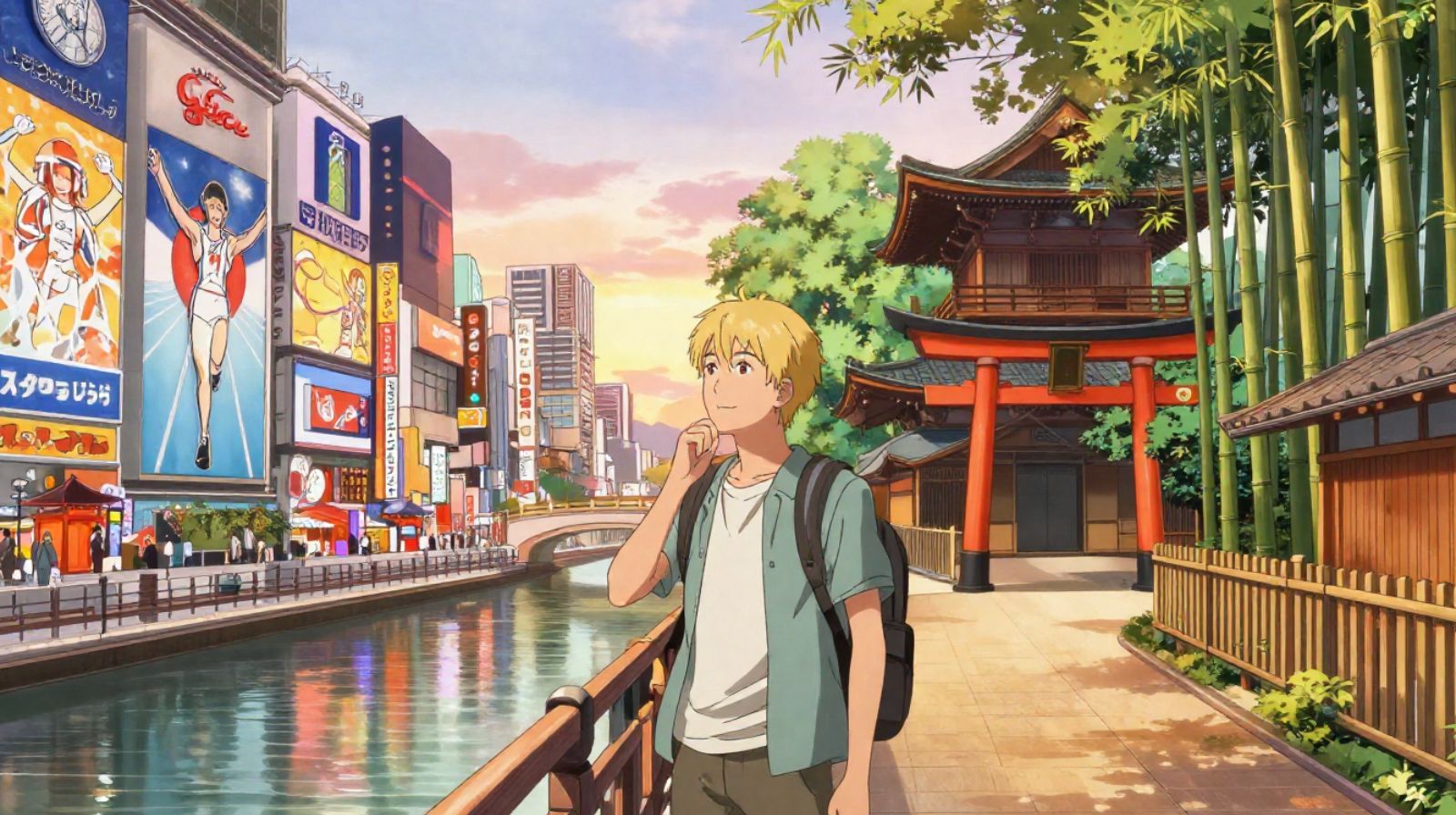
難波 / Namba / Namba, 心斎橋 / Shinsaibashi / Shinsaibashi, and 道頓堀 / Dōtonbori / Dotonbori are natural first-trip areas for food, shopping, neon-lit streets, and a lively evening atmosphere. You do not need to spend the whole trip here, but it is one of the clearest introductions to Osaka’s energetic side.
Food can be part of the sightseeing rather than a break from it. Familiar Osaka specialties include お好み焼き / Okonomiyaki / savory pancake, たこ焼き / Takoyaki / octopus-filled batter balls, and 串カツ / Kushikatsu / deep-fried skewers. There is no need to chase every famous shop; leaving room for an ordinary restaurant, market stop, or neighborhood meal often makes the day more flexible.
See a different side of the city around Osaka Castle and the east
大阪城 / Ōsakajō / Osaka Castle is an obvious first-visit landmark, but the wider area also gives you a reason to slow down in Osaka Castle Park and notice how quickly the city becomes more residential toward Morinomiya and Midoribashi.
Use Umeda and Nakanoshima for modern central Osaka
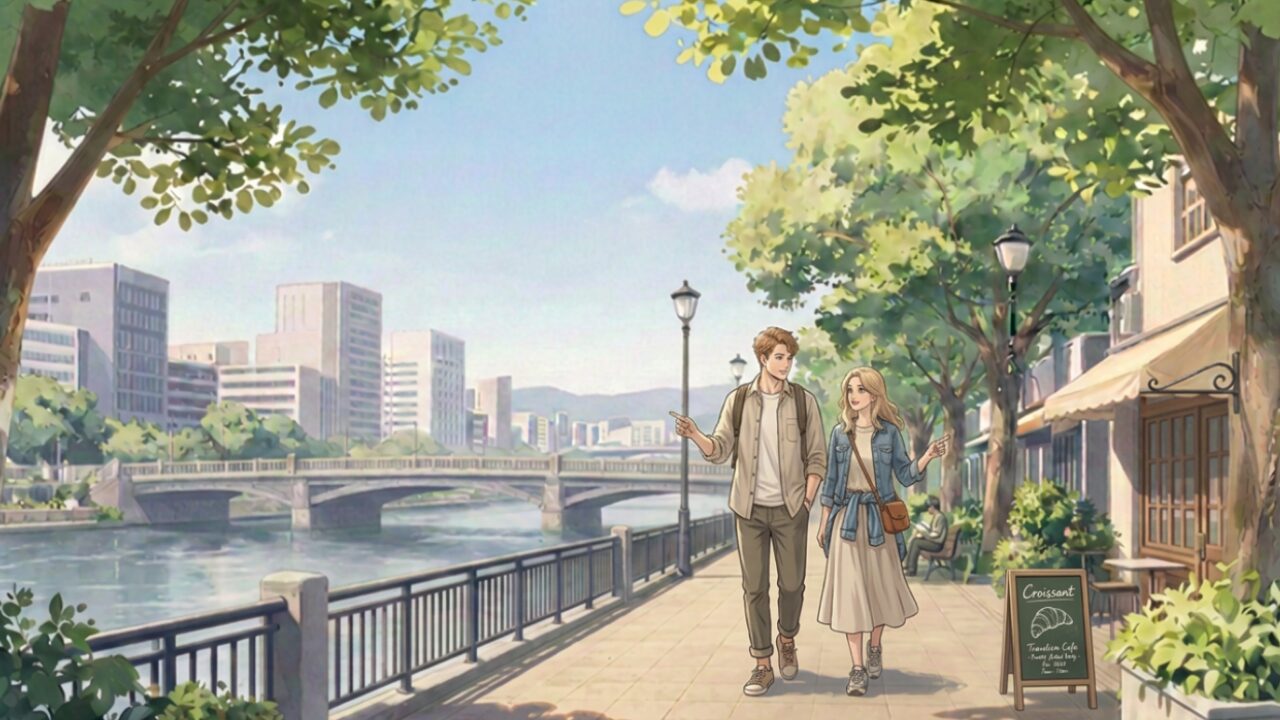
Umeda shows Osaka as a major commercial and transportation city. Nearby 中之島 / Nakanoshima / Nakanoshima adds river walks, cultural buildings, and a calmer central atmosphere. Combining a large urban center with somewhere quieter nearby gives a more complete sense of the city than staying only on the busiest shopping streets.
Make room for one neighborhood that is not a headline attraction
This may be the area around your accommodation rather than somewhere you travel across the city to visit. A morning near Utsubo Park, a residential walk in Midoribashi, local streets around Tengachaya, or the quieter edges of Umeda can add a different rhythm to the trip.
- Have breakfast or coffee near your accommodation before beginning the sightseeing day.
- Use a park, shopping street, supermarket, neighborhood public bath, or local restaurant as part of the day rather than treating the area only as somewhere to sleep.
- Leave some unplanned time in the evening instead of scheduling every meal and attraction before arrival.
If Universal Studios Japan is one of the main reasons for the trip, give it its own day rather than trying to combine it with a full central Osaka sightseeing plan.
Where you stay determines which version of Osaka becomes part of your everyday experience. Namba brings the nightlife to your doorstep. Edobori can give you park walks and calmer mornings. Tengachaya and Midoribashi bring more residential streets into the beginning and end of each day. None is the single “real Osaka”; they simply reveal different parts of the city.
Should You Stay in Osaka or Kyoto?
Osaka and Kyoto are close enough to combine easily, but they create very different stays.
Osaka generally works well for travelers who value food, nightlife, urban convenience, a wide choice of accommodation, and access to several parts of Kansai. Kyoto offers a different rhythm built more strongly around historic districts, temples, traditional streetscapes, and early-morning or evening access to places that can become crowded during the day.
You do not have to choose one city for the entire Kansai portion of the trip. Some travelers use Osaka as the main base and visit Kyoto by day. Others split their stay because they want to experience both cities in the morning and evening rather than only as daytime visitors.
Osaka vs Kyoto: Where Should You Stay? compares the two cities according to travel style rather than trying to declare one objectively better.
Using Osaka as a Base for Kansai Day Trips
One reason Osaka works well in a longer Japan itinerary is that you can reach several major Kansai destinations without changing accommodation every day.
Kyoto, Kobe, and Nara can all fit into a wider Osaka-based trip, but the best base depends on which day trips matter most. Umeda is particularly useful when many journeys run north or west. Shin-Osaka is practical when frequent Shinkansen travel matters more than neighborhood atmosphere. Other areas may require an extra local connection but give you a more enjoyable place to return to in the evening.
Do not choose a hotel only because it saves a few minutes on one day trip. Compare that advantage with the journeys you will make every other day and with what you want around your accommodation in the morning and at night.
At this stage, it is enough to decide whether day trips are central to your stay or simply one optional part of it. If they are central, give more weight to the rail connections from your accommodation area when choosing where to stay.
What to Know About Osaka Accommodation and Prices
Accommodation value in Osaka is not only about finding the lowest nightly price. Location, room size, luggage, station access, room facilities, and the purpose of the trip can change whether a cheaper room is actually the better choice.
A traveler making frequent day trips may value quick rail access. A family may care more about room size and fewer transfers. Someone staying a week may appreciate a washing machine, kitchen, supermarket, and a quieter residential environment more than being directly beside a famous nightlife district.
Hotel rates can also change substantially by date. If your travel dates or room requirements are fixed, availability can matter as much as the average price for the neighborhood.
Are Osaka Hotels Expensive in 2026? What to Expect and When to Book looks at current Osaka pricing and the practical question of when it makes sense to book rather than keep waiting.
A Simple Way to Plan Your Osaka Stay
You do not need to solve every Osaka decision at the same time. Use this order:
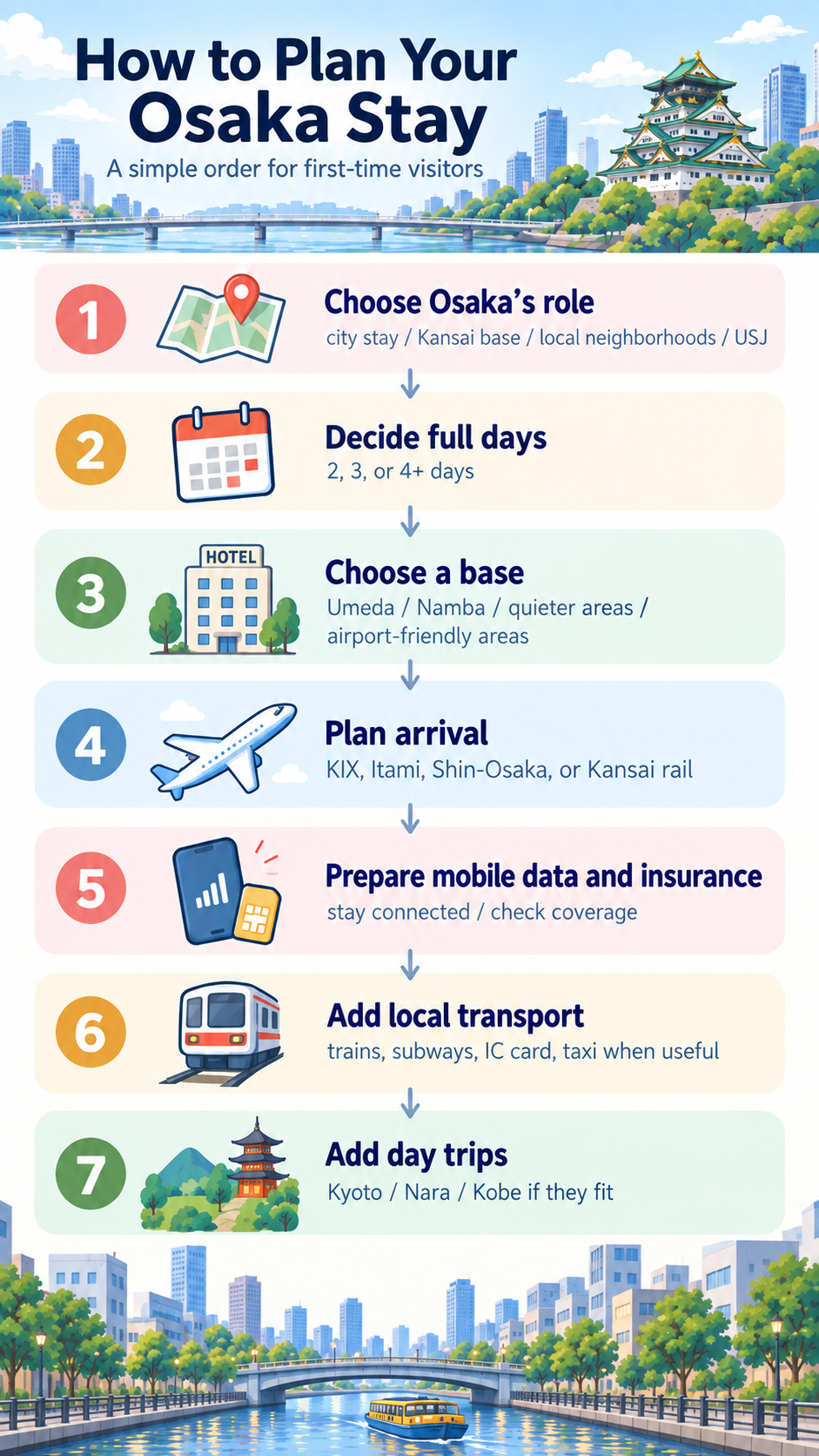
- Decide what role Osaka will play in your Japan trip.
- Decide how many full Osaka days you actually want.
- Choose the accommodation area that supports those days.
- Check the complete route from KIX, Itami, Shin-Osaka, or your previous city to that accommodation.
- Prepare mobile data and check your travel-insurance coverage before departure.
- Use trains and subways as the starting point for city travel, then add buses or taxis when they simplify a specific journey.
- Add day trips only after you know how much time you actually want to spend in Osaka itself.
This keeps the plan flexible without leaving every decision open. You can still change restaurants, neighborhoods, or individual activities after arrival, but the important structure—time, base, arrival, and transportation—will already be clear.
Frequently Asked Questions
- How many days do I need in Osaka for a first trip?
-
Two full days can cover a focused first visit, while three full days give you more room to combine major districts with a slower neighborhood or evening. Stay four days or longer if you want USJ, a day trip, or a more relaxed pace.
- What is the best area to stay in Osaka for a first-time visitor?
-
Umeda and Namba are the easiest starting points for many first-time visitors. Choose Umeda for transportation and day trips, or Namba for food, nightlife, and southern central Osaka. Quieter central areas such as Yodoyabashi, Higobashi, and Edobori are useful alternatives when you want calmer evenings.
- Is Osaka easy to get around without a car?
-
Yes. Trains and subways are the practical starting point for most visitor journeys, with buses, walking, and occasional taxis filling the gaps. A car is usually unnecessary for a first trip focused on Osaka and other major Kansai cities.
- Should I stay in Osaka or Kyoto?
-
Choose according to the experience you want rather than treating one city as universally better. Osaka is strong for food, nightlife, urban convenience, and Kansai transport, while Kyoto offers easier access to its historic districts in the quieter morning and evening hours. A split stay can make sense when both experiences matter.
- What is the easiest way to get from Kansai Airport to Osaka?
-
There is no single best route for every Osaka stay. Start with the area where your accommodation is located, then compare direct trains, airport buses, and whether a short taxi for the final section would reduce transfers with luggage.
- Is Osaka Itami Airport convenient for central Osaka?
-
Yes. Itami is a major domestic airport serving Osaka, and direct airport limousine buses serve major hubs including Umeda, Shin-Osaka, Namba, and Tennoji. Check the current route that comes closest to your accommodation.
- Can I use Osaka as a base for Kyoto, Nara, and Kobe?
-
Yes. Osaka can work very well as a Kansai base, especially when you choose accommodation with useful rail connections for the day trips you actually plan to make. Umeda is particularly convenient for many Kyoto and Kobe journeys, while the best base can change for other routes.