The Transportation Mix That Works for Most First Trips
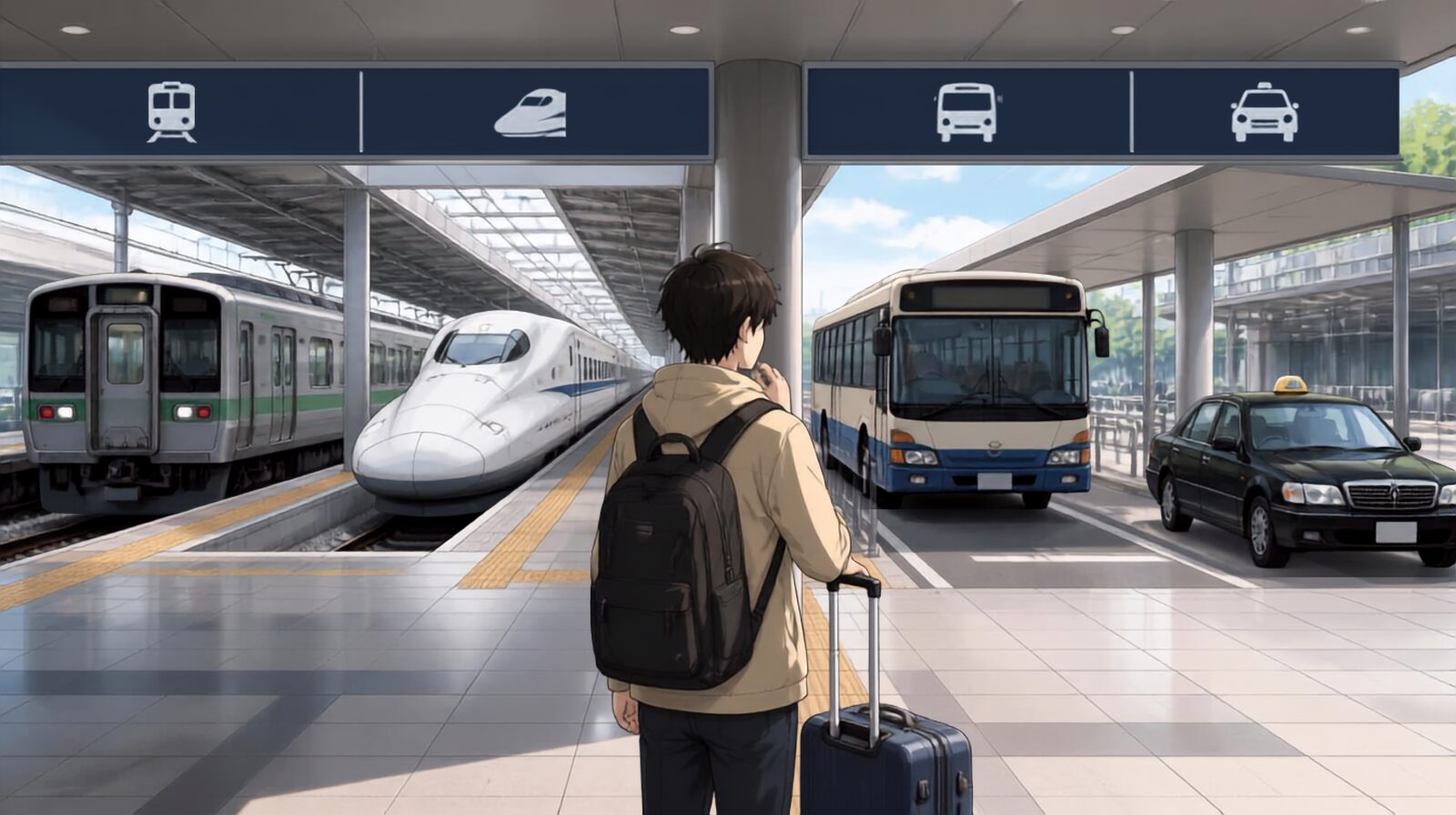
Most trips to Japan use several types of transportation. The useful question is not “What is the best way to travel in Japan?” but “What is the simplest way to make this particular journey?”
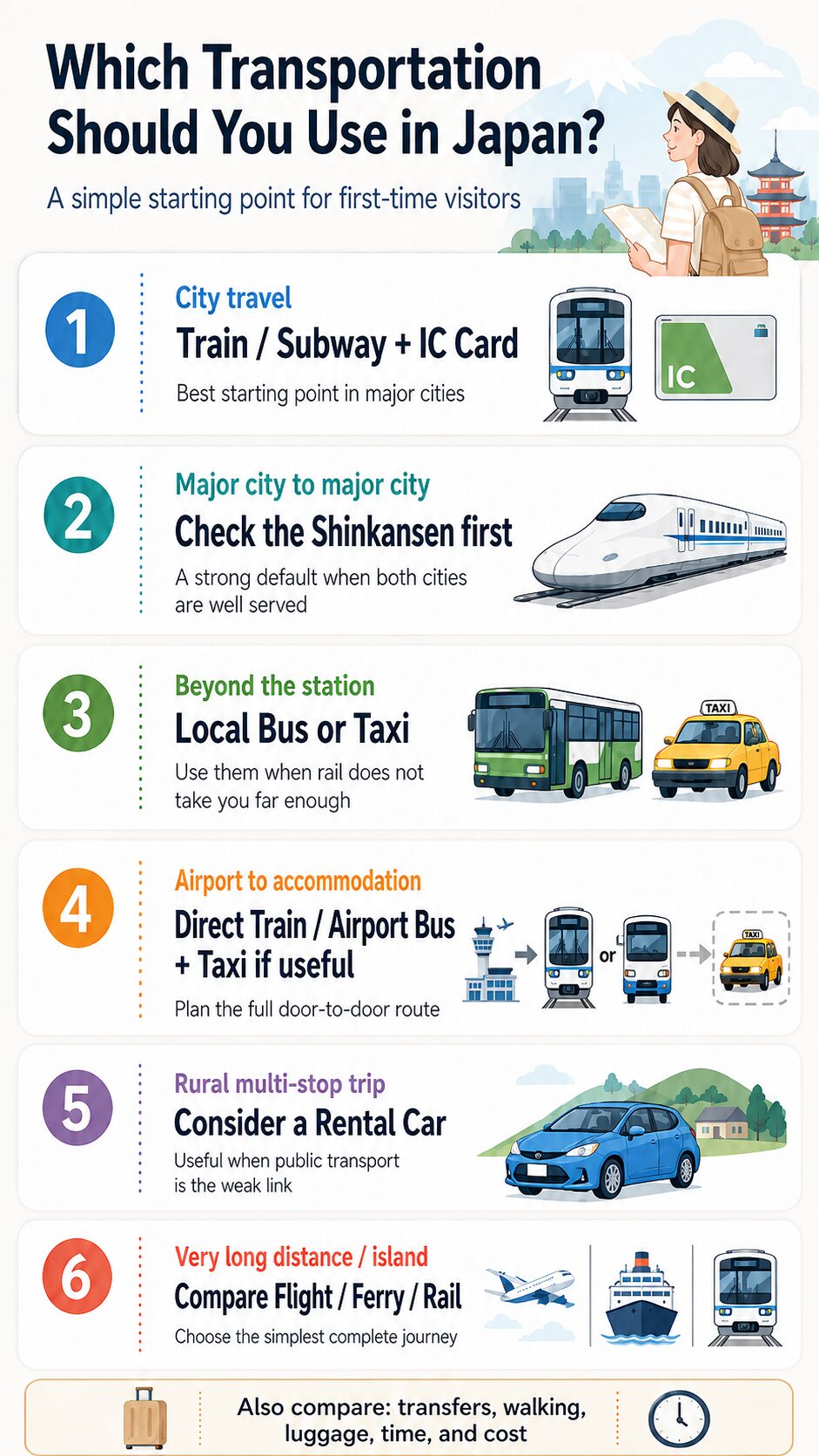
| Travel situation | Best starting point | Choose something else when… |
|---|---|---|
| Getting around a major city | Train / subway + IC card | A bus serves the destination better, or a taxi removes an awkward final section |
| Traveling between major cities | Shinkansen when both cities are well served by it | A highway bus saves enough money to justify the extra time, or a flight makes more sense for a much longer journey |
| Going beyond the nearest railway station | Local bus | The bus is infrequent, difficult with luggage, or a short taxi is more practical |
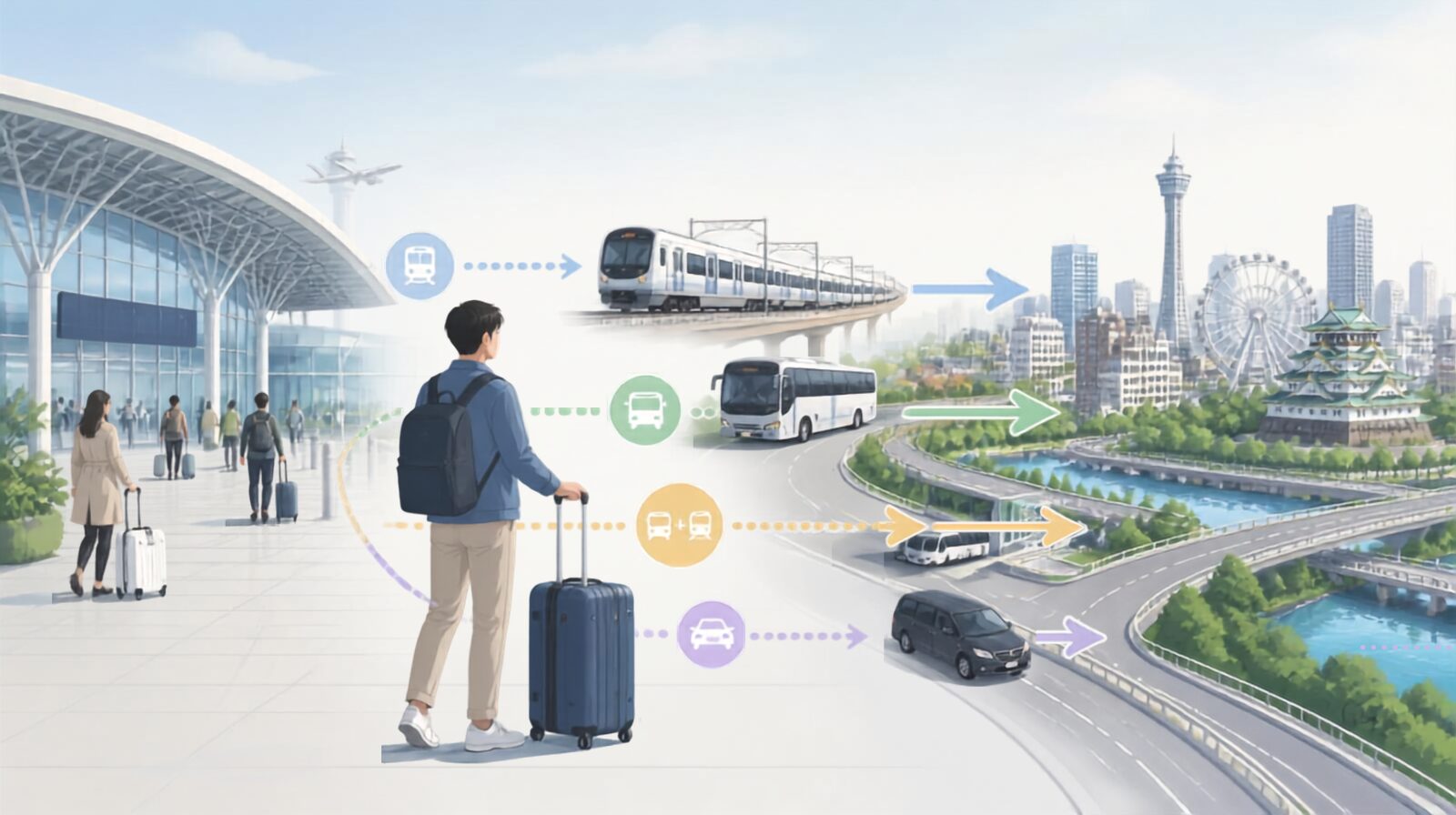
| Airport to accommodation | Direct train or airport bus, then a short taxi if useful | Another route gets closer to the accommodation, or door-to-door convenience is worth the extra cost |
| Rural or countryside travel | Check public transport first | A rental car clearly simplifies several difficult-to-connect stops |
| Very long domestic journey or island travel | Compare rail with flight or ferry | The complete door-to-door journey makes one option clearly easier |
Think of this as a starting framework, not a rule. Luggage, children, mobility needs, weather, arrival time, budget, and the location of your accommodation can all change the best choice.
Getting Around Major Cities: Start With Trains and Subways
電車 / Densha / Train
地下鉄 / Chikatetsu / Subway
For most journeys in Tokyo, Osaka, and many other major cities, start with trains and subways. They connect major stations, neighborhoods, shopping areas, business districts, and many visitor destinations without the need to drive.
That does not mean rail must handle every city journey. Some places are easier by local bus, and a taxi can be worth using when the final walk or transfer is the difficult part. The point is to make rail your starting assumption, then change when another option clearly improves the route.
If you want to understand stations, platforms, train types, transfers, and exits, read How to Use Trains and Subways in Japan.
Use an IC Card for Everyday Local Fares
交通系ICカード / Kōtsū-kei IC kādo / Transportation IC card
For compatible local trains, subways, and many buses, an IC card such as Suica, PASMO, or ICOCA is usually the simplest way to pay. You tap at the gate or reader instead of buying a separate paper ticket for each eligible journey.
You do not need to decide every IC-card detail here. How to Use IC Cards in Japan: Suica, PASMO, ICOCA & Mobile IC Cards helps you choose between physical and mobile options. For the broader difference between IC cards, paper tickets, Shinkansen tickets, and other rail payments, see How to Pay for Train Travel in Japan.
Traveling Between Major Cities: Check the Shinkansen First
新幹線 / Shinkansen / Bullet train
If both cities are well served by the Shinkansen, check it first. For the common Tokyo–Kyoto–Osaka route, it is usually the most practical starting point because it connects major city stations without the airport transfers required by flying.
Do not turn that into a rule that rail is always best. A highway bus can make sense when saving money matters more than travel time. A domestic flight becomes more attractive on much longer routes or when the destination is far from the Shinkansen network. Some regional journeys are better served by conventional or limited express trains.
Once the Shinkansen is the right choice, How to Buy Shinkansen Tickets in Japan explains ticket machines, station counters, online reservations, seats, and luggage considerations.
Choose the Route Before You Choose a Rail Pass
A Japan Rail Pass is not a transportation mode. It is a travel pass that covers eligible JR services. Decide where you are actually going first, then ask whether the pass makes those journeys cheaper or easier.
For many first-time itineraries, an IC card for local travel plus separate long-distance tickets is simpler than buying a nationwide pass automatically. If your trip includes several eligible long-distance JR journeys, compare the numbers in Japan Rail Pass: Is It Worth It? A Complete Guide.
When Rail Does Not Take You All the Way: Bus or Taxi
Rail is often the strongest part of Japan’s transportation network, but your destination may not be beside a station. This is where buses and taxis become much more useful.
Use a Local Bus When It Naturally Extends the Route
路線バス / Rosen basu / Local route bus
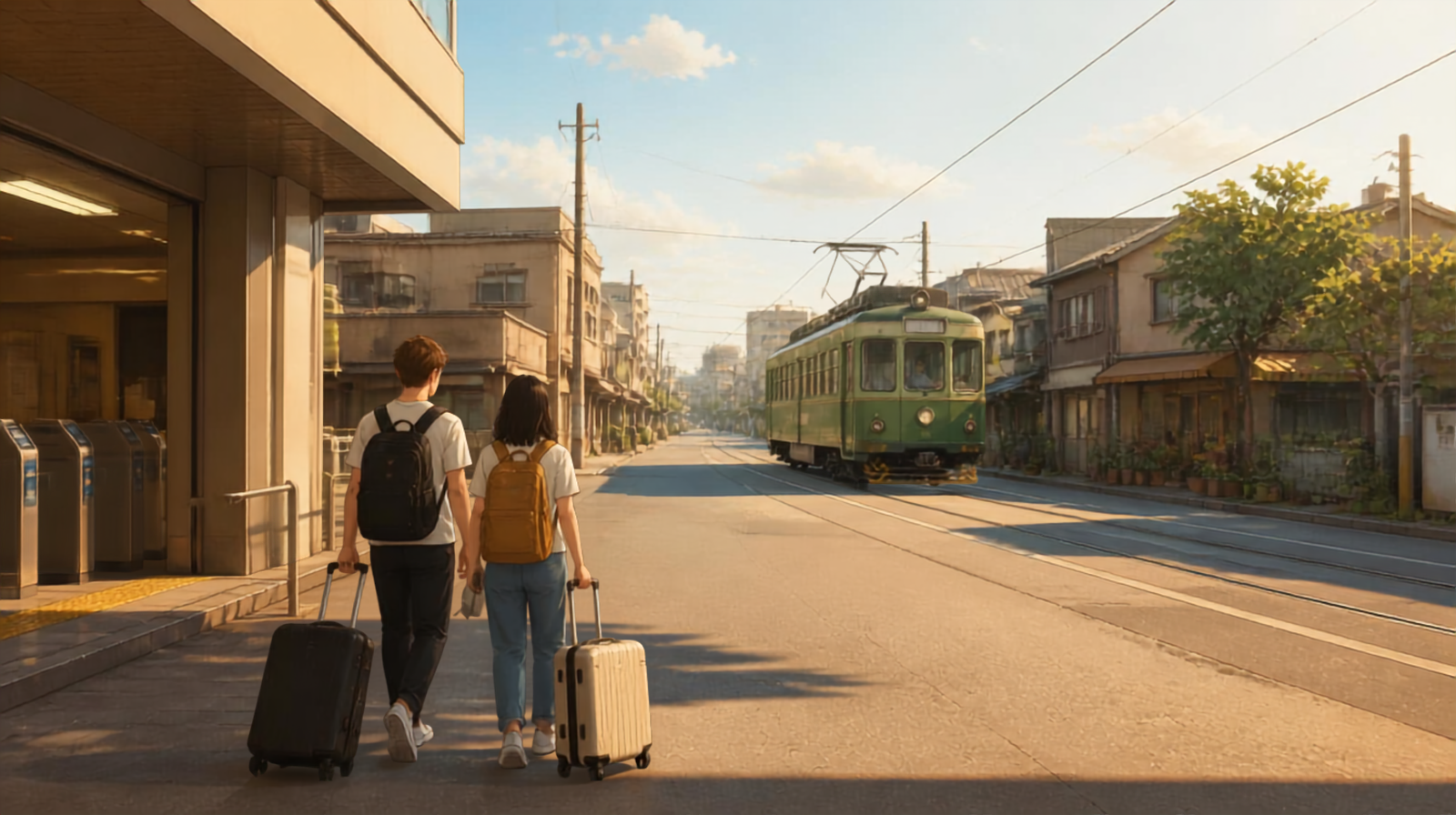
A local bus can take you from a railway station to a residential neighborhood, temple, hot-spring area, trailhead, suburban district, or smaller community. In some destinations, the bus is part of the normal route rather than a backup option.
Bus boarding and payment methods vary by operator, so learn the system only when you actually need it. How to Use Local Buses in Japan: A First-Time Visitor Guide explains the practical steps.
Use a Taxi for the Difficult Part, Not Necessarily the Whole Trip
タクシー / Takushī / Taxi
A useful way to think about taxis in Japan is not “train or taxi,” but “train plus taxi when needed.” Public transport may handle the long part of the journey efficiently, while a short taxi removes a difficult transfer, a long final walk, or the worst part of traveling with luggage.
Taxis become especially useful with large luggage, young children, mobility needs, late arrivals, bad weather, or accommodation that is awkward to reach from the nearest station. How to Use Taxis in Japan covers taxi stands, apps, fares, payment, destinations, and luggage.
Airport Transfers: Plan to Your Accommodation Door
Airport transportation is where “take the train” is often too simple an answer. The best route depends on the airport and the actual location of your accommodation.
Start by finding the direct train or airport bus that gets you closest with the least friction. Then look at the final section. If the last transfer or walk is awkward with luggage, adding a short taxi may create a much easier journey than choosing a theoretically faster route with more transfers.
| Option | Use it when… |
|---|---|
| Direct airport train | It reaches a station that is genuinely convenient for your accommodation |
| Airport bus | Its stop is closer to your hotel, neighborhood, or useful transport hub |
| Train or bus + short taxi | Public transport handles the long section well but the final section is awkward |
| Door-to-door taxi | Convenience matters more than cost, especially for a group or with substantial luggage |
Kansai International Airport shows why accommodation location matters. The simplest route can change even within the same city. Kansai Airport to Osaka: Best Routes for 8 Areas compares eight stay areas and shows when a direct train, airport bus, or short taxi for the final section makes more sense.
Rural and Countryside Travel: Rent a Car When Public Transport Is the Weak Link
レンタカー / Rentakā / Rental car
If your trip is centered on Tokyo, Kyoto, Osaka, and other major cities, do not start by assuming you need a rental car. City traffic, parking, tolls, and unfamiliar roads can add work to a journey that public transport already handles well.
A rental car becomes more useful when public transport is the weak part of the itinerary: services are infrequent, several countryside stops are difficult to connect, or a mountain, coastal, or remote route becomes substantially simpler by road.
Before booking a car, confirm that the license and documents you plan to use are valid for driving in Japan. Check the National Police Agency guidance if you will drive with an international or foreign license. Then compare parking, tolls, driving time, and the complete route—not just the freedom of having a car.
Very Long Journeys and Islands: Compare Rail With Flights and Ferries
Japan stretches a long way from north to south and includes many islands, so the Shinkansen should not become a blind default for every domestic journey.
For a long route, compare the complete journey rather than the scheduled time spent on the train or aircraft. A short flight still includes travel to the airport, check-in, security, baggage, and the trip from the arrival airport. A ferry may be slower but useful when it serves an island directly or arrives close to where you want to be.
If rail still gives you the simplest door-to-door journey, use rail. If flying or taking a ferry removes many hours or difficult connections, switch. The best choice depends on the route, not on a rule that one form of transportation is always superior.
Luggage Can Change the Best Route
Navigation apps are very good at finding fast routes. They are less good at knowing how tired you are, how large your suitcase is, or whether you want to carry it through several large stations.
A route that is ten minutes faster may be much harder if it requires two complicated transfers and a long walk at the end. A direct train followed by a short taxi may be the better journey even when it costs a little more.
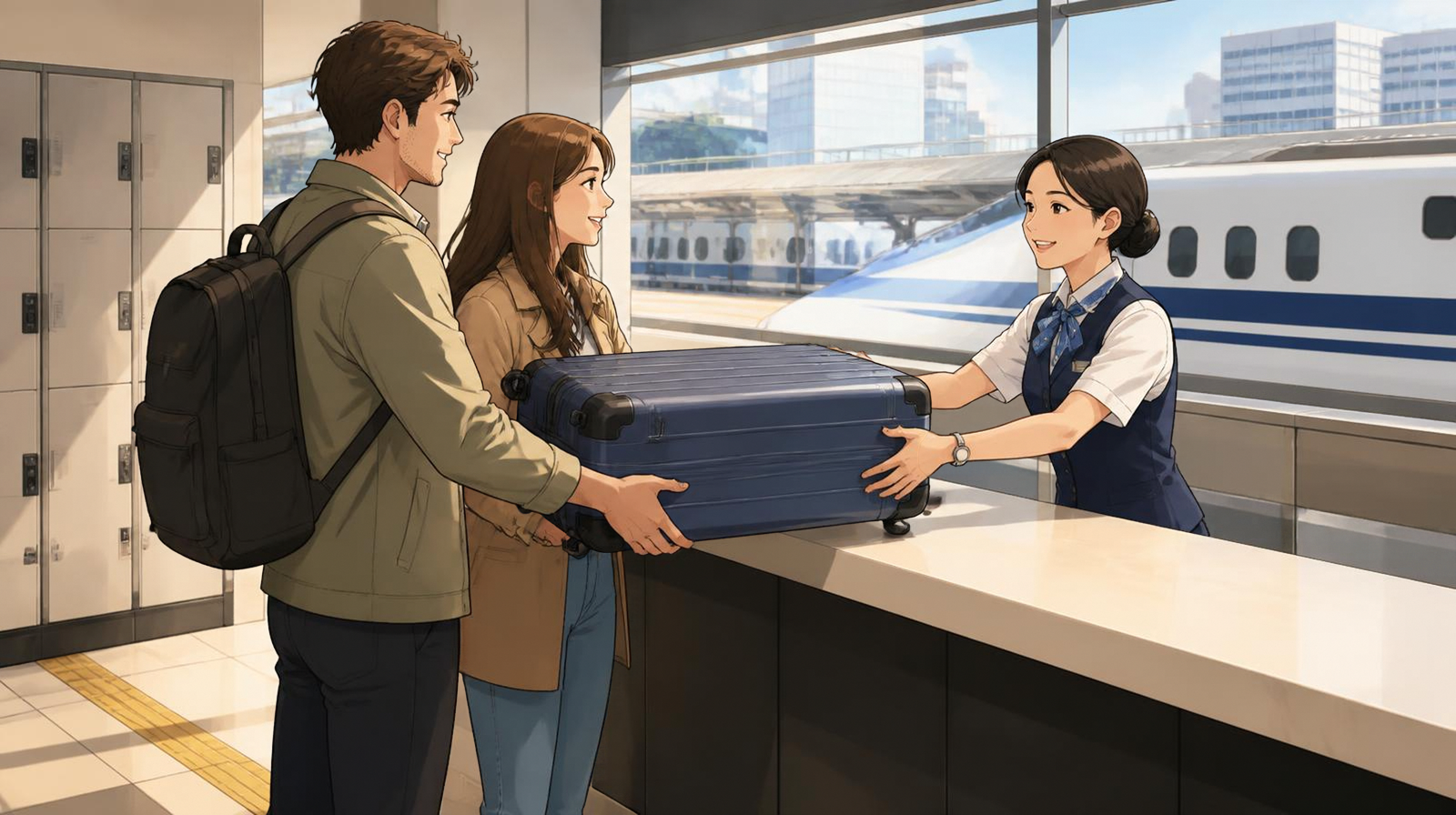
With luggage, look at the number of transfers, walking distance, elevator access, realistic transfer time, and the final route to the accommodation. This matters most on arrival and departure days, when you are carrying everything with you.
Before finalizing the route, use our guide to luggage delivery, lockers and Shinkansen rules to decide whether to carry, store or forward your suitcase.
Where You Stay Changes How You Travel
Transportation planning does not end at the nearest major station. Where you stay affects the first and last part of almost every journey.
A hotel beside a major station may make airport transfers and day trips very simple. A quieter residential stay may put cafés, supermarkets, parks, and local streets outside your door while adding a short bus ride, walk, or taxi to some longer journeys. Neither is automatically better.
Before booking accommodation, check the actual route from the station or airport-bus stop to the property, especially with luggage and at the time you expect to arrive. A place that looks close on a city map can feel very different when the final 15 minutes involve a large station, stairs, or an unfamiliar walk. If Osaka is one of your bases, Where to Stay in Osaka: Best Areas for First-Time Visitors compares eight areas by transport, atmosphere, and the kind of stay each location naturally supports.
Choose the Simplest Door-to-Door Journey
The easiest way to travel around Japan is not to master every transportation system. Start with a simple default for each part of the trip, then change only when your route gives you a good reason.
- Major-city travel → train / subway + IC card
- Major-city to major-city travel → check the Shinkansen first
- Beyond the railway station → local bus or taxi
- Airport arrival → plan all the way to your accommodation
- Rural multi-stop travel → consider a rental car
- Very long distances or islands → compare rail, flights, and ferries
Then compare the details that matter to your actual journey: transfers, walking, luggage, time, cost, and where you are staying. Japan becomes much easier to navigate once transportation stops being one big system to learn and becomes a series of smaller choices.
Frequently Asked Questions
- What is the easiest way to get around Japan for a first-time visitor?
-
Use trains and subways as the default in major cities, an IC card for compatible local fares, and the Shinkansen for many major intercity journeys. Add a local bus or taxi when rail does not take you conveniently to the final destination.
- Do I need an IC card in Japan?
-
An IC card is not mandatory, but it is usually the simplest way to pay for compatible local trains, subways, and many buses. Shinkansen, limited express, and some regional journeys may require a different ticket or reservation.
- Is the Shinkansen always the best way to travel between cities?
-
No. Check the Shinkansen first when both cities are well served by it, but compare a highway bus, flight, or other rail service when the route, budget, or distance makes one of those options more practical.
- Do I need a Japan Rail Pass for my first trip?
-
Not automatically. Decide your itinerary first, then compare the pass with the individual JR journeys you actually plan to take. For many first trips, local IC-card travel plus separate long-distance tickets is simpler.
- Should I use a taxi or public transport in Japan?
-
Use public transport for most of the journey when it works well, then add a taxi when it removes an inconvenient final section. Luggage, children, mobility needs, late arrivals, weather, and accommodation location can make the extra cost worthwhile.
- Should I rent a car in Japan?
-
Usually not for a first trip focused on major cities. A rental car becomes more useful when regional public transport is infrequent or several countryside stops are difficult to connect without driving.