Is Winter a Good Time to Visit Japan?
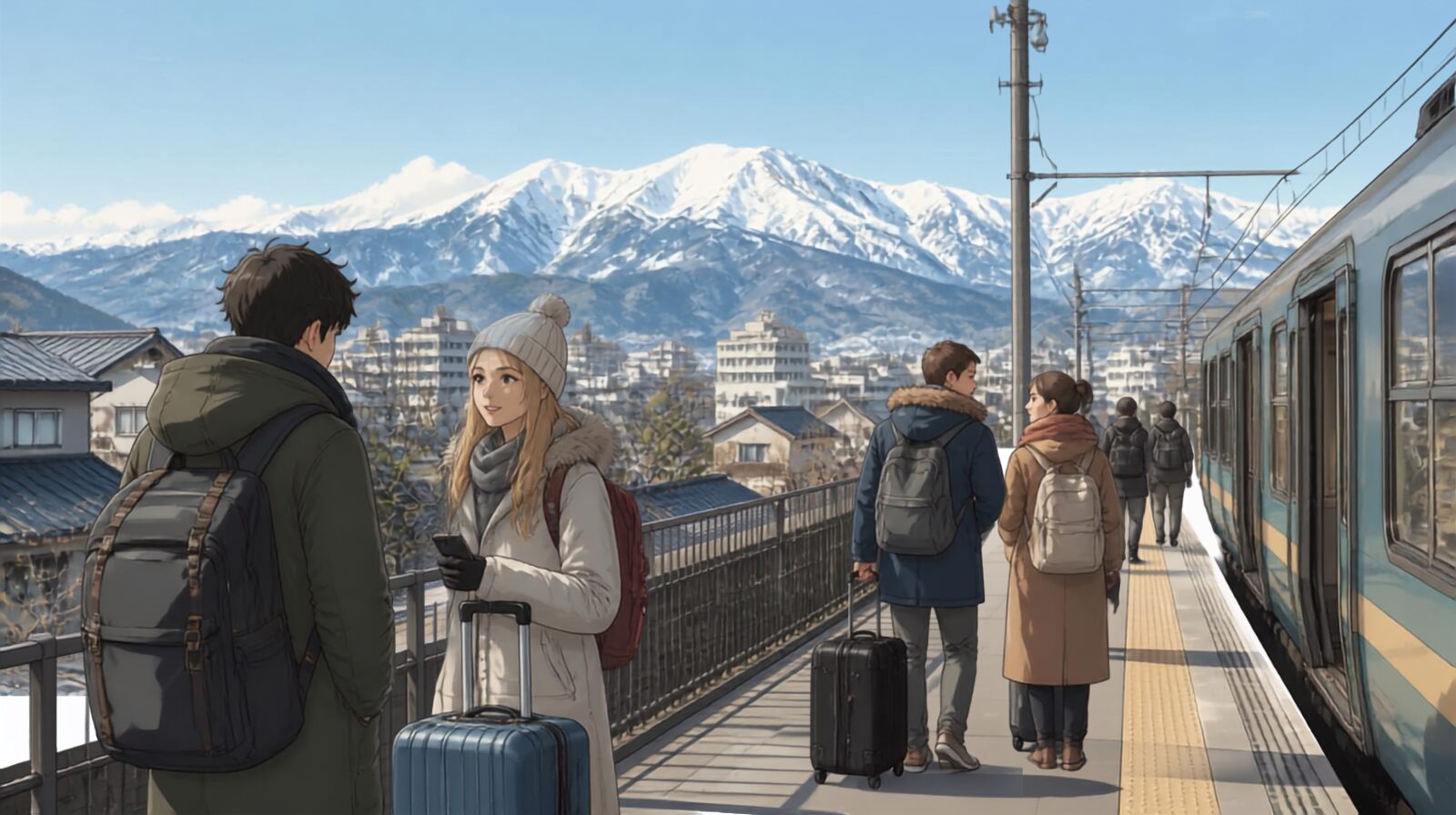
Yes. Winter can be an excellent time for a first trip, especially if you prefer cooler walking weather, seasonal food, hot springs, winter sports, or a slower daily pace.
But winter does not improve every itinerary in the same way. 東京 / Tōkyō / Tokyo, 京都 / Kyōto / Kyoto, and 大阪 / Ōsaka / Osaka are not reliable snow destinations, yet they can still work very well in winter. Cold mornings, relatively dry conditions on many Pacific-side days, shorter daylight hours, heated indoor spaces, and winter evenings give the familiar first-trip route a different rhythm.
If snow or skiing is one of the main reasons for visiting Japan, the route needs to change more deliberately. In that case, a colder region should become a real part of the trip rather than an optional side effect of winter weather.
If your dates are still flexible between seasons, compare winter with spring, summer, and autumn in our Best Time to Visit Japan guide before choosing your travel period.
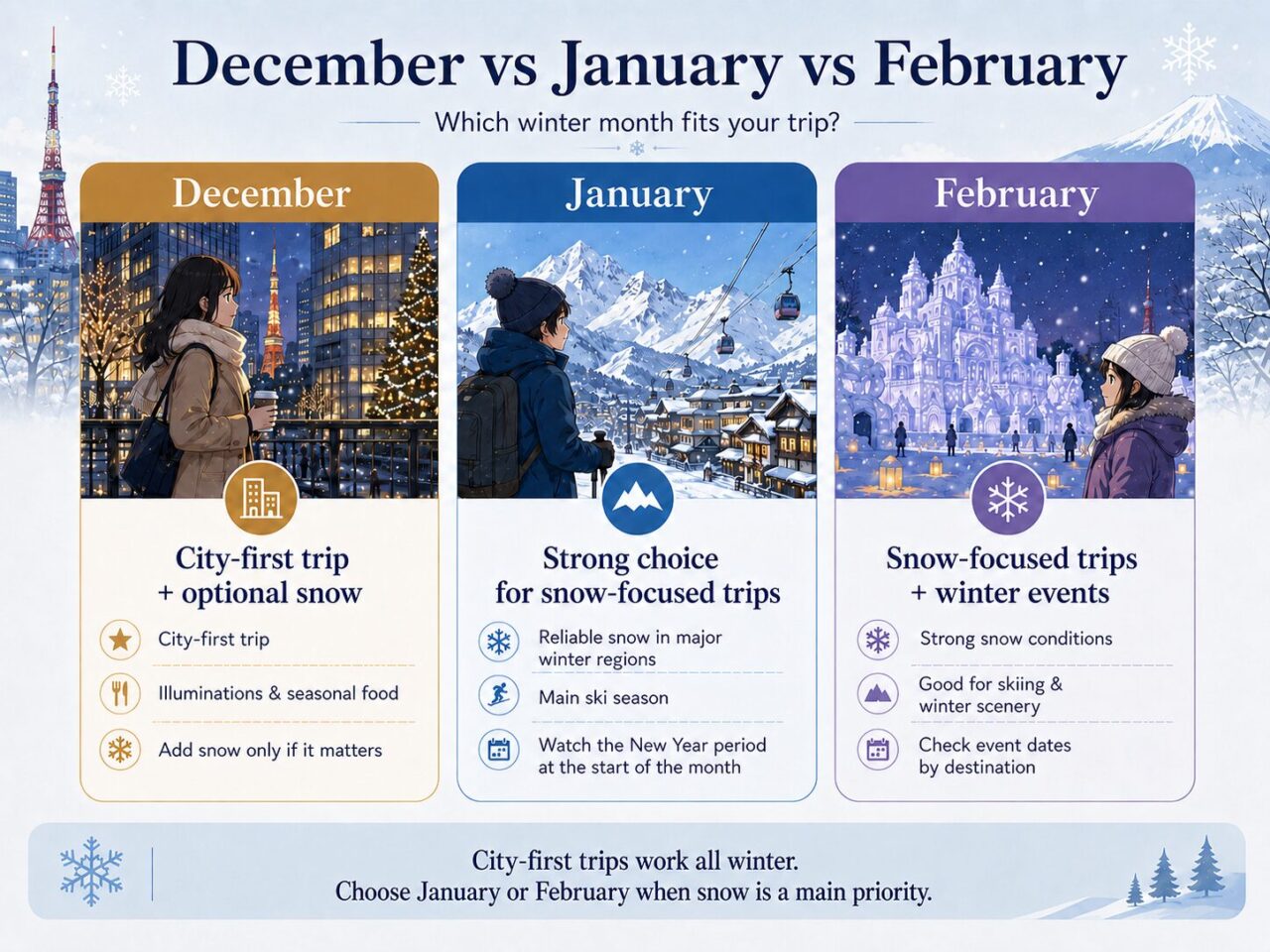
December, January, or February: Which Winter Month Fits Your Trip?
Japan’s meteorological winter is December through February, but those three months are not interchangeable. The season generally becomes colder and more established after December, while snow conditions in northern and mountain regions become more dependable through the heart of winter.
| Month | How Winter Feels | Snow & Skiing | Best For | Main Planning Point |
|---|---|---|---|---|
| December | Winter begins, but conditions vary widely by region | Snow is established in colder areas; some ski regions are still in early season | Classic city trips with winter atmosphere, illuminations, and an optional colder stay | Late December overlaps with year-end and New Year travel |
| January | Deep winter across much of Japan | One of the strongest periods for snow and skiing | Snow-focused trips, skiing, onsen stays, and winter scenery | Early January has New Year closures, crowds, and transport demand |
| February | Still full winter in northern and mountain areas | Peak-season conditions continue in many major snow regions | Skiing, snow festivals, deep-winter landscapes, and winter-first itineraries | Conditions remain severe in snow country even as some southern areas begin to feel slightly less cold |
December: The Easiest Bridge Into Winter
December suits travelers who want Japan to feel wintry without making snow the entire purpose of the trip.
Tokyo, Kyoto, and Osaka can remain the core route. Snow becomes a more deliberate choice: add a colder mountain or northern destination if it matters, rather than expecting the main cities to provide it.
Of the three winter months, December is the least dependable for a trip built mainly around snow because some ski areas are still moving into their main season. It works best when snow is optional or when you deliberately choose a colder destination.
If your dates are already fixed in December, use our Japan in December guide for regional temperatures, what to wear, where snow is realistic, and late-December planning.
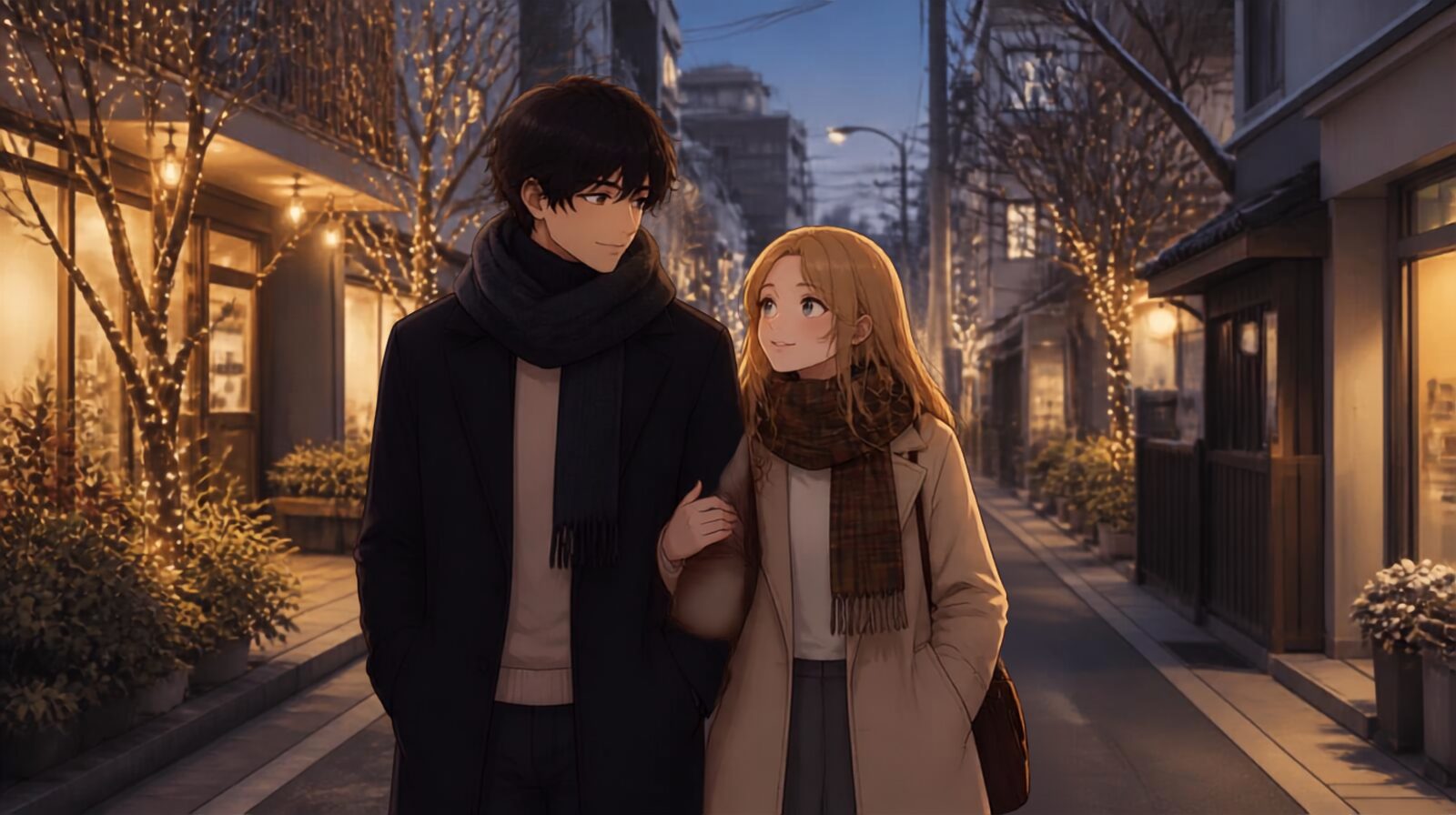
January: Deep Winter and Reliable Snow
January is one of the strongest choices for travelers whose main purpose is reliable winter scenery or skiing. Compared with December, snow conditions are more established across many northern and mountain regions.
Cold conditions are well established across northern Japan and mountain regions, and major ski destinations are typically operating in their main winter season. January also makes a hot-spring stay feel naturally connected to the rest of the trip rather than added as a separate attraction.
The main exception is the beginning of the month. The New Year period can affect transportation demand, opening schedules, restaurants, and cultural sites, so a January trip should distinguish the holiday period from the rest of the month.
If your dates are already fixed in January, use our Japan in January guide for regional temperatures, what to wear, snow, skiing, New Year travel, and January-specific planning.
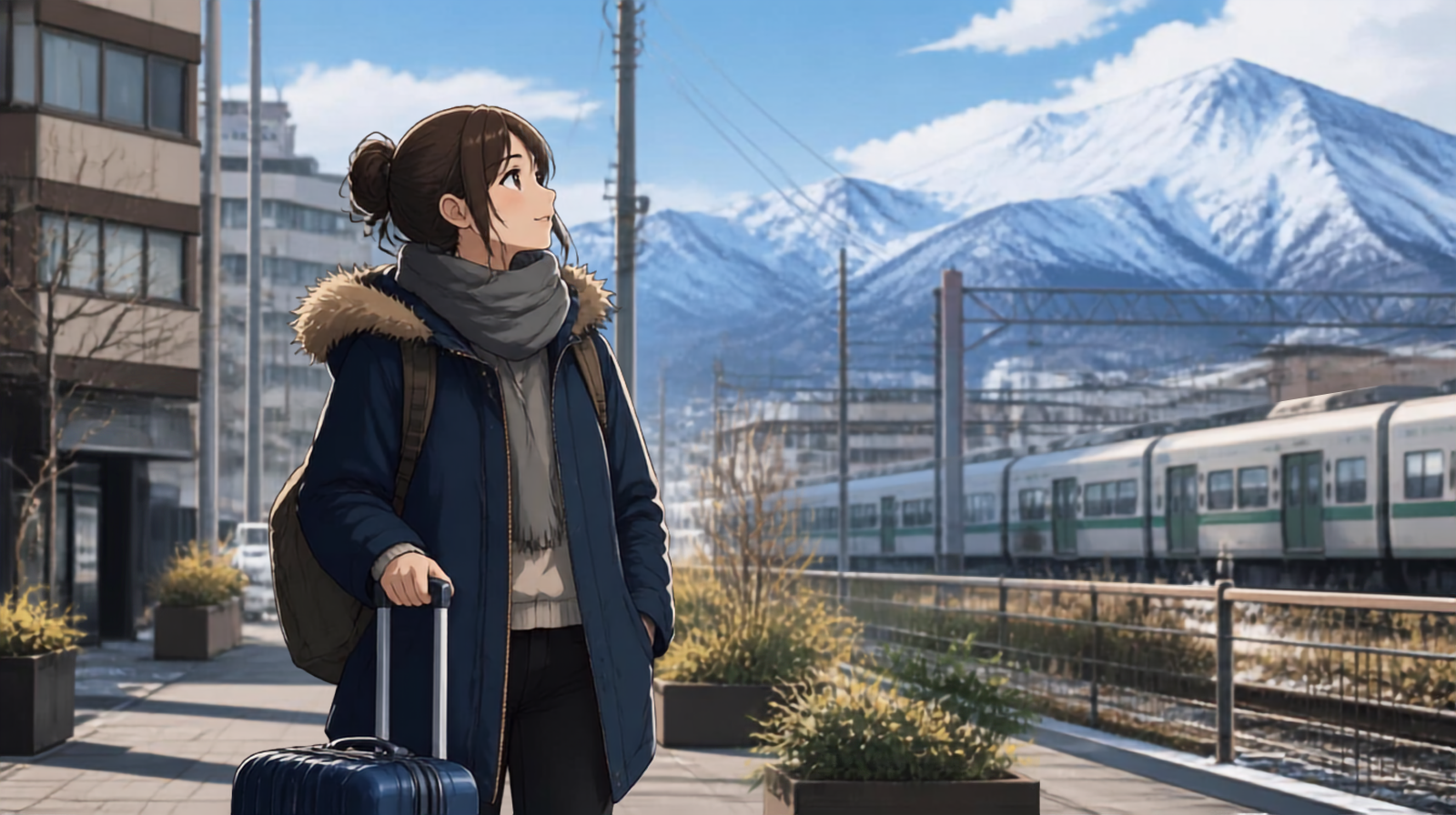
February: Deep Winter With Strong Snow Experiences
February remains deep winter in 北海道 / Hokkaidō / Hokkaido, northern 本州 / Honshū / Honshu, and many mountain areas. It is one of the strongest months for travelers who want snow to shape the trip rather than simply appear in the background.
Snow festivals and winter events also become part of the appeal in some regions. Exact dates change each year, so treat event calendars as something to verify after the month and destination are chosen rather than as the foundation of an evergreen winter plan.
In warmer parts of Japan, February may feel slightly less severe than January, but this does not mean snow-country conditions are ending. A traveler moving between southern cities and northern or mountain regions can still need very different clothing and travel margins.
If your dates are already fixed in February, use our Japan in February guide for regional temperatures, what to wear, snow, skiing, winter festivals, and late-February seasonal changes.
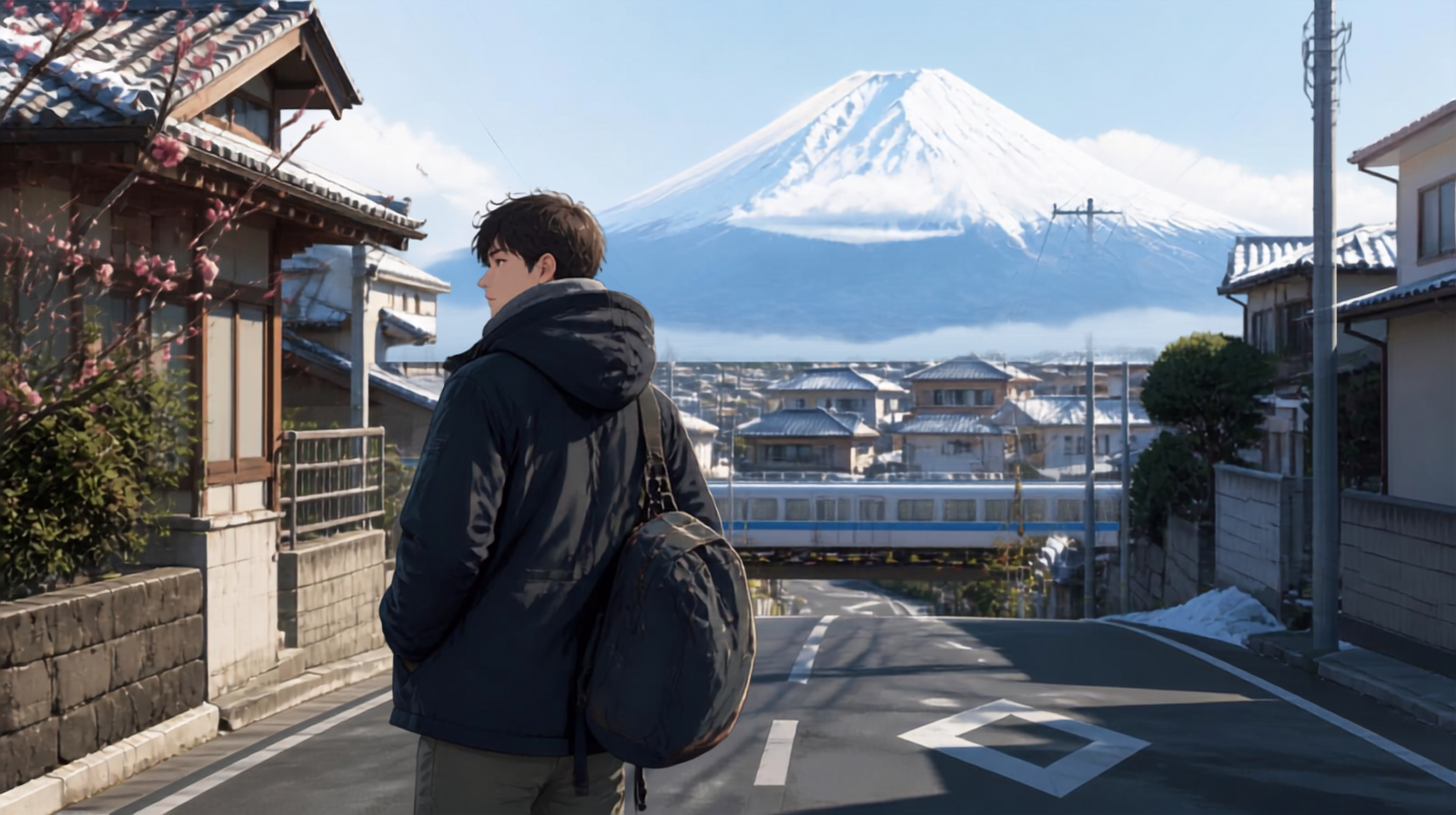
Where to Go in Winter: How Conditions Change Across Japan
Japan’s winter climate is shaped by both latitude and geography. The Japan Meteorological Agency explains that winter northwesterly winds bring heavy snowfall to much of the Sea of Japan side, while the Pacific side often has more sunny weather.
The table below uses Japan Meteorological Agency 1991–2020 climate normals to show how average temperatures progress through winter in four reference cities. These are long-term monthly means, not forecasts for a particular trip.
| Reference City | December Mean | January Mean | February Mean |
|---|---|---|---|
| Sapporo | −0.9°C | −3.2°C | −2.7°C |
| Tokyo | 7.7°C | 5.4°C | 6.1°C |
| Fukuoka | 9.1°C | 6.9°C | 7.8°C |
| Naha | 19.0°C | 17.3°C | 17.5°C |
The numbers show why “winter in Japan” is too broad to describe one packing list or one type of itinerary. The difference between Sapporo and Naha is larger than the change between December and February within either city.
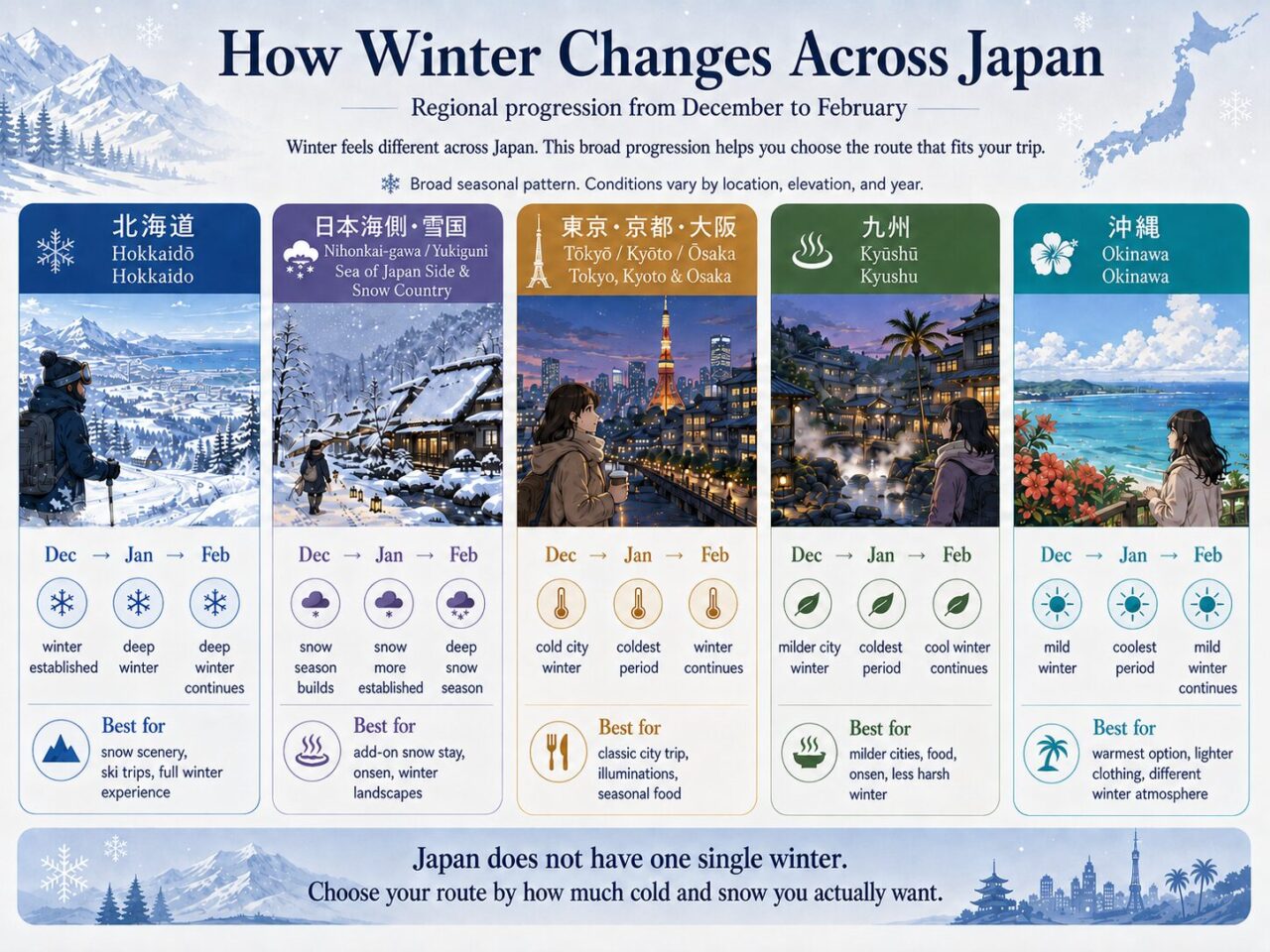
Source: Japan Meteorological Agency climate normals and regional climate guidance. Conditions vary by year, elevation, and location.
Hokkaido: Winter Is a Major Part of the Trip
Hokkaido is the clearest choice when snow, winter scenery, or skiing is central to the journey. Snow changes walking speed, footwear, transport margins, outdoor time, and the value of staying close to stations, restaurants, or the activity you came for.
A Hokkaido winter trip should therefore be planned as a winter itinerary from the beginning, not as a normal city trip with a colder temperature forecast. If winter itself is one of the main purposes of the journey, give Hokkaido or another major winter region several days rather than treating it as a quick add-on.
The Sea of Japan Side and Snow Country
Parts of 東北 / Tōhoku / Tohoku, 新潟県 / Niigata-ken / Niigata Prefecture, 長野県 / Nagano-ken / Nagano Prefecture, 北陸 / Hokuriku / Hokuriku region, and other mountain or Sea of Japan-side areas can offer substantial snow without requiring a flight to Hokkaido.
This can work especially well for travelers who want to combine the classic Tokyo–Kyoto–Osaka journey with one or two nights in a genuine snow region. If the major cities remain your priorities, a Honshu snow-country stay is often easier to add without redesigning the whole journey.
Choose a specific winter destination rather than an entire prefecture. Elevation and local geography matter, so snow conditions can differ substantially within the same region.
Tokyo, Kyoto, and Osaka: Cold City Winter, Not Guaranteed Snow
For a first trip centered on Tokyo, Kyoto, and Osaka, winter does not require a completely different route.
Outdoor sightseeing works best earlier in the day, while museums, cafés, shopping, restaurants, illuminated streets, and time near your accommodation become more useful after dark. Snow can occur, but these cities should not be chosen because you expect a snow-covered landscape.
Kyushu and Okinawa: A Different Kind of Winter
九州 / Kyūshū / Kyushu is generally milder than northern Japan, especially in lowland cities, but it is still winter. Mountain and inland areas can be much colder than the image of “southern Japan” suggests.
沖縄 / Okinawa / Okinawa is different again. Winter is much warmer than in the main cities of Honshu, so choosing Okinawa is not simply a slightly warmer version of the Tokyo–Kyoto–Osaka route. It creates a different seasonal trip.
If Snow Matters, Start With the Month
Travelers often begin by searching for “snow places in Japan,” but the more useful first question is how important snow is to the trip.
If snow is optional, December can work well because the rest of the journey can remain a normal first trip. If snow is one of the main reasons for traveling, January or February is the safer default because the season is more established across major snow regions.
If skiing or snowboarding is the main purpose, plan the accommodation and transport around the resort area rather than treating the mountain as a day trip from a distant city. Japan’s ski season generally begins in December and extends into spring at many resorts, but opening and closing dates depend on location, elevation, and snowfall.
Snow also increases the cost of mistakes. A late arrival, unsuitable shoes, a long uphill walk from the station, or an overly tight final connection matters more when roads and footpaths are icy. The winter destination itself may be beautiful, but the practical route to the accommodation deserves equal attention.
What Should You Wear in Japan in Winter?
Pack for the coldest part of your itinerary, not the airport where you land.
| Route Type | General Packing Approach | Footwear |
|---|---|---|
| Tokyo / Kyoto / Osaka city trip | Warm coat with removable layers for heated trains, shops, and restaurants | Comfortable closed walking shoes |
| Snow country / Hokkaido | Stronger insulation, gloves, hat, and protection from wind and wet snow | Water-resistant footwear with useful grip |
| Kyushu city route | Normal winter layers, with extra warmth for mornings, evenings, and inland areas | Comfortable closed shoes |
| Okinawa | Much lighter layers than mainland winter, while still allowing for wind and cooler evenings | Normal walking shoes |
Layering matters because the temperature difference between outdoors and heated interiors can be large. A coat that feels comfortable outside may become inconvenient on a crowded train or inside a department store.
Month-specific clothing still depends on the route. A December traveler comparing Tokyo with Hokkaido needs different detail from someone visiting only Okinawa, which is why fixed-month guides should handle the final packing decision.
How Winter Changes the Way You Spend the Day
Winter changes the value of time as much as it changes the temperature.
Use the brighter part of the day for gardens, temple districts, parks, scenic walks, and other outdoor experiences. After sunset, move naturally into dinner, shopping streets, cafés, indoor attractions, illuminations, or the neighborhood around your accommodation rather than trying to extend a summer-style sightseeing schedule.
In snow regions, add more margin between activities. Walking is slower, luggage is harder to move, buses and trains can be affected by weather, and the final kilometer from the station may matter more than it did when you booked the room online.
Winter Makes Accommodation Location More Important
Accommodation close to a station or reliable transport can be especially valuable when you are moving with luggage in cold or snowy conditions. In a city, a neighborhood with restaurants, convenience stores, and somewhere pleasant to walk after dinner can make short winter evenings feel fuller without adding another train journey.
In a snow destination, check the route from the station or bus stop to the property, not only the map distance. A short walk on dry pavement and the same distance on packed snow are different travel experiences.
Popular ski areas and destinations with major winter events can also have strong accommodation demand in January and February. If a particular winter stay is central to the trip, secure that part of the itinerary before relying on the flexibility you might expect from an ordinary city stay.
An Onsen Stay Can Become Part of the Winter Rhythm
温泉 / Onsen / hot springs are often treated as one more activity to add to a sightseeing list. In winter, an overnight stay can work better than a rushed visit.
Arrive in the afternoon, bathe before dinner, spend the cold evening at the property or in the surrounding town, and begin the next morning without immediately returning to a major city. The value comes from slowing the trip down, not only from the bath itself.
If you are unfamiliar with shared bathing, Onsen & Sento Etiquette in Japan explains the bathing sequence and the facility rules worth checking before you go.
Winter Food Is Part of Everyday Travel
You do not need to build the trip around famous restaurants to notice winter food. Supermarkets, convenience stores, department-store food halls, neighborhood restaurants, and small izakaya all change with the season.
Common winter foods include 鍋 / Nabe / hot pot, おでん / Oden / simmered ingredients in broth, hot noodles, soups, seasonal seafood, roasted sweet potatoes, and warm drinks.
This is also where staying in one neighborhood for several nights can improve the trip. Returning to the same local supermarket, bakery, coffee shop, or restaurant lets you notice ordinary seasonal changes that are easy to miss when every meal is planned as a destination.
New Year Is the Main Winter Calendar Exception
Most winter travel can be planned with evergreen seasonal principles. The year-end and New Year period is different.
Transportation demand can rise, and museums, restaurants, attractions, shops, and cultural sites may change their opening schedules. There is no single nationwide closure calendar, so anything essential to the trip should be checked individually.
If your journey falls in late December, the December guide covers the month-specific planning issues rather than treating the entire winter season as having the same holiday conditions.
Winter festivals and snow events also vary by year and destination. Choose the month and region first, then verify the current event dates before making a non-refundable booking around one specific festival.
Snow Can Affect Transportation Even When the Route Is Normally Reliable
Heavy snow can delay or suspend trains, buses, flights, and road transport. Snow-country regions are accustomed to winter operations, but that does not mean every service runs normally in every storm.
Pacific-side cities can also be disrupted when unusual snow or ice affects roads and railways. A place that receives less snow is not automatically immune to winter transport problems.
Keep extra time around important connections, especially when leaving a snow region for an international flight. If weather begins to affect the route, Natural Disasters in Japan: What Every Traveler Should Know explains how to check disruptions and respond when plans change.
Plan Your Winter Trip in This Order
The easiest way to plan a winter trip is to make the decisions in the right order.
- Decide how important snow is. If you mainly want winter atmosphere, seasonal food, illuminations, and comfortable city sightseeing, the classic Tokyo–Kyoto–Osaka route can remain the center of the trip. If snow or skiing is a main purpose, build a colder region into the itinerary deliberately.
- Choose the part of winter. December works well for a city-first trip with optional snow. January and February are stronger choices when established snow conditions matter more. Choose between them based on your dates, the winter experiences you want, and any event-specific plans.
- Decide how much winter should change the route. Add one or two nights in Honshu snow country if the major cities remain your priorities. Give Hokkaido or another major winter region several days if winter itself is one of the main reasons for traveling.
For most first trips that are not primarily about snow, keep the places you genuinely want to see and let winter change only the parts of the journey where the season adds real value.
Frequently Asked Questions
- Is winter a good time to visit Japan for a first trip?
-
Yes. Tokyo, Kyoto, and Osaka remain practical first-trip destinations in winter, while snow regions, skiing, and onsen stays can be added when they match your priorities. The main requirement is to plan for colder weather, shorter daylight hours, and possible winter transport disruption.
- Which month is best for winter in Japan?
-
December is a good choice for a classic city trip with winter atmosphere. January and February are stronger choices when reliable snow or skiing is a priority; choose between them based on your dates, destination, and whether a specific winter event matters to you.
- Does it snow everywhere in Japan in winter?
-
No. Hokkaido, northern Japan, the Sea of Japan side, and mountain regions receive much more snow than major Pacific-side cities. Tokyo, Kyoto, and Osaka may see snow, but they should not be chosen as reliable snow destinations.
- Is January colder than December in Japan?
-
In many major cities, January has a lower long-term mean temperature than December. Regional differences remain large, so the places on your itinerary matter more than a nationwide average.
- What should I wear in Japan in winter?
-
For city travel, use a warm coat and removable layers that remain comfortable in heated indoor spaces. Snow-country travel requires stronger insulation and footwear suited to wet, snowy, or icy surfaces, while Okinawa needs much lighter clothing.
- Can I enjoy winter in Japan without skiing?
-
Yes. Winter can work well for city sightseeing, seasonal food, illuminations, museums, neighborhood walks, hot-spring stays, and snow scenery without skiing. Choose the month and region based on how much cold and snow you actually want.