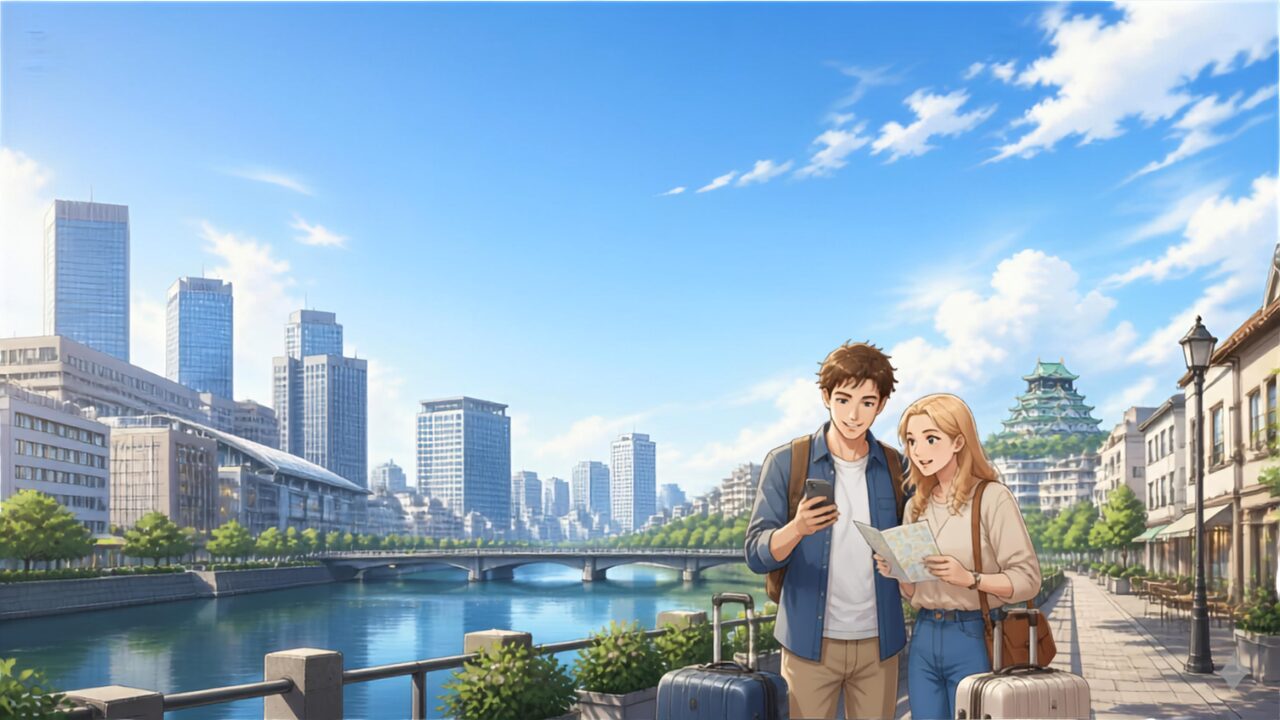
The Quick Answer: Stay in Osaka or Kyoto?
- Choose Osaka if food, nightlife, Universal Studios Japan (USJ), and a wider Kansai trip matter most.
- Choose Kyoto if temples, historic neighborhoods, early mornings, and several full Kyoto sightseeing days are central to the trip.
- Split the stay only when both cities are important enough that you genuinely want to wake up and spend evenings in each one.
If you only have a few nights in Kansai, one well-chosen base is usually simpler than changing hotels.
Osaka and Kyoto Are Close, but Your Base Still Matters
Osaka and Kyoto are connected by several railway routes, including JR, Hankyu, and Keihan services. This makes day trips realistic in either direction.
But a fast train between two stations is not the same as a short journey from your accommodation to a sightseeing area. You still need to reach the departure station, wait for the train, and travel onward after arriving.
This matters particularly in Kyoto, where many major sights are spread across different parts of the city. A traveler leaving an Osaka hotel for a morning in Higashiyama may spend considerably more time door to door than the headline Osaka–Kyoto train time suggests.
The same principle works in reverse. If your Osaka plans focus on Namba, Universal Studios Japan, or a neighborhood far from Osaka Station, staying in Kyoto adds another local journey before and after the intercity train.
Osaka vs Kyoto at a Glance
| What matters most? | Osaka | Kyoto |
|---|---|---|
| Overall feel | Large, energetic, and varied | Historic, atmospheric, more sightseeing-led |
| Morning advantage | Useful for transport hubs, local neighborhoods, and city routines | Strong advantage for early access to popular historic areas |
| Evenings | More late-night dining, shopping, and entertainment | Downtown remains active, while many sightseeing districts become quieter |
| Food | Casual local specialties and easy evening dining | Traditional cuisine, cafés, sweets, markets, and refined dining |
| Historic sightseeing | Important sites, but not the main character of the city | One of the main reasons to stay in Kyoto |
| USJ and Osaka-focused sightseeing | Clearly easier | Requires travel into Osaka |
| Broader Kansai base | Often more practical when several destinations matter | Strong when Kyoto itself is the main destination |
Choose Osaka for Food, Nightlife, USJ, and a Wider Kansai Base
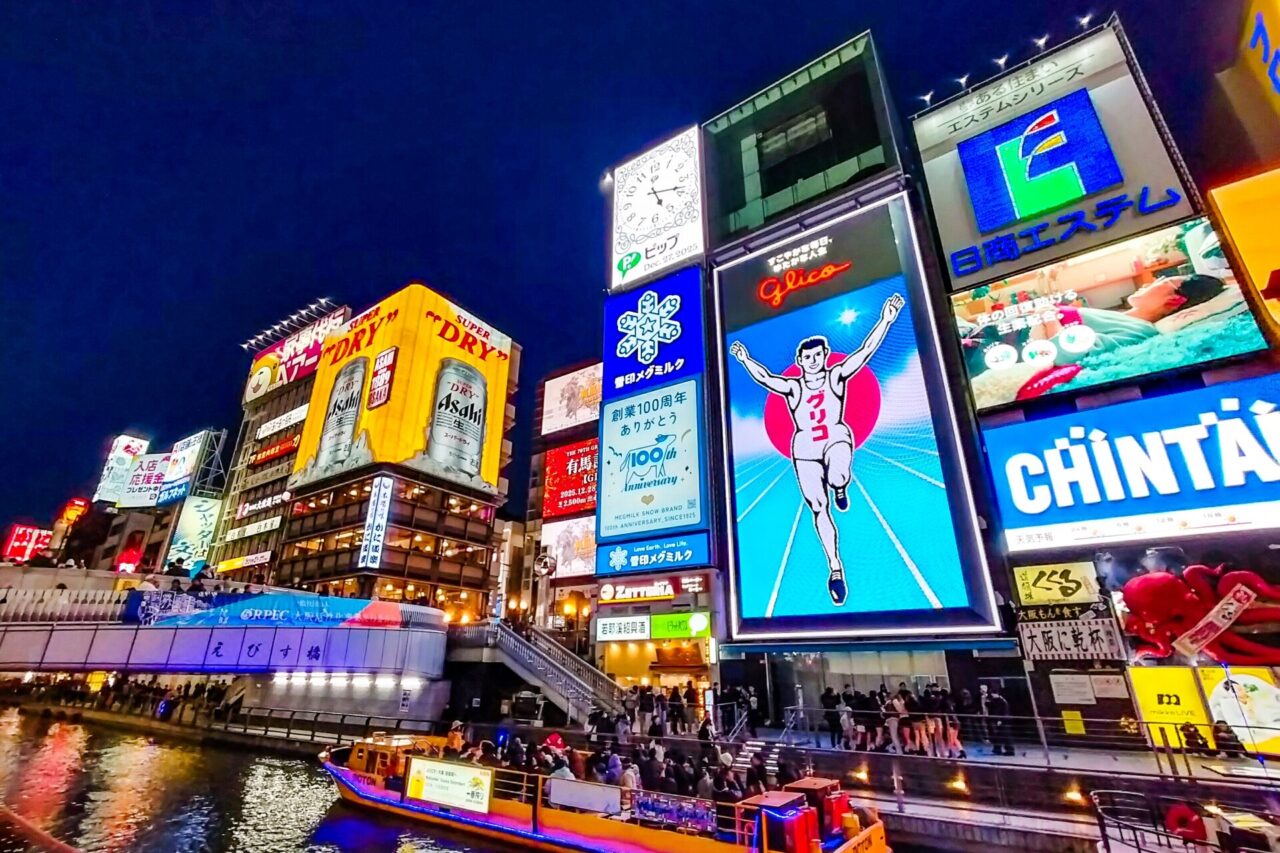
Osaka is usually the stronger base when you want the city to stay useful after the main sightseeing day ends.
- Choose Osaka if food, restaurants, nightlife, and evening shopping are major parts of the trip.
- Choose Osaka if Universal Studios Japan is one of your main priorities.
- Choose Osaka if you plan several journeys around Kansai and want a large transport base.
- Choose Osaka if you enjoy having several different urban areas and local neighborhoods within one city stay.
難波 / Namba / Namba and 心斎橋 / Shinsaibashi / Shinsaibashi suit travelers who want food and nightlife close to the accommodation. 大阪駅・梅田 / Ōsaka-eki・Umeda / Osaka Station & Umeda is especially useful for transport and day trips. Quieter central and residential areas can create a very different Osaka stay while keeping the city accessible.
Choose Kyoto for Temples, Early Mornings, and Historic Atmosphere
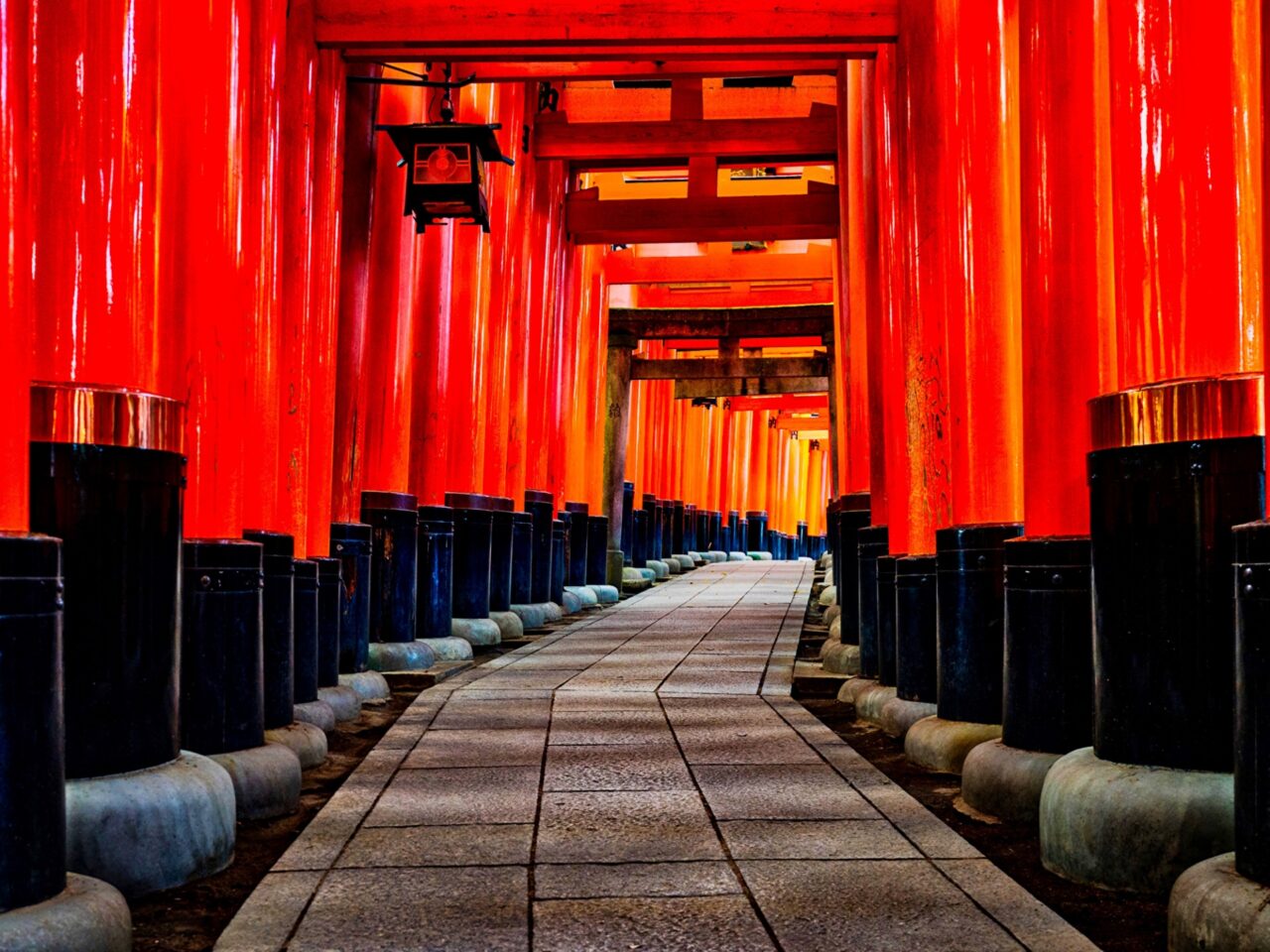
Kyoto becomes a stronger place to stay when the hours before and after the main sightseeing crowds matter to you.
- Choose Kyoto if temples, shrines, gardens, and historic neighborhoods are the main reason for your Kansai stay.
- Choose Kyoto if you expect to spend several full days sightseeing in Kyoto itself.
- Choose Kyoto if you want to begin early in areas such as Higashiyama or enjoy quieter streets after daytime visitors leave.
- Choose Kyoto if traditional scenery and slower walking days matter more than nightlife or late shopping.
Staying in Kyoto does not mean the city becomes silent after dark. Areas around 四条 / Shijō / Shijo, 河原町 / Kawaramachi / Kawaramachi, 先斗町 / Pontochō / Pontocho, and 祇園 / Gion / Gion have restaurants and evening activity. The difference is that many temple and sightseeing districts become much calmer than Osaka’s major entertainment areas.
Should You Use One Base or Split Your Stay?
Because Osaka and Kyoto are close, changing hotels is not automatically the best way to see both. The decision depends more on trip length and how much you value mornings and evenings in each city.
| Kansai stay | Practical starting point | Why |
|---|---|---|
| 2–3 nights | Choose one base | Hotel changes can take too much time relative to the length of the stay. |
| 4–5 nights | Either can work | Split only when both cities are real priorities and the change of base adds something meaningful to the experience. |
| 6+ nights | A split becomes easier to justify | You have enough time for each hotel to feel like a real stay rather than a one-night stop. |
One Osaka base works well when Kyoto is mainly a day trip
If Kyoto is one part of a wider Kansai itinerary and you prefer Osaka’s evenings, staying in Osaka and visiting Kyoto by day can be very practical. This is especially true when your accommodation is near a useful railway connection.
One Kyoto base works well when Kyoto fills most of the itinerary
If most of your must-see places are in Kyoto, commuting from Osaka every day adds travel without giving you much benefit. Staying in Kyoto also makes early starts easier.
Split the stay when you want two different daily rhythms
A split stay is most valuable when you want both cities to function as real bases: Kyoto for early historic districts and quieter evenings, and Osaka for food, nightlife, shopping, USJ, or a broader regional base.
Do not split the stay only to avoid a short train journey. Packing, check-out, luggage handling, and check-in are also travel time.
Where You Stay Within Each City Still Matters
Choosing Osaka or Kyoto is only the first layer of the accommodation decision.
In Osaka, Umeda is useful for transport and many day trips, Namba for food and nightlife, and quieter areas such as Yodoyabashi, Higobashi, Edobori, Morinomiya, Midoribashi, or Tengachaya can make everyday local life a larger part of the stay.
In Kyoto, staying around Kyoto Station emphasizes rail convenience, while downtown and eastern areas can make restaurants, historic streets, and morning sightseeing easier. The best choice depends on which parts of Kyoto you expect to visit repeatedly.
If Osaka is the better fit, start with Osaka Travel Guide: How to Plan Your First Visit for the city-wide plan, including trip length, accommodation areas, arrival, local transportation, and Kansai day trips.
Frequently Asked Questions
- Is Osaka or Kyoto better for a first trip to Japan?
-
Neither is universally better. Osaka is usually the easier base for food, nightlife, USJ, and a broader Kansai trip. Kyoto is the stronger base when temples, historic areas, and several full Kyoto sightseeing days are the priority.
- Can I stay in Osaka and visit Kyoto for the day?
-
Yes. Several railways connect Osaka and Kyoto, so a Kyoto day trip from Osaka is realistic. Allow for the full journey from your accommodation to the Kyoto area you actually want to visit rather than looking only at the intercity train time.
- Do I need the Shinkansen between Osaka and Kyoto?
-
No. JR trains, Hankyu, and Keihan can all be useful depending on where you are staying and where you are going. The Shinkansen is mainly useful when Shin-Osaka and Kyoto Station match your wider journey.
- Is it worth staying overnight in both Osaka and Kyoto?
-
It can be, especially when you have enough time to give both cities meaningful stays and want both Kyoto mornings and Osaka evenings. On a short stay, one well-chosen base is often simpler than changing hotels.
- Which city is better as a base for Kansai day trips?
-
Osaka is often the more practical general base when your plans include several destinations in different directions. Kyoto can still be the better base when Kyoto itself accounts for most of your sightseeing time.