What Are Summer Festivals in Japan?
Summer festivals are commonly called:
- 夏祭り
- Natsu matsuri
- Summer festival
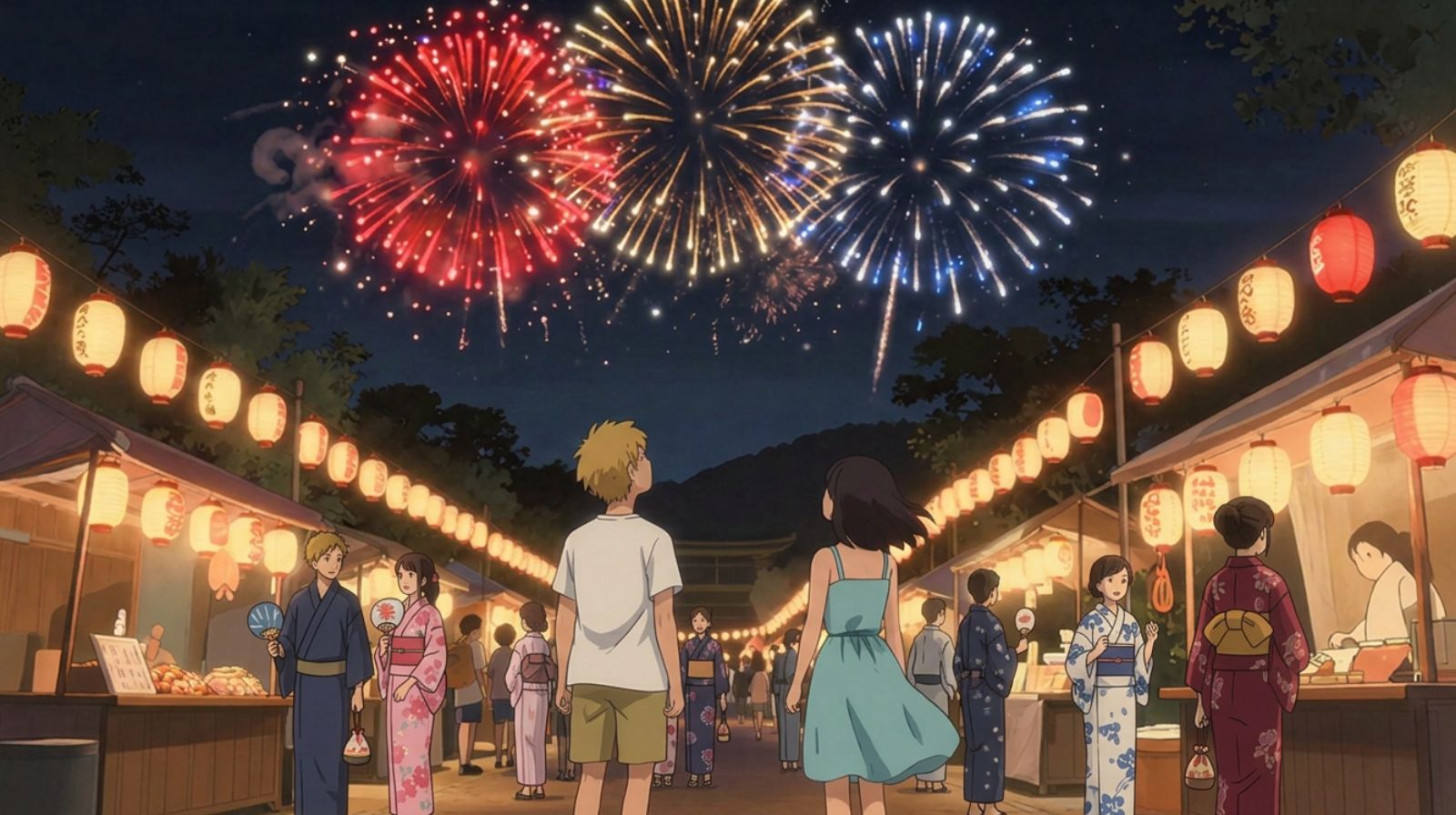
They are held across Japan, mainly during the warmer months, and range from small neighborhood celebrations to large events that attract visitors from across the country.
Some festivals are connected to shrines, temples, seasonal traditions, or local history. Others focus on fireworks, dance, music, food, or community activities.
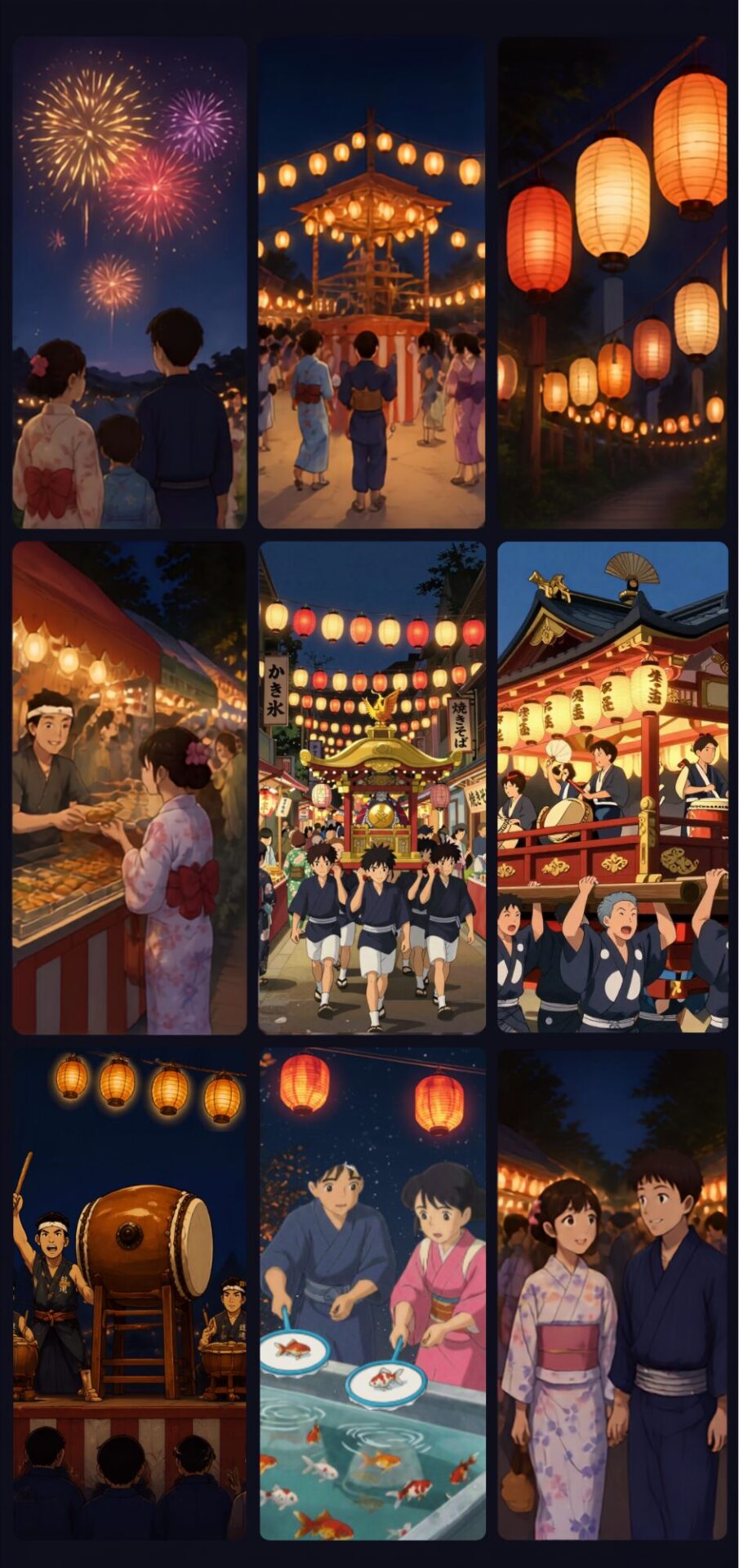
A summer festival may include:
- Fireworks (花火 / Hanabi / Fireworks)
- Bon Odori and other traditional dances (盆踊り / Bon Odori / Traditional summer dance)
- Paper lantern decorations (提灯 / Chōchin / Paper lanterns)
- Festival food stalls (屋台 / Yatai / Food stalls)
- Portable shrines carried through the streets (神輿 / Mikoshi / Portable shrine)
- Festival floats and parades (山車 / Dashi / Festival float)
- Taiko drumming and other local performances (太鼓 / Taiko / Japanese drums)
- Games for children and families
- People wearing yukata (浴衣 / Yukata / Light summer kimono)
Not every festival includes all of these elements. A riverside fireworks display, a neighborhood Bon Odori dance, and a major historic procession can all be described as summer festivals, but the experience may be very different.
What Can You Expect at a Summer Festival in Japan?
The atmosphere often changes as the sun begins to set. Streets, shrine grounds, parks, or riverbanks fill with families, groups of friends, and visitors enjoying food, performances, and the summer evening.
Many people wear yukata, but regular summer clothing is also completely acceptable. Food stalls may line the route, while music, drums, lanterns, or announcements help create a festive setting.
What you experience depends on the event.
| Type of Festival | What You May Experience |
|---|---|
| Fireworks festival | Large crowds, riverside or coastal viewing areas, food stalls, and an evening fireworks display |
| Traditional procession | Floats, portable shrines, costumes, music, and historic streets |
| Dance festival | Organized performances, community dancing, and opportunities to watch or join |
| Neighborhood festival | Local food, games, small performances, and a more relaxed community atmosphere |
| Shrine or temple festival | Religious traditions, processions, lanterns, and festival stalls |
Large festivals may require advance planning because stations, roads, and viewing areas can become extremely crowded. Smaller local festivals may be easier to explore and can offer a closer look at how communities celebrate together.
You do not need to understand every tradition before attending. Observe the people around you, follow event staff instructions, and allow time to enjoy the atmosphere rather than trying to see everything.
What Are Fireworks Festivals in Japan?
Fireworks festivals are commonly called:
- 花火大会
- Hanabi taikai
- Fireworks festival
Fireworks are one of the best-known parts of summer in Japan. Large displays are often held beside rivers, lakes, or coastal areas, where visitors gather before sunset to find a viewing spot, enjoy festival food, and wait for the evening show.
A Japanese fireworks festival is often more than a short fireworks display. Major events may include food stalls, reserved seating areas, temporary traffic restrictions, and large crowds arriving through the same nearby stations.
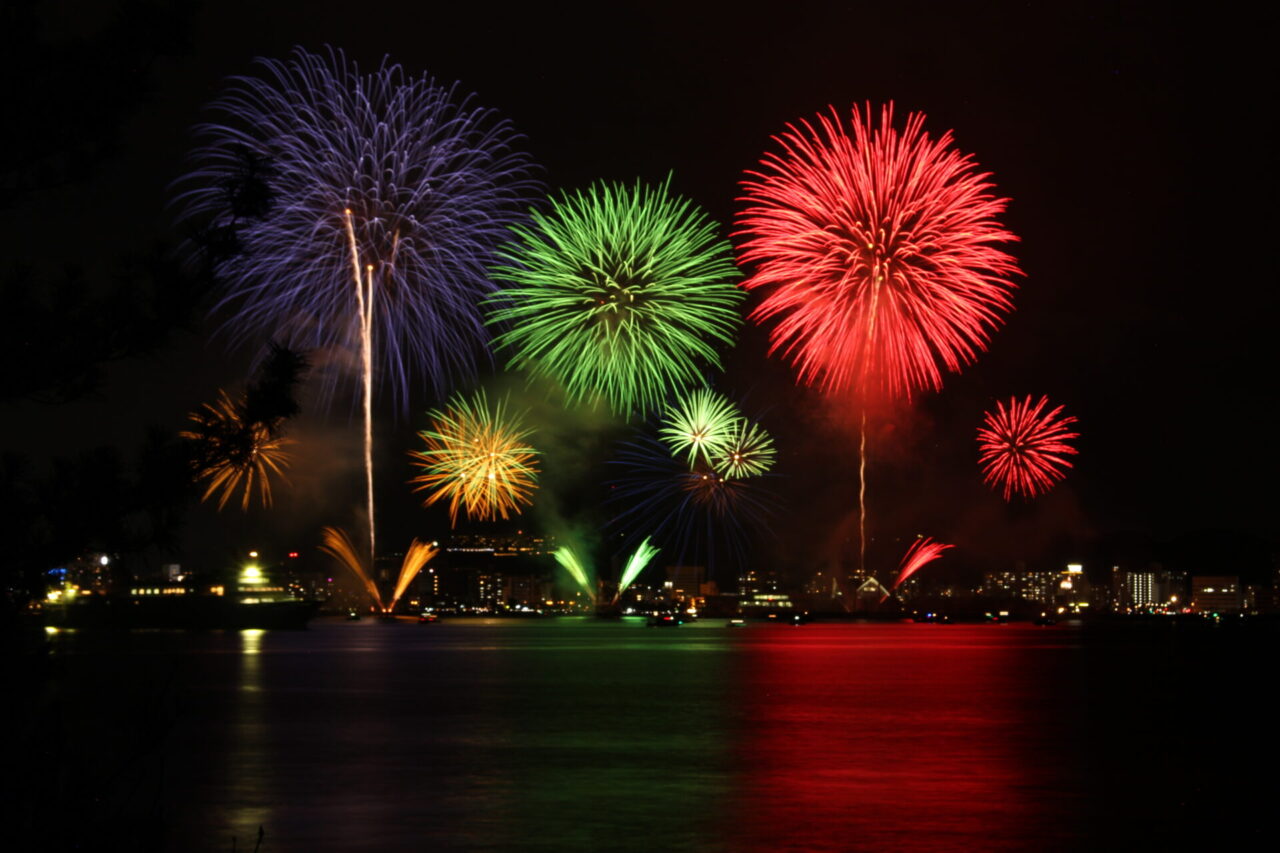
Many people wear yukata, but regular summer clothing is completely acceptable.
Before attending a fireworks festival, check:
- The official event date and start time
- Whether advance tickets or reserved seats are required
- Where free viewing areas are located
- Which station and exit you should use
- Temporary train, bus, and road arrangements
- Weather-related postponement or cancellation information
- Rules about bringing chairs, sheets, food, or drinks
Popular viewing areas can fill several hours before the fireworks begin. Stations may also become extremely crowded after the event, so allow extra time and check the last train to your accommodation.
Some well-known fireworks festivals include:
| Festival | Location | What It Is Known For |
|---|---|---|
| 隅田川花火大会 / Sumidagawa Hanabi Taikai / Sumida River Fireworks Festival | Tokyo | A major urban fireworks festival held around Asakusa and the Sumida River |
| なにわ淀川花火大会 / Naniwa Yodogawa Hanabi Taikai / Naniwa Yodogawa Fireworks Festival | Osaka | A large city fireworks display held along the Yodo River |
| 長岡まつり大花火大会 / Nagaoka Matsuri Ōhanabi Taikai / Nagaoka Fireworks Festival | Niigata | A large-scale display held along the Shinano River |
| 大曲の花火 / Ōmagari no Hanabi / Omagari Fireworks | Akita | A national competition featuring leading fireworks artists from across Japan |
These are only a few examples. Cities and towns throughout Japan hold their own fireworks events, and a smaller regional display may offer a more relaxed local experience.
Festival dates, ticket systems, viewing areas, and transportation arrangements can change each year. Always check the event’s official website shortly before visiting.
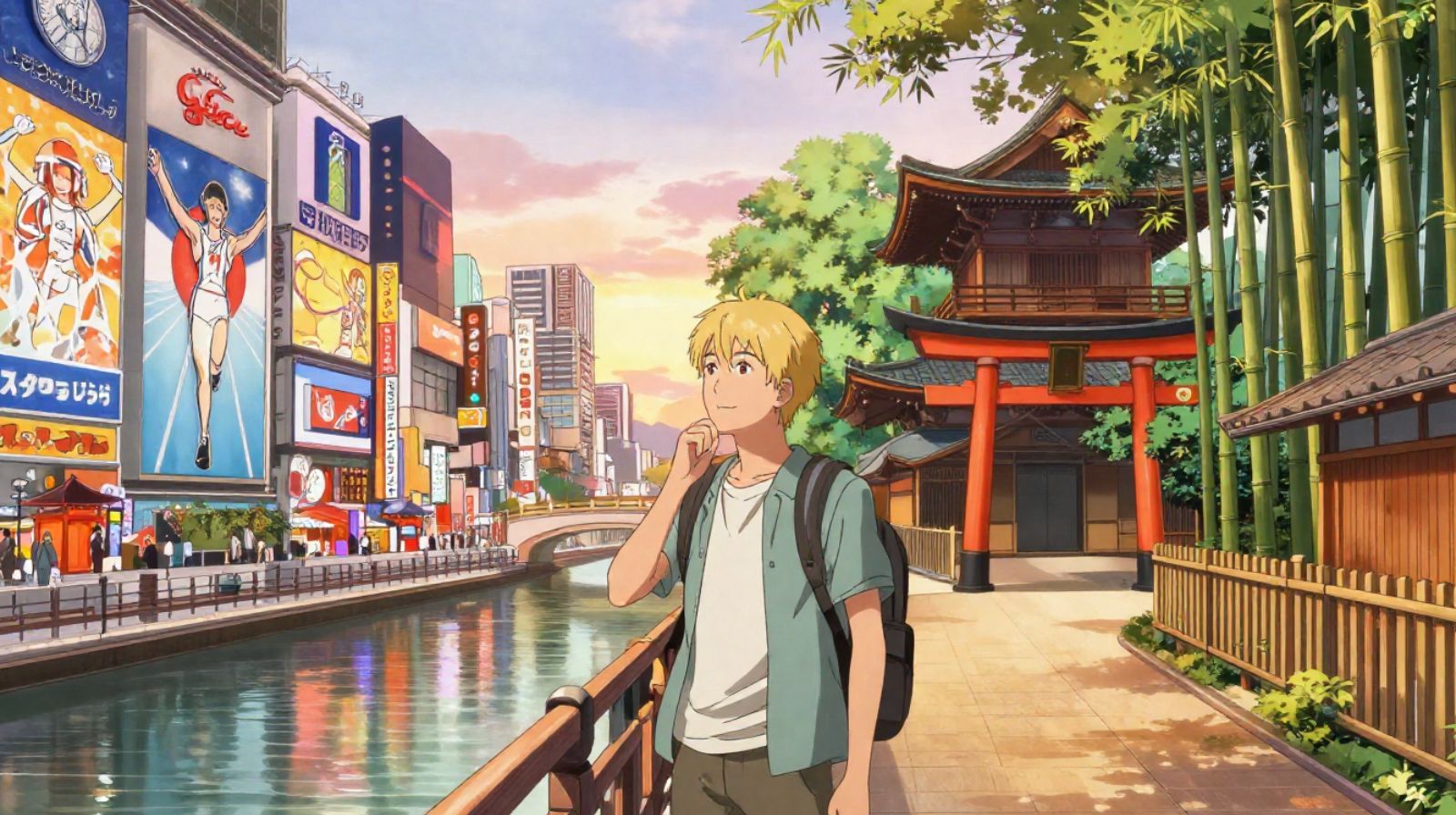
Planning to visit Tokyo or Osaka during festival season?
Many of Japan’s most famous fireworks festivals take place in these cities.
→Osaka vs Kyoto: Which City Is Right for You?
Famous Traditional Summer Festivals in Japan
Fireworks are only one part of Japan’s summer festival season. Traditional festivals may feature decorated floats, dance, music, processions, shrine rituals, and customs that have been passed down through local communities.
Each festival has its own atmosphere. Some are large events where visitors mainly watch a procession or performance, while others include dances that visitors may be able to join.
Some well-known examples include:
| Festival | Location | What Travelers Can Expect |
|---|---|---|
| 祇園祭 / Gion Matsuri / Gion Festival | Kyoto | Elaborately decorated festival floats, traditional processions, music, and events held across central Kyoto |
| 青森ねぶた祭 / Aomori Nebuta Matsuri / Aomori Nebuta Festival | Aomori | Large illuminated floats, energetic drumming, dancers, and lively street processions |
| 阿波おどり / Awa Odori / Awa Dance Festival | Tokushima | Groups of dancers and musicians performing through the streets in one of Japan’s best-known dance festivals |
| 盆踊り / Bon Odori / Bon dance | Nationwide | Community dances held around a central stage or tower, often as part of local summer and Obon celebrations |
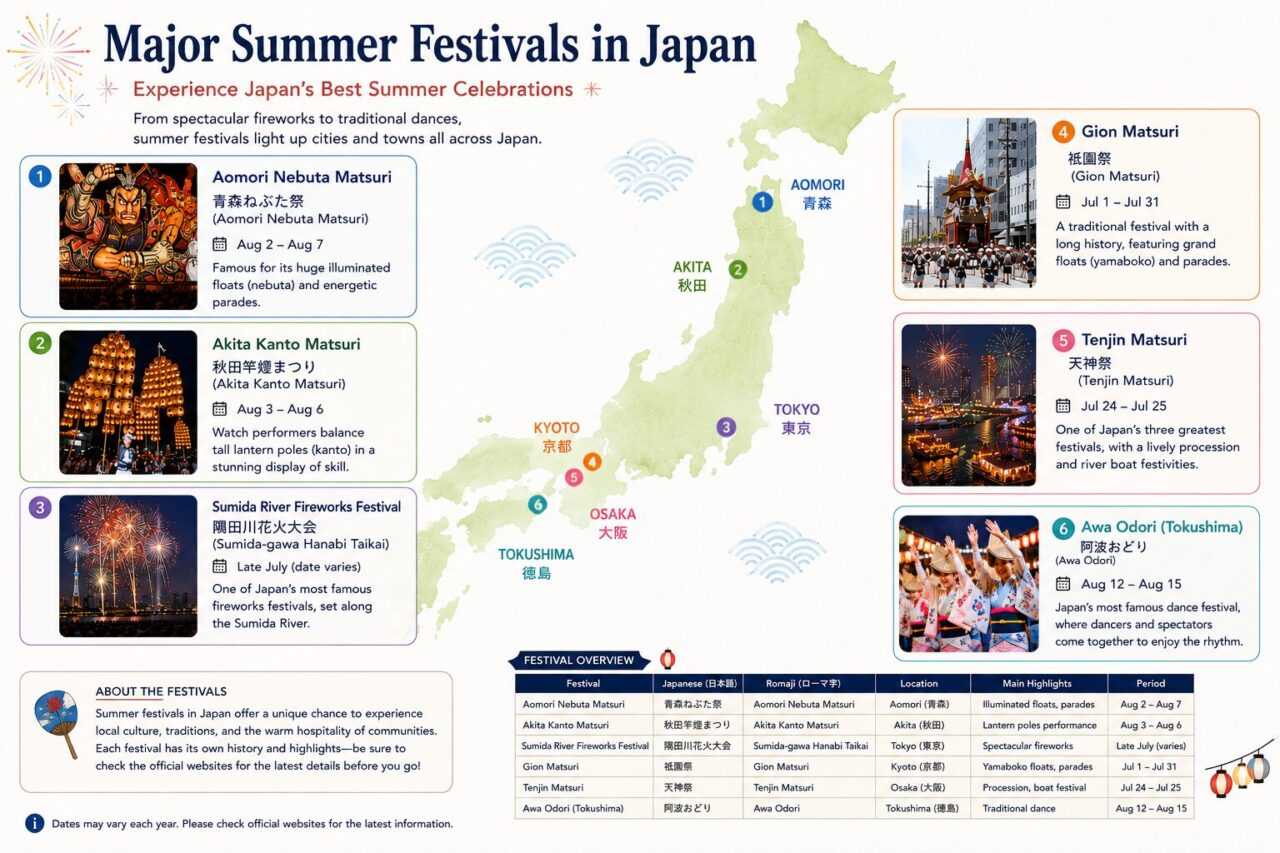
These festivals offer very different experiences.
At the Gion Festival, much of the experience involves watching historic processions and exploring streets decorated for the event. At the Aomori Nebuta Festival, the illuminated floats, music, and movement create a much more energetic atmosphere. Awa Odori centers on organized dance groups, while a neighborhood Bon Odori may feel smaller and more relaxed.
Visitors are sometimes invited to join a dance, especially at local Bon Odori events. Watch how local participants move, follow event staff instructions, and do not enter a procession or performance area unless participation is clearly permitted.
Major festivals can become extremely crowded, particularly around parade routes, stations, and popular viewing areas. Check the official event website for the current schedule, route, reserved seating information, and transportation arrangements before visiting.
Smaller neighborhood festivals may not be internationally famous, but they can offer a closer look at how local communities celebrate together. Ask your hotel or accommodation host whether any festivals are taking place nearby during your stay.
What Should You Wear to a Summer Festival?
There is usually no special dress code for visitors to a summer festival in Japan. Lightweight everyday clothing and comfortable shoes are completely acceptable.
Many people choose to wear:
- 浴衣
- Yukata
- Casual summer kimono
A yukata is lighter and more casual than a formal kimono. Wearing one can make a festival evening feel special, but it is entirely optional.
Here are some common types of festival clothing:
| Clothing | What It Is | Practical Advice |
|---|---|---|
| 浴衣 / Yukata / Casual summer kimono | Lightweight traditional clothing commonly worn at summer festivals and fireworks events | Rental shops in major tourist areas may provide dressing services and accessories |
| 下駄 / Geta / Wooden sandals | Traditional footwear often worn with yukata | They can become uncomfortable during long walks, especially if you are not used to them |
| 甚平 / Jinbei / Lightweight two-piece summer wear | A relaxed summer outfit consisting of a short-sleeved top and matching shorts or trousers | Comfortable for casual festivals and commonly worn by both children and adults |
If you rent a yukata, confirm:
- What accessories are included
- Whether dressing assistance is provided
- The return time and location
- Whether you can return it after the festival
- What happens if the weather changes
Do not feel that you must wear traditional footwear. If you are not comfortable walking in geta, choose shoes or sandals that allow you to walk safely.
Japan’s summer weather can be hot and humid, even during evening events. Wear breathable clothing and consider bringing:
- Water
- A small towel
- A portable fan
- Sun protection for daytime events
- Light rain protection
- A small bag that is easy to carry in crowds
Comfort is more important than dressing perfectly. Whether you wear a yukata or regular summer clothes, choose an outfit that allows you to walk, stand, and enjoy the festival safely.
What Food Can You Try at a Japanese Summer Festival?
Festival food stalls are commonly called:
- 屋台
- Yatai
- Festival food stalls
Rows of yatai are a familiar sight at many summer festivals. They may sell hot meals, grilled snacks, sweets, cold drinks, and regional specialties.
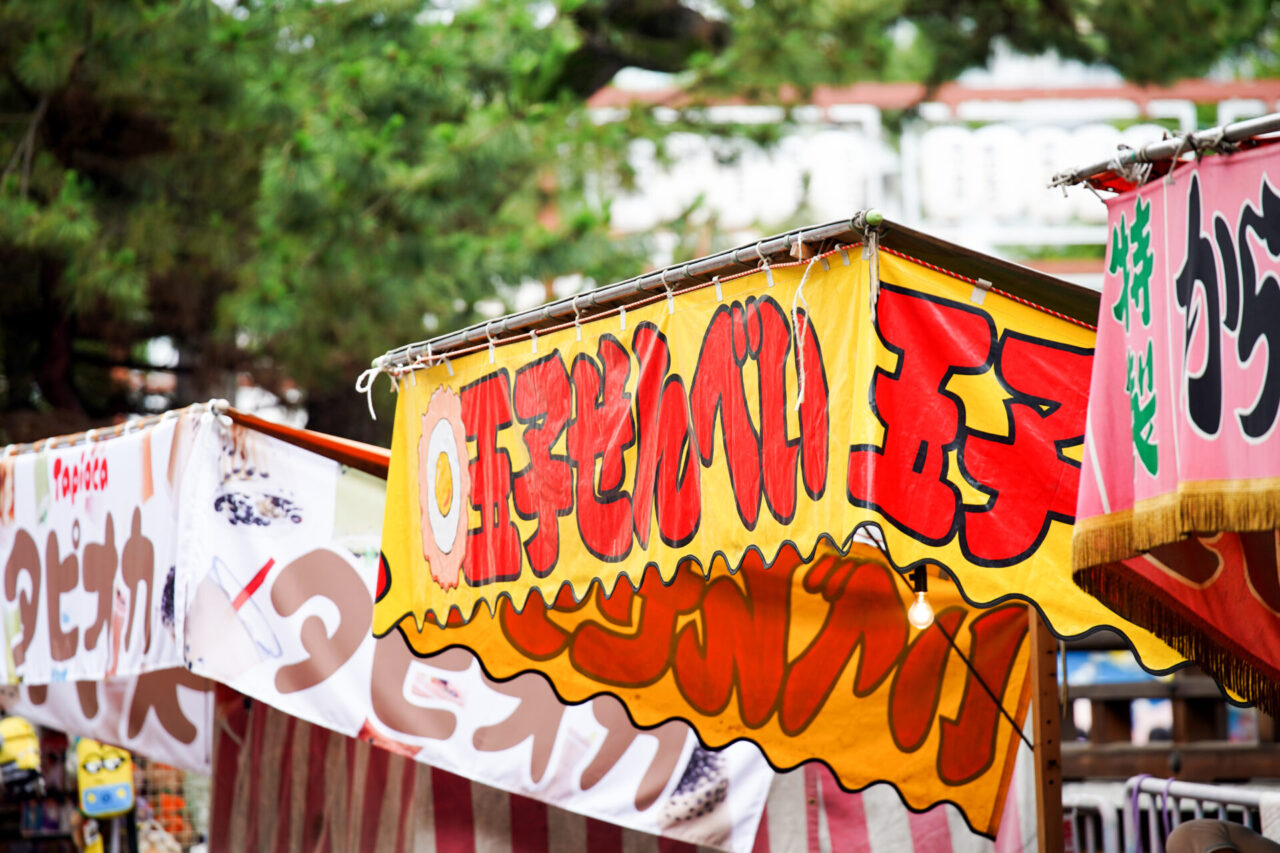
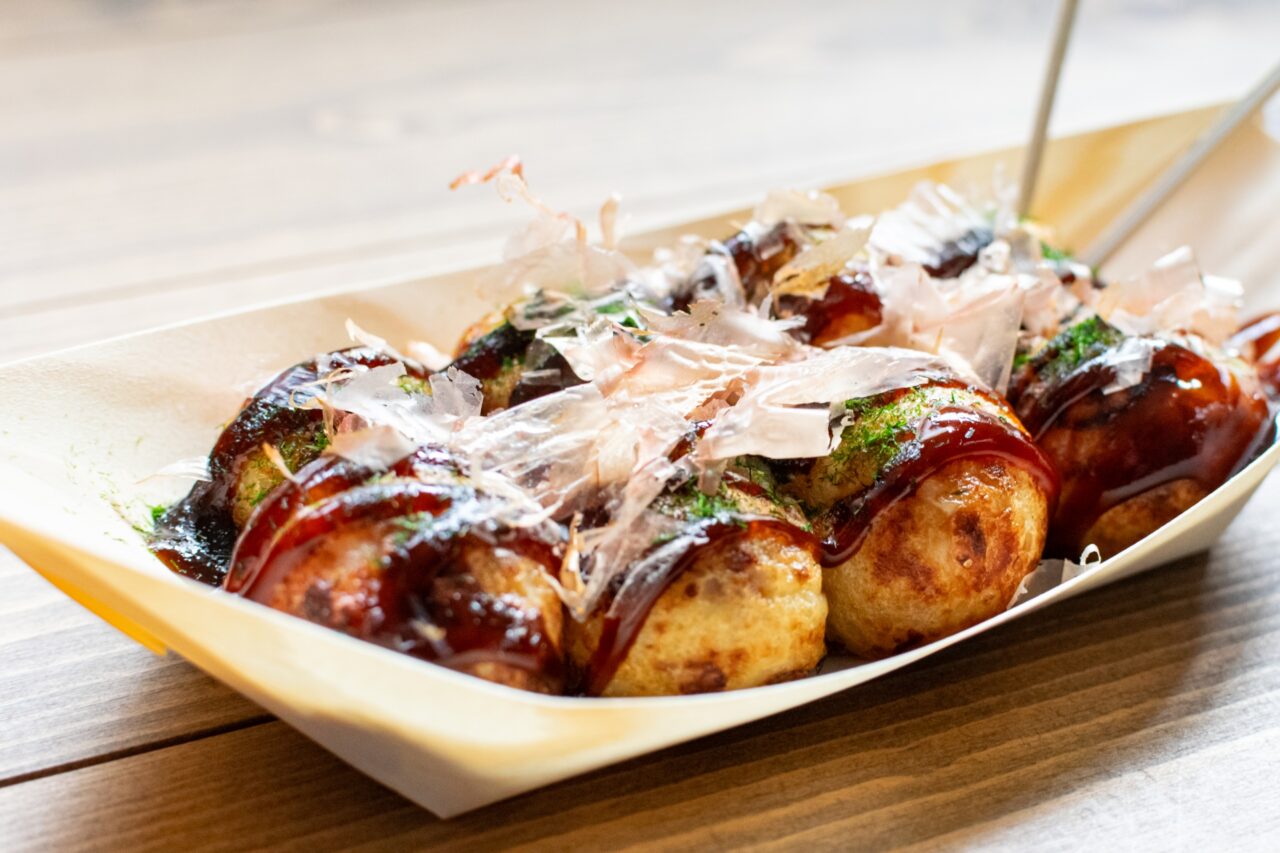
The selection varies by festival and location, so not every event will offer the same food. Part of the experience is walking around the festival area and seeing what is being prepared at each stall.
Popular festival foods may include:
| Food | What It Is | Practical Note |
|---|---|---|
| たこ焼き / Takoyaki / Octopus-filled batter balls | Round snacks made with batter and pieces of octopus, usually topped with sauce | The inside can be extremely hot, so allow them to cool before eating |
| 焼きそば / Yakisoba / Stir-fried noodles | Noodles cooked on a large grill with vegetables, sauce, and sometimes meat | A filling option that is usually served in a takeaway container |
| お好み焼き / Okonomiyaki / Savory Japanese pancake | A grilled dish made with batter, cabbage, and a variety of toppings | Ingredients and styles vary by stall and region |
| 焼き鳥 / Yakitori / Grilled chicken skewers | Pieces of chicken grilled on skewers and seasoned with salt or sauce | Different parts of the chicken may be available |
| 唐揚げ / Karaage / Japanese fried chicken | Bite-sized pieces of seasoned fried chicken | Often served in a cup or small container for easy carrying |
| かき氷 / Kakigōri / Shaved ice | Finely shaved ice topped with flavored syrup | A popular choice during hot and humid summer evenings |
| 焼きとうもろこし / Yaki tōmorokoshi / Grilled corn | Corn grilled and commonly brushed with a soy-based sauce | A familiar seasonal food at outdoor summer events |
| りんご飴 / Ringo ame / Candy apple | An apple coated in a hard sugar glaze | Smaller fruit versions may also be available |
| チョコバナナ / Choko banana / Chocolate-covered banana | A banana coated in chocolate and often decorated with colorful toppings | A popular festival sweet for children and adults |
Some smaller festivals also feature dishes or ingredients associated with the local area. Trying a regional specialty can be one of the most enjoyable ways to experience the destination where you are staying.
Practical Tips for Buying Food at Festival Stalls
Bring some Japanese yen in small notes and coins. Some stalls may accept cashless payments, but you should not assume that cards or mobile payments will be available.
For more advice on paying at small vendors, see our guide to using cash and credit cards in Japan.
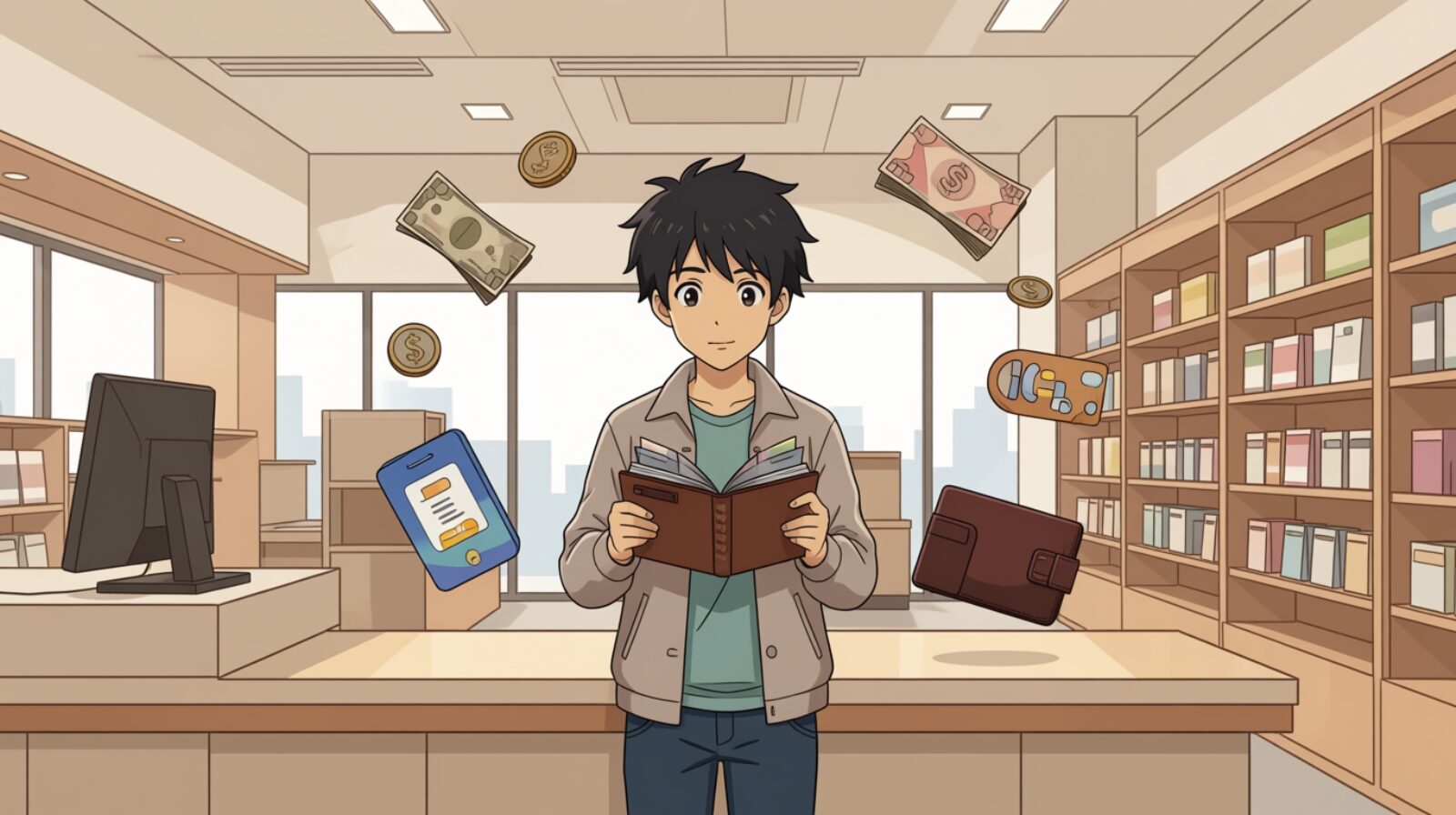
When eating at a festival:
- Check the displayed price before ordering
- Move away from the counter after receiving your food
- Use designated eating areas when available
- Avoid blocking narrow paths or busy stall entrances
- Return skewers, trays, and containers to the stall if requested
- Use designated rubbish stations or ask the vendor where to dispose of waste
- Keep drinks and hot food secure when walking through crowds
Ingredient and allergen information may not always be displayed in English. If you have a serious food allergy or dietary restriction, prepare a written explanation in Japanese and show it before ordering. When the ingredients cannot be confirmed, choose another option.
Festival food does not need to replace a full meal. You can try one or two items, enjoy the atmosphere, and eat somewhere quieter before or after the event.
How to Enjoy a Summer Festival in Japan
Summer festivals can be crowded, hot, and unfamiliar, but a little preparation makes the experience much easier.
Before leaving your accommodation, check the event’s official website for the latest schedule, venue map, weather information, transportation changes, and cancellation notices.
Arrive Early
Large festivals often become busiest shortly before the main procession, dance, or fireworks display begins.
Arriving early gives you time to:
- Find the correct entrance or viewing area
- Locate toilets and rubbish stations
- Buy food before lines become long
- Check the route back to the station
- Find a meeting point for your group
- Ask event staff questions before the largest crowds arrive
For major fireworks festivals, popular free viewing areas may fill several hours in advance.
Prepare for Heat and Humidity
Japanese summers can remain hot and humid after sunset.
Bring:
- Water
- A small towel
- A portable fan
- Sun protection for daytime events
- Light rain protection
- Any medication you may need
- A fully charged phone or portable battery
Take breaks when necessary. Do not wait until you feel unwell before moving to a cooler or less crowded area.
Plan Your Transportation Home
Nearby stations may be extremely crowded after a major festival. Some roads may also be closed to taxis, buses, and private vehicles.
Before the event, confirm:
- Your nearest station
- An alternative station or walking route
- The last train to your accommodation
- Whether temporary trains or buses will operate
- Which station entrance or exit you should use
- Whether your IC card has enough balance
For more information, see our guide to using trains and subways in Japan.
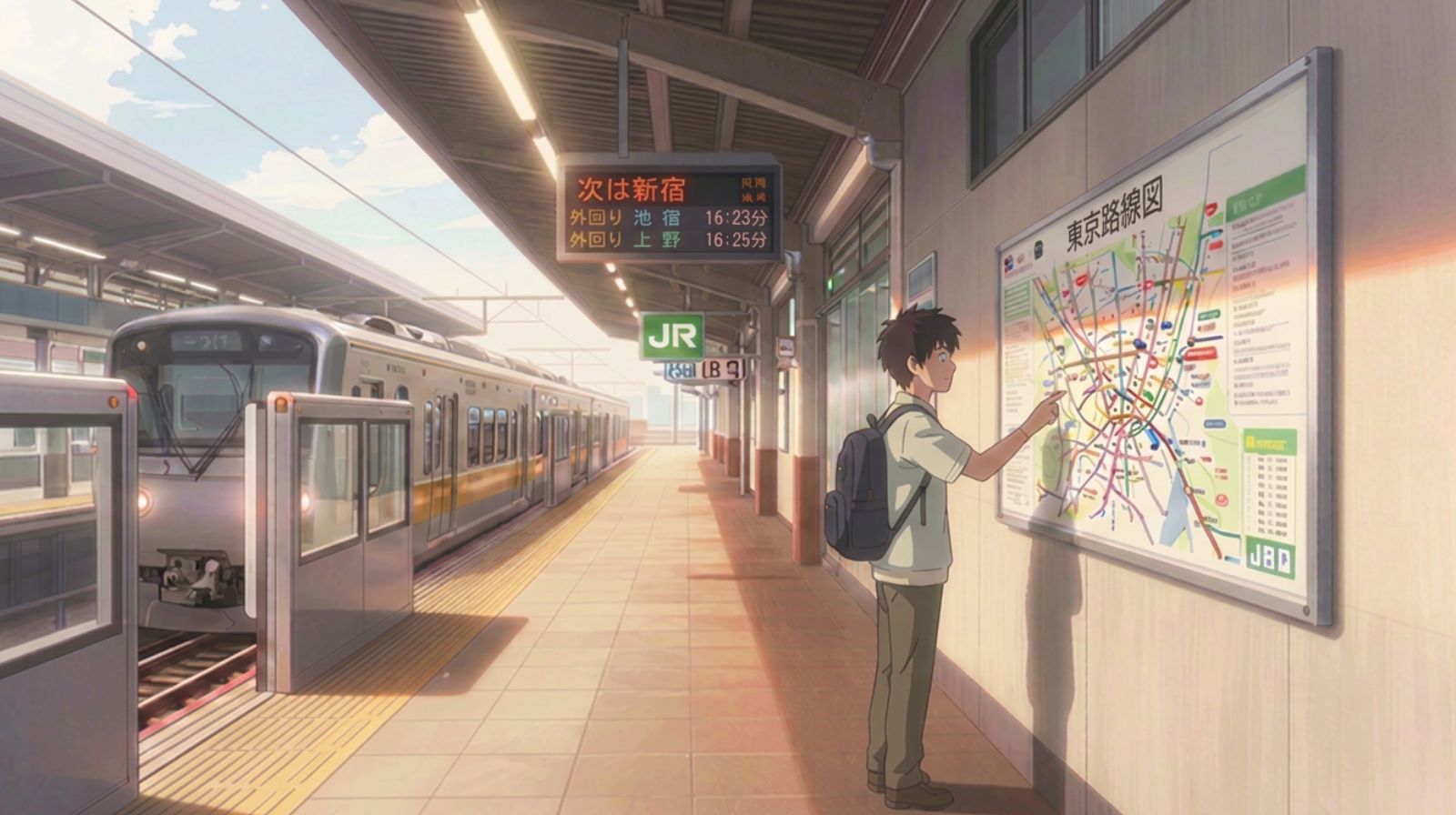
Do not assume that you will be able to find a taxi immediately after a major event.
Stay Together in Crowded Areas
Mobile phone connections can become slower when many people gather in one place.
When traveling with family or friends:
- Choose a meeting point in advance
- Share the accommodation address
- Make sure everyone knows the nearest station
- Keep children close in dense crowds
- Avoid using temporary food stalls as meeting points because they may look similar or close early
A permanent landmark, station entrance, or clearly numbered area is usually easier to find.
Follow Local Festival Etiquette
Festivals are public celebrations, but some parts may also have religious or community significance.
Keep the following points in mind:
- Follow instructions from event staff and police
- Do not enter restricted procession or performance areas
- Ask before photographing performers at close range
- Avoid blocking narrow streets, entrances, or residential properties
- Do not leave rubbish behind
- Use designated smoking areas
- Keep noise low when walking through residential neighborhoods after the event
- Do not touch floats, portable shrines, costumes, or decorations unless invited
At smaller neighborhood festivals, visitors are usually welcome, but the event may be organized mainly for the local community. Observe how others behave and participate respectfully.
Prepare for Weather Changes and Cancellations
Outdoor festivals may be postponed, shortened, or cancelled because of heavy rain, strong winds, extreme heat, or other safety concerns.
Check official information again on the day of the event. Social media posts, tourism websites, and old travel articles may not reflect last-minute changes.
Have a simple alternative plan, such as visiting a museum, shopping area, indoor attraction, or local restaurant near your accommodation.
The goal is not to see every stall or performance. Allow time to walk slowly, try a few foods, watch local traditions, and enjoy the atmosphere safely.
For broader advice on respectful behavior during your trip, see our guide to Japanese etiquette for visitors.
How Can You Find Summer Festivals in Japan?
You do not need to plan your entire trip around a famous festival. During the summer, you may find a fireworks display, Bon Odori dance, shrine festival, or small neighborhood celebration near the place where you are staying.
Smaller local festivals may receive little English-language coverage, so it helps to check several sources.
Where to Look for Festival Information
Useful sources include:
- Official city or prefectural tourism websites
- Official festival websites and social media accounts
- Tourist information centers
- Posters at railway stations and shopping streets
- Local event calendars
- Hotel and accommodation staff
- Community notice boards
Accommodation staff can be especially helpful because they may know about small local events that are not widely promoted to international visitors. They may also be able to explain the venue, transportation, and whether visitors are welcome to participate.
Useful Japanese Search Terms
Try combining the name of your destination with one of these terms:
| Japanese | Romaji | English |
|---|---|---|
| 夏祭り | Natsu matsuri | Summer festival |
| 花火大会 | Hanabi taikai | Fireworks festival |
| 盆踊り | Bon Odori | Bon dance |
| お祭り | Omatsuri | Festival |
| イベント | Ibento | Event |
For example, you could search for:
- Kyoto natsu matsuri
- Osaka hanabi taikai
- Aomori summer festival
- Takayama Bon Odori
Searching with the Japanese name of the city or town may reveal additional local information.
What to Confirm Before You Go
Once you find an event, check:
- The official date and starting time
- The exact venue
- The nearest station or bus stop
- Whether tickets or reservations are required
- Whether visitors may join dances or processions
- Temporary transportation arrangements
- Weather-related postponement or cancellation information
- The time of the last train back to your accommodation
Do not rely only on an old travel article, video, or social media post. Festival dates, routes, ticket systems, and participation rules may change from year to year.
Check the official source again shortly before leaving your accommodation. For outdoor events, confirm the information once more on the day of the festival.
How Summer Festivals Connect You With Local Japan
Summer festivals offer more than entertainment. Many are community events supported by local residents, neighborhood associations, shrines, temples, schools, businesses, and volunteers.
As a visitor, you may see parts of everyday local life that are less visible at major sightseeing attractions:
- Families gathering after work or school
- Children taking part in games and performances
- Local groups preparing food stalls and decorations
- Residents carrying portable shrines or festival floats
- Different generations participating in the same traditions
- Neighborhood streets becoming temporary gathering places
You do not need to join every activity to have a meaningful experience. Watching a procession, trying local food, listening to music, or following a Bon Odori dance from the edge of the group can all help you understand the atmosphere of the community.
When participation is open to visitors, follow the instructions of organizers and local participants. Do not enter a procession, carry a portable shrine, or step into a performance area unless you are clearly invited.
How Your Accommodation Can Shape the Experience
Where you stay can affect how you experience a festival.
Staying in the same neighborhood or regional town may make it easier to:
- Walk to the festival venue
- Ask accommodation staff about local events
- Learn which parts of the festival welcome visitors
- Return without depending on a crowded station
- Experience the neighborhood before and after the main event
Your hotel, ryokan, guesthouse, or accommodation host may also know about smaller festivals that receive little English-language promotion.
Before attending, ask about the walking route, transportation home, expected crowds, and any local customs you should know.
After the festival, remember that many venues are surrounded by residential streets. Keep your voice low, take your rubbish with you, and avoid blocking entrances while returning to your accommodation.
A famous festival can be spectacular, but a smaller neighborhood event may offer a quieter and more personal connection to the place where you are staying. The value of the experience does not depend on the size of the event.
Enjoy Summer Festivals in Japan With Confidence
A summer festival can be one of the most rewarding ways to experience Japan beyond sightseeing.
You might spend the evening watching fireworks beside a river, trying food from yatai, following a Bon Odori dance, or simply observing a neighborhood celebration near your accommodation.
You do not need special knowledge or traditional clothing to take part. Check the official event information, arrive with enough time, prepare for heat and crowds, and follow instructions from organizers and local staff.
Famous festivals can be spectacular, but smaller local events may offer a quieter and more personal connection to the community. Ask your hotel, ryokan, guesthouse, or accommodation host whether any festivals are taking place nearby during your stay.
Before attending, confirm:
- The event date and venue
- Ticket or reservation requirements
- Transportation to and from the festival
- The last train or bus to your accommodation
- Weather-related changes or cancellations
Festival schedules, routes, ticket systems, and transportation arrangements may change each year. Always check the official source shortly before visiting.
With a little preparation and respect for the local community, a summer festival can add a memorable local experience to your journey through Japan.
Planning your first trip to Japan? Before exploring Japan’s festival culture, check out our complete guide for first-time visitors.
Frequently Asked Questions About Summer Festivals in Japan
When are summer festivals held in Japan?
Many summer festivals take place in July and August, although some events are held in June or September. Dates vary by region and may change each year, so always check the official festival website before making travel plans.
Do I need tickets to attend a summer festival in Japan?
Many neighborhood festivals and festival grounds are free to enter. However, major fireworks displays, reserved viewing areas, performances, and special seating may require advance tickets.
Check whether you need a ticket before visiting, especially for a famous event.
Can international visitors attend local summer festivals?
Yes. International visitors are generally welcome at public summer festivals.
At smaller neighborhood events, remember that the festival may be organized mainly for local residents. Follow staff instructions, avoid entering restricted areas, and participate only when visitors are clearly invited.
Do I need to wear a yukata?
No. A yukata is optional.
Lightweight summer clothing and comfortable shoes are completely acceptable. If you rent a yukata, confirm the return time and consider wearing comfortable footwear if you expect to walk or stand for a long time.
Are summer festivals suitable for families with children?
Many summer festivals welcome families and may include food stalls, games, performances, and activities for children.
Large festivals can become very crowded, so choose a meeting point, keep children close, bring water, and identify toilets and quieter areas when you arrive.
How early should I arrive at a summer festival?
For a small local festival, arriving shortly before the main activities begin may be sufficient.
For a major fireworks festival or procession, arrive several hours early if you want a particular viewing area. Allow additional time for crowded stations, road closures, security checks, and food stall lines.
What happens if it rains?
Outdoor festivals may continue in light rain, but heavy rain, strong winds, extreme heat, or other safety concerns can cause postponement, schedule changes, or cancellation.
Check the official website or social media account on the day of the event before leaving your accommodation.
Can I use credit cards at festival food stalls?
Some stalls accept cashless payments, but many smaller vendors may accept only cash.
Bring Japanese yen in small notes and coins, and do not rely entirely on credit cards or mobile payment services. For more information, see our guide to Cash or Credit Cards in Japan?
Related Guides
Explore practical guides to help you plan your trip and travel around Japan with confidence.
Planning Your Trip to Japan
- A Complete Guide for First-Time Visitors to Japan: Stay, Travel, and Experience Local Life
- How to Prepare for a Trip to Japan: What to Plan Before You Go
Transportation
- How to Use Trains and Subways in Japan
- How to Use IC Cards in Japan: Suica, PASMO, ICOCA & Mobile IC Cards
- How to Pay for Train Travel in Japan
- How to Use Local Buses in Japan: A First-Time Visitor Guide
- How to Use Taxis in Japan
- Kansai Airport to Osaka: Best Routes for 8 Areas
- Kansai Airport to Umeda: A Practical Route Example Using Train, Bus & Taxi
- How to Buy Shinkansen Tickets in Japan
- Japan Rail Pass: Is It Worth It? A Complete Guide
Money
- Cash or Credit Cards in Japan? A Complete Guide for First-Time Visitors
- Can I Use Credit Cards Everywhere in Japan? Where Cards Work—and Where You’ll Still Need Cash
- How to Exchange Money in Japan: The Best Ways to Get Japanese Yen
- Tax-Free Shopping in Japan: Rules, Purchases & Refunds
Cities & Destinations
- Osaka vs Kyoto: Which City Is Right for You?
- Where to Stay in Osaka: Best Areas for First-Time Visitors
- Are Osaka Hotels Expensive in 2026? What to Expect and When to Book
- Where to Stay in Yodoyabashi, Higobashi & Edobori: Central Osaka Area Guide
Culture & Etiquette
- Japanese Etiquette Every Visitor Should Know
- Onsen & Sento Etiquette in Japan: A First-Time Visitor Guide