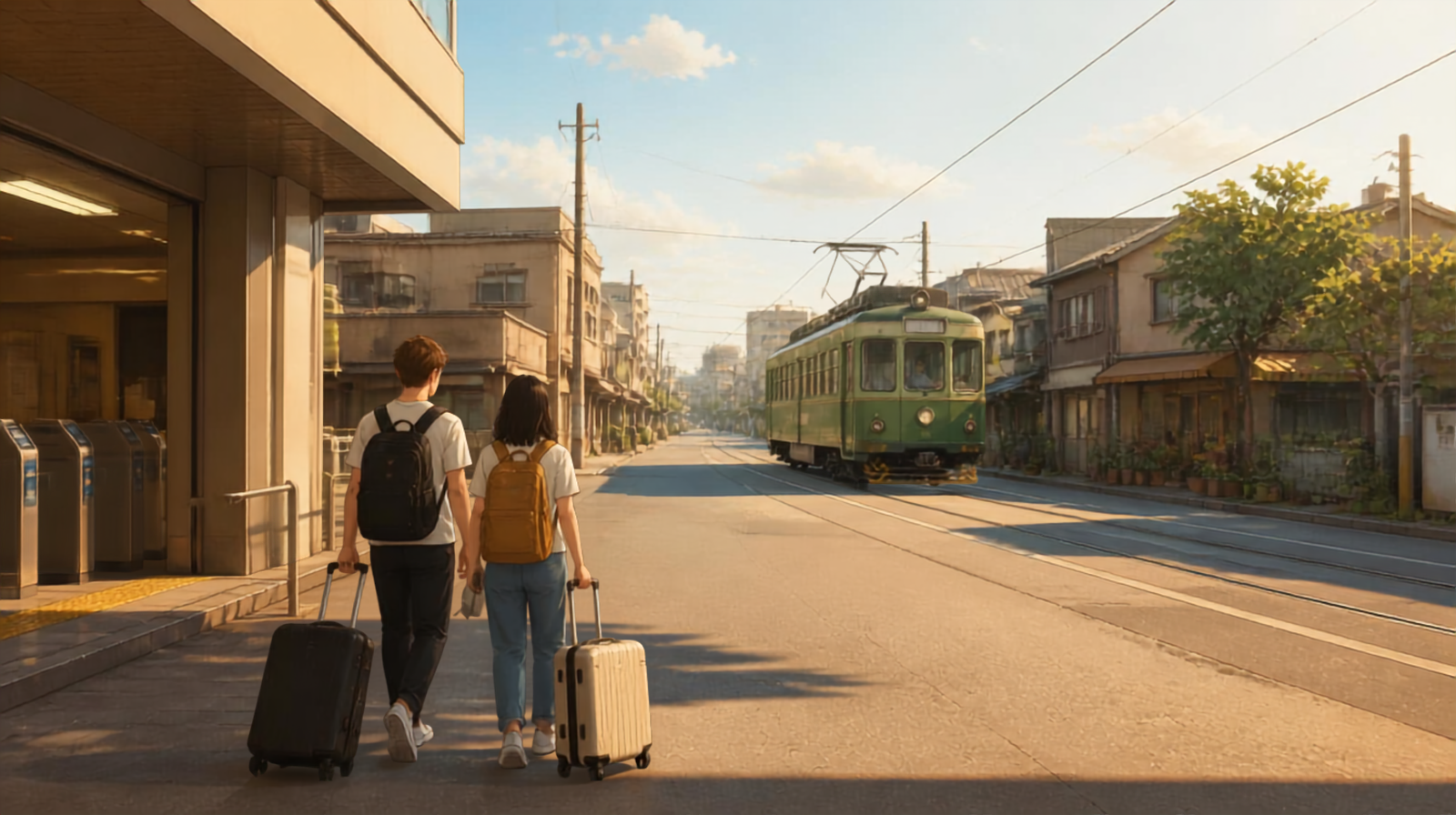
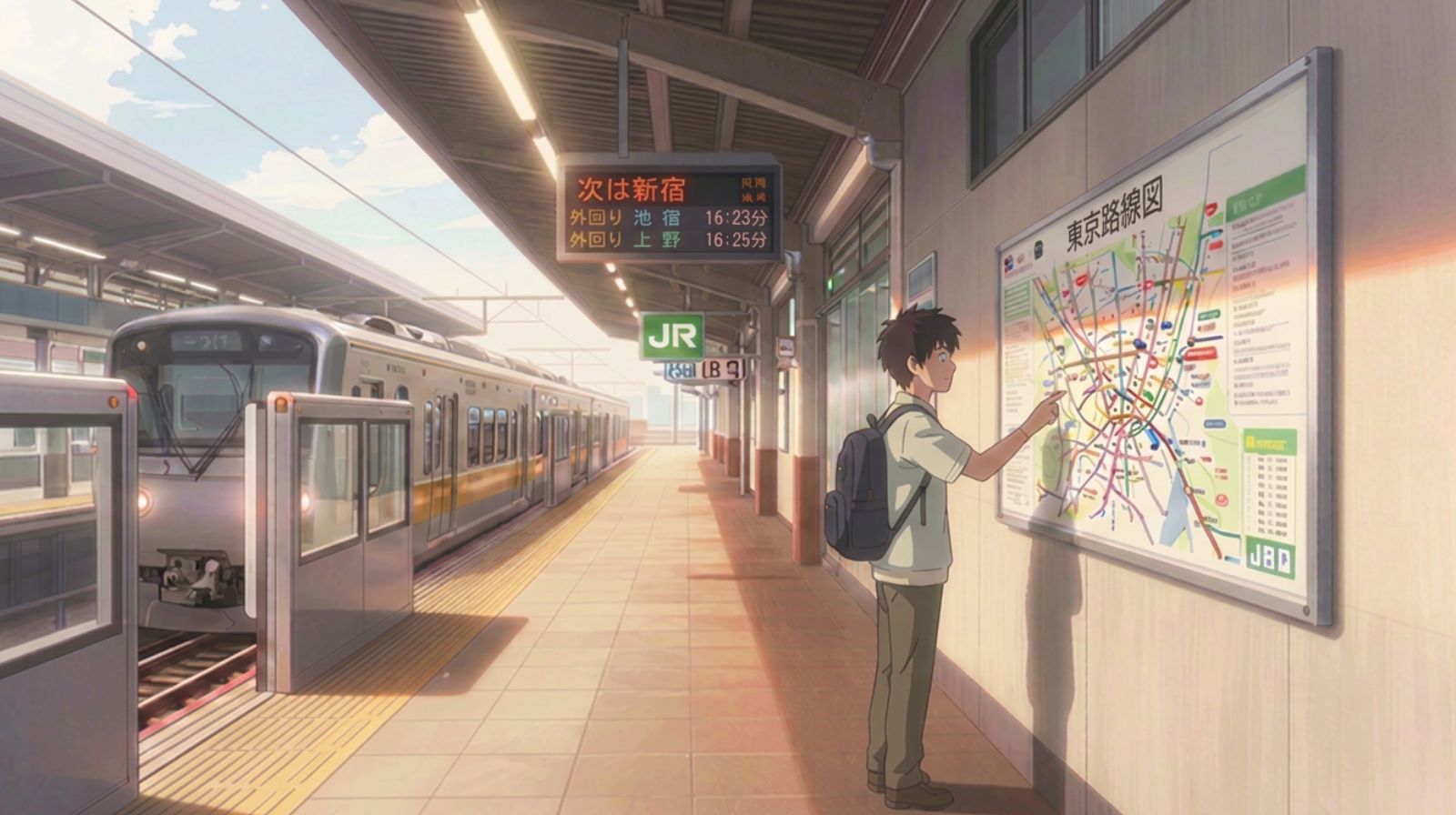
How Japan’s Train and Subway Network Is Organized
Japan’s rail network is operated by many different companies rather than by a single nationwide operator.
In major cities, your journey may involve:
- JR lines
- Private railway lines
- Municipal or privately operated subway lines
- Local tram or light rail services
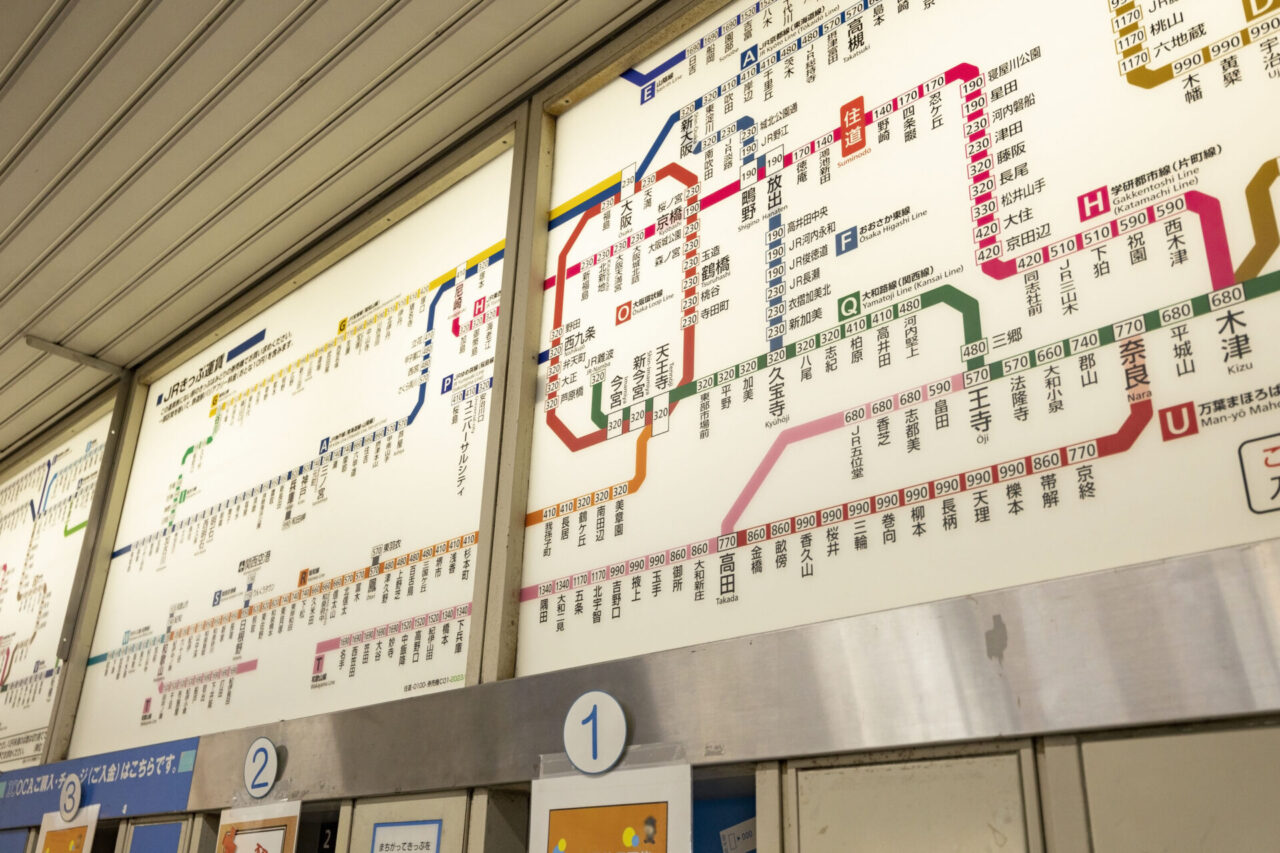
路線図(大阪)
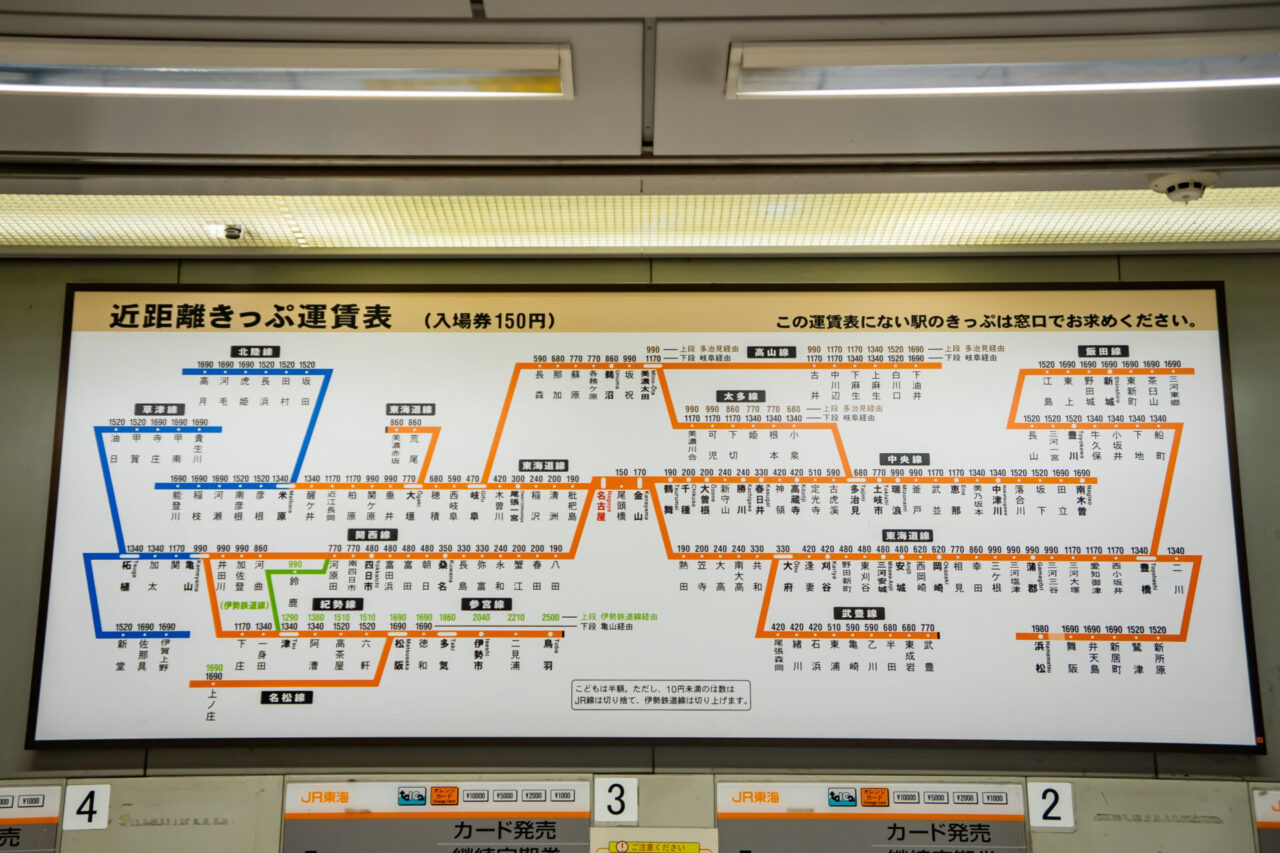
路線図(名古屋)
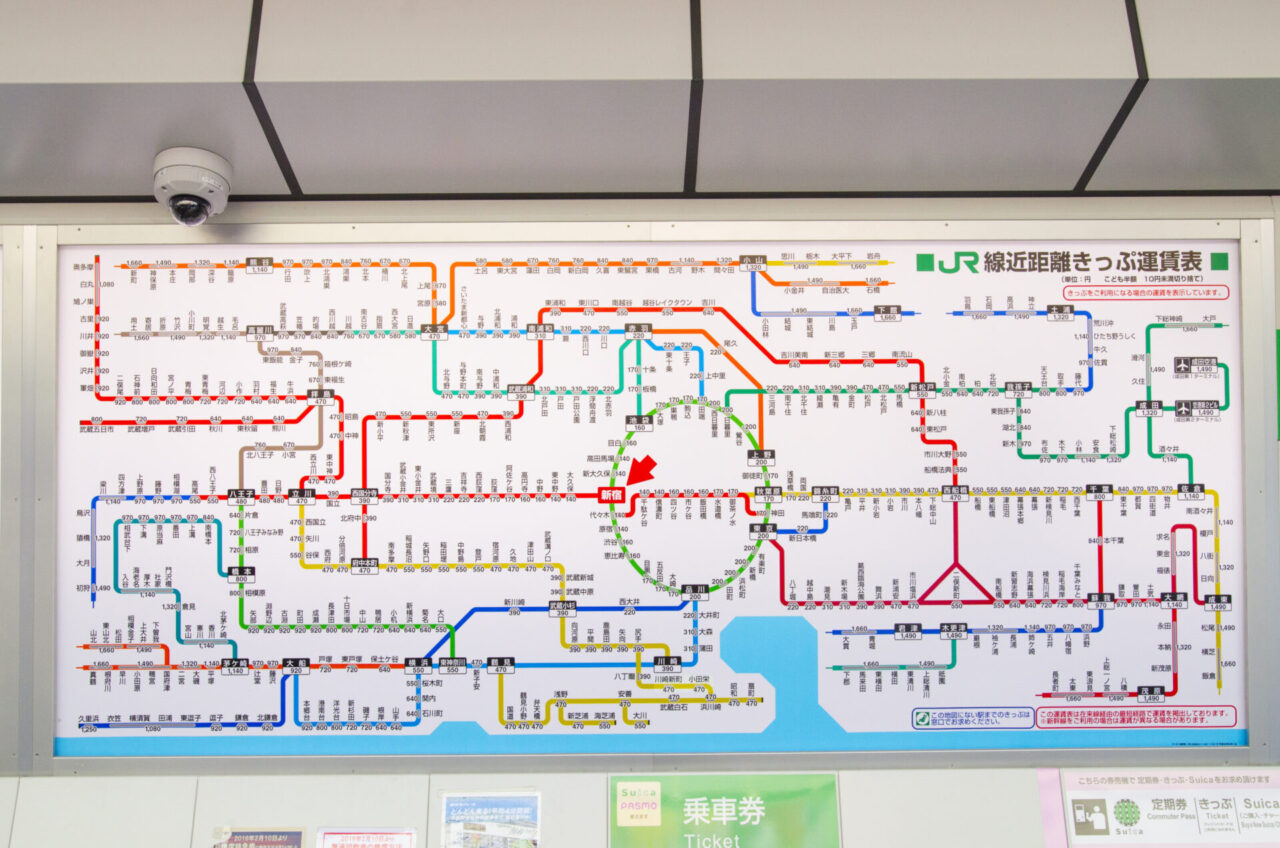
路線図(東京)
For most visitors, there is no need to memorize which company operates each line. Navigation apps and station signs normally show the line name, route color, station number, platform, destination, and transfer instructions.
The most important details to follow are:
- The station name
- The railway or subway line
- The direction or final destination of the train
- The platform number
- Whether a transfer is required
You may see the following words at stations:
駅 / Eki / Station
路線 / Rosen / Train line
地下鉄 / Chikatetsu / Subway
乗り換え / Norikae / Transfer
改札 / Kaisatsu / Ticket gate
Some large station complexes contain JR, private railway, and subway areas under the same or similar station names. Their ticket gates and platforms may be separate, so follow the exact line name rather than relying only on the station name.
Route maps can appear overwhelming because they show the entire network. In practice, you only need to follow one journey at a time: find the correct station, enter through the appropriate gate, travel in the correct direction, and follow the signs when transferring.
If you’re planning your first trip to Japan, you may also find our complete guide for first-time visitors helpful.
→ A Complete Guide for First-Time Visitors to Japan
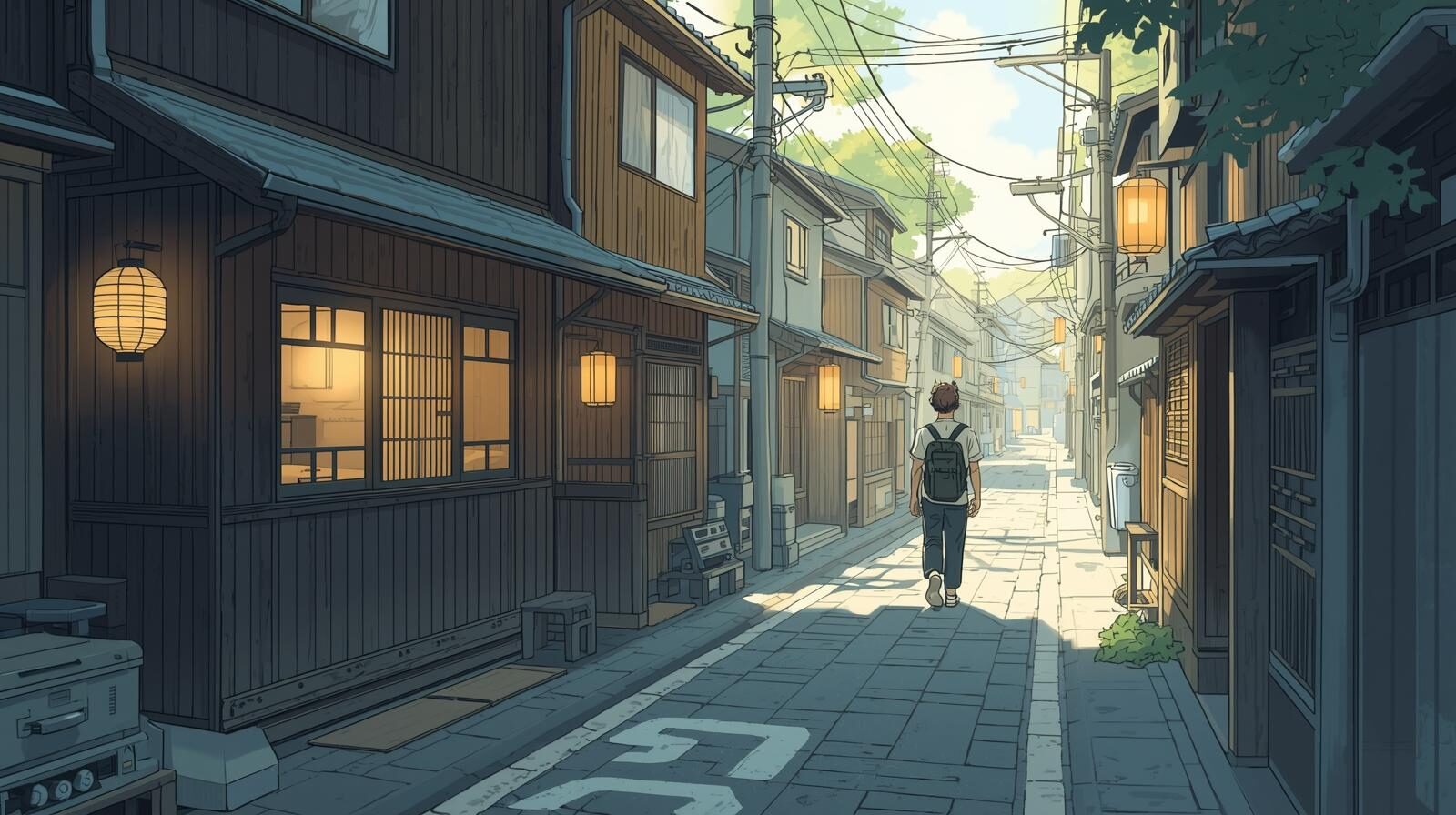
When Trains Are the Best Way to Travel in Japan
Trains and subways are usually the most practical way to travel between major stations, city neighborhoods, airports, and regional destinations in Japan.
They are particularly useful when:
- Traveling between major cities
- Moving around Tokyo, Osaka, Kyoto, and other urban areas
- Visiting destinations located near a railway station
- Avoiding city traffic
- Making day trips without renting a car
- Traveling independently without Japanese-language driving experience
Frequent services and clear station signs make rail travel suitable for first-time visitors. Trains also allow you to observe how neighborhoods, landscapes, and local communities change along the journey.
However, a train is not always the simplest option.
A taxi may be more practical when:
- Your accommodation is far from a station
- You are carrying several large suitcases
- You are traveling with young children or someone with limited mobility
- You arrive late at night
- Public transportation requires several difficult transfers
- You are traveling a short distance as a group
In rural areas, buses, taxis, rental cars, or accommodation transfers may be necessary after reaching the nearest station.
Where you stay also affects how you experience Japan’s transportation system. Accommodation near a convenient station can make sightseeing easier, while staying in a quieter residential neighborhood may offer a more local atmosphere but require additional walking, buses, or occasional taxi rides.
The best approach is not to use trains for every journey, but to understand when rail travel is the most convenient choice.
How to Use a Train or Subway in Japan
The basic process is similar whether you are using a JR train, private railway, or subway. Plan your route, prepare the correct payment method, enter through the appropriate ticket gate, find your platform, board the correct train, and follow the signs to your transfer or exit.
Before entering the station, use a navigation app to check:
- Your departure station
- Your destination station
- The railway or subway line
- The direction or final destination of the train
- The platform number
- Any required transfers
- The recommended station exit
Do not rely only on the departure time. Trains using the same platform may have different destinations or stop at different stations.
For most local trains and subways, you can use:
- An IC card
- A mobile IC card
- An individual paper ticket
Shinkansen and many limited express journeys require a separate ticket or reservation.
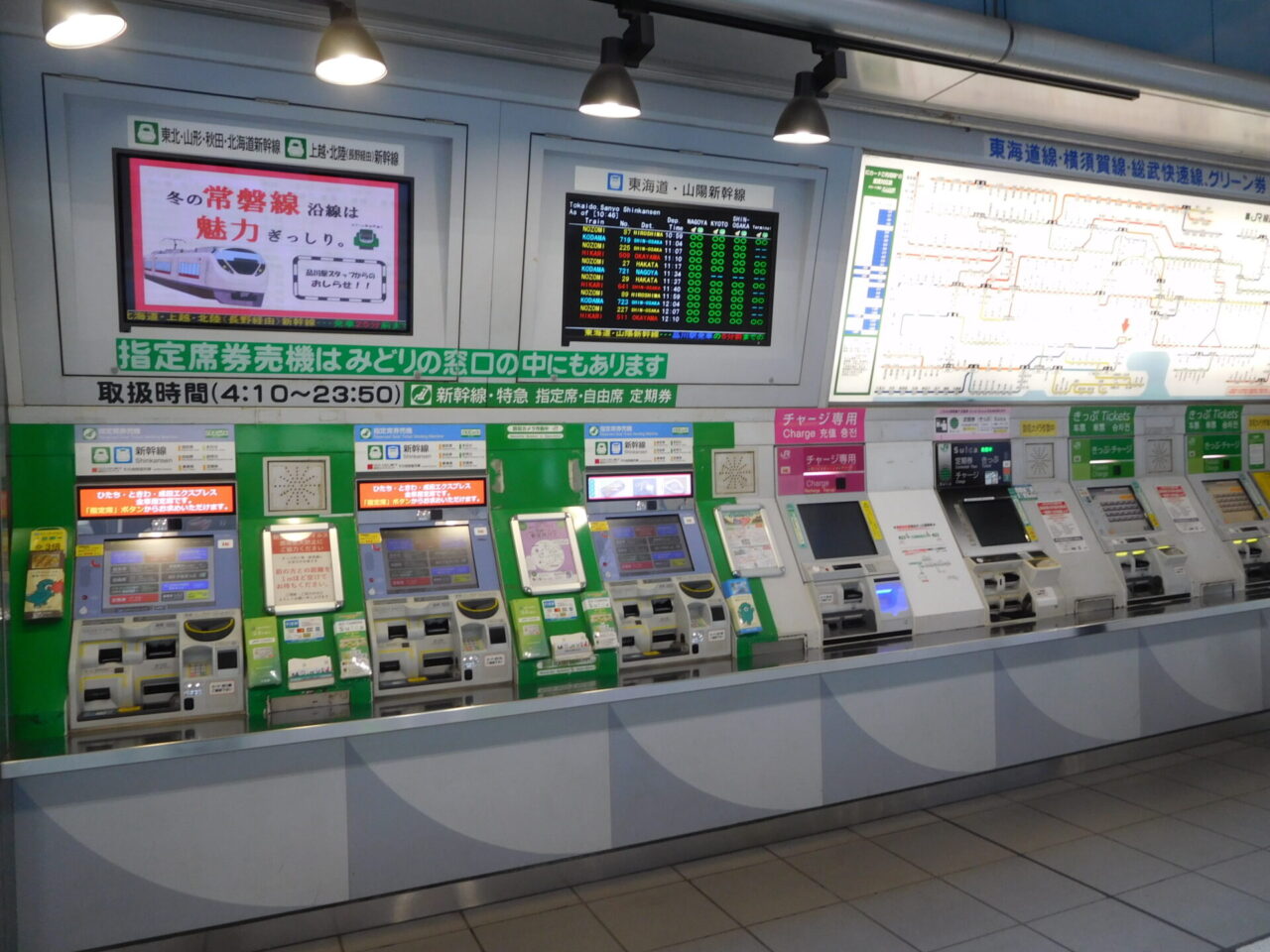
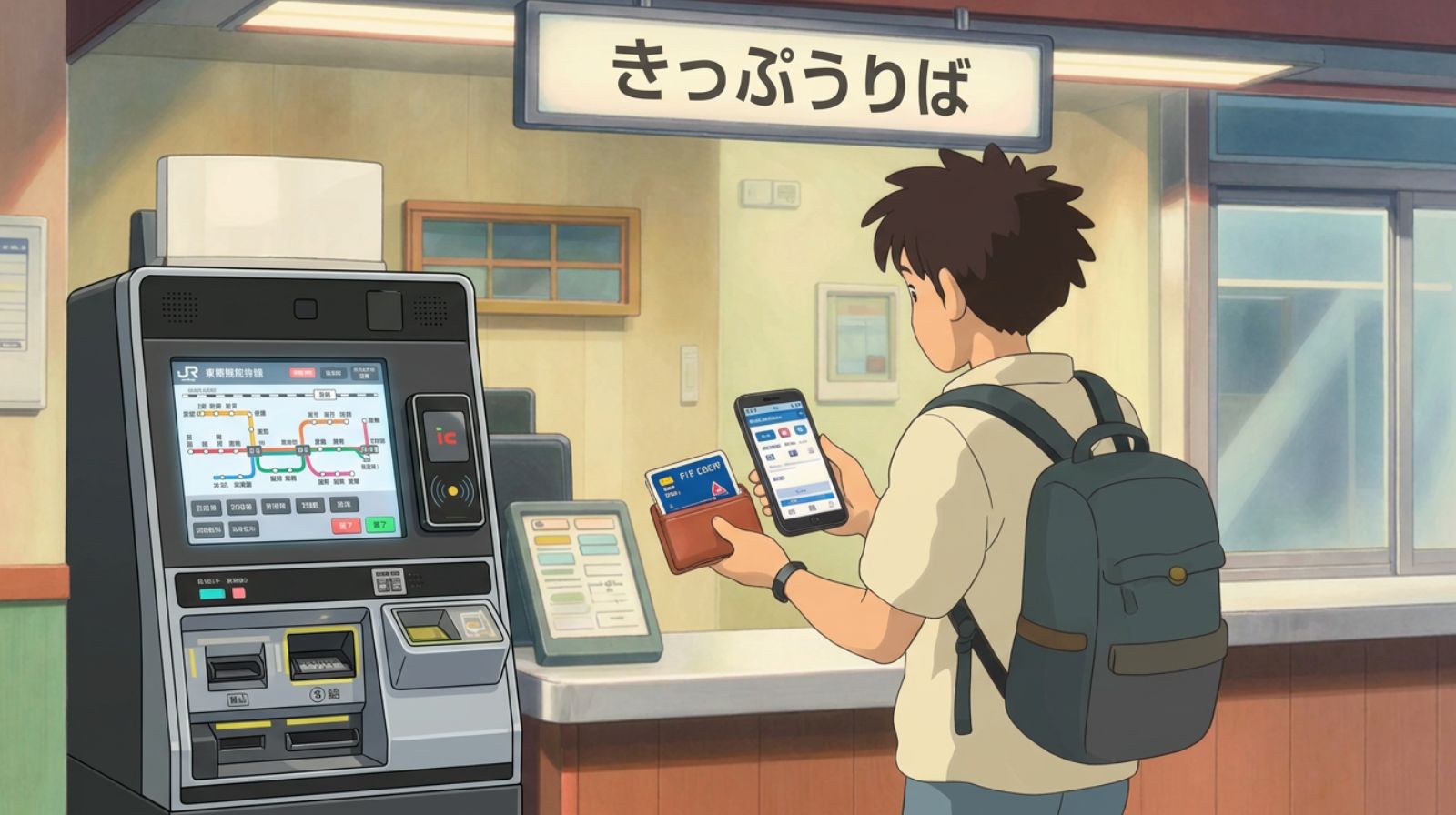
券売機
Prepare your card, smartphone, or paper ticket before reaching the gate so you do not block other passengers.
You may see:
改札 / Kaisatsu / Ticket gate
Large stations may have separate gates for JR lines, private railways, subways, and the Shinkansen.
Even when two lines use the same station name, their ticket gates may be in different parts of the station. Follow the railway company and line name shown in your route.
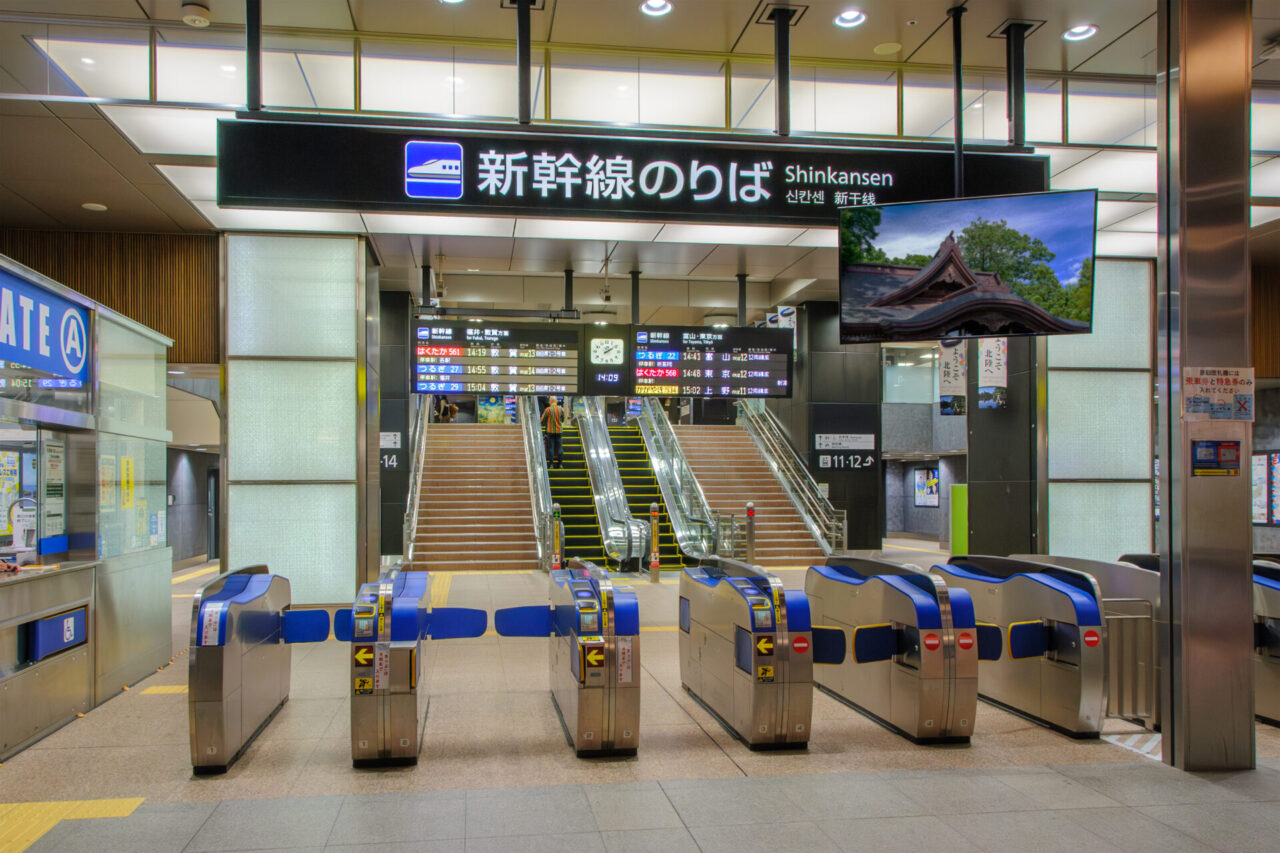
改札
When using an IC card or mobile IC card, touch it to the reader at the ticket gate. Wait for the gate to open before walking through.
When using a paper ticket, insert it into the ticket slot and collect it from the other side of the gate.
Keep your paper ticket throughout the journey. You may need it when transferring or leaving the destination station.
You may see:
ホーム / Hōmu / Platform
Station signs usually show:
- Line name and color
- Platform number
- Direction of travel
- Final destination
- Major stations served
- Train departure time
- Train type
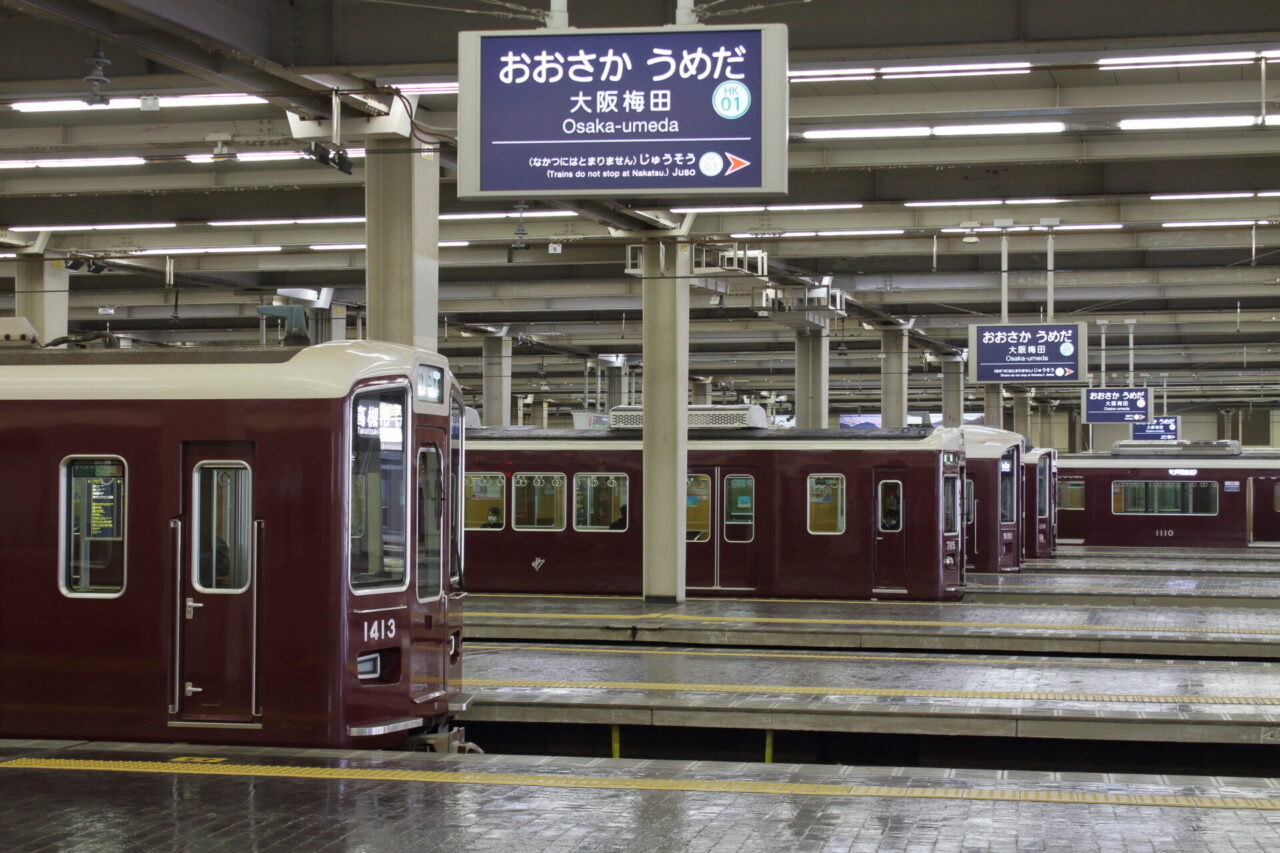
ホーム
Check both the platform number and the train’s direction or final destination.
For example, knowing that you need the Yamanote Line is not enough. You must also confirm whether the train is traveling toward Shibuya, Shinjuku, Ueno, or another part of the loop.
Not every train stops at every station.
Common service types include:
- 各駅停車 / Kakueki teisha / Local train
- 快速 / Kaisoku / Rapid train
- 急行 / Kyūkō / Express train
- 特急 / Tokkyū / Limited express train
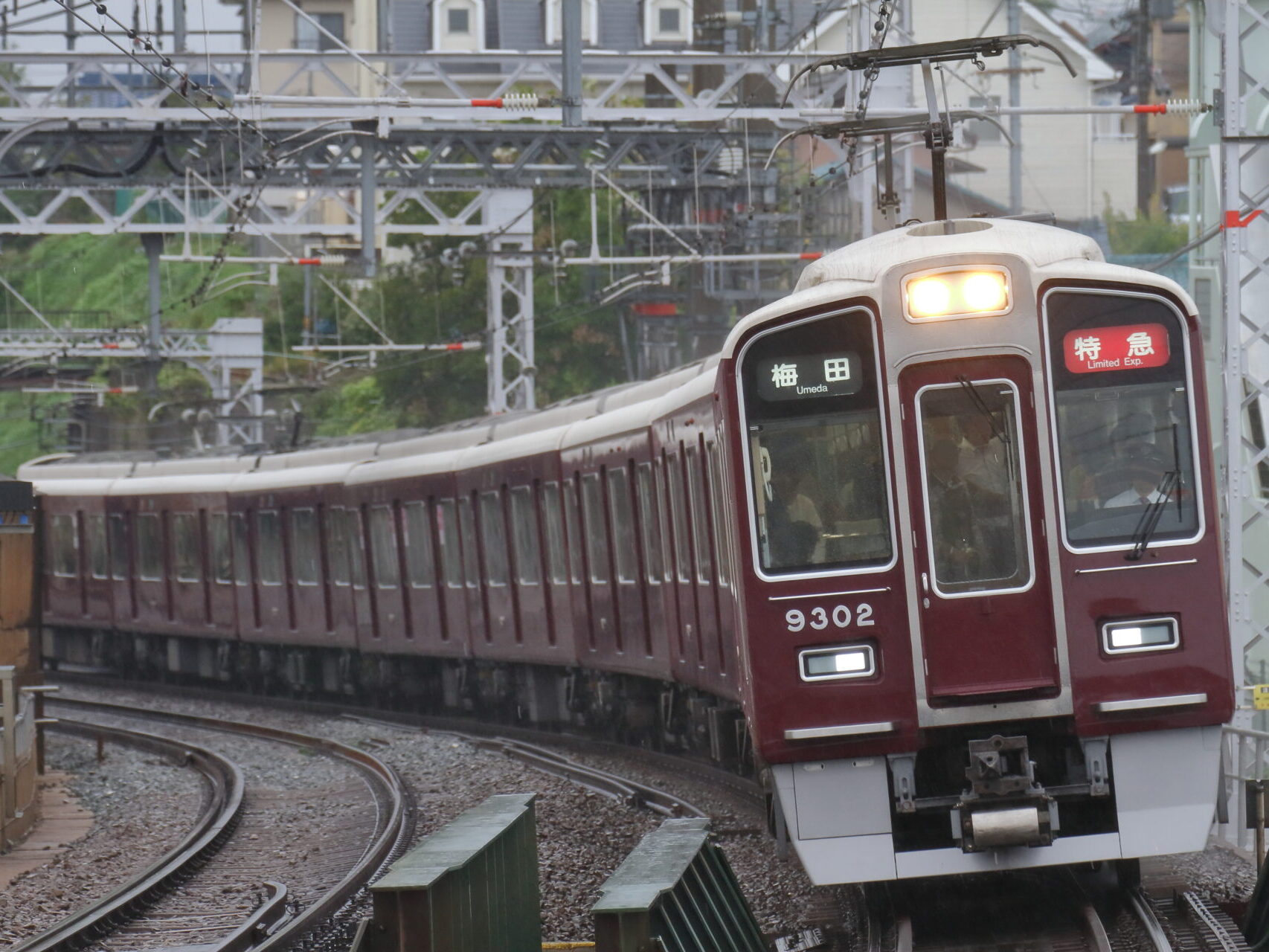
特急
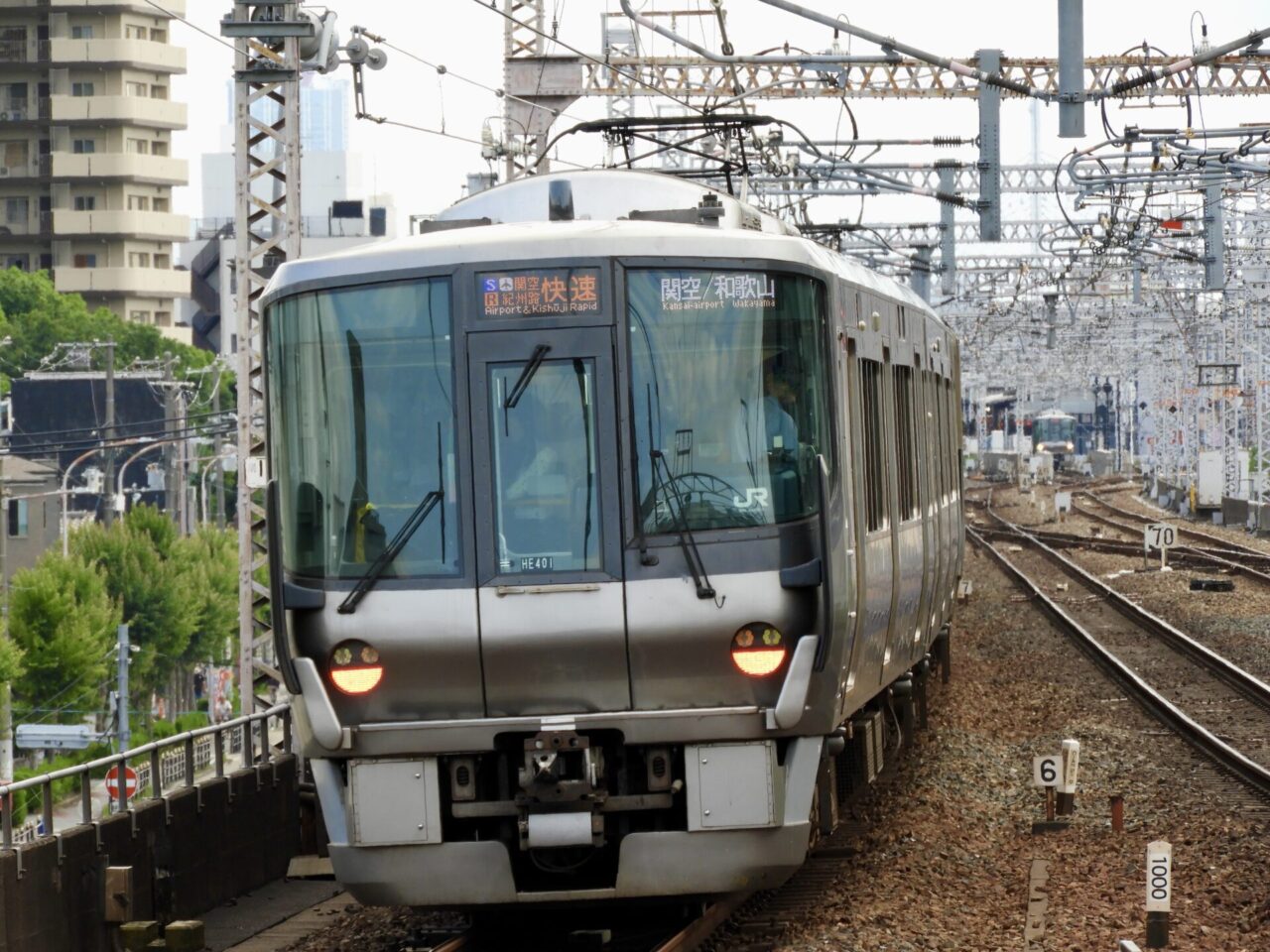
快速
A local train normally stops at every station. Rapid, express, and limited express trains may skip smaller stations.
Some limited express trains require an additional ticket or seat reservation. Check the navigation app and platform display before boarding.
Wait in the marked boarding line and allow passengers to leave before entering.
Before the doors close, confirm:
- The line name
- The train type
- The direction or final destination
- The next station
Onboard screens and announcements often provide information in English as well as Japanese.
If you realize that you boarded the wrong train, get off at the next station and check your route again. In most cases, the mistake is easy to correct.
You may see:
乗り換え / Norikae / Transfer
Follow the transfer signs for the next line. The signs normally include the line name, color, symbol, and direction.
Some transfers take place within the same ticketed area. Others require you to leave through one gate and enter through another.
Do not follow the general exit signs unless your navigation instructions tell you to leave the station. Look specifically for the name of your next railway or subway line.
Allow extra time when transferring at a large station or changing between different railway companies.
You may see:
出口 / Deguchi / Exit
Use your IC card, mobile IC card, or paper ticket at the exit gate.
A regular single-journey paper ticket is normally retained by the gate when your journey is complete.
If your IC card balance or paper ticket fare is insufficient, look for:
精算機 / Seisanki / Fare adjustment machine
You can add money or pay the fare difference before leaving the station. Station staff can also help.
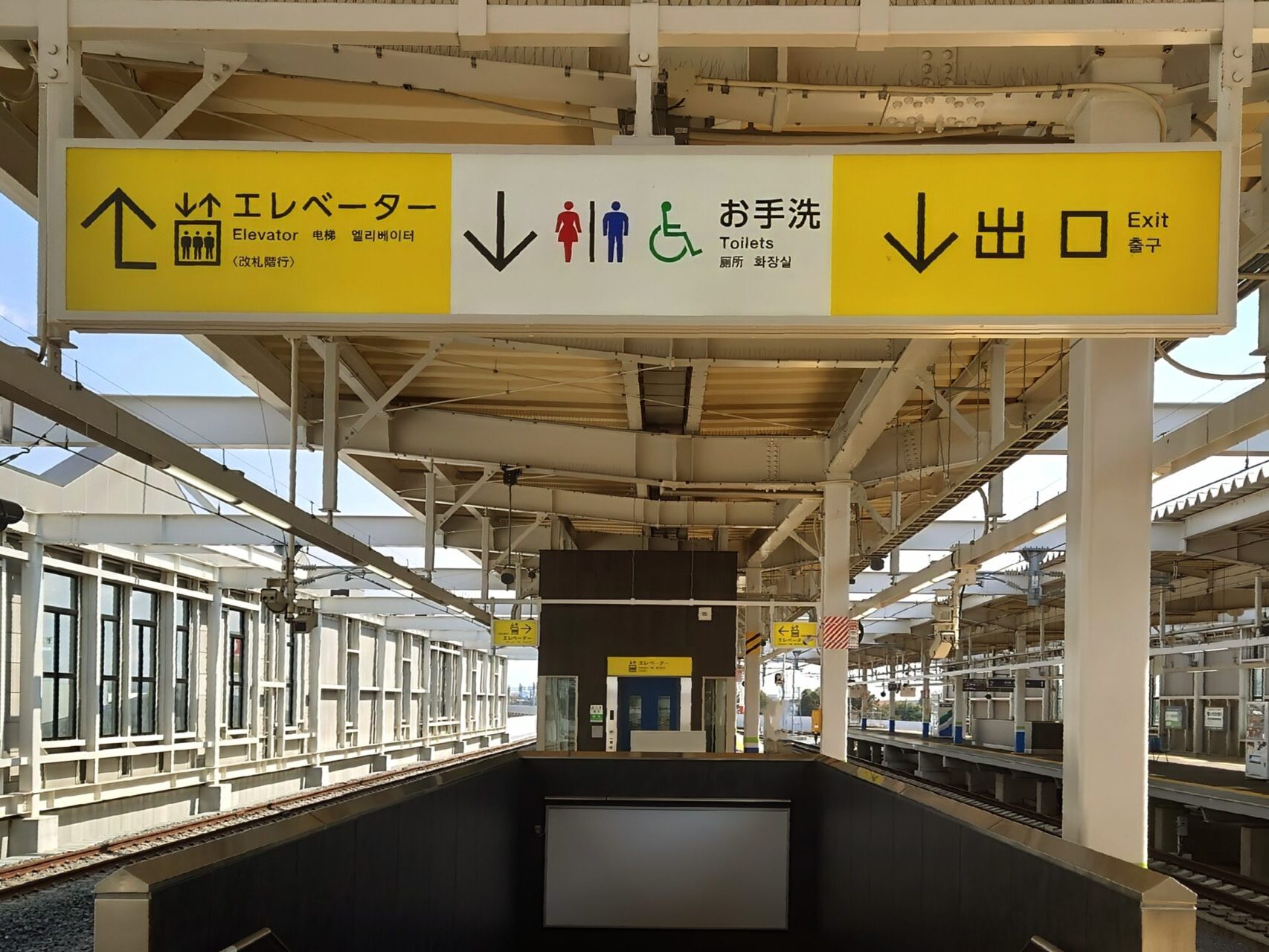
出口
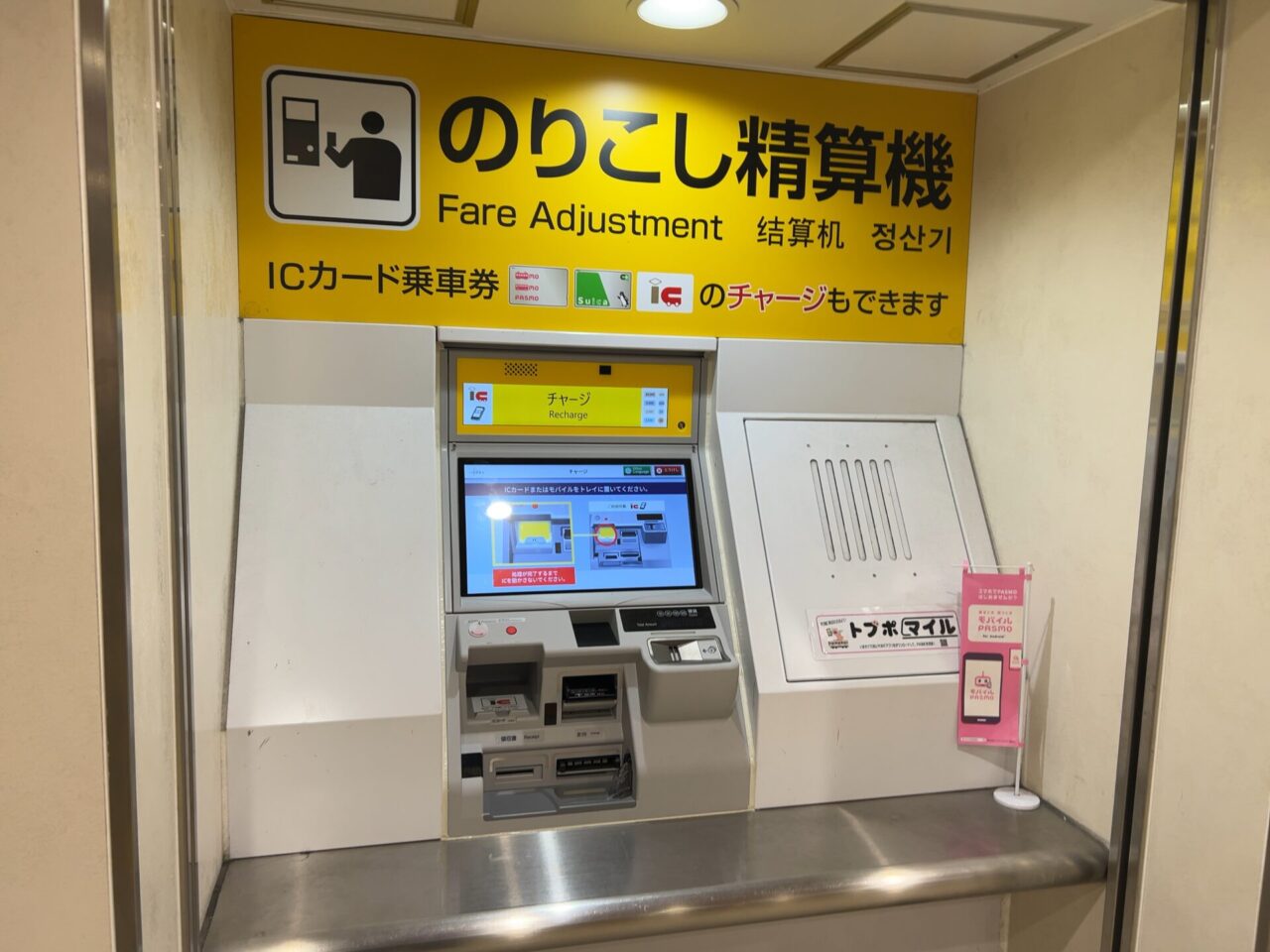
精算機
Large stations may have many exits, and choosing the wrong one can add a long walk to your journey.
Navigation apps often recommend a specific exit number or name. Check this before passing through the final gate.
You may see:
東口 / Higashi-guchi / East Exit
西口 / Nishi-guchi / West Exit
南口 / Minami-guchi / South Exit
北口 / Kita-guchi / North Exit
北改札 / Kita-kaisatsu / North ticket gate
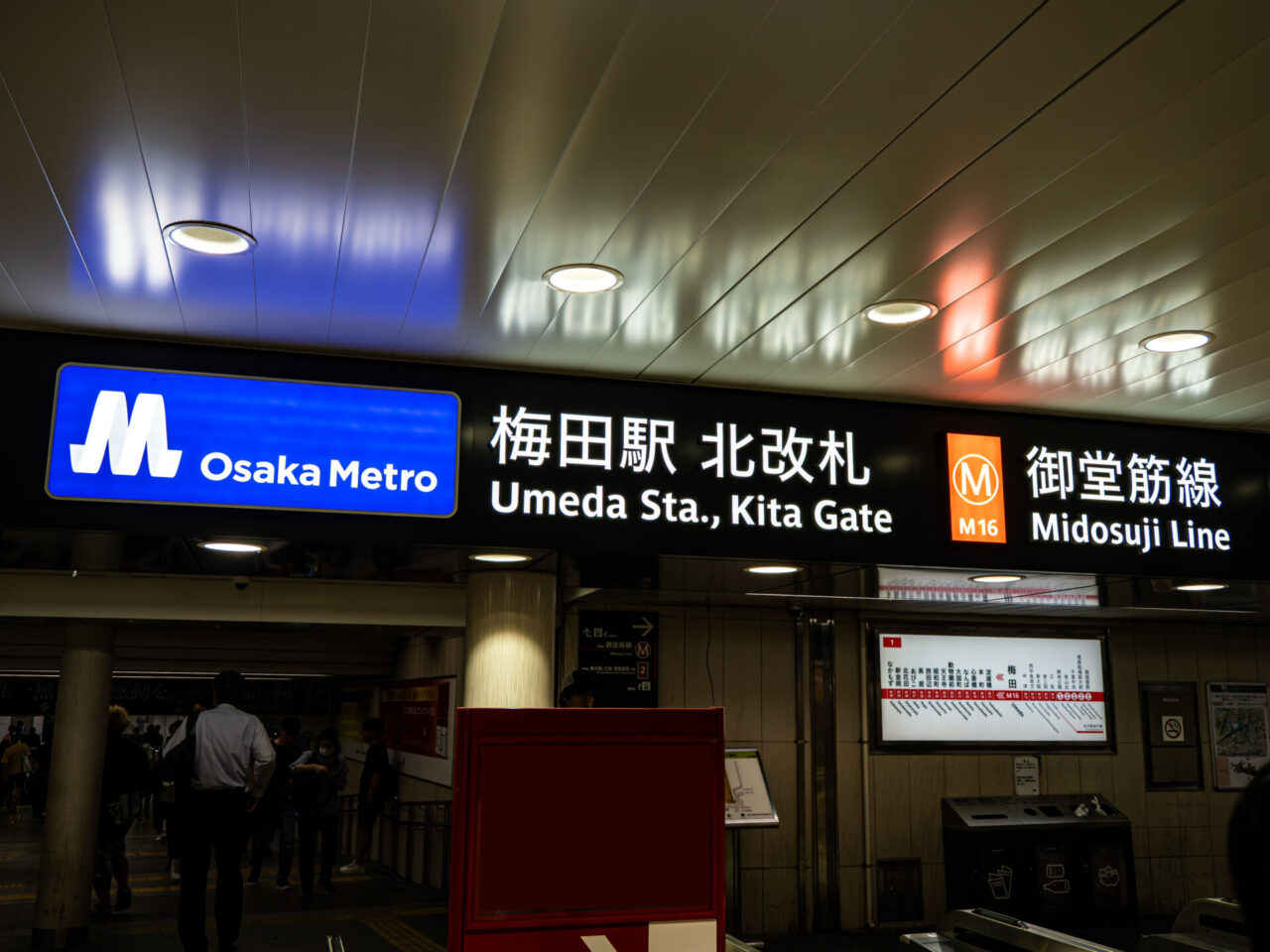
出口・改札
Some exits are named after nearby streets, buildings, landmarks, or districts rather than compass directions.
Once outside the station, check your walking route again. Reaching the correct exit is often just as important as boarding the correct train.
How to Navigate Large Train Stations in Japan
Major stations such as Shinjuku, Tokyo, Osaka, Umeda, and Kyoto can feel like small cities. They may contain several railway companies, multiple levels, underground passages, shopping areas, restaurants, and dozens of exits.
Getting briefly confused is normal, even for people who regularly use these stations. Allow extra time and solve one part of the journey at a time.
Follow the Line Name, Not Only the Station Name
A large station may contain separate areas for:
- JR lines
- Private railway lines
- Subway lines
- Shinkansen services
Two lines may use the same or a similar station name while having different entrances, ticket gates, and platforms.
Always confirm:
- Railway company
- Line name
- Platform number
- Direction or final destination
For example, looking only for “Shinjuku Station” is not enough. You may need JR Shinjuku Station, a Tokyo Metro line, the Toei Subway, the Odakyu Line, or the Keio Line.
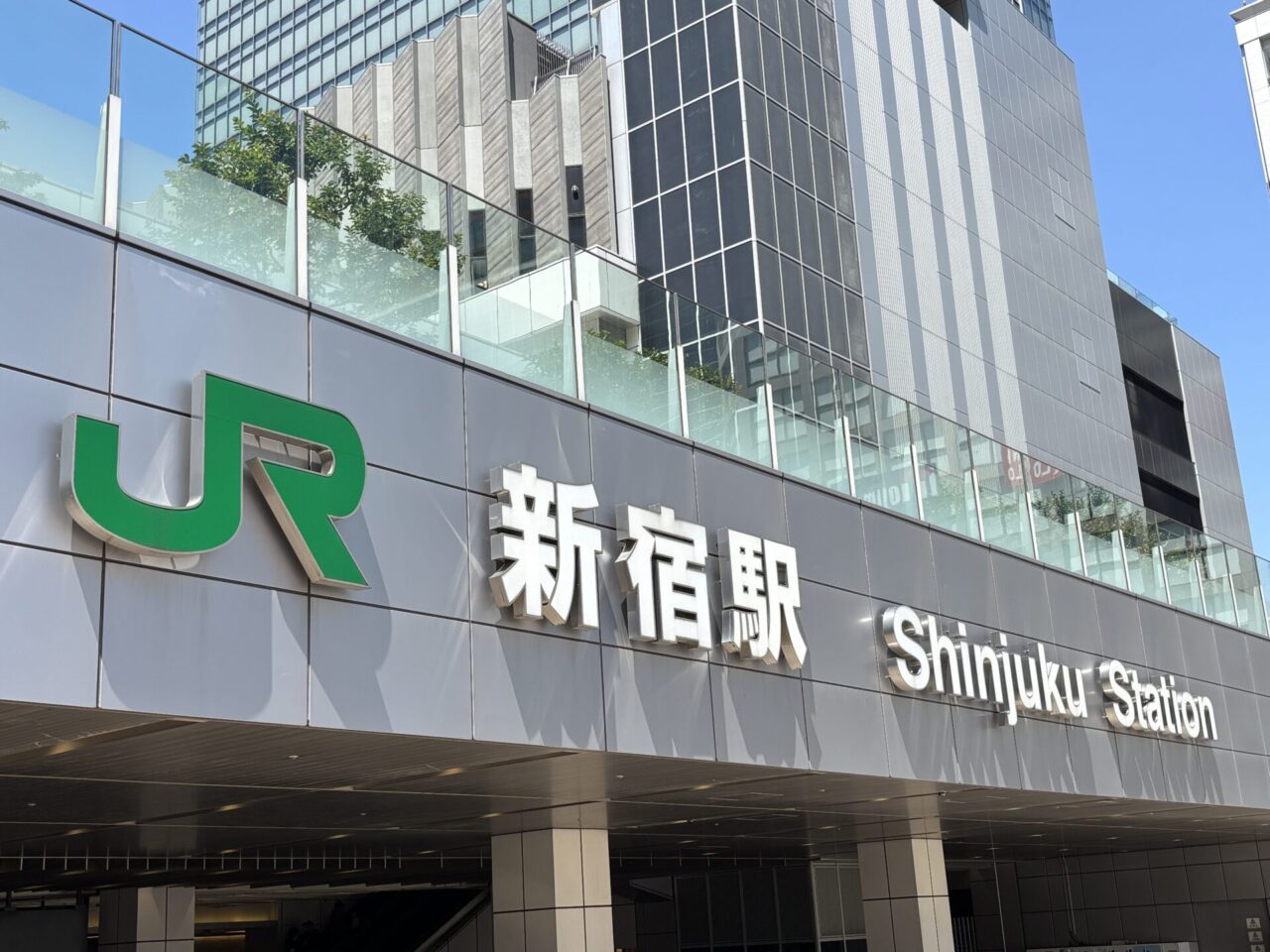
JR新宿駅
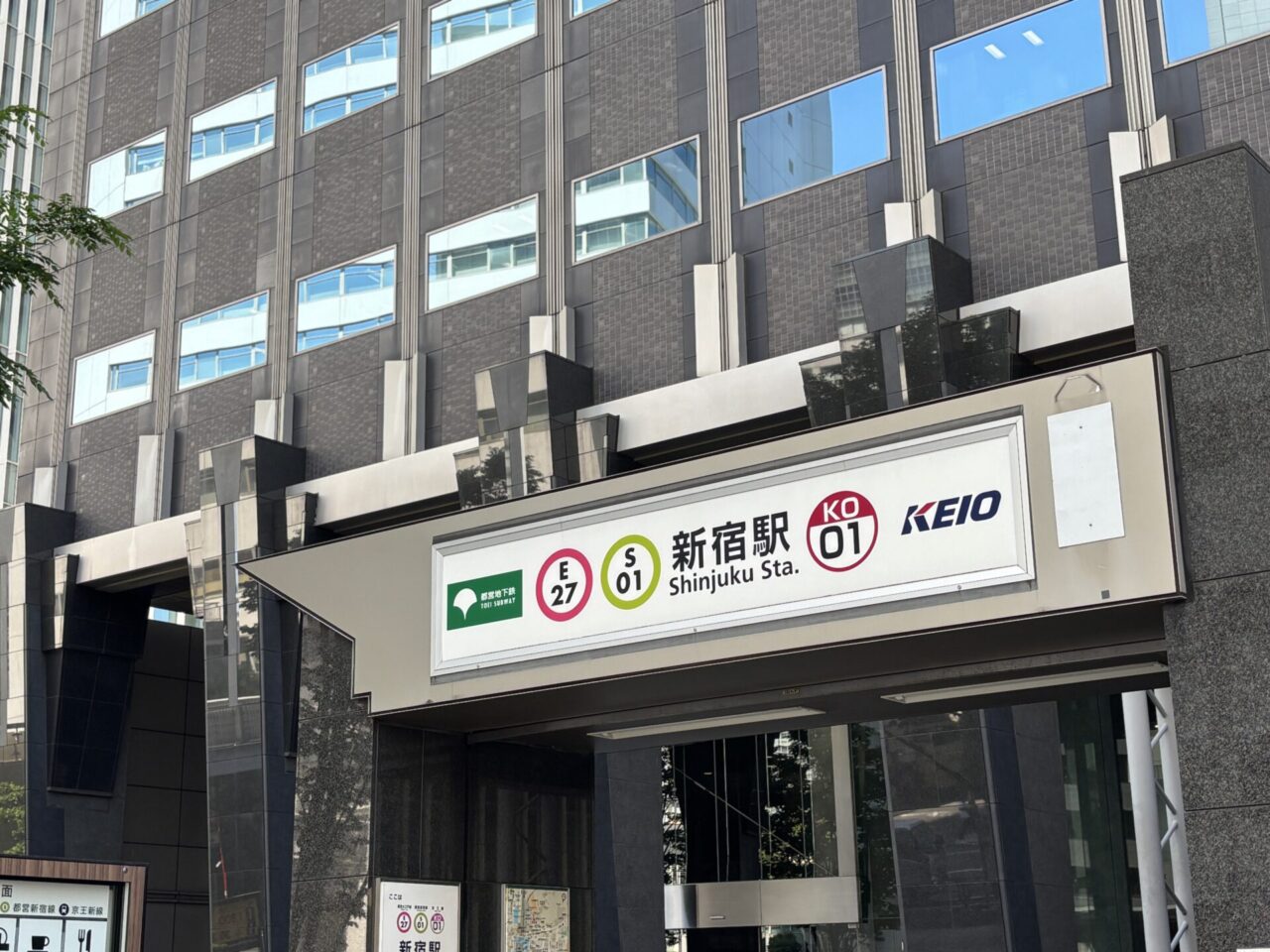
新宿駅
Check Your Exit Before Leaving the Ticketed Area
Large stations often have many exits located far apart from one another.
You may see:
出口 / Deguchi / Exit
中央口 / Chūō-guchi / Central Exit
東口 / Higashi-guchi / East Exit
西口 / Nishi-guchi / West Exit
Check the recommended exit in your navigation app before passing through the final ticket gate. Choosing the wrong exit can place you on the opposite side of the station or add a long walk above or below ground.
Use Station Numbers and Line Colors
Many subway and railway systems use a line letter, color, and station number.
For example, a navigation app may show a code such as:
M08
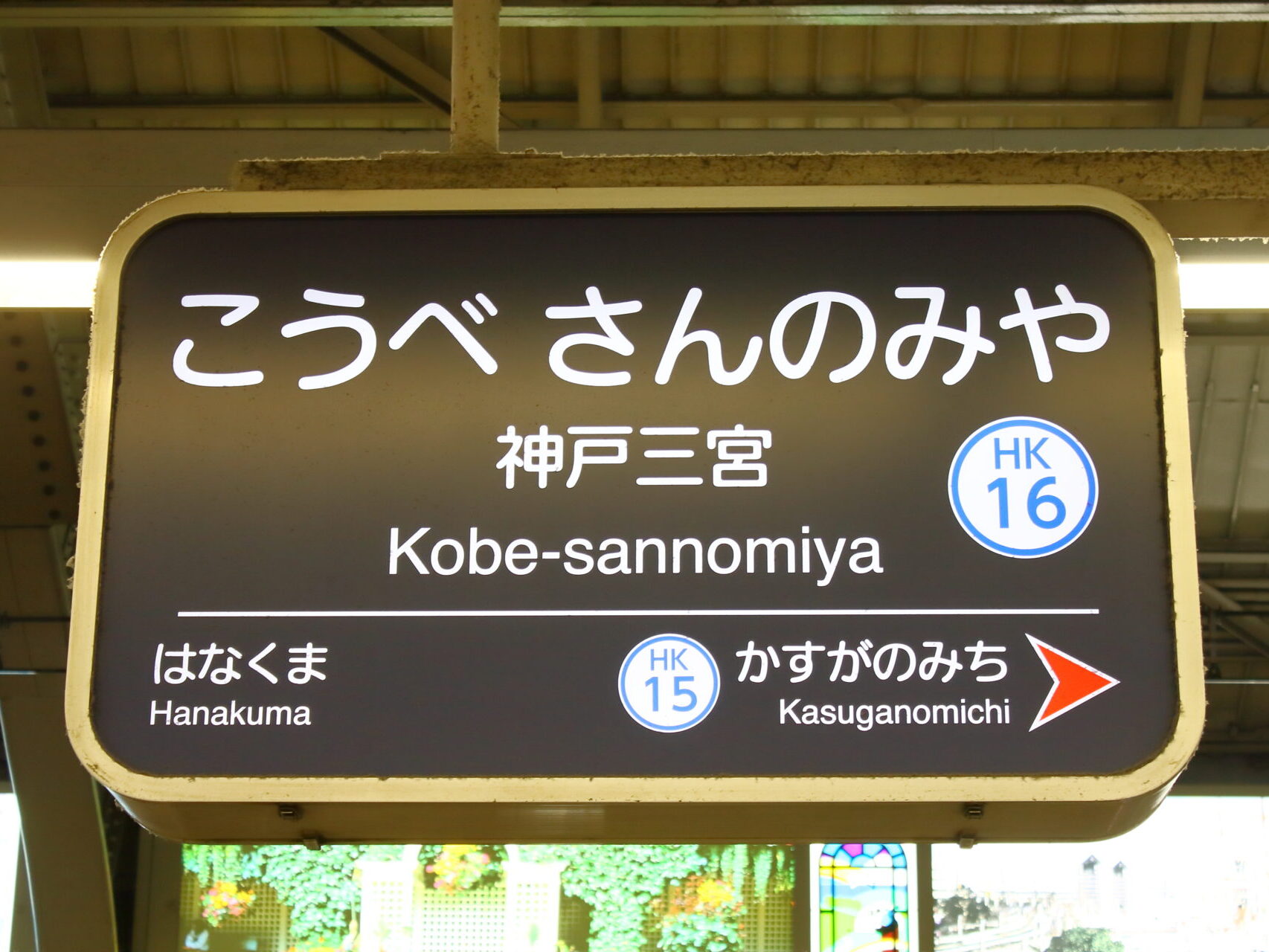
神戸三宮駅
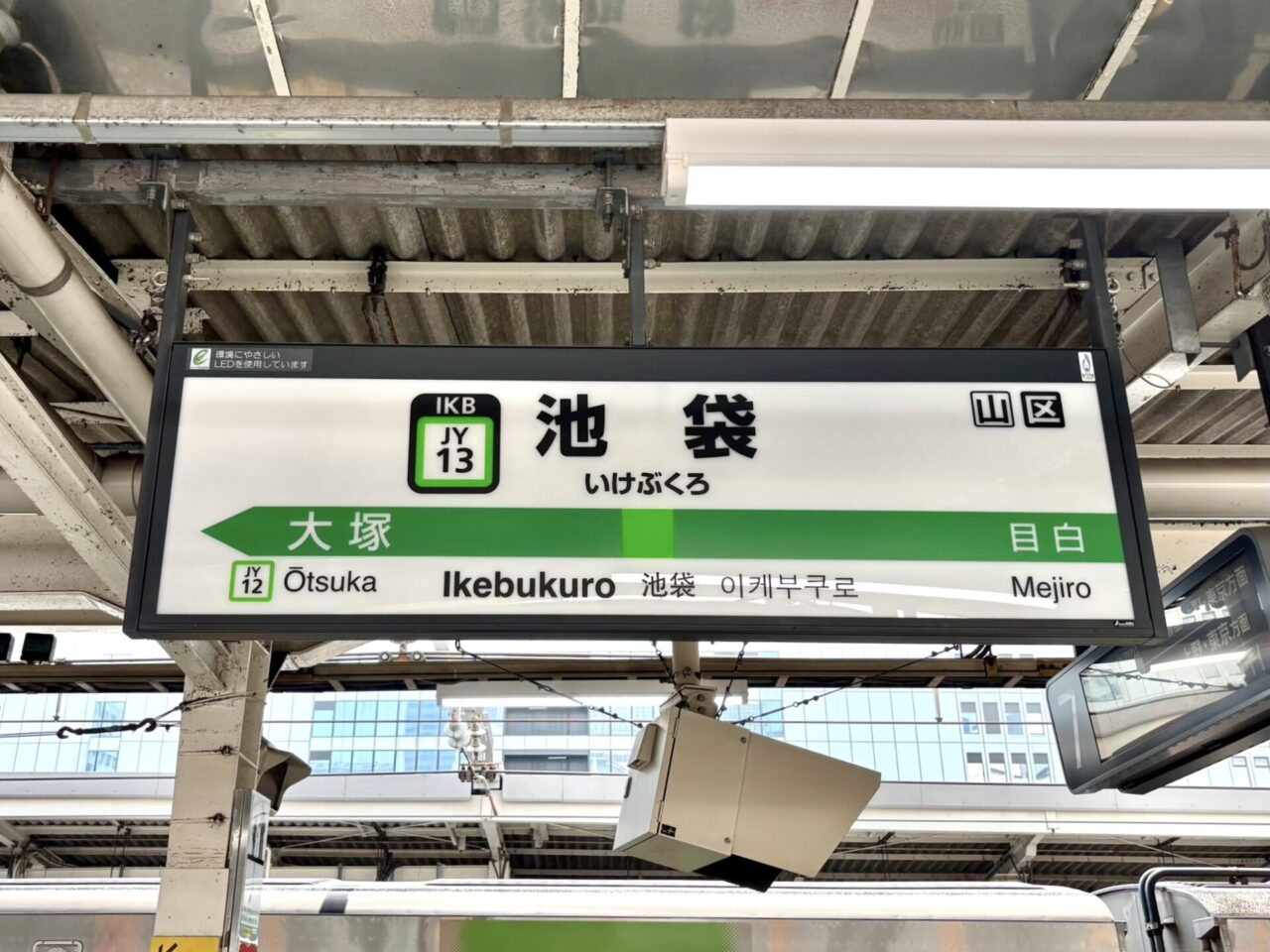
池袋駅
This can be easier to recognize than the full station name, particularly when Japanese and English names appear together.
Use station numbers as a helpful confirmation, but still check the direction and final destination of the train.
Look for Overhead Signs
The most useful signs are usually above eye level.
When the station feels crowded, stop near the side of the passage rather than in the middle, then look for:
- Line names and symbols
- Platform numbers
- Transfer signs
- Exit numbers
- Elevator and escalator signs
- Information counters
Follow the signs step by step instead of trying to understand the entire station map at once.
Do Not Leave Through a Gate During a Transfer Unless Directed
Some transfers take place inside the ticketed area, while others require you to exit one gate and enter another.
Follow signs showing:
乗り換え / Norikae / Transfer
Do not follow a general exit sign simply because you cannot immediately see the next platform. Leaving through the wrong gate may interrupt your route or require assistance from station staff.
Allow Extra Time for Important Connections
Allow additional time when:
- Catching a Shinkansen
- Changing between different railway companies
- Traveling with children
- Carrying large luggage
- Using an unfamiliar station
- Meeting another person inside the station
- Finding an elevator or accessible route
A transfer that appears short in a navigation app may still involve several corridors, stairs, escalators, or ticket gates.
Choose a Clear Meeting Point
Avoid arranging to meet someone only “at Shinjuku Station” or “inside Tokyo Station.”
Choose a specific place, such as:
- A named ticket gate
- A numbered exit
- An information counter
- A recognizable shop
- A well-known statue or landmark
Send the exact name and, when possible, a map pin or photograph.
Ask for Help Early
You may see:
案内所 / Annaijo / Information counter
駅員 / Ekiin / Station staff
If you are unsure, show the staff member your destination or route on your phone.
You can ask:
このホームはどこですか?
Kono hōmu wa doko desu ka?
Where is this platform?
この出口はどこですか?
Kono deguchi wa doko desu ka?
Where is this exit?
Taking a wrong turn is rarely a serious problem. Move away from the flow of passengers, check your route, and ask for help before walking too far in the wrong direction.
How to Use Google Maps for Train Travel in Japan
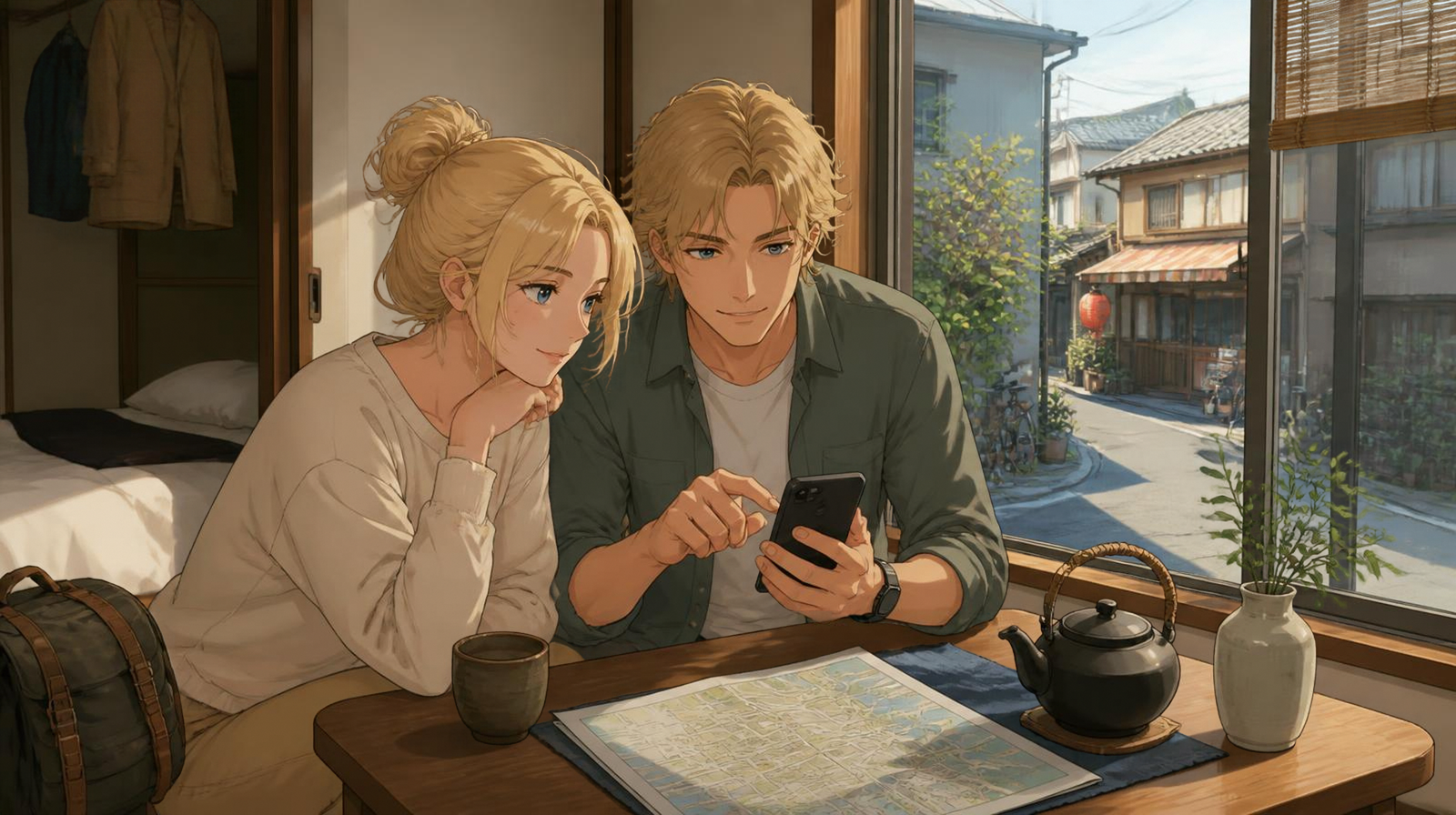
Google Maps is a useful starting point for planning train, subway, bus, and walking routes in Japan. It works best when you use it to compare routes and then confirm the details against the signs and displays at the station.
What to Check Before Leaving
A route may show:
- Departure and arrival stations
- Railway or subway line
- Departure time
- Platform number
- Direction or final destination
- Train type
- Required transfers
- Total travel time
- Walking time between stations or platforms
- Recommended station exit
Do not look only at the total journey time. A slightly longer route may be easier when it has fewer transfers, less walking, or a simpler station.
Match the App With the Station Signs
Before boarding, match the route in the app with the actual line name, platform number, direction or final destination, departure time, and train type shown at the station.
Confirm the exact station as well. For example, Osaka Station, Umeda Station, Higashi-Umeda Station, and Nishi-Umeda Station are connected within the same general area but serve different railway and subway lines.
You may see:
方面 / Hōmen / Direction
行き / Yuki / Bound for
A rapid or express train may skip your station even when it departs from the correct platform, so make sure your destination is served by the train.
Compare More Than One Route
The first suggested route is not always the easiest for every traveler.
Consider another route when:
- The first option has several transfers
- The transfer time is very short
- You are carrying luggage
- You are traveling with children
- You need elevators or an accessible route
- The route requires a long walk through a large station
- A direct train is available a few minutes later
When possible, choose a route that you feel comfortable following rather than automatically selecting the fastest option.
Check the Recommended Exit
For the final part of your journey, Google Maps may recommend a station exit. Check it before passing through the final ticket gate, especially at large stations.
After leaving the station, switch to walking directions and confirm that you are moving toward your destination. GPS positioning can be less accurate inside stations and underground passages.
Recheck the Route During the Journey
Train services can change because of delays, disruptions, or missed connections.
Recheck the route when:
- You miss the planned train
- A train is delayed
- You get off at the wrong station
- A transfer takes longer than expected
- The platform display differs from the original route
Google Maps may provide alternative departures, but follow current station signs, announcements, and staff instructions when they differ from the app.
Save Important Destinations Before Traveling
Before leaving your accommodation, save or confirm:
- Your accommodation
- The nearest station
- Your destination
- The return route
- The final train time, when traveling at night
Saving your accommodation is particularly helpful when returning through an unfamiliar station or taking a taxi after the trains have stopped running.
A navigation app can guide you through most journeys, but it works best when you also check the actual line name, platform display, train destination, and station signs.
Train Etiquette in Japan
Japanese trains are generally orderly, but international visitors are not expected to know every local custom. A few practical habits will help you travel comfortably without disrupting other passengers.
On the Platform
Wait behind the safety line or platform doors and stand in the marked boarding line.
Allow passengers to leave the train before you board. Do not move forward until the doorway is clear.
Avoid:
- Standing on tactile paving
- Blocking stairs, escalators, or platform doors
- Running for a train as the doors are closing
- Looking at your phone while walking near the platform edge
- Spreading luggage across busy waiting areas
You may see:
黄色い点字ブロック / Kiiroi tenji burokku / Yellow tactile paving
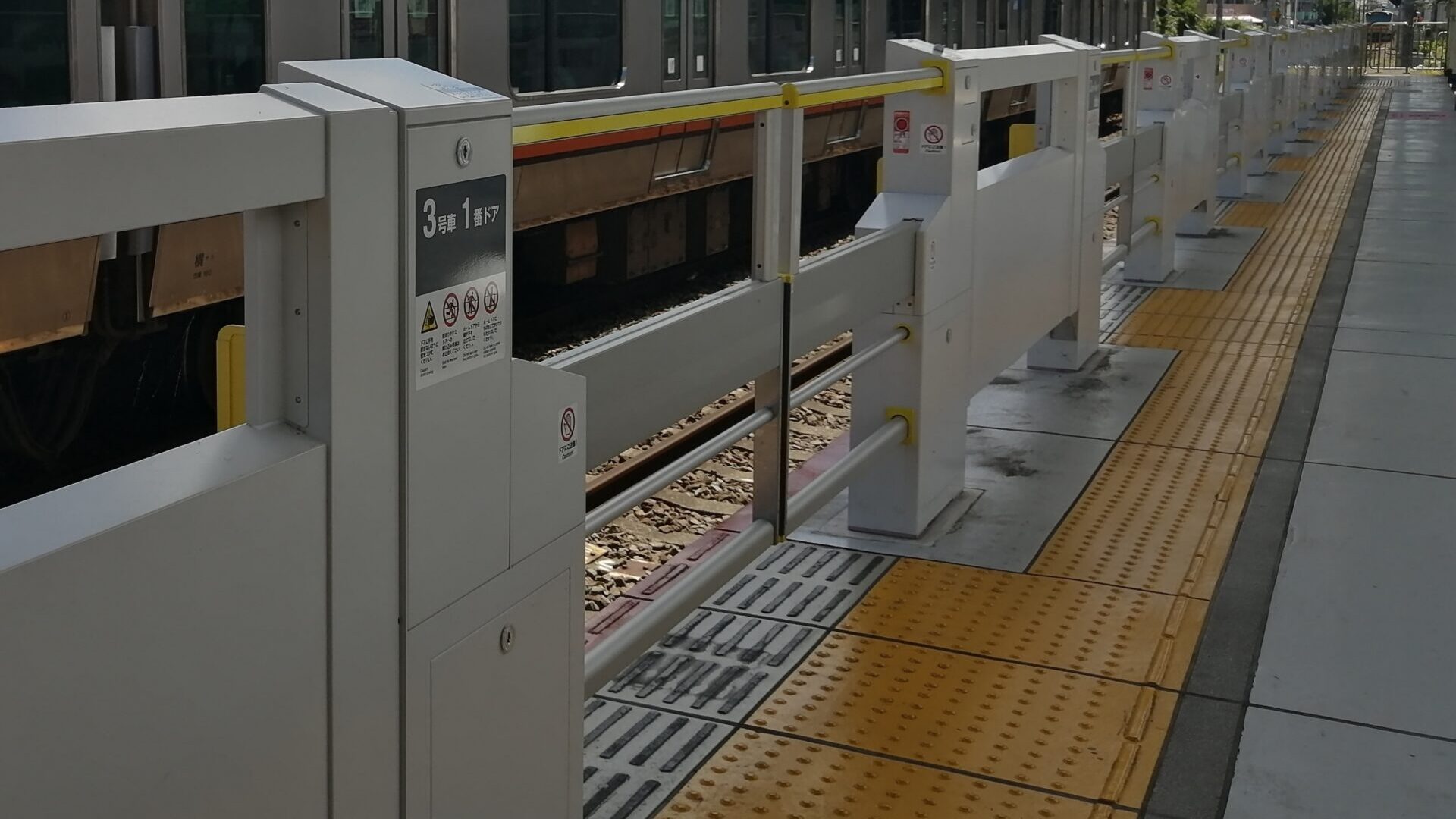
Tactile paving helps guide passengers with visual impairments. Do not stand or place luggage on it when space is available elsewhere.
When Boarding and Leaving
Wait to the side of the doors so passengers can exit first.
Once inside, move away from the doorway when possible. During crowded periods, standing directly beside the doors can make it difficult for other passengers to board and leave.
If you are standing near the door but are not getting off at the next station, make space for passengers leaving the train. On a crowded train, you may need to step onto the platform briefly and then reboard.
Keep Conversations and Audio Quiet
Conversations are acceptable, but keep your voice lower than you might in a restaurant or public outdoor space.
Use headphones when listening to music, watching videos, or playing games. Make sure the sound cannot be heard by nearby passengers.
Voice calls are generally avoided on local trains and subways. Use text messaging or wait until you leave the train when possible.
Set your phone to silent mode or reduce notification sounds before boarding.
Use Priority Seats Considerately
You may see:
優先席 / Yūsenseki / Priority seat
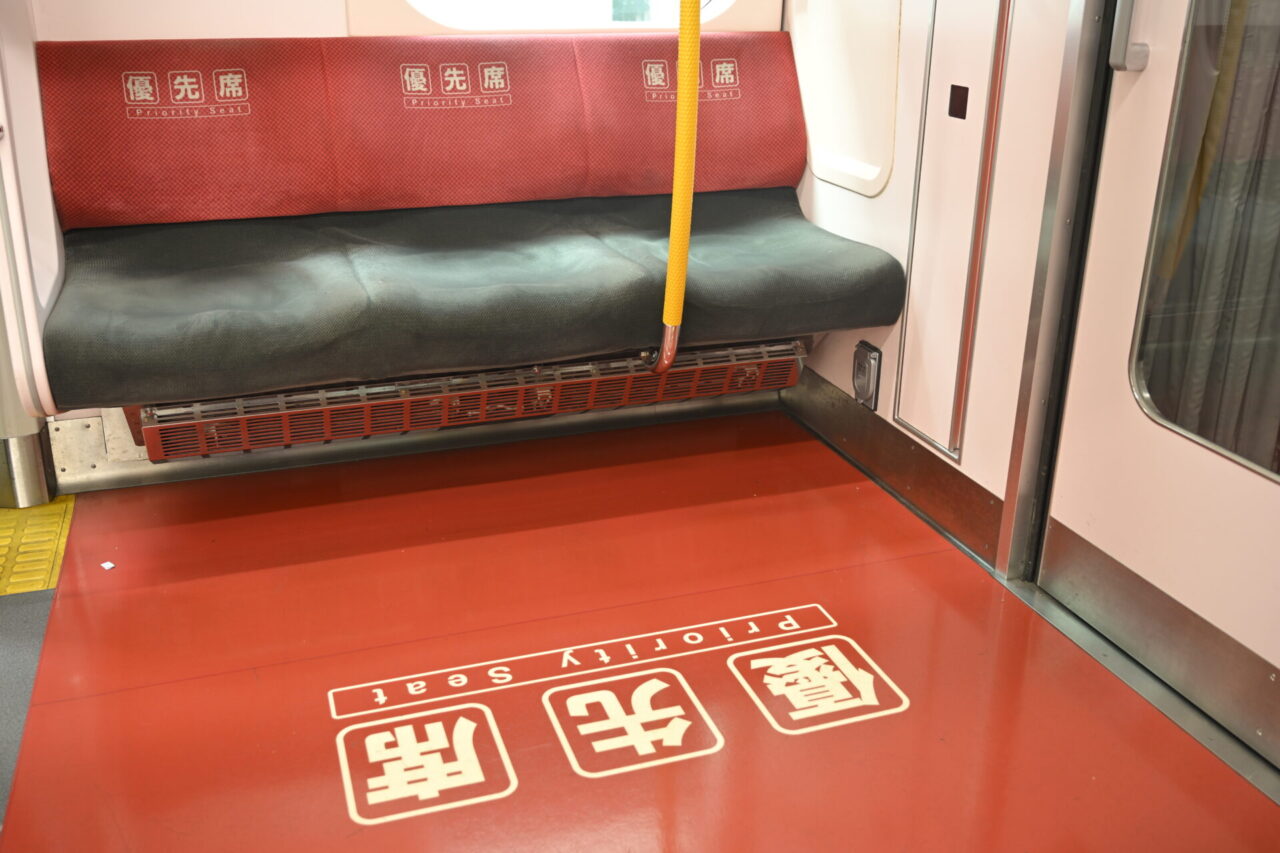
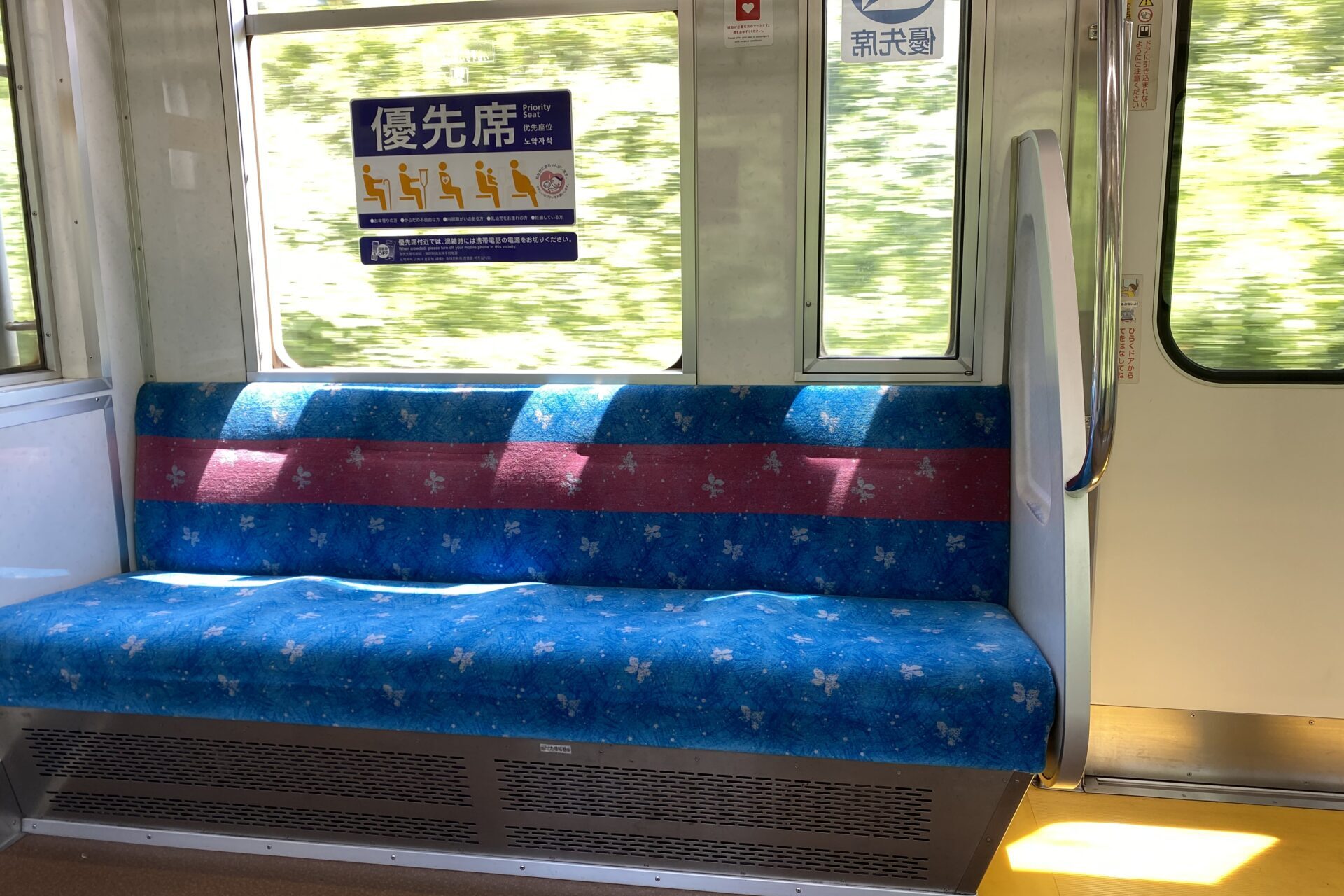
Priority seats are intended for passengers who may need them, including:
- Older passengers
- People with disabilities or injuries
- Pregnant passengers
- Adults traveling with infants or small children
- People wearing a Help Mark
You may sit in a priority seat when it is available, but be prepared to offer it to someone who appears to need it.
Some disabilities and medical conditions are not immediately visible. A passenger carrying a red Help Mark may require additional consideration even if they appear physically well.
Manage Luggage Carefully
Keep bags and suitcases away from doors, aisles, and areas used by other passengers.
Smaller bags can usually be placed:
- On your lap
- At your feet without blocking the aisle
- On an overhead luggage rack
When using an overhead rack, make sure the luggage is stable and not too heavy to lift or remove safely.
During crowded periods, avoid wearing a large backpack on your back. Hold it in front of you, place it between your feet, or use the luggage rack when appropriate.
Large luggage rules differ for some Shinkansen services. Check the specific requirements before traveling with an oversized suitcase.
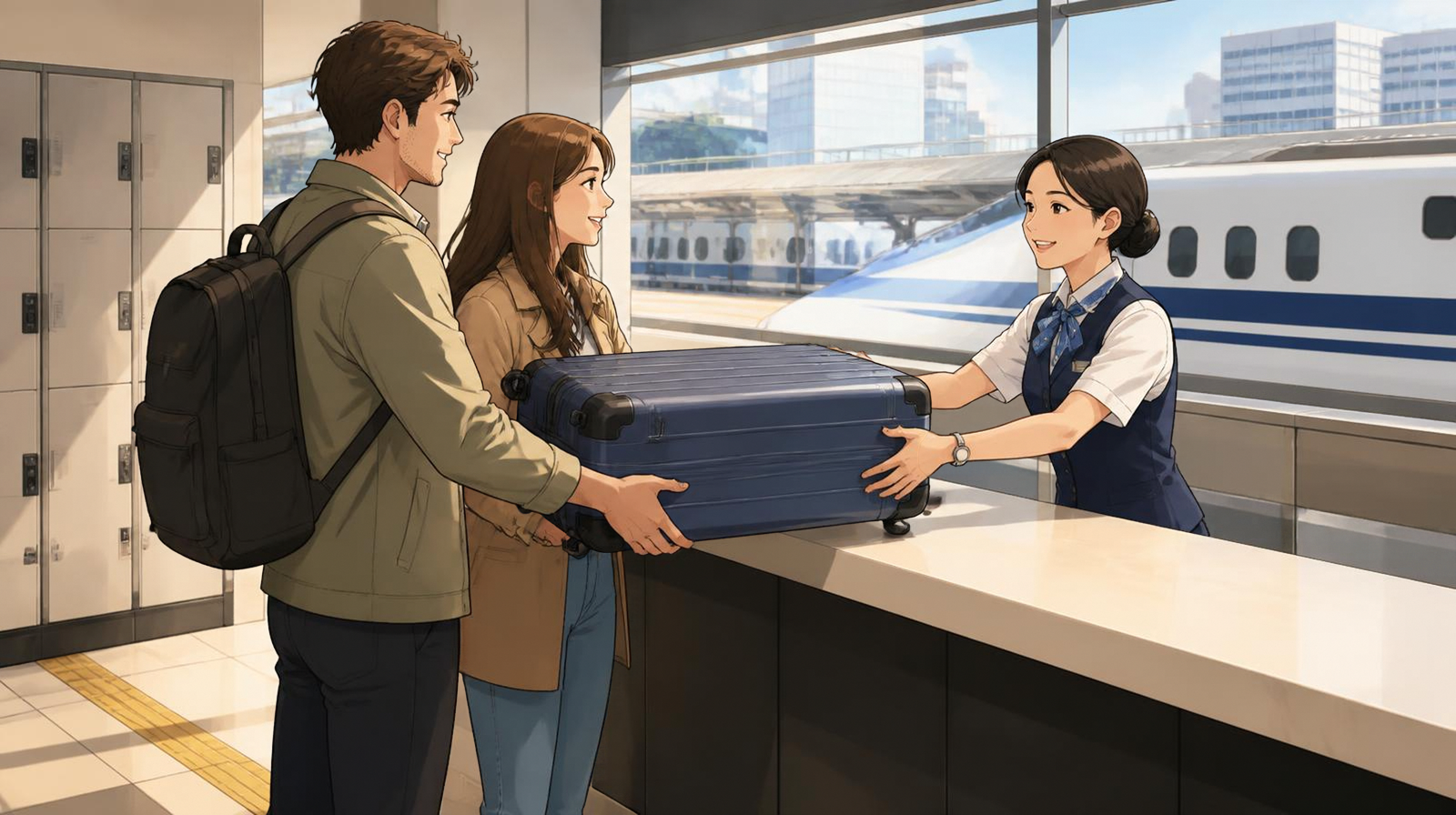
If a suitcase will be difficult to manage through crowded trains or station transfers, our guide to luggage forwarding and coin lockers in Japan explains when to store it, send it ahead or carry it.
Eating and Drinking
Eating a full meal is generally avoided on crowded local trains and subways.
Drinking water or another non-alcoholic beverage is usually acceptable when done carefully. Avoid strong-smelling food, spilling drinks, or leaving rubbish behind.
Eating meals is more common on:
- Shinkansen trains
- Limited express trains
- Long-distance services with forward-facing seats and tray tables
Follow the atmosphere and rules of the specific train.
Photography and Video
You can take photographs of trains and stations when it is safe and permitted, but do not obstruct other passengers or railway staff.
Avoid:
- Photographing strangers without permission
- Using flash toward an approaching or moving train
- Standing beyond safety lines
- Leaning over platform doors or barriers
- Setting up tripods or equipment in busy passages
- Blocking tactile paving, doors, stairs, or platforms
- Raising selfie sticks where they may strike another passenger
Always follow instructions from station staff.
Escalators and Station Passages
Local habits about standing on one side of an escalator vary between cities. Railway operators increasingly encourage passengers to stand still and hold the handrail rather than walk.
Do not rush past passengers with luggage or mobility needs.
In station corridors, move to the side before stopping to check your phone or route. Avoid stopping suddenly in the main flow of passengers.
Be Aware of Women-Only Cars
Some commuter trains operate:
女性専用車 / Josei senyō-sha / Women-only car
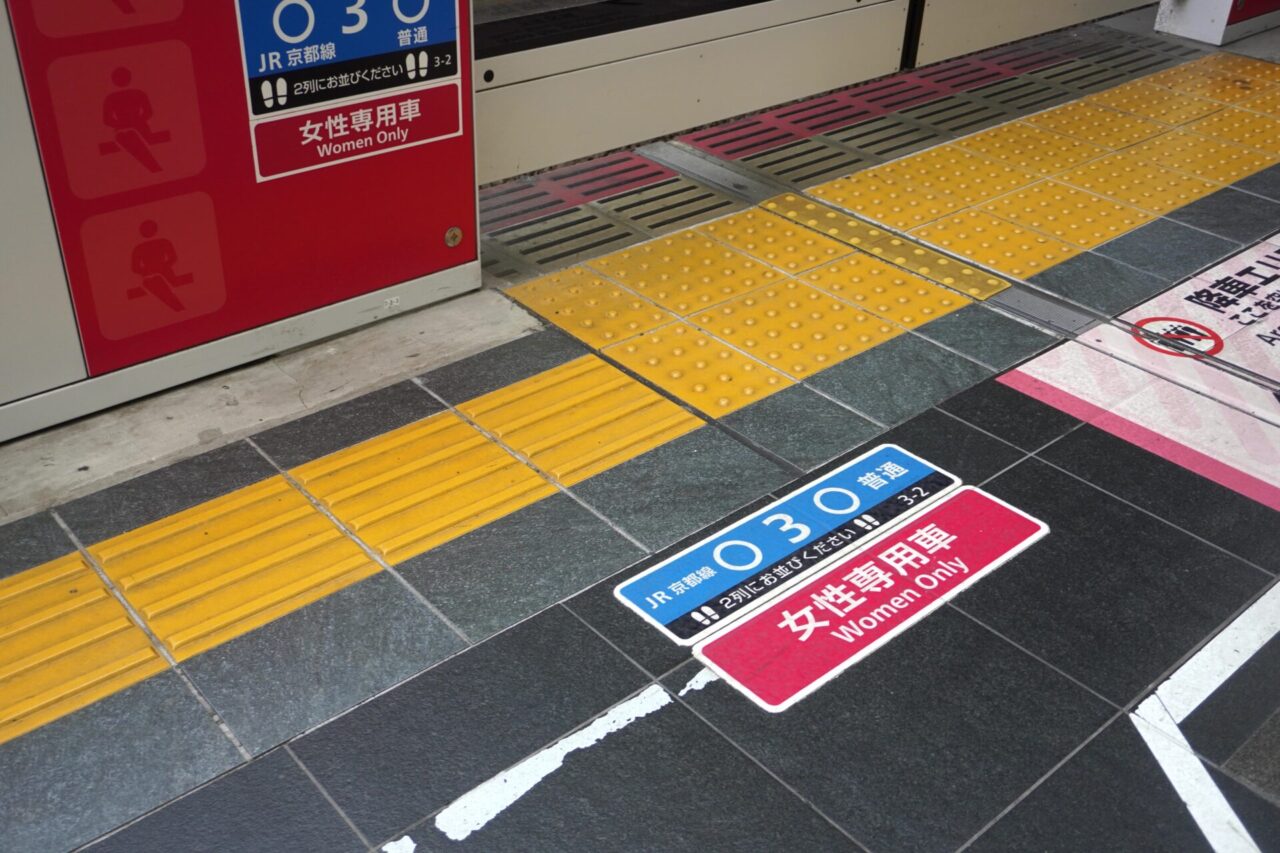
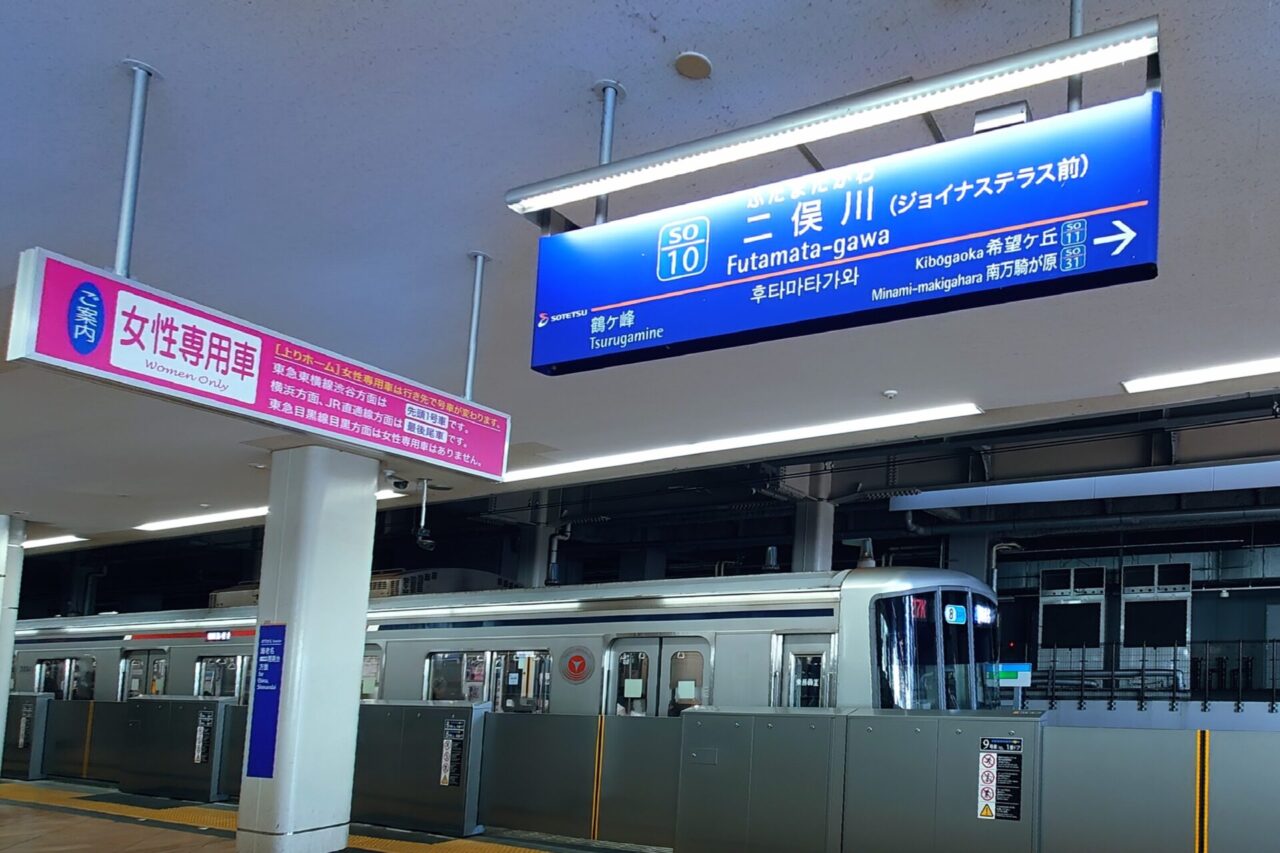
These cars are generally designated during specific weekday morning periods, although the rules vary by railway company and line.
Look for signs on the platform and train windows. Outside the designated hours, the same car normally operates as a regular carriage.
Simple Consideration Is Enough
You do not need to behave perfectly or remain completely silent.
The most important points are to:
- Let passengers leave before boarding
- Avoid blocking doors and walkways
- Keep calls and audio quiet
- Manage luggage carefully
- Offer priority seating when appropriate
- Follow station signs and staff instructions
Most visitors adapt quickly after a few journeys.
For broader advice about everyday customs, public spaces, restaurants, and accommodation, read our Japanese etiquette guide.
What to Do If You Get Lost or Make a Mistake
Taking the wrong train, missing a stop, or leaving through the wrong exit is common, particularly during the first few days of a trip.
Most mistakes are easy to correct, but the fare treatment depends on your ticket and route. Stop somewhere away from the flow of passengers, check your route, and ask station staff if you are unsure.
If You Board the Wrong Train
If you realize that the train is traveling in the wrong direction, get off at the next station.
Check:
- The line name
- Your current station
- The direction you need
- The next available train
- Whether you need the opposite platform
Do not rush across the platform or enter a restricted area. Follow the signs or navigation instructions to the correct platform.
If you boarded a rapid, express, or limited express train that does not stop at your destination, get off at the next available stop and check the return route.
If You Miss Your Stop
Get off at the next station and check the route back. Depending on your ticket and the railway rules, an additional fare may apply, so ask station staff if you are unsure before continuing.
You may see:
反対方向 / Hantai hōkō / Opposite direction
In many cases, station staff can help you correct the journey without starting over. If you are unsure whether you need to pass through another ticket gate or pay an additional fare, ask station staff before continuing.
If You Enter Through the Wrong Ticket Gate
Large stations may have separate ticket gates for JR lines, subways, private railways, and the Shinkansen.
If you enter the wrong area:
- Do not repeatedly tap your IC card
- Do not insert the same ticket into several gates
- Look for the staffed gate
- Show your route or destination on your phone
- Explain which line you intended to use
Station staff can check your IC card or paper ticket and tell you where to go next.
You can say:
改札を間違えました。
Kaisatsu o machigaemashita.
I entered through the wrong ticket gate.
If You Choose the Wrong Exit
A wrong exit usually does not affect your train fare, but it may place you far from your destination.
Check the station map or walking directions before continuing. In a large underground station, it may be easier to follow signs to the correct district or landmark than to return immediately through a ticket gate.
You can ask:
この場所へ行くには、どの出口ですか?
Kono basho e iku ni wa, dono deguchi desu ka?
Which exit should I use to reach this place?
Show the destination name, address, or map pin on your phone.
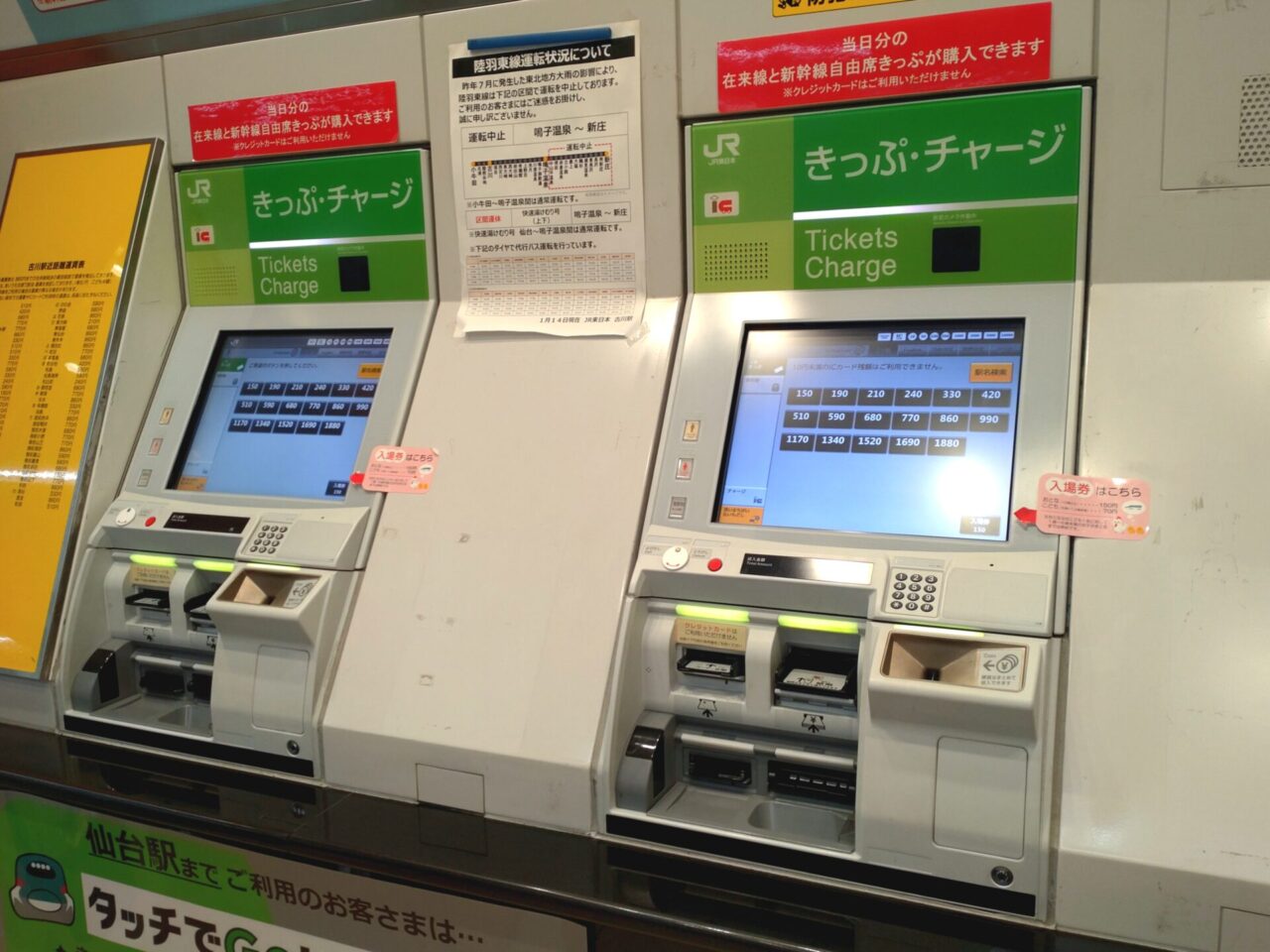
If Your IC Card Balance Is Too Low
If the ticket gate does not open because your balance is insufficient, do not force your way through or repeatedly tap the card.
Look for:
精算機 / Seisanki / Fare adjustment machine
チャージ / Chāji / Top up
Add money to the card or pay the required fare difference before trying the gate again.
You can also use the staffed gate and ask for assistance.
If Your Paper Ticket Does Not Work
A paper ticket may be rejected when:
- The fare does not cover the full journey
- The wrong ticket is being used
- A transfer requires another ticket
- The ticket was damaged
- The ticket was not collected at an earlier gate
Take the ticket to the staffed gate rather than repeatedly inserting it into the machine.
If you lose a paper ticket, tell station staff as soon as possible. The procedure and any additional payment will depend on the ticket and journey.
You can say:
切符をなくしました。
Kippu o nakushimashita.
I lost my ticket.
If You Cannot Find Your Platform or Transfer
Look for:
案内所 / Annaijo / Information counter
駅員 / Ekiin / Station staff
Show the staff member:
- Your destination
- The line name
- The planned departure time
- The route shown in your navigation app
You can ask:
この電車は〇〇駅に行きますか?
Kono densha wa 〇〇-eki ni ikimasu ka?
Does this train go to 〇〇 Station?
乗り換えはどこですか?
Norikae wa doko desu ka?
Where is the transfer?
何番ホームですか?
Nanban hōmu desu ka?
Which platform is it?
If You Miss the Final Train
If train service has ended, check whether another railway or subway line is still operating.
When no suitable train is available, your main options may include:
- A taxi or taxi app
- A late-night bus, where available
- Walking, when the distance and route are safe
- Staying near the station until morning
Check the distance and estimated taxi fare before deciding. Saving your accommodation address in Japanese and English makes it easier to show the destination to a driver.
Ask for Help Before Walking Too Far
Station staff regularly assist passengers who have taken the wrong train, entered through the wrong gate, or cannot find a transfer.
You do not need to explain the entire situation in Japanese. Showing the destination and route on your phone is often enough.
A wrong turn is usually a small delay rather than a serious problem. Stop, confirm where you are, and correct one part of the journey at a time.
Explore Japan Beyond the Major Cities by Train
Japan’s rail network is useful not only for traveling between major cities. Local and regional trains can also connect you with quieter communities, everyday neighborhoods, and places that are often missed when a trip focuses only on famous attractions.
A train journey may take you from a busy city center to:
- A historic town
- A coastal community
- A mountain gateway
- A traditional shopping street
- A residential neighborhood
- A smaller regional city
- A local hot spring area
Watching the scenery change through the window is part of the experience. Dense neighborhoods may gradually give way to rivers, farmland, mountains, or the coast, helping you understand how different parts of Japan are connected.
Plan Regional Journeys More Carefully
Train services outside major cities may be less frequent than those in Tokyo, Osaka, or Kyoto.
Before traveling, check:
- How often the train operates
- The time of the final return train
- Whether a transfer is required
- Whether your IC card is accepted
- Whether a paper ticket or cash is needed
- How you will travel from the station to your final destination
- Whether luggage storage is available
- Whether the station is staffed
A destination that appears close on a map may require a bus, taxi, accommodation transfer, or a significant walk after you leave the train.
Consider Where You Stay
Accommodation affects how you experience Japan’s transportation network.
Staying near a major station can make transfers and day trips easier. Staying near a smaller local station may offer a quieter atmosphere and a closer connection with the surrounding neighborhood, but services may finish earlier and nearby transportation options may be limited.
Before booking, consider:
- Walking distance from the station
- The route with luggage
- Evening and early-morning train frequency
- Nearby shops and restaurants
- Access to buses or taxis
- How the location fits the places you plan to visit
A convenient base is not always the station with the most railway lines. The right location depends on whether you value fast connections, a quieter neighborhood, or easier access to a particular region.
Let the Journey Become Part of the Trip
Transportation is more than simply moving between attractions.
A local train may lead you to a neighborhood café, a small shopping street, a regional market, or a landscape you had not planned to see. These ordinary moments can become some of the most memorable parts of traveling in Japan.
Once you feel comfortable using trains and subways, you can explore more freely and experience Japan at a pace that goes beyond a checklist of famous sights.
Choose the Right Transportation Guide for Your Trip
This guide explains how to navigate stations, find the correct platform, board trains, make transfers, and reach the right exit.
Japan’s ticketing and transportation options vary depending on the type of journey. Use the following guides when you need more detailed help.
| What You Need to Know | Recommended Guide |
|---|---|
| How to choose between an IC card, paper ticket, and separate long-distance ticket | How to Pay for Train Travel in Japan |
| Which Suica, PASMO, ICOCA, tourist card, or mobile IC option to choose | How to Use IC Cards in Japan |
| Where and how to buy or reserve Shinkansen tickets | How to Buy Shinkansen Tickets in Japan |
| Whether a Japan Rail Pass will save money for your itinerary | Japan Rail Pass: Is It Worth It? A Complete Guide |
| How local buses work when a train does not take you all the way to your destination | How to Use Local Buses in Japan |
| When a taxi is more convenient and how to use one | How to Use Taxis in Japan |
You do not need to read every guide before arriving in Japan. Start with the topic that matches your next decision, then return to this guide when you need help navigating the station and completing the journey.
Travel Japan by Train With Confidence
Japan’s train and subway network may seem complicated before your first journey, but you do not need to understand the entire system at once. For each trip, focus on the correct station, line, direction, platform, train type, transfer, and exit.
Navigation apps, station signs, onboard displays, and railway staff can help you confirm each step. Allow extra time at unfamiliar stations, prepare your payment method before reaching the gate, and ask for help when something does not match your route. Taking the wrong train or exit is usually a small problem that can be corrected.
Once the basic process becomes familiar, trains make it easier to travel beyond the most famous attractions and reach residential neighborhoods, regional towns, coastal communities, and quieter places where everyday life becomes part of the journey.
Frequently Asked Questions
- Is it difficult to use trains and subways in Japan?
-
Japan’s railway network can look complicated, but most journeys are manageable once you check the station, line, direction, platform, train type, transfer, and exit one step at a time. English signs, station numbers, navigation apps, and onboard displays are widely available in major cities.
- Do I need to speak Japanese to use trains in Japan?
-
No. Most major stations provide English signs, ticket machine menus, and onboard announcements. When you need help, showing your destination or route on your phone is often enough.
- What is the easiest way to pay for local trains and subways?
-
For most visitors, an IC card such as Suica, PASMO, or ICOCA is the easiest option. You can tap the card when entering and leaving participating stations instead of buying a paper ticket for every journey.
For a comparison of IC cards, paper tickets, and long-distance tickets, read our guide to paying for train travel in Japan.
- How do I know whether I am boarding the correct train?
-
Check the line name, platform number, direction or final destination, departure time, and train type. Make sure your destination is served by the train, as rapid, express, and limited express services may skip some stations.
- What should I do if I take the wrong train?
-
Get off at the next station and check the route in the opposite direction. Depending on your ticket and route, an additional fare may apply, so ask station staff if you are unsure before continuing or leaving through a ticket gate.
- How much time should I allow for a transfer?
-
A simple transfer at a small station may take only a few minutes, but large stations can require longer walks, stairs, escalators, or another ticket gate. Allow extra time when traveling with luggage, children, or between different railway companies.
- Can I use an IC card on the Shinkansen?
-
Sometimes. A regular IC card does not work as a universal Shinkansen ticket. Depending on the line and service, you may need a separate Shinkansen ticket, a reservation linked to your IC card, or an eligible IC-based service. Check the ticketing method for your specific Shinkansen journey before boarding.
For ticket machines, online reservations, seat choices, and luggage rules, read our Shinkansen ticket guide.
- What should I do if I miss the final train?
-
Check whether another railway or subway line is still operating. When no suitable train is available, you may need to use a taxi, late-night bus, or accommodation near the station.
Saving your accommodation address in both Japanese and English can make it easier to show your destination to a taxi driver.
Related Guides
Explore practical guides to help you plan your trip and travel around Japan with confidence.
Planning Your Trip to Japan
- A Complete Guide for First-Time Visitors to Japan: Stay, Travel, and Experience Local Life
- How to Prepare for a Trip to Japan: What to Plan Before You Go
Transportation
- How to Use Trains and Subways in Japan
- How to Use IC Cards in Japan: Suica, PASMO, ICOCA & Mobile IC Cards
- How to Pay for Train Travel in Japan
- How to Use Local Buses in Japan: A First-Time Visitor Guide
- How to Use Taxis in Japan
- Kansai Airport to Osaka: Best Routes for 8 Areas
- Kansai Airport to Umeda: A Practical Route Example Using Train, Bus & Taxi
- How to Buy Shinkansen Tickets in Japan
- Japan Rail Pass: Is It Worth It? A Complete Guide
Money
- Cash or Credit Cards in Japan? A Complete Guide for First-Time Visitors
- Can I Use Credit Cards Everywhere in Japan? Where Cards Work—and Where You’ll Still Need Cash
- How to Exchange Money in Japan: The Best Ways to Get Japanese Yen
- Tax-Free Shopping in Japan: Rules, Purchases & Refunds
Cities & Destinations
- Osaka vs Kyoto: Which City Is Right for You?
- Where to Stay in Osaka: Best Areas for First-Time Visitors
- Are Osaka Hotels Expensive in 2026? What to Expect and When to Book
- Where to Stay in Yodoyabashi, Higobashi & Edobori: Central Osaka Area Guide
Culture & Etiquette
- Japanese Etiquette Every Visitor Should Know
- Onsen & Sento Etiquette in Japan: A First-Time Visitor Guide