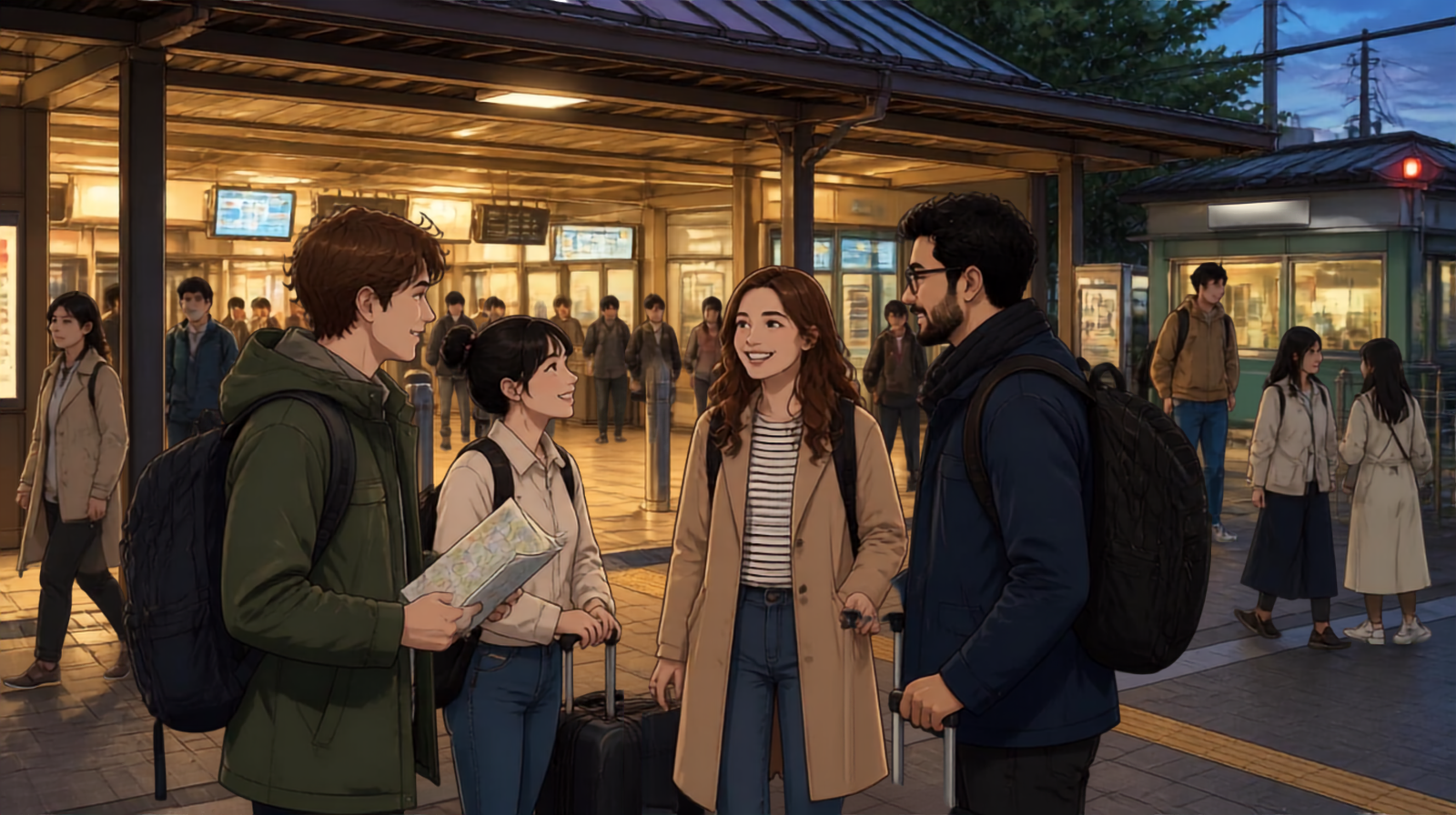
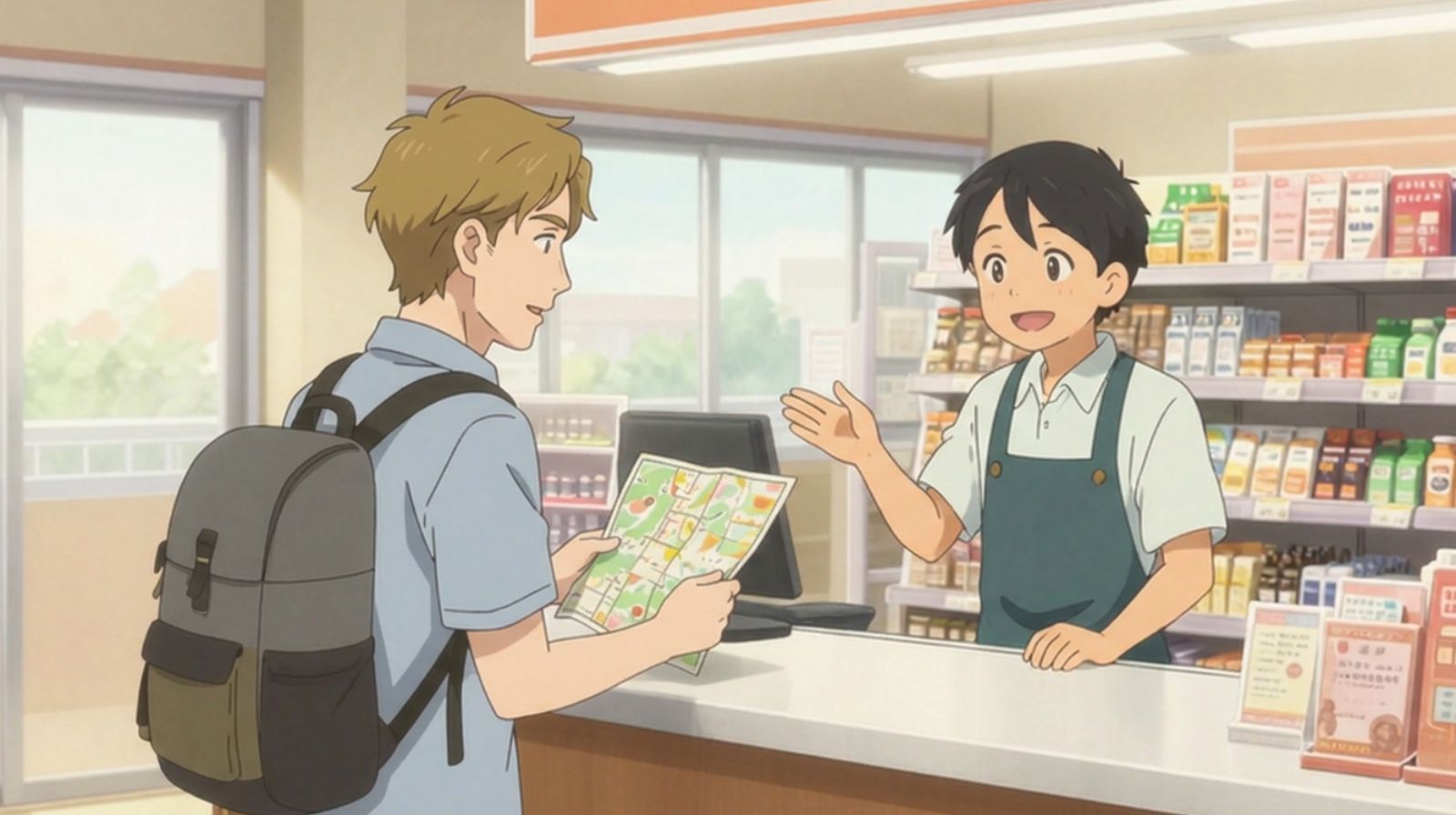
The Short Answer: English in Japan
English is not widely used in everyday conversation throughout Japan, and you should not expect everyone you meet to be comfortable holding a conversation in English.
However, English information is often much easier to find than spoken English. A station may have English signs and announcements even when a staff member speaks only limited English. A restaurant may have a picture menu or multilingual ordering tablet even when conversational support is unavailable.
For travelers, that distinction matters more than trying to measure how many people speak English. The practical question is whether you can complete everyday tasks such as finding a platform, ordering a meal, checking into accommodation, or reaching your destination.
| Location | What Travelers Can Generally Expect |
|---|---|
| Airports | Extensive English signs and visitor information |
| Major stations and tourist areas | English signs, announcements, maps, and multilingual machines |
| Hotels serving international guests | Basic English assistance is often available |
| Local restaurants and neighborhood shops | Support varies; pictures, gestures, and translation apps may help |
| Rural towns and regional destinations | Spoken English may be limited, so preparing routes, addresses, and key information is useful |
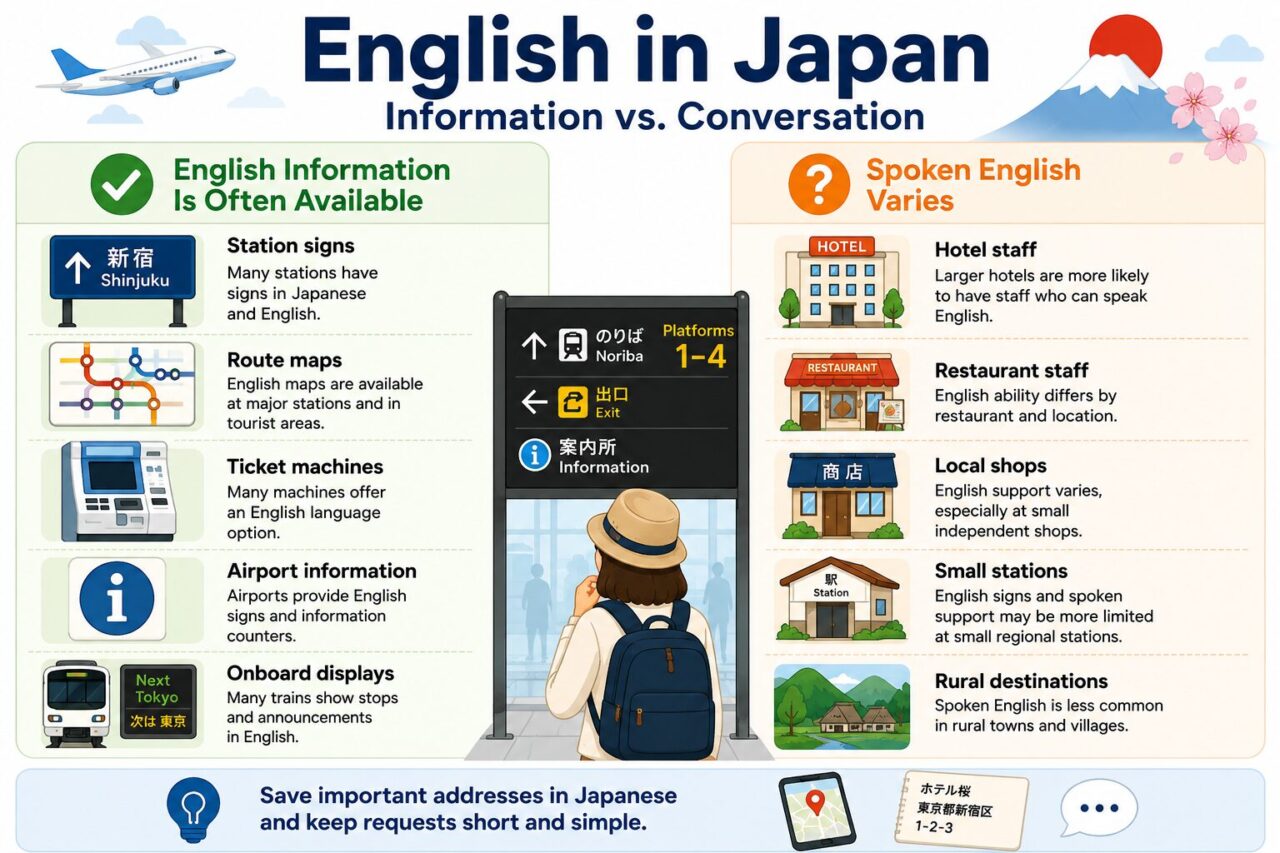
Can You Travel Japan Without Speaking Japanese?
Yes. For most first-time visitors, not speaking Japanese may create occasional difficulties, but it does not prevent independent travel.
You can usually manage the most important parts of a trip by combining:
- English and multilingual signs
- Navigation and translation apps
- Photos, maps, reservation screens, and written addresses
- Short, simple communication
- A few useful Japanese expressions
The experience will not be identical everywhere. Airports, major stations, large hotels, and popular sightseeing areas generally provide more English support than small restaurants, locally operated businesses, or rural destinations.
The most useful preparation is not memorizing large amounts of Japanese. It is making sure you can access your route, accommodation address, reservation details, translation tools, and other important information when you need them.
Where Can Travelers Expect English Support in Japan?
English support is easiest to find in places that regularly serve international travelers.
You are most likely to see English information at:
- International airports
- Major railway and subway stations
- Tourist information centers
- Popular attractions
- Large hotels
- Department stores and major shopping centers
- Restaurants in busy visitor areas
In these places, English support may include signs, announcements, maps, ticket machines, printed information, or multilingual digital screens.
You may need English information more often than an English conversation
In practice, travelers often rely more on signs, screens, maps, and written instructions than on long conversations.
A station can be easy to navigate because the signs are bilingual even if you never speak to a staff member. A hotel can provide translated check-in instructions even if not every employee is comfortable handling a complicated request in English.
For most visitors, clear information and basic assistance are enough to handle most situations they encounter during a trip.
Where Is English Less Common in Japan?
English support becomes less predictable outside major visitor areas.
You may encounter limited spoken English at:
- Small neighborhood restaurants
- Family-run shops
- Traditional markets
- Local clinics and pharmacies
- Small accommodation properties
- Rural stations
- Regional towns and villages
These places are still manageable for international visitors, but you may need to rely less on conversation and more on clear visual information.
A destination on your phone, an address written in Japanese, a menu photograph, a reservation screen, or a short translated message can often solve the problem faster than a long spoken explanation.
Allowing a little extra time also helps. Language difficulties are easier to manage when you are not trying to make a tight connection or find an unfamiliar property at the last minute.
Is English Spoken in Restaurants in Japan?
English support varies considerably between restaurants.

Restaurants in major tourist areas, large shopping centers, hotels, and national chains are more likely to provide:
- English menus
- Picture menus
- Multilingual ordering tablets
- Numbered menu items
- Food displays near the entrance
- Ticket vending machines
However, an English menu does not necessarily mean that staff members can explain every dish or handle a detailed conversation in English.
What to expect at local restaurants
Small neighborhood restaurants and family-run establishments may have Japanese-only menus and limited spoken English.
You can often order by pointing to a menu item or photograph, using camera translation, showing the number of a dish, or displaying a short request on your phone.
Keep questions short and specific. A visual menu or photograph is often more useful than a long spoken explanation.
Food allergies and serious dietary restrictions require more care than choosing from a menu. Prepare a clear written explanation in Japanese before your trip; the section below explains what information is useful to prepare.
You do not need to limit yourself to restaurants with English menus. If you do not need to explain an allergy or another special requirement, you can often order at a local restaurant using a photo, pointing, or a translation app.
Is English Available on Trains and at Stations?
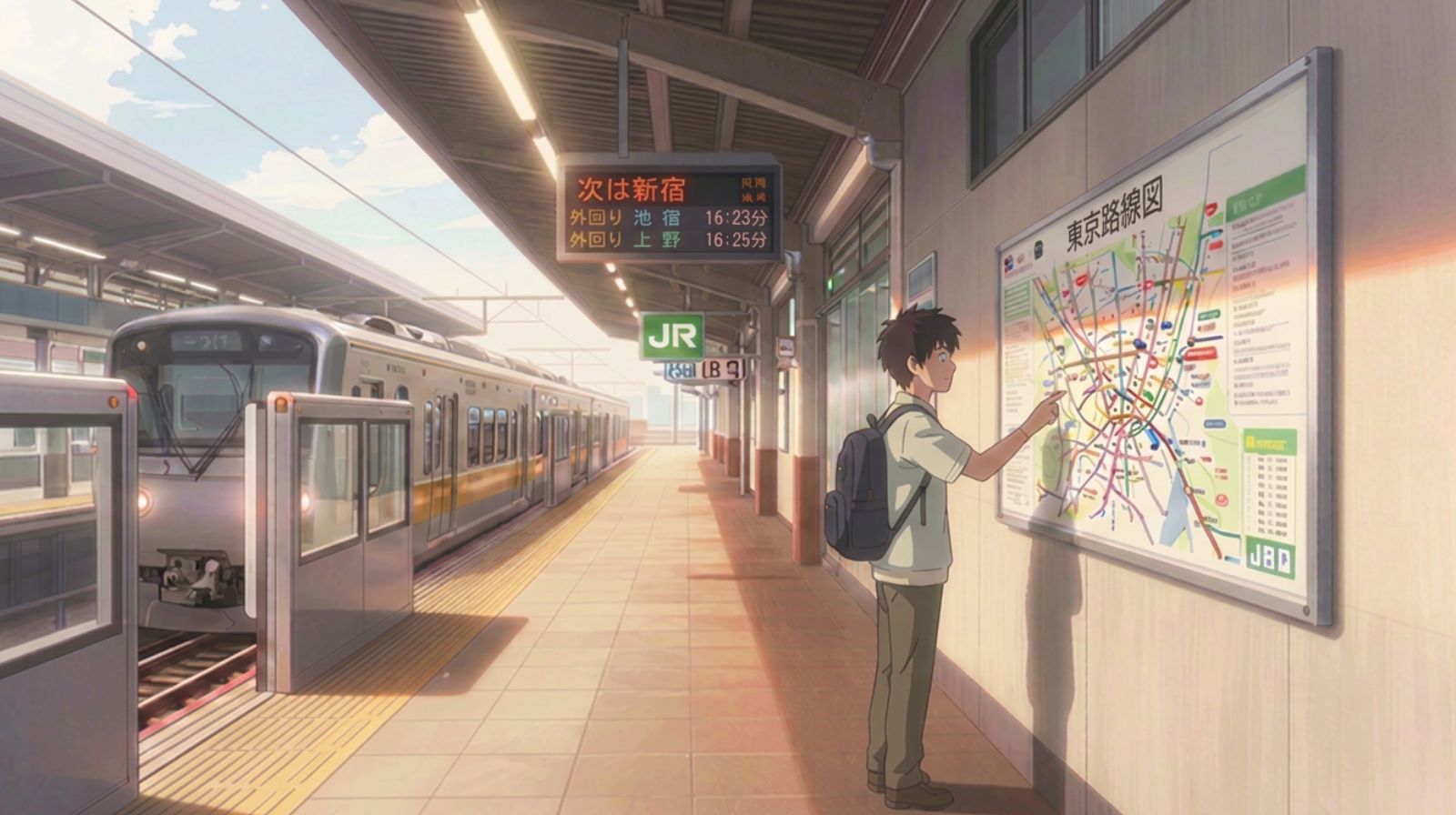
English information is widely available at major stations and on many routes used by international travelers.
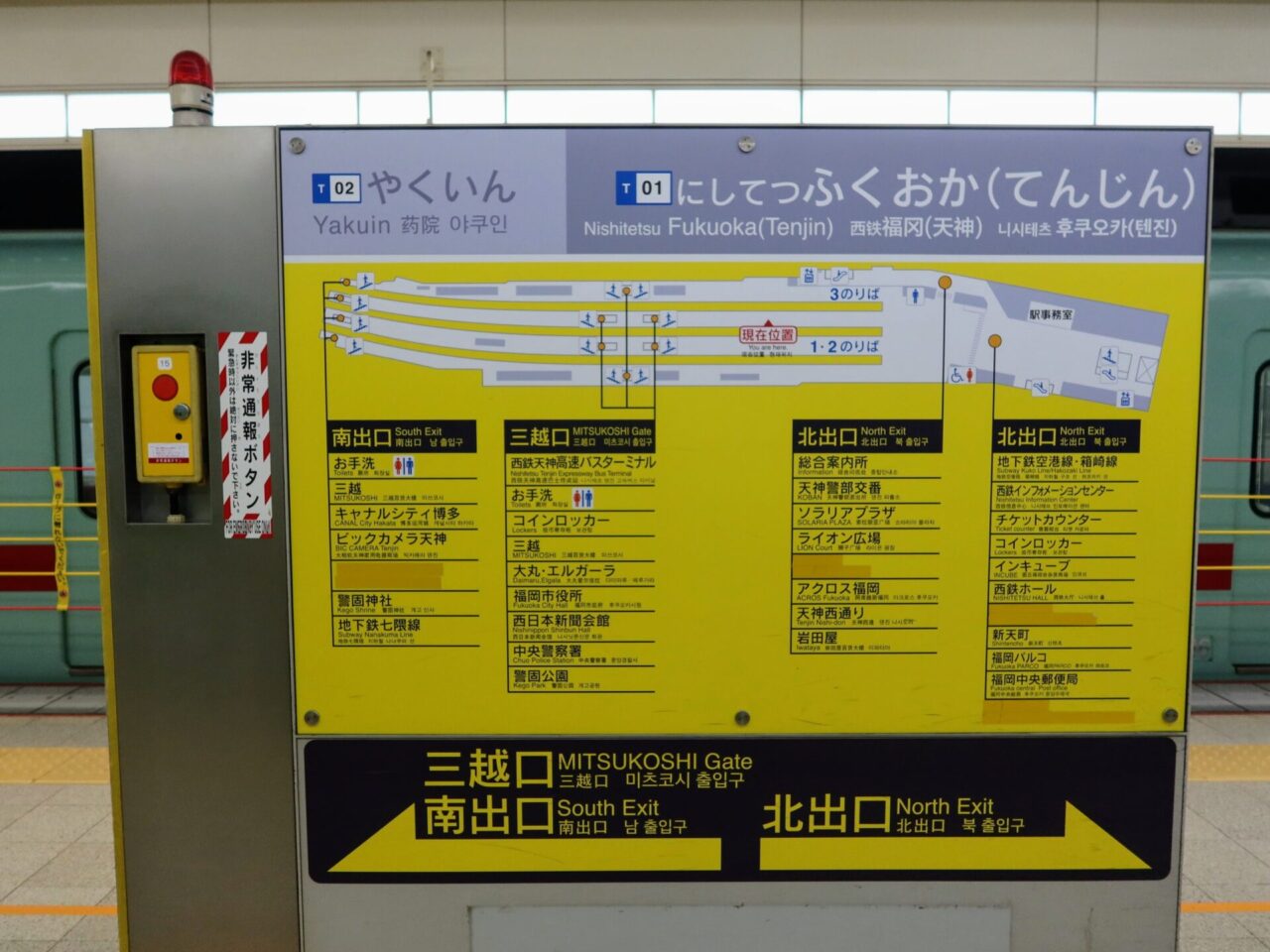
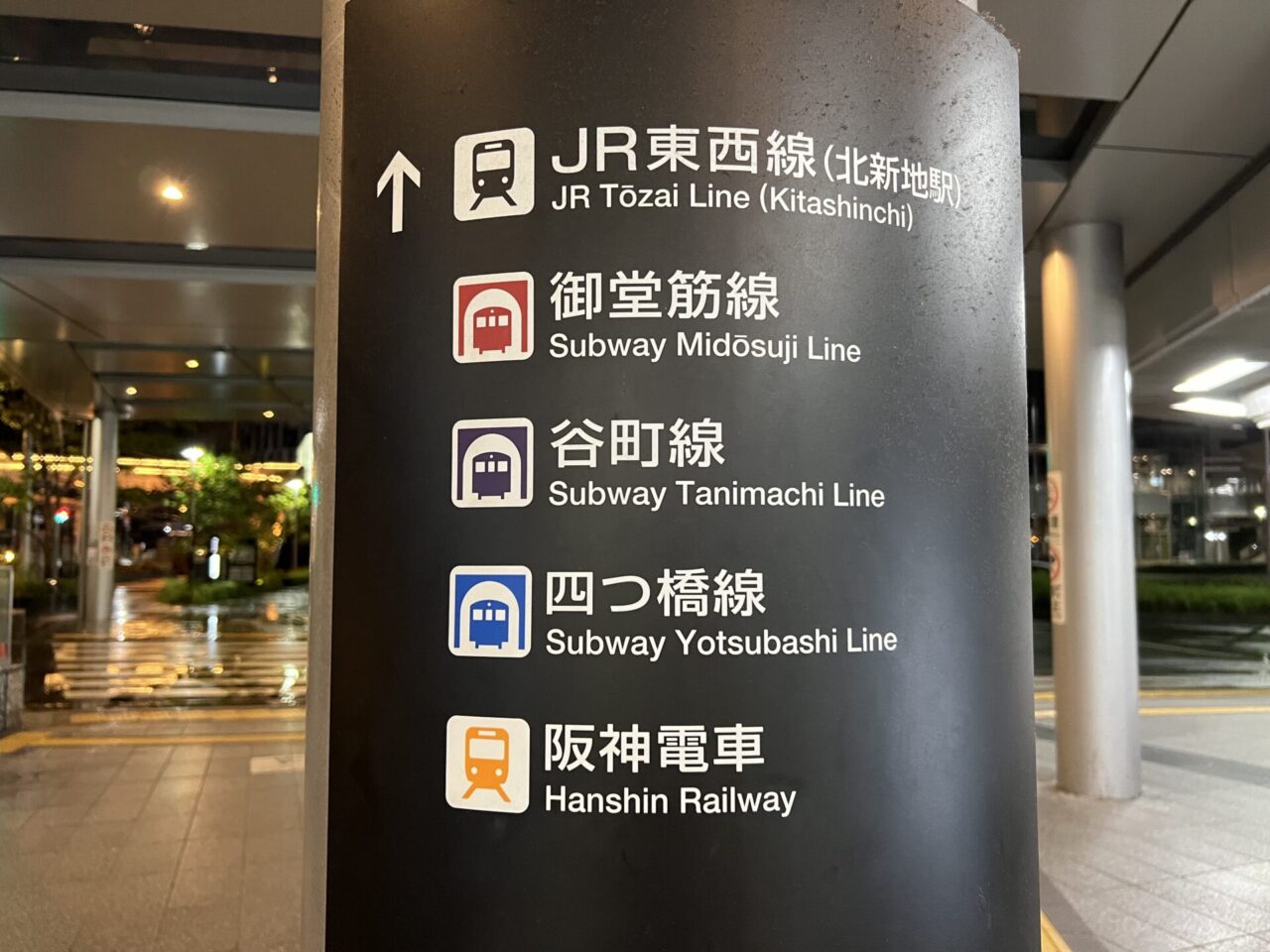
You can often expect:
- Station names in Japanese and English
- Station numbering on many urban railway and subway lines
- English direction signs
- Multilingual ticket machines
- English route maps
- English announcements or onboard displays on many major routes
This makes it possible to use many trains and subways without having a detailed conversation in Japanese.
Spoken English varies by station
Railway staff at major stations may be accustomed to helping international visitors, but spoken English ability varies.
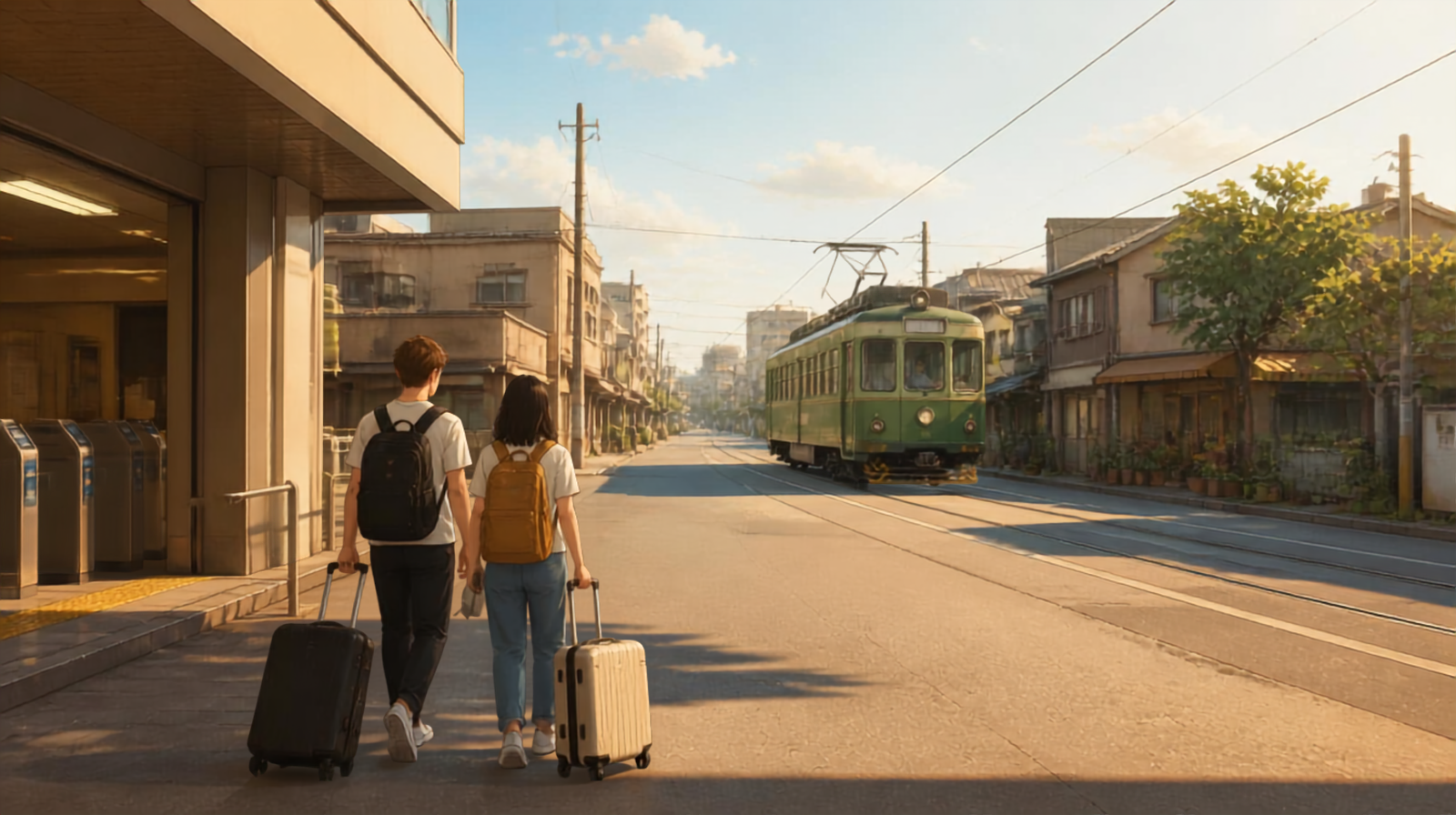
At smaller regional stations, English announcements, signs, and staff assistance may be more limited. Before traveling, save the destination station, line name, departure time, train name when applicable, and any important transfer information.
If you become unsure, show a station employee the destination or route on your phone. A written place name is often easier to understand than repeating an unfamiliar pronunciation.
For detailed guidance on ticket gates, platforms, transfers, and exits, read our guide to using trains and subways in Japan.
Do Hotels in Japan Have English-Speaking Staff?
Hotels that regularly welcome international travelers are more likely to provide English-language assistance.
Support may include check-in information, luggage storage instructions, transportation guidance, local maps, English-language notices, and help arranging a taxi.
However, English ability can vary between properties and individual staff members. Do not assume that every employee at a hotel serving international guests will be able to handle a complicated request in English.
Smaller accommodations may work differently
Small hotels, 旅館 / Ryokan / traditional inns, guesthouses, vacation rentals, and locally operated accommodations may provide limited spoken English.
Some properties communicate through translated messages, written instructions, or digital check-in information rather than extended face-to-face conversation.
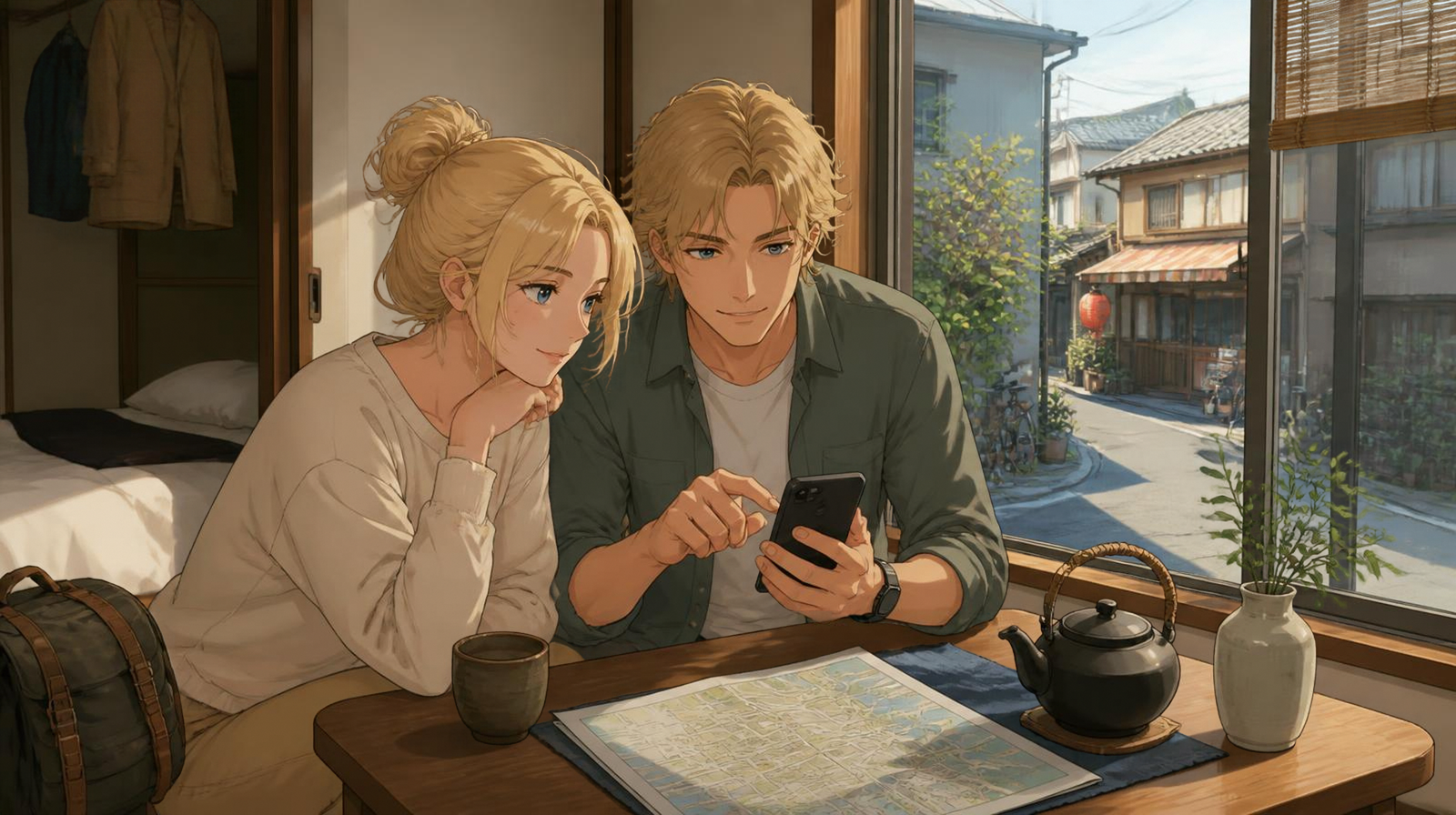
Before traveling to your accommodation, make sure you have the property name, full address in Japanese, nearest station, walking route, check-in instructions, and contact method saved on your phone.
If the property uses self check-in, confirm whether you need to complete online registration or receive a PIN, QR code, key-box code, or other access information before arrival.
Language support is one part of choosing accommodation, but it is not the only consideration. A quieter neighborhood or locally operated property can give you a different view of everyday life in Japan, provided that you understand the arrival and communication process in advance.
What About Taxis, Shops, and Everyday Transactions?
Taking a taxi without Japanese
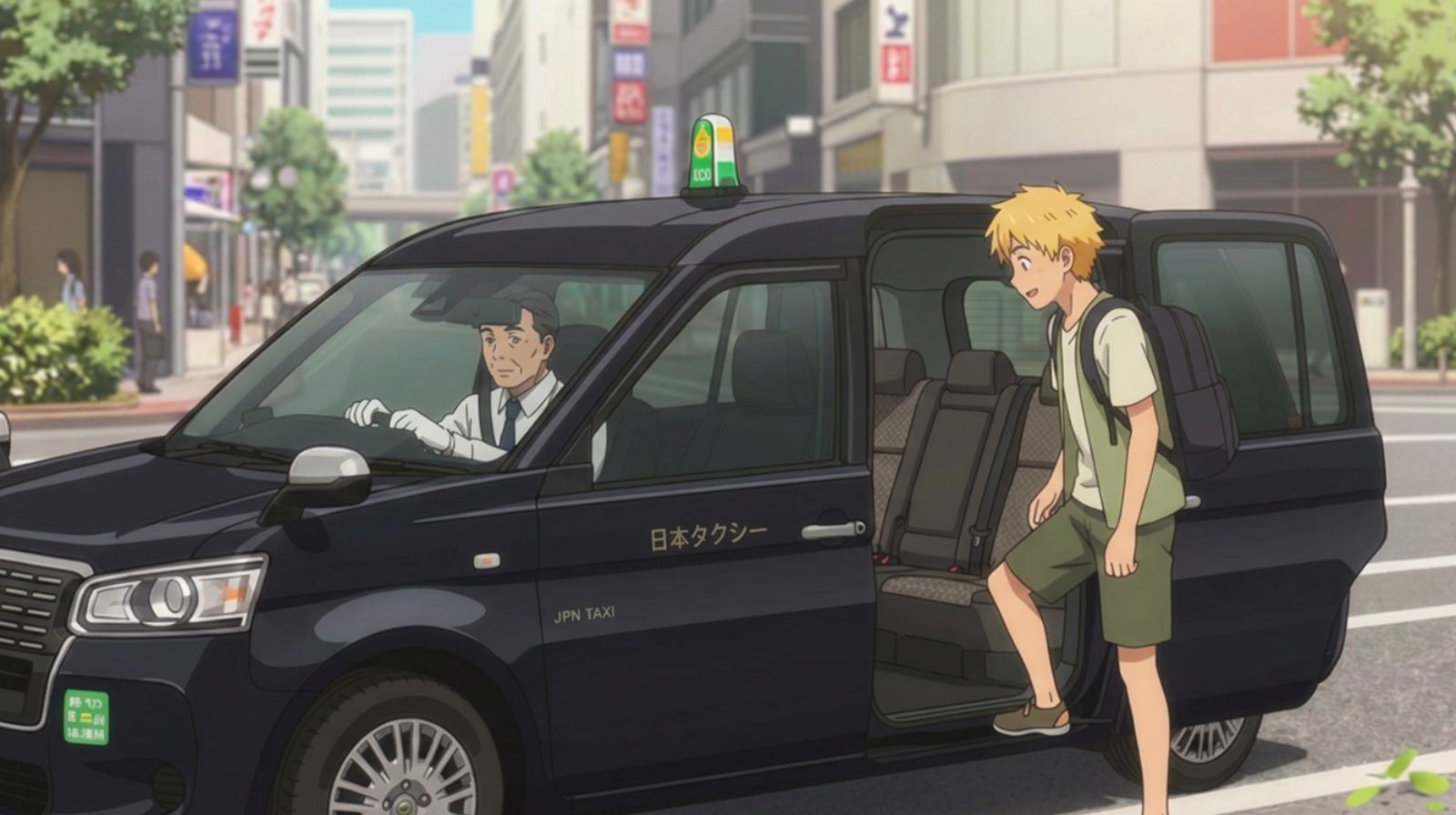
You do not need to pronounce a Japanese address perfectly to use a taxi. In many cases, showing the destination on your phone is easier for both you and the driver.
Have the destination name in Japanese, the full address, or a map pin ready before you get in. This is particularly useful for small accommodations, restaurants, and places on residential streets.
For more practical details about hailing a taxi, taxi apps, doors, payment, and what to expect during the ride, see How to Use Taxis in Japan.
Shopping and paying
Convenience stores, supermarkets, department stores, drugstores, and other shops are generally manageable without much conversation. Prices are visible, and self-checkout machines or payment terminals often guide you through the transaction.
The questions that cause confusion are usually small ones: whether you need a bag, whether you want something heated, whether you have a loyalty card, or which payment method you are using. Watch the screen or what the staff member is indicating, and use translation when the meaning actually matters.
Payment methods also vary by business, especially once you move away from major commercial areas. For practical advice on when cards work and when cash is still useful, see our guide to cash and credit cards in Japan.
How Much English Can You Expect in Tokyo, Osaka, and Kyoto?
Japan’s major visitor cities generally provide extensive English-language transport and sightseeing information, but spoken English still varies from person to person. Being in a major city does not guarantee that every restaurant, shop, or accommodation will offer English conversation.
Tokyo
東京 / Tōkyō / Tokyo has English signs and multilingual information across major airports, railway and subway stations, large hotels, shopping centers, and popular sightseeing districts. Smaller restaurants and neighborhood businesses may still have limited spoken English, so the same simple communication methods used elsewhere in Japan remain useful.
Osaka
大阪 / Ōsaka / Osaka is generally easy to navigate around major hubs such as Umeda, Namba, and Shin-Osaka, where English transport information is common. Move into residential neighborhoods or smaller local businesses and spoken English becomes less predictable, even though getting around the city itself remains manageable.
Kyoto
京都 / Kyōto / Kyoto provides English information at Kyoto Station, major attractions, visitor facilities, and many places serving international travelers. Smaller restaurants, local transport stops, traditional businesses, and neighborhood accommodations may offer less spoken English. Because Kyoto’s sights are spread across the city, saving the destination name and route before setting out can be particularly helpful.
The main difference between these cities and regional Japan is consistency rather than a guarantee of conversation. In Tokyo, Osaka, and Kyoto, you are more likely to find English signs or multilingual systems nearby when spoken communication is difficult.
How Much English Is Spoken in Rural Japan?
Spoken English is generally less common in rural towns and regional destinations than in major cities and popular visitor areas.
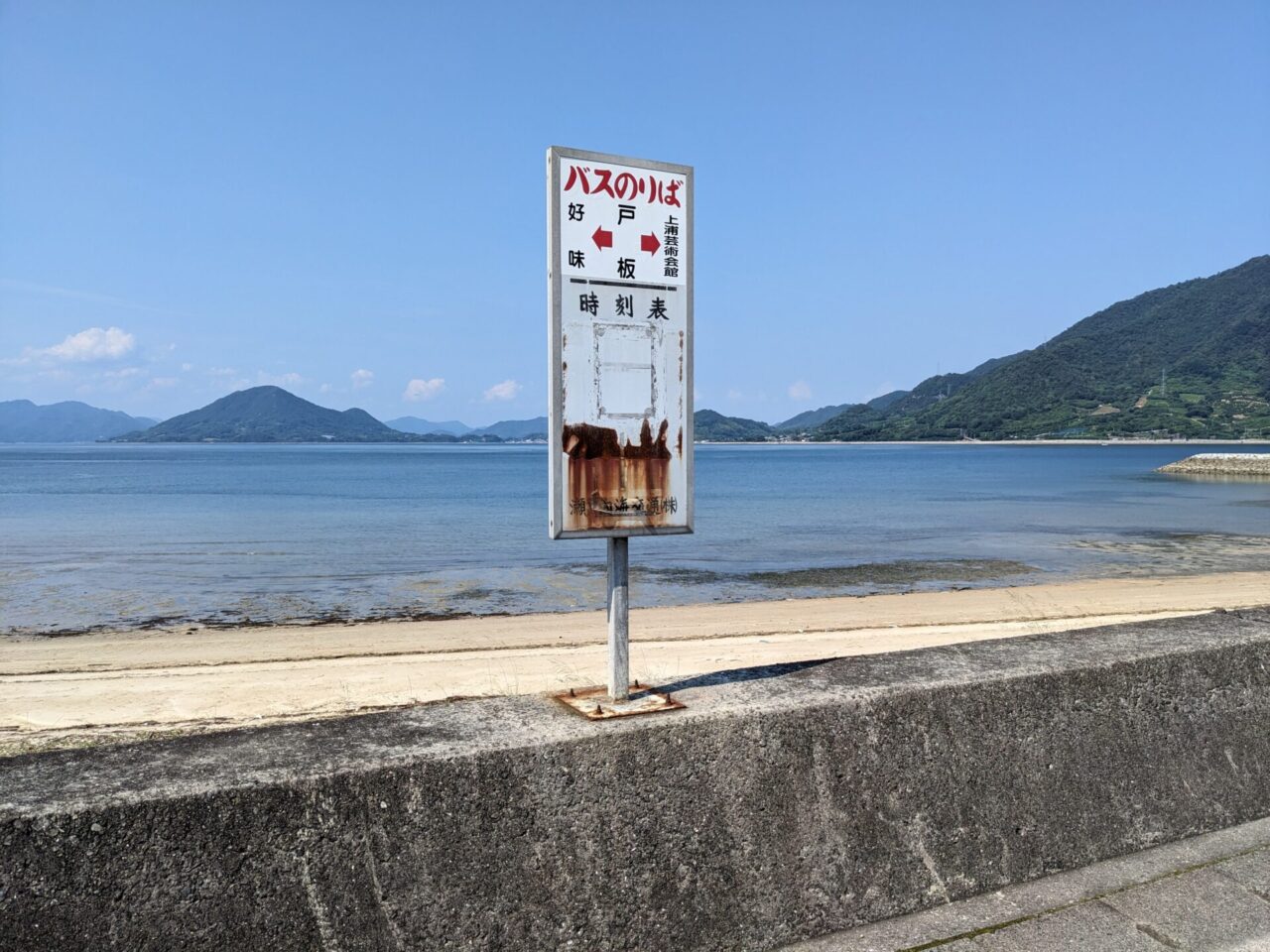
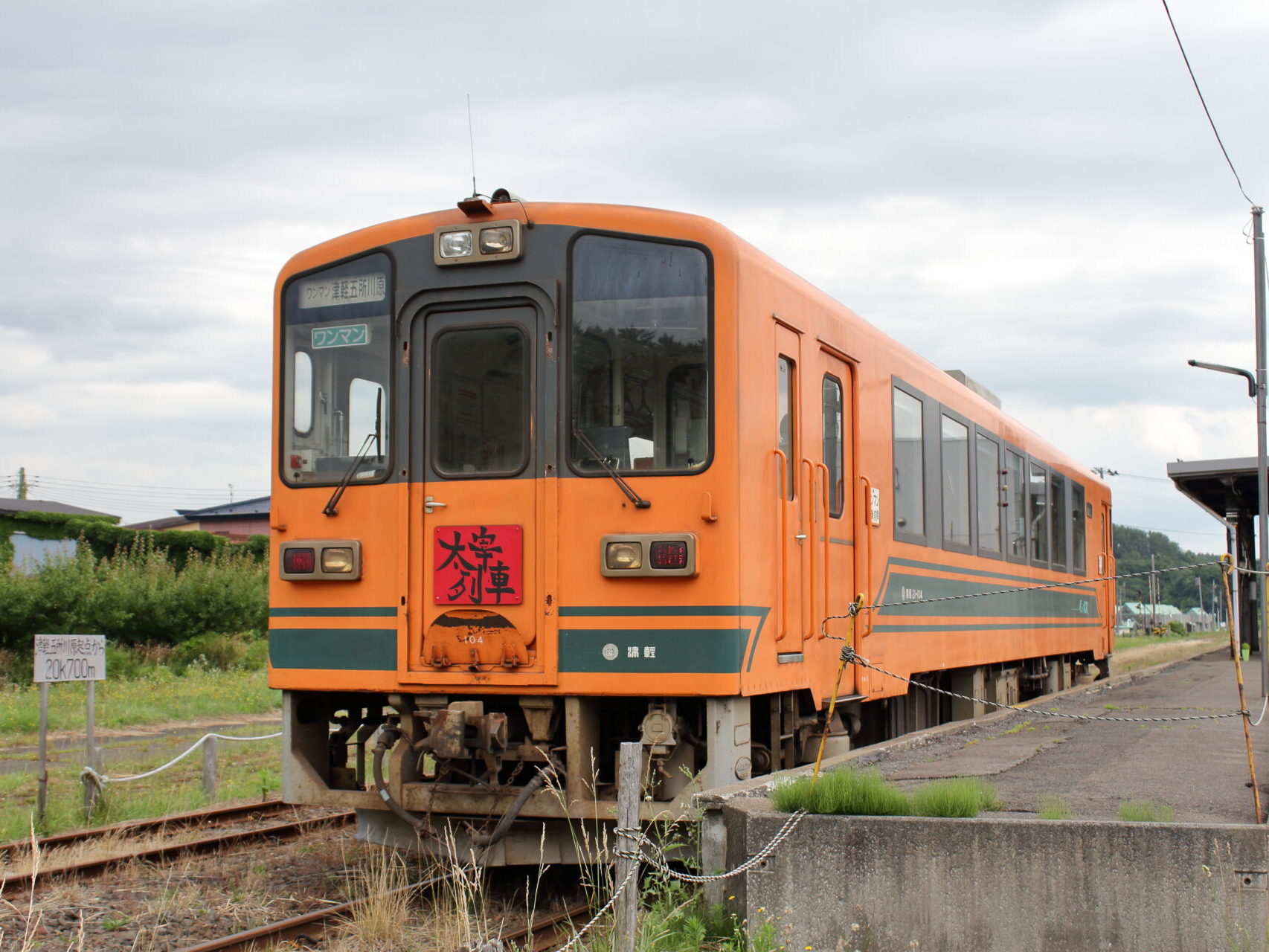
Large regional stations, well-known attractions, and tourist information centers may still provide English signs, maps, or printed guidance. The difference is that support becomes less consistent as you move into smaller communities and local transport networks.
Before leaving a major city for a regional destination, it helps to save:
- The destination name in Japanese
- The train or bus route
- Departure and return times
- The accommodation name and full address in Japanese
- Check-in instructions and contact information
- A map showing the entrance, bus stop, or pickup point when relevant
If a local service runs only a few times a day, confirm the timetable before you set out rather than assuming you can ask for the next departure when you arrive.
Limited English support is not a reason to avoid regional Japan. It simply means that routes, arrival details, and other practical information are worth checking before you travel. Regional towns, neighborhood restaurants, local public baths, and small accommodations can still be part of an independent trip.
How to Communicate When English Is Limited
When spoken English is unavailable, simpler communication usually works better.
You can show:
- A destination on Google Maps or another map app
- An address written in Japanese
- A hotel or restaurant reservation
- A menu item or photograph
- A train route or station name
- A short translated message
Keep sentences short and ask one question at a time. If possible, communicate the key information visually rather than repeating the same sentence more loudly.
Prepare your phone before you need it
A smartphone is one of the most useful tools for traveling in Japan without Japanese, especially when the information you need is already saved and easy to find.
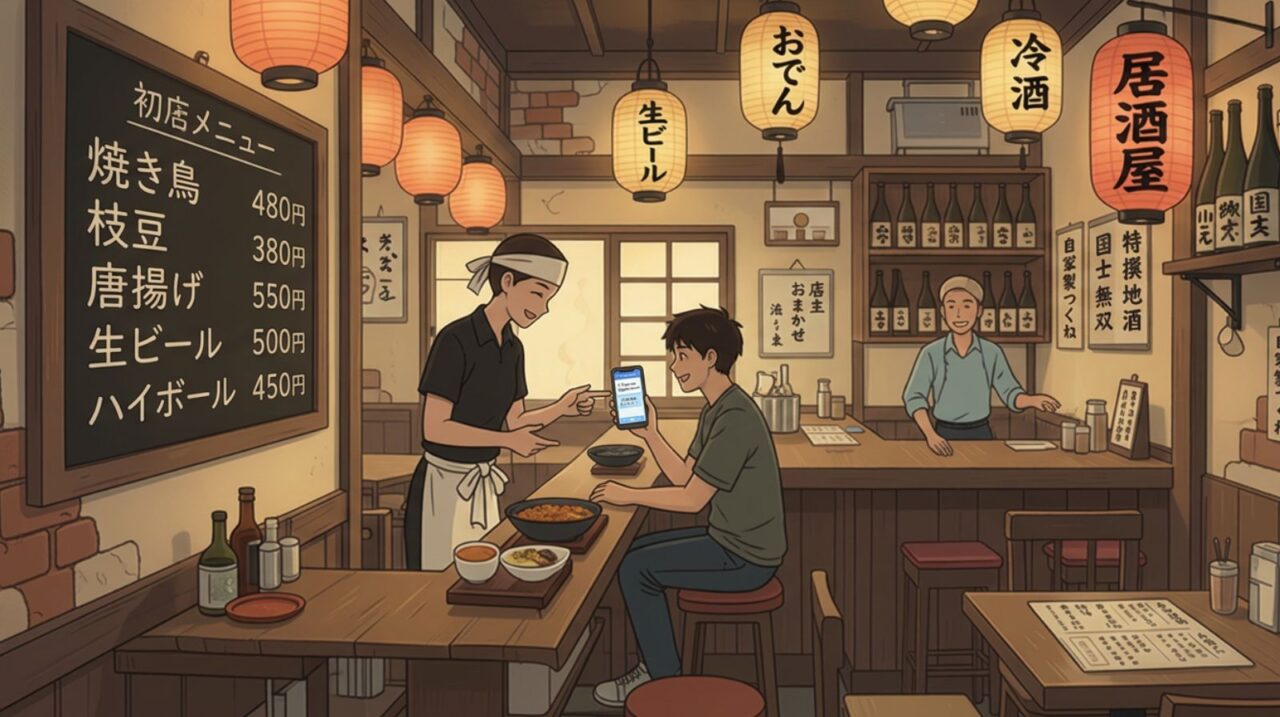
Before your trip, consider:
- Arranging reliable mobile data through an eSIM, SIM card, or pocket Wi-Fi
- Installing a translation app
- Downloading offline language data where your chosen app supports it
- Saving accommodation addresses and important reservations
- Taking screenshots of routes, check-in instructions, and other information you may need quickly
Camera translation can be useful for signs, menus, and product labels. For conversations, short translated sentences usually work better than long paragraphs because machine translation can miss context or nuance.
Useful Japanese phrases
| Japanese | Romaji | English |
|---|---|---|
| すみません | Sumimasen | Excuse me / Sorry |
| 英語は話せますか? | Eigo wa hanasemasu ka? | Do you speak English? |
| これをお願いします | Kore o onegaishimasu | This one, please |
| ここまでお願いします | Koko made onegaishimasu | Please take me here |
| わかりません | Wakarimasen | I don’t understand |
| ありがとうございます | Arigatō gozaimasu | Thank you |
You do not need to memorize a long phrase list. A few expressions can make simple interactions easier, while written information or translation is better when the situation requires detail.
Prepare Important Information in Japanese Before Your Trip
For most sightseeing, transportation, shopping, and dining, English signs, simple communication, and a translation app will usually be enough. However, some information is better prepared before your trip rather than translated for the first time when you need it.
If you have a medical condition, food allergy, dietary restriction, or another important requirement, prepare a short written explanation in Japanese and save it somewhere you can access quickly on your phone. Keeping a printed copy can also be useful.
Depending on your situation, consider preparing:
- Food allergies and the specific ingredients you must avoid
- Serious dietary restrictions that need to be clearly understood
- Medical conditions, allergies, and medication information
- Emergency contact and travel insurance details
- Your accommodation name and full address in Japanese
- Copies or photographs of your passport and other important travel documents
For a food allergy, be specific about the ingredient rather than relying only on a general statement such as “I have an allergy.” If the allergy is serious, prepare the information carefully before traveling and make sure restaurant staff understand what must be avoided before ordering.
For medical information, keep the names of your conditions, allergies, and medications in English and Japanese where possible. Including the generic name of a medication can be useful because brand names may differ between countries.
Keep copies of your passport, travel insurance details, and other important documents separately from the originals. These copies do not replace the originals, but having the information available can make it easier to explain what has been lost or contact the appropriate organization if a problem occurs.
If you are booking an activity where understanding safety instructions is important, check before booking whether English guidance is available. If it is not, ask whether written instructions or other language support can be provided.
Translation apps are useful for unexpected situations, but health, safety, and other important information is better prepared before you need it.
Communication is also easier when you understand a few everyday customs. Our Japanese etiquette guide covers practical behavior on trains, in restaurants, at accommodations, and in other common travel situations.

Traveling Japan When English Is Limited
English is not widely spoken in every part of Japan, but most first-time visitors do not need Japanese fluency to get around, eat out, shop, or check into accommodation.
At major airports, stations, hotels, and popular visitor destinations, English signs and digital information often make practical tasks manageable. In local neighborhoods and regional destinations, spoken English may be more limited, so preparing addresses, routes, reservations, and translation tools can make a significant difference.
When a conversation is difficult, a map, photograph, menu item, reservation screen, or short translated message may be all you need.
Language concerns also do not need to determine where you go or where you stay. Once the practical details are prepared, you can explore neighborhood restaurants, residential areas, regional towns, and smaller accommodations rather than limiting your trip to places designed mainly for international visitors.
If this is your first trip and you are working through the larger planning questions, our Complete Guide for First-Time Visitors to Japan brings together transportation, accommodation, money, etiquette, safety, and other practical basics.

Frequently Asked Questions
Is English widely spoken in Japan?
No. English is not widely used in everyday conversation throughout Japan. However, English signs, maps, announcements, ticket machines, and other multilingual information are common at major transportation hubs and visitor-oriented facilities.
Can I travel around Japan without speaking Japanese?
Yes. Most first-time visitors can travel independently without speaking Japanese. Navigation and translation apps, multilingual signs, written addresses, reservation screens, and a few simple phrases are enough for many everyday situations.
Is English available at train stations in Japan?
Major stations usually provide English station names, direction signs, route maps, and multilingual ticket information. English support may be more limited at small regional stations, so save the station name, line, departure time, and destination before traveling.
Do restaurants in Japan have English menus?
Some restaurants provide English menus, picture menus, or multilingual ordering systems, particularly in tourist areas and large cities. Small local restaurants may have Japanese-only menus, but pointing, photographs, and camera translation can often make ordering easier.
Do hotels in Japan have English-speaking staff?
Hotels that regularly welcome international travelers are more likely to provide English assistance, but ability varies between properties and individual staff members. Smaller accommodations may rely more on written instructions, translated messages, or digital check-in information.
How much English is spoken in rural Japan?
Spoken English is generally less common in rural towns and regional destinations than in major cities. Tourist information centers and popular attractions may still provide English guidance, but preparing Japanese place names, transport details, and accommodation information is useful.
What should I do when someone does not speak English?
Show the person a map, address, reservation, menu item, station name, or short translated message on your phone. Use simple wording, ask one question at a time, and allow enough time for the other person to understand and respond.
Should I learn Japanese before visiting Japan?
You do not need to learn Japanese to make the trip possible. A few expressions such as すみません / Sumimasen / Excuse me and ありがとうございます / Arigatō gozaimasu / Thank you can make everyday interactions smoother, but practical preparation is more important than memorizing a long phrase list.
Related Guides
Explore practical guides to help you plan your trip and travel around Japan with confidence.
Planning Your Trip to Japan
- A Complete Guide for First-Time Visitors to Japan: Stay, Travel, and Experience Local Life
- How to Prepare for a Trip to Japan: What to Plan Before You Go
Transportation
- How to Use Trains and Subways in Japan
- How to Use IC Cards in Japan: Suica, PASMO, ICOCA & Mobile IC Cards
- How to Pay for Train Travel in Japan
- How to Use Local Buses in Japan: A First-Time Visitor Guide
- How to Use Taxis in Japan
- Kansai Airport to Osaka: Best Routes for 8 Areas
- Kansai Airport to Umeda: A Practical Route Example Using Train, Bus & Taxi
- How to Buy Shinkansen Tickets in Japan
- Japan Rail Pass: Is It Worth It? A Complete Guide
Money
- Cash or Credit Cards in Japan? A Complete Guide for First-Time Visitors
- Can I Use Credit Cards Everywhere in Japan? Where Cards Work—and Where You’ll Still Need Cash
- How to Exchange Money in Japan: The Best Ways to Get Japanese Yen
- Tax-Free Shopping in Japan: Rules, Purchases & Refunds
Cities & Destinations
- Osaka vs Kyoto: Which City Is Right for You?
- Where to Stay in Osaka: Best Areas for First-Time Visitors
- Are Osaka Hotels Expensive in 2026? What to Expect and When to Book
- Where to Stay in Yodoyabashi, Higobashi & Edobori: Central Osaka Area Guide
Culture & Etiquette
- Japanese Etiquette Every Visitor Should Know
- Onsen & Sento Etiquette in Japan: A First-Time Visitor Guide